How-To Guide
How to Use Angel Oracle Cards: A Step-by-Step Guide
Автор: Seraphina
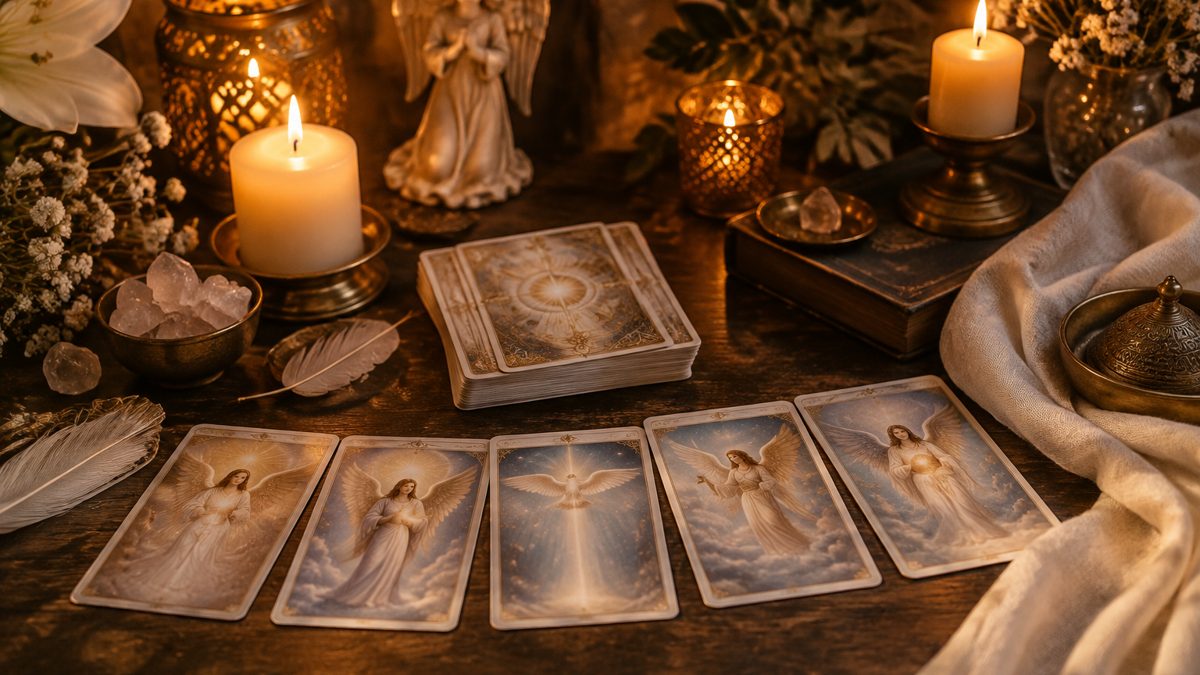
How to Use Angel Oracle Cards: A Step-by-Step Guide
There is something quietly inviting about a deck of cards waiting on a table: the painted wings, the unfamiliar symbols, the possibility of pausing long enough to hear yourself think. At Crossroads Journal, I like to approach practices like this with warmth and curiosity, but also with both feet on the ground. Angel oracle cards can belong to a spiritual tradition, a personal ritual, or a reflective journaling practice. You do not have to pretend certainty about the unseen to explore what the images bring to mind.
Я Seraphina, и мой подход прост: пусть карты открывают разговор, а не закрывают вопрос. Некоторые толкователи верят, что колода ангельского оракула передаёт наставление от ангелов или других благожелательных духовных существ. Другие понимают этот опыт через символику, интуицию и то, как вдумчивая подсказка способна выявить то, что уже шевелится под повседневной суетой. Эти взгляды не тождественны, но любой из них может поддержать осознанную, содержательную практику, если вы честны в том, во что верите и чего не знаете.
This guide will take you from choosing your first deck to making a small reading your own. We will cover intention and prayer, daily draws, beginner-friendly spreads, interpretation, archangel traditions, journaling, and a complete sample reading. There is no requirement to buy elaborate tools, memorize a hidden system, or receive a dramatic sign. A deck, a little time, and permission to stay curious are enough to begin.
Looking for the meaning of a single card or ingredient? Keep our Angel oracle card meanings guide open beside you.
1. Understand what angel oracle cards are
Ангельские оракульные карты — это иллюстрированные карты, созданные вокруг ангельских образов, духовных тем или посланий, связанных с наставлением и поддержкой. На карте может быть слово вроде «терпение», «мужество» или «обновление». Другая может называть архангела или изображать дверной проём, сад, фонарь или пару крыльев. В большинстве колод есть руководство, объясняющее задуманную автором символику и предлагающее способы чтения карт. Единой управляющей структуры нет: число карт, язык и лежащие в основе верования различаются от колоды к колоде.
Within angel-oriented spiritual practice, readers may regard drawing a card as an invitation to receive a message from a benevolent presence. That is a matter of belief, not an established mechanism or a guarantee of supernatural communication. I find it helpful to make that distinction early. A reading can feel moving, timely, or deeply personal without proving where the experience came from. You can honor its emotional significance while leaving the larger metaphysical question open.
You can also use these cards without treating them as divination. A picture of a bridge might prompt you to consider a transition; a card about kindness might encourage you to examine your tone in a difficult conversation. In that approach, the deck supplies a subject for reflection rather than information about hidden events. The usefulness lies in the attention you bring to the prompt and the choices you make afterward.
Before your first reading, write one sentence describing your own starting point. Perhaps you believe angels can offer spiritual guidance. Perhaps you are exploring a family tradition. Perhaps you simply enjoy symbolic art. None of those positions requires performing conviction you do not feel. I would rather begin with an honest question than build a ritual around someone else’s certainty.
2. Know how oracle cards differ from tarot
Tarot and oracle cards share a family resemblance: both use images that can be arranged and interpreted. Their structures, however, differ. A conventional tarot deck contains 78 cards, divided into 22 Major Arcana cards and 56 Minor Arcana cards. The Minor Arcana usually comprises four suits, each with numbered and court cards. Decks vary in naming and imagery, but that underlying framework gives tarot readers a shared vocabulary across many editions.
Oracle decks do not follow one universal pattern. A creator might build a small collection of brief affirmations or a larger system with several categories and layered symbolism. An angel oracle deck might focus entirely on archangels, organize its cards around virtues, or mix angels with broader contemporary spiritual themes. Its guidebook is therefore especially useful: you are learning that particular creator’s system rather than assuming the rules of another deck apply.
Angel oracle cards often emphasize reassurance and constructive reflection, although not every deck is gentle in tone. Tarot can accommodate a broader dramatic range within its established symbolism, including conflict, endings, uncertainty, and change. Neither format is inherently more spiritually powerful, more accurate, or more suitable for everyone. The better starting point is the one whose imagery and structure help you ask thoughtful questions without feeling pressured or confused.
Вам не нужно изучать таро, прежде чем пользоваться колодой ангельского оракула. Не нужно и переносить в неё приёмы таро. Перевёрнутые значения, сложные расклады и соответствия астрологии или другим системам необязательны, если колода специально их не включает. Начинающим я советую сначала освоить колоду на её собственных условиях. Одна ясная карта и внимательный вопрос научат вас большему о ваших привычках как толкователя, чем сложная схема, которую вы не можете уверенно истолковать.
3. Choose a deck you can meet with curiosity
Начните с иллюстраций, но не останавливайтесь на них. Вы будете подолгу всматриваться в эти образы, поэтому заметьте, привлекают ли они внимание или рассеивают. В одних колодах используется традиционная религиозная образность; в других ангелы изображены средствами современной фэнтези-иллюстрации, абстрактного света или природных сцен. Обязательной эстетики нет. Я бы выбрала колоду, над картинками которой хочется задержаться, а не ту, которой, как мне кажется, следует восхищаться.
Далее прочтите несколько образцов посланий с карт и, если есть, отрывок из руководства. Оставляет ли язык место для рассудительности? Звучит ли он сострадательно, не настаивая, что у каждой трудности есть простое духовное объяснение? Я предпочитаю формулировки, приглашающие к размышлению, а не провозглашающие неизбежную судьбу. Будьте осторожны с колодами или сопутствующими услугами, которые используют страх, заявляют об исключительном доступе к истине или намекают, что для устранения невидимой угрозы нужно купить что-то ещё.
Подумайте и о практических деталях. Удобно ли вам держать и тасовать карты? Читаема ли печать? Объясняет ли руководство, как создавалась колода и как ею пользоваться? Если вас интересует определённая религиозная традиция, изучите источники автора, а не считайте, что ангельские образы означают верное изображение этой традиции. Современные оракульные системы часто сочетают идеи из нескольких источников.
You do not need an expensive deck, and you do not need someone else to give you your first one. Buying your own is perfectly reasonable. A borrowed or secondhand deck can also work if its condition and provenance are acceptable to you. Set a modest limit before browsing, choose one deck, and give yourself time to learn it. Familiarity usually offers more to a reflective practice than a rapidly growing collection.
- Look at several actual cards, not only the cover artwork.
- Read the deck description and a guidebook sample to understand its tone and beliefs.
- Check card size, readability, availability, and price.
- Choose a deck that encourages reflection without demanding unquestioning obedience.
4. Подготовьте простое, удобное пространство для чтения
A reading space need not resemble an altar in a photograph. A clear corner of a kitchen table can be enough. The purpose is to create a little room for attention, not to impress an imagined spiritual audience. Put down your phone if possible, move anything that might spill, and gather your deck, guidebook, and notebook. If your household is busy, even a few uninterrupted minutes may be more practical than waiting for perfect silence.
Некоторые гадатели очищают или благословляют свои колоды перед использованием. В различных современных духовных практиках это может включать молитву, символическое постукивание по колоде, звук или размещение карт рядом со значимым предметом. Эти действия понимаются через традицию и личную веру; они не обязательны, чтобы колоду можно было использовать. Если вам нравится приветственный ритуал, выберите простой и безопасный. Избегайте дыма там, где он беспокоит людей или животных, и держите карты вдали от пламени, воды и вредного солнечного света.
I like the idea of beginning by getting acquainted rather than trying to activate anything. Look through the cards in order. Notice repeated colors, recurring symbols, and words that feel particularly inviting or uncomfortable. Read the creator’s introduction. This first pass helps you recognize the visual language of the deck and reduces the pressure to produce an immediate, meaningful reading. It is also a chance to spot themes you may want to approach carefully.
Decide how long your session will last before you start. Ten quiet minutes can hold a complete reading: settle, ask, draw, reflect, close. A time boundary helps prevent a simple question from becoming an afternoon of repeated draws. If the setting is distracting or you are too tired to engage, you can put the deck away. Missing a session does not damage a relationship with your cards or require a corrective ritual.
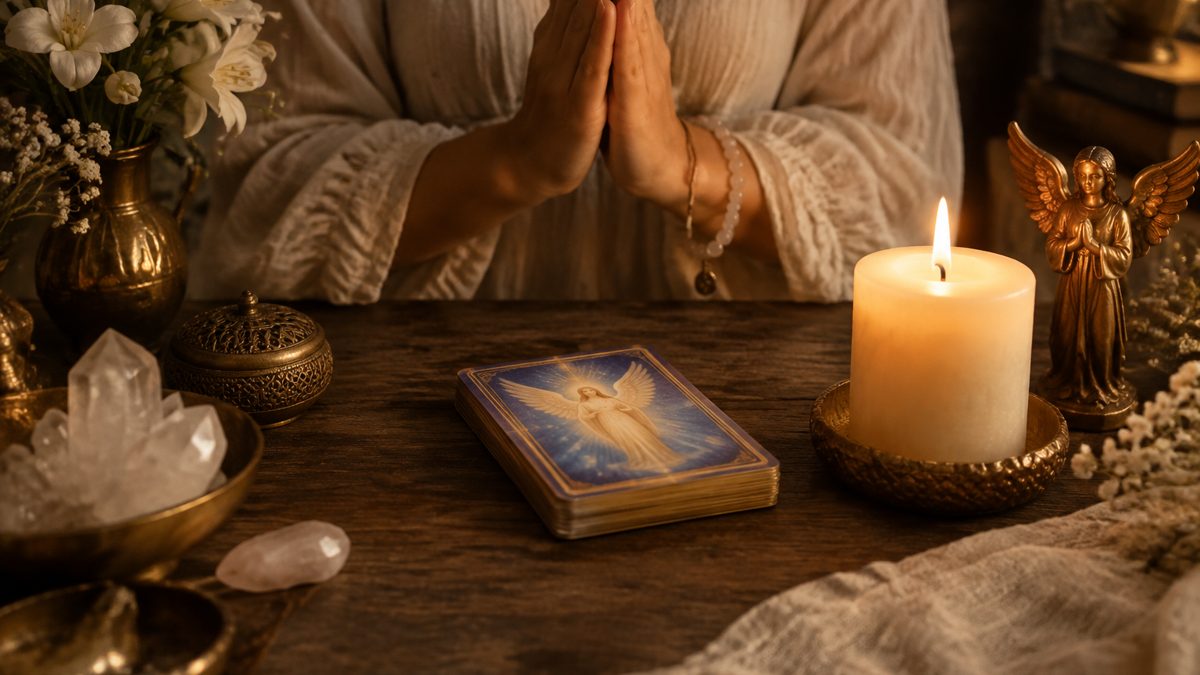
5. Set an intention or offer a prayer
Намерение придаёт раскладу направление. Оно не обязано быть сложным и не принуждает к определённому результату. Прежде чем тасовать, спросите себя, чего вы на самом деле ищете: утешения, взгляда со стороны, темы для дневника или способа подумать о своём следующем обычном действии. Это небольшое уточнение важно. Вопрос о том, как подойти к разговору, позволяет глубже поразмыслить, чем требование точно узнать, что втайне думает другой человек.
If prayer belongs to your spiritual practice, you may begin by addressing God, angels, or a benevolent presence in language consistent with your beliefs. A simple prayer could ask for clarity, compassion, and the wisdom to keep your own judgment. You might also ask that the practice remain grounded in kindness toward yourself and others. No particular wording is required, and an awkward sentence is not a spiritual mistake.
Если вы предпочитаете нерелигиозный подход, просто назовите свою цель: вы уделяете несколько минут размышлению, наблюдению за своими откликами и поиску полезного следующего шага. Можно положить руки на колоду или спокойно вдохнуть. Эти жесты способны отметить переход от повседневных дел к сосредоточенному вниманию, не утверждая ничего о невидимых силах. Выбирайте то, что кажется искренним, а не заимствуйте ритуал, от которого вам не по себе.
Keep your question open-ended and within your own sphere of action. Ask what deserves your attention, what perspective you might be overlooking, or what quality you want to bring to a situation. Avoid treating the cards as a way to obtain consent, read someone’s private thoughts, or settle factual matters that require evidence. When your question concerns another person, turn it gently toward your own communication, boundaries, or assumptions.
- Name the topic in one sentence, without trying to solve every part of it.
- Выберите открытый вопрос, например: «Что помогло бы мне подойти к этому вдумчиво?»
- Offer a prayer if it fits your beliefs, or state a secular intention.
- Remind yourself that the cards are prompts to consider, not commands to obey.
6. Shuffle and begin with a daily one-card draw
There is no universally correct way to shuffle an oracle deck. You can use an overhand shuffle, cut the cards into piles, or spread them face down and mix them gently on a clean surface. Choose a method that suits your hands and does not damage the cards. Once you have shuffled, draw from the top or select one from a face-down fan. The method need not be mysterious to feel intentional.
Ежедневное вытягивание — один из самых простых способов учиться. Вместо того чтобы просить предсказания, спросите, над какой темой можно поразмыслить сегодня. Положите карту так, чтобы видеть её, прочтите название и рассмотрите образ, прежде чем открыть руководство. Дайте себе минуту на первое впечатление. Вы не сдаёте экзамен, и за дословное воспроизведение объяснения автора награды нет.
Если при тасовании выпало несколько карт, у вас есть варианты. Одни толкователи считают такие карты значимыми; другие видят в них обычную оплошность и возвращают в колоду. Выберите правило заранее, чтобы не менять метод только потому, что один результат нравится больше другого. То же относится к картам вверх ногами. Если в вашей колоде нет значений для перевёрнутых карт и вы не принимали их сознательно, поверните карту прямо.
Most importantly, let one card be enough. If the message feels puzzling or disappointing, note that response instead of immediately replacing it. Repeatedly drawing until you receive reassurance can make the practice less reflective and more urgent. You may also decide that a card does not resonate today. That is an acceptable result. A daily practice is an invitation, not an obligation, and occasional draws work just as well for learning at your own pace.
- Выделите около пяти минут и выберите простой вопрос.
- Shuffle in a comfortable way, then draw one card.
- Write down its title and your first observation.
- Прочтите руководство и выберите одно предметное размышление или действие.
- В конце дня коротко вернитесь к записке, не пытаясь навязать связь.
7. Try a few clear, beginner-friendly spreads
Расклад — это просто схема, в которой у каждой карты определена роль. Позиции помогают сузить иначе слишком широкое толкование. Вместо того чтобы просить три карты объяснить всё, можно назначить одну ситуации, другую — упущенной перспективе, третью — возможному следующему шагу. Запишите позиции до вытягивания. Это не даст вам незаметно переформулировать вопрос под выпавшие карты.
For a two-card reading, try: what I am noticing, and what else I could consider. The first position gives you a place to examine your current focus; the second invites a wider view. It is a useful arrangement when you feel caught between a familiar reaction and a more thoughtful response. Neither card needs to describe objective reality. Both can function as lenses through which to examine your understanding.
For three cards, I like: where my attention is, what could support me, and one action I can choose. The final position is deliberately modest. It asks for a possibility within your control rather than an instruction from an unquestionable authority. Another useful three-card spread is: what I appreciate, what I am learning, and what I am ready to simplify. That version works especially well for a weekly reflection.
Keep the positions visible while you interpret. A courage card in a support position might prompt you to remember a skill you already have; in an action position, it might suggest preparing for an honest conversation. Resist expanding every reading with extra clarifying cards. If a position remains unclear, return to its question, consult the guidebook, or leave a note to revisit it. Uncertainty is not a failure of the spread.
- Choose a two- or three-card layout and write down the meaning of each position.
- Shuffle while holding the overall question in mind.
- Выкладывайте карты слева направо в порядке вытягивания.
- Interpret each card within its assigned position before looking for connections.
- Summarize the reading in one or two sentences.
8. Interpret messages without surrendering your judgment
Start with what is actually on the card. Describe the image as though you were explaining it to someone who cannot see it: a figure stands beside an open gate, the background is blue, a lantern hangs from one hand. Then notice your associations. Perhaps the gate suggests opportunity to you, while the lantern suggests preparation. Separating observation from interpretation makes it easier to see how your own experiences shape the reading.
Next, read the guidebook. Treat it as the creator’s explanation, not an infallible verdict. You may discover a symbol you overlooked or find that the written message differs from your first impression. Hold those possibilities side by side. Ask which interpretation best fits the question without stretching the facts. A card about forgiveness, for example, need not mean reconciliation, renewed access, or abandoning a boundary.
Look for practical meaning rather than dramatic certainty. A rest card does not establish why you feel tired, and a card about abundance does not predict material gain. It might instead prompt you to notice what you already have or reconsider an expectation. Cards are not substitutes for medical, legal, or financial expertise, and they cannot establish facts about those subjects. Use appropriate information and qualified help when a decision calls for them.
Be especially careful with fear-based interpretations. A dark image is not evidence of a curse, an approaching disaster, or a hostile presence. Likewise, a comforting image cannot promise safety or a particular outcome. Our minds naturally notice patterns and remember striking matches; keeping track of misses and ambiguous results helps preserve perspective. I ask three questions before accepting an interpretation: Is it compassionate? Is it plausible as reflection? Does it leave me free to choose?
9. Explore archangels as a spiritual tradition
Many angel oracle decks feature archangels, but the traditions behind those figures are not uniform. Angels appear in Jewish, Christian, and Islamic traditions, with differences in names, roles, texts, and devotional practices. Contemporary oracle creators may also draw on later esoteric teachings and modern spiritual systems. A deck that presents a neat list of archangels and corresponding colors is offering a particular framework, not necessarily a universal religious teaching.
Во многих христианских контекстах Михаил связывается с защитой и духовной борьбой, Гавриил — с божественными вестями, а Рафаил — с исцелением, особенно через Книгу Товита, чей писаниевый статус различается в разных традициях. Современные практики с ангелами могут адаптировать эти ассоциации в рефлексивные темы, такие как мужество, общение и забота. Эти символические темы не доказывают, что обращение к фигуре даст внешний результат. Когда колода делает конкретное утверждение о традиции, её источники стоит проверить.
If archangel devotion fits your beliefs, you might choose one figure to learn about through reputable sources from the relevant tradition. Read about the historical or textual context before adding correspondences from a deck. You could then offer a respectful prayer, draw a card, and reflect on a quality associated with that figure. Avoid assuming that traditions are interchangeable or that one guidebook speaks for every community that honors angels.
Можно также работать с образами символически, ясно понимая, что это отличается от религиозной практики. Образ Михаила может побудить поразмыслить о границе; образ Гавриила — обратить внимание на то, как вы выражаете себя. Нет требования обращаться к названному существу, ощущать присутствие или получать знак. Если практика противоречит вашей вере или вызывает неловкость, отложите её. Уважение включает и уважение к собственным пределам.
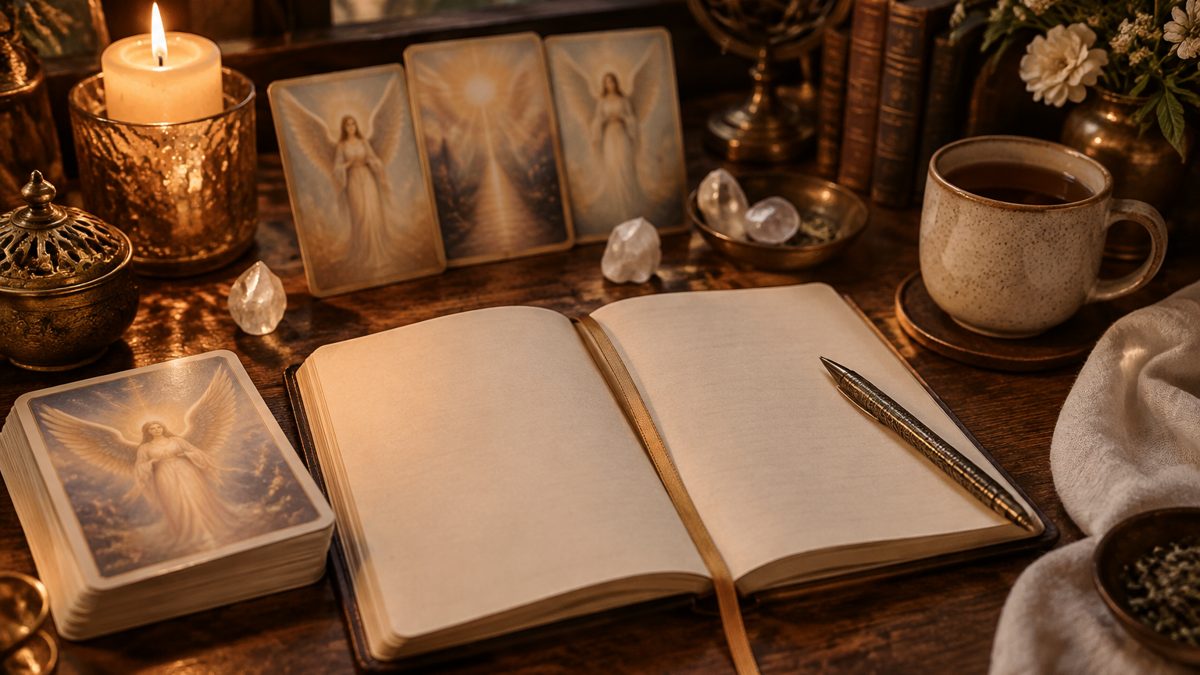
10. Keep a journal that welcomes honest observation
An oracle journal does not need to be beautiful to be useful. A plain notebook or a simple digital document will do. Record the date, your question, the deck, the card or cards drawn, and a few sentences about your response. Include the spread positions if you used them. These details give you a reliable record rather than relying on memory, which tends to highlight the most striking or emotionally satisfying moments.
Separate the card’s wording from your interpretation. You might note that the card’s title is Patience, while your response is that you feel rushed about a creative project. Then add what the guidebook contributed and what you actually intend to do. This distinction prevents a personal association from gradually becoming something you remember as an explicit message. It also helps you recognize which parts of the reading came from your existing knowledge of the situation.
Leave room for disagreement. Write down when a reading felt irrelevant, when you could not make sense of it, and when a suggested action did not suit your circumstances. Honest notes are more valuable than a record edited into a string of apparent confirmations. If the same card appears repeatedly, it may be interesting to reflect on, but repetition alone does not prove an outside message. You can explore the theme without assigning it special authority.
Просмотрите свой дневник через несколько недель. Ищите закономерности в своих вопросах и реакциях, а не пытайтесь вычислить силу колоды. Вы раз за разом ищете разрешение отдохнуть? Вы продолжаете спрашивать о разговоре, к которому можно подготовиться напрямую? Самое полезное открытие может касаться ваших собственных привычек внимания. Берегите приватность дневника, особенно если пишете о других людях, и не выдавайте свои впечатления за факты о них.
- Запишите вопрос, карты и позиции расклада.
- Опишите свою первую реакцию, прежде чем добавлять толкование из руководства.
- Choose one small action, or note that no action is needed.
- Вернитесь к записи позже и отметьте, что произошло, не переписывая первоначальное толкование.
- Notice recurring concerns while allowing for coincidence and ordinary repetition.
11. Walk through a sample three-card reading
Here is an illustrative reading using invented card titles, not a quotation from a published deck or a report of an actual supernatural message. Imagine that you have been postponing a personal writing project. You ask: What could help me return to this project in a thoughtful, manageable way? Your positions are where my attention is, what could support me, and one action I can choose. You draw Listening, Kindness, and Open Door.
In the first position, Listening might prompt you to examine how much advice you have been collecting. Perhaps you have read so many suggestions that you can no longer hear your own preferences clearly. That is one interpretation, not a fact established by the card. You test it against your experience: have you really been seeking more input instead of beginning? If not, Listening could invite another relevant reflection, such as noticing what originally attracted you to the project.
In the support position, Kindness might suggest changing the standard by which you judge a first attempt. Instead of expecting a polished piece immediately, you could allow an untidy draft. Notice how the interpretation stays connected to the question. It does not promise that kindness will make the project successful, and it does not claim that every obstacle is merely an attitude problem. It offers a possible way to make returning less intimidating.
В позиции действия «Открытая дверь» может предложить создать одно небольшое отверстие, а не планировать полное преображение. Вы решаете потратить пятнадцать минут на набросок сцены завтра. Ваше резюме звучит так: возможно, меня захлестнули советы со стороны; более мягкий стандарт мог бы помочь начать; я попробую одну короткую писательскую сессию. Вы записываете этот план и завершаете гадание. Завтра, напишете вы или нет, вы сможете разобрать, что помогло, а что помешало. Ценность гадания — в размышлении и эксперименте, а не в том, чтобы считать три карты предсказанием.
12. Завершите сеанс и выстройте устойчивую практику
Closing a reading can be very simple. Gather the cards, write your final thought, and return the deck to its box or another suitable place. If gratitude belongs to your practice, offer thanks in your own words. If you prefer a secular closing, acknowledge the time you gave yourself. A closing ritual marks the end of the session; it does not need to seal an invisible doorway or protect you from consequences for doing something incorrectly.
Choose a rhythm that fits your life. You might draw one card on quiet mornings, use a three-card spread each weekend, or reach for the deck only when you want a journaling prompt. There is no spiritual attendance record. If daily draws become repetitive, try reading less often or spending more time with a single image. Learning the deck includes noticing when it supports reflection and when another activity would serve you better.
Keep a few boundaries visible. Do not let a card override clear evidence, another person’s consent, or your own considered judgment. Avoid repeatedly checking the same question in search of certainty. If you notice that you feel unable to make ordinary choices without drawing, or that readings leave you increasingly frightened or preoccupied, put the cards away and reconnect with everyday sources of support. A reflective tool should remain something you can freely choose not to use.
What I hope you carry from this guide is not a perfect technique, but a gentle balance: imagination alongside discernment, tradition alongside curiosity, and meaningful ritual alongside ordinary action. Angel oracle cards can offer a language for reflection if that language speaks to you. They do not have to explain your future or solve your life. Sometimes the most worthwhile reading ends with a modest sentence in a notebook, a clearer question, and the willingness to take one thoughtful step.
These practices are shared as tradition and personal reflection, not as a substitute for medical, legal or financial advice.
Продолжайте узнавать
- Angel oracle card meanings
- How to read tarot cards
- How to use angel oracle cards
- Как читать игральные карты
- Как использовать кристаллы в заклинаниях
- Как использовать травы в ведовстве
- How to read the Dr. Moorne Egyptian Tarot
- How to read dice
- How to read tea leaves
- Как пользоваться маятником
- Как наложить заклинание со свечой
- How to make a spell jar
- How to make a sigil
- How to cleanse your home
- How to set up an ancestor altar
- How to open a sacred space
- How to time spells with the moon
- How to work with water and salt
- How to make a protection charm bag
- Read the Journal или посетите shops