How-To Guide
كيف تطهّر بيتك روحيًا
بقلم Seraphina

A home can feel different after an argument, an illness, a move, or a long season of stress. Sometimes the change is easy to explain: stale air, unfinished chores, difficult memories, or too little rest. Spiritual cleansing offers a deliberate way to acknowledge those feelings and mark a fresh beginning. It can sit comfortably alongside ordinary cleaning, maintenance, and care.
في تقاليد كثيرة، يطهّر الناس أماكن المعيشة أو يباركونها بالصلاة أو الماء أو العطر أو الصوت أو الضوء أو الإيماءات ذات المعنى. ويعتمد معنى هذه الممارسات على الجماعة وعلى الفرد. فبعضهم يفهمها روحيًا؛ وآخرون يتناولونها بوصفها طقوسًا رمزية تدعم الانتباه والنيّة. ولا يوجد دليل موثوق على أن الطقوس المنزلية تزيل قوى خارقة، ولا يثبت أي إحساس بعينه أن التطهير قد نجح.
This guide approaches the subject with warmth, cultural care, and practical common sense. You do not need expensive tools, a dramatic ceremony, or certainty about what you believe. A tidy surface, a bowl of plain water, and a few honest words may be enough for a meaningful personal practice. Your comfort and the consent of everyone sharing the home matter more than elaborate instructions.
سنستكشف خلفية تطهير البيت، ونختار المواد المناسبة، ونُعدّ المكان، ونبني طقسًا لطيفًا غرفة بغرفة. وستجد أيضًا مثالًا تطبيقيًا، وإرشادًا لتفسير تجربتك، وطرقًا للاحتفاظ بدفتر يوميات مفيد. ولمقارنة الأساليب الفردية، راجع صفحة المرجع المرافقة «طرق تطهير البيت»، وكيّف فقط ما يناسب بيتك فعلًا.
Looking for the meaning of a single card or ingredient? Keep our Home cleansing methods guide open beside you.
1. Decide What Spiritual Cleansing Means to You
Before choosing a method, name the reason you want to cleanse. Perhaps you have moved into a new apartment, finished a difficult project, welcomed a baby, or ended a relationship. A specific reason gives the ritual direction. “I want this room to support restful evenings” is more useful than an open-ended demand to eliminate everything negative.
Distinguish an intention from a promise. An intention describes how you hope to live and what you will practice; a promise claims an outcome you cannot control. You might intend to speak more kindly, protect quiet time, or make space for grief. A cleansing cannot guarantee harmony, prevent misfortune, or change another person's behavior.
Consider what “clean” means in your spiritual vocabulary. It need not mean that sadness, anger, or uncertainty are unwelcome. A supportive home can hold difficult emotions without treating them as contamination. Think of cleansing as making room for life rather than demanding constant happiness or judging yourself for having a hard week.
Write one sentence you can return to throughout the process. For example: “I am caring for this home so it can support safety, rest, and honest conversation.” If religious language is meaningful to you, use a prayer from your own practice. If not, ordinary language is entirely appropriate; sincerity does not require ceremonial phrasing.
2. Understand the History Without Flattening Traditions
يظهر تطهير البيت وتبريكه في مجتمعات كثيرة، لكنه ليس ممارسة عالمية واحدة بمكونات قابلة للتبادل. فبحسب التقليد، قد يعبّر الطقس عن التعبد أو الضيافة أو الحماية أو التذكّر أو الاستعداد لمناسبة مقدسة. وغالبًا ما يمزج التطهير الروحي الحديث الرمزية الشخصية بأفكار مستعارة، مما يجعل معرفة أصل الممارسة أمرًا بالغ الأهمية.
Some Christian communities bless homes with prayer and holy water. Incense has devotional roles in various Buddhist, Hindu, Christian, and other settings, although its purpose and use differ. Jewish household practices surrounding the mezuzah belong to a specific religious framework and should not be reduced to a generic cleansing technique. These examples illustrate diversity, not a menu of equivalent tools.
Smoke practices among Indigenous peoples are also diverse. “Smudging” should not be used as a catch-all label for burning any herb, because it can refer to particular ceremonies with community-specific meanings and responsibilities. White sage and sweetgrass carry cultural significance in some communities. Popular retail packaging is not a substitute for learning from appropriate sources.
Folk household customs in parts of Europe and elsewhere have included sweeping, washing thresholds, prayer, salt, and seasonal plants. Details vary by place, family, and period; claims about a single ancient recipe deserve caution. Start with your own background where possible, use reputable cultural histories, and seek community guidance before attempting practices intended for initiated or authorized participants.
3. اختر طريقة تناسب بيتك
أنسب الطرق هي التي تستطيع أداءها بأمان واحترام ودون إزعاج أحد. وغالبًا ما تكون الأساليب الخالية من الدخان أبسط نقطة بداية. يمكنك الجمع بين التنظيف العادي والنوايا المنطوقة والموسيقى الهادئة والتصفيق الخفيف أو نقطة تركيز بصرية. ولا يتفوق أي منها روحيًا بطبيعته على غيره؛ فالمعنى المُدرَك يعتمد على المعتقد والارتباط والتجربة الشخصية.
يمكن للماء أن يرمز إلى التجدد دون أن يُرشّ في كل مكان. ضع وعاءً صغيرًا على صينية ثابتة، ثم اتخذه نقطة تركيز وأنت تنطق نيّتك. وإن أردت مسح سطح، فاتبع تعليمات العناية بمادته. فالرمزية الروحية لا تجعل الماء آمنًا للأجهزة الإلكترونية أو الخشب غير المعالج أو الأقمشة الرقيقة أو الأغراض الحساسة للرطوبة.
Sound can mark a transition, but volume is not a measure of effectiveness. A softly rung bell, a short song, or your own speaking voice may be sufficient. Avoid sudden noises around sleeping children, sound-sensitive people, and animals. If hearing or sensory needs make sound unsuitable, silent gestures and written intentions are equally valid alternatives.
Smoke is optional, never a requirement. Skip it around respiratory conditions, smoke-sensitive occupants, birds, or other vulnerable animals, and wherever building rules prohibit it. Essential-oil diffusion is not automatically a safe substitute, especially around pets. Home Cleansing Methods can help you compare approaches, but a comfortable, low-impact choice usually serves a shared home best.
4. Gather a Small, Practical Kit
Begin with ordinary household supplies: a rubbish bag, a donation box, clean cloths, and cleaning products appropriate to your surfaces. Add drinking water for yourself and a notebook if you want to record the experience. These unglamorous items often contribute more to a welcoming room than a large collection of ceremonial accessories.
أما الطقس نفسه، فاختر غرضًا أو غرضين بدل جمع كل ما رأيته على الإنترنت. يمكن لوعاء من الماء الصافي، أو شمعة تعمل بالبطارية، أو صورة ذات معنى، أو جرس، أن يمنحك بؤرة تركيز واضحة. قد تحمل الأغراض رمزية شخصية، لكنك لا تحتاج إلى شراء شيء يُسوَّق على أنه قوي روحيًا.
إذا كانت الأعشاب جزءًا من ممارستك الراسخة، فتعرّف على النبتة وتأكد من كيفية التعامل معها بأمان. فالنبتة التي تُباع للزينة أو العطر أو الاستخدام الطقسي ليست بالضرورة صالحة للأكل. تجنّب الخلطات المجهولة والمساحيق السائبة التي لا تُذكر مكوّناتها. أبقِ الأعشاب بعيدًا عن الأطفال والحيوانات الأليفة، ولا تفترض أن «الطبيعي» يعني «غير ضار».
Salt is optional and often unnecessary. It can scratch surfaces, corrode metal, and harm plants when discarded in soil or watering containers. A small amount kept inside a closed container can carry symbolic meaning without being scattered. Likewise, choose an LED light instead of an open flame when you want the symbolism of illumination without fire risk.
- 1. Set out your cleaning supplies and one chosen ritual object on a stable, uncluttered surface.
- 2. Check ingredients, care labels, household sensitivities, and any building restrictions before beginning.
- 3. Put away everything you do not need, leaving clear walking routes and keeping exits unobstructed.
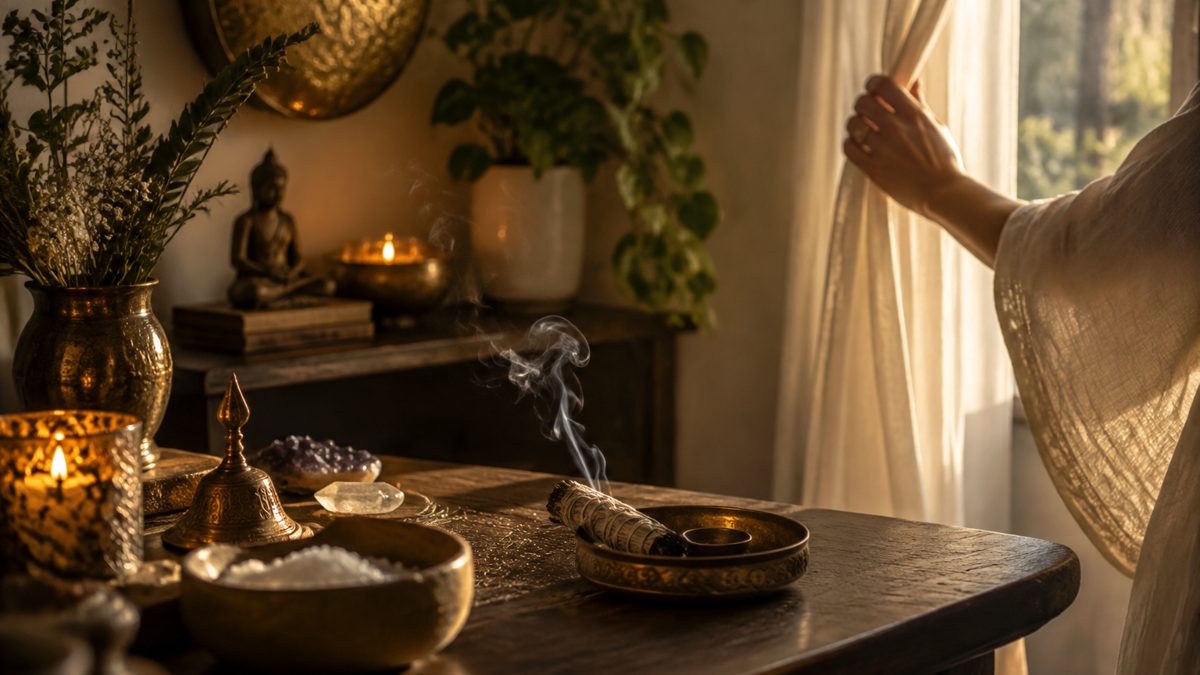
5. Prepare the Space and Ask for Consent
Talk with housemates before using fragrance, sound, prayer in shared areas, or changes to household objects. Explain what you plan to do and ask what would make them comfortable. Participation should be optional. A shared living room is not yours alone to redefine, and someone declining a ritual is not introducing negative energy.
عالج الأحوال العملية أولًا. أخرج القمامة، وتخلّص من الطعام الفاسد، واغسل الأطباق، وتعامل مع مصادر الرائحة الواضحة. وإن لاحظت رطوبة أو آفات أو أسلاكًا تالفة أو رائحة متكررة غير مفسّرة، فابحث عن السبب المادي. يمكن للطقس أن يرافق العناية بالبيت، لكنه لا يحل محل الإصلاحات أو مكافحة الآفات أو التقييم المهني لمشكلة سلامة.
Choose a manageable scope. Cleansing a whole house when you are tired may turn a supportive practice into another burden. One bedside table or one doorway is a legitimate starting point. Schedule enough time to finish without rushing, and leave a little time afterward to put supplies away and enjoy the room.
Ventilate if outdoor conditions, security, and health needs allow. Check pollen, air quality, weather, and the safety of children and pets before opening windows. An open window can represent a fresh start, but no supernatural exit is required. In unsuitable conditions, use your normal safe ventilation arrangements and keep the symbolic gesture entirely indoors.
- 1. Agree on the rooms, timing, and permitted materials with everyone affected.
- 2. Complete a short physical tidy, prioritizing waste, dishes, trip hazards, and frequently used surfaces.
- 3. Arrange safe ventilation if appropriate, then place your chosen ritual object where it cannot be knocked over.
6. هدّئ نفسك وافتتح الطقس
ابدأ بملاحظة ما تشعر به بدل محاولة استحضار حالة خاصة. قد تكون متفائلًا أو مشتت الذهن أو متشككًا أو منزعجًا. ولا يُقصيك أيٌّ من هذه المشاعر. اجلس أو قف براحة، وانتبه إلى ما يسندك، وخذ بضعة أنفاس هادئة دون إجبار نفسك على التنفس العميق أو حبس النفَس.
انظر حولك وحدد بضع تفاصيل عادية: لون ستارة، أو وزن كوب، أو ضوء النهار على الأرض. فهذا يبقي الممارسة متصلة بالغرفة التي تسكنها فعلًا. وإن كان إغلاق عينيك غير مريح فأبقهما مفتوحتين. وإن كان السكون صعبًا، فيمكن للترتيب البطيء أن يكون نشاط افتتاحك.
اقرأ النيّة التي كتبتها سابقًا أو انطق بها. يمكنك أن تقول: «أعلن بداية جديدة وأفسح مجالًا للراحة». هذه صياغة مقترحة، وليست صيغة تقليدية ولا أمرًا ذا قوة مضمونة. عدّلها حتى تبدو شيئًا تقوله بطبيعتك، أو أبقِ النيّة سرية.
Set a clear endpoint before you begin moving through the home. For example, decide that the ritual will end after one pass through three rooms. A defined boundary prevents the urge to repeat actions until everything feels perfect. You are completing a chosen act of care, not testing whether the home has become spiritually flawless.
- 1. Pause in a comfortable position and notice your surroundings for about a minute.
- 2. State your intention aloud, silently, or in writing.
- 3. Decide which rooms you will visit and what action will signal that the ritual is complete.
7. Follow a Gentle Room-by-Room Method
Start somewhere convenient, such as the entrance or the room you use most. Some traditions specify a direction or route, but there is no universal rule requiring clockwise movement or a particular doorway. Unless you are following an established practice you understand, choose a route that is easy to remember and physically accessible.
At each room, pause and consider its everyday purpose. A kitchen supports nourishment; a bedroom supports rest; a workspace supports concentration. Remove one small obstacle to that purpose before performing your symbolic action. Clear the chair, put away the shoes, or open the curtains. Linking the ritual to a practical change gives the intention somewhere to land.
Use the same simple action throughout: speak a sentence, ring a bell softly, or briefly hold your attention on an LED candle resting safely on a surface. You do not have to touch every wall or reach every corner. Avoid climbing, stretching into unsafe places, or moving heavy furniture simply to complete a ceremonial route.
Finish each room by naming one habit that could sustain your intention. A calmer bedroom may need a phone-charging place outside the bed area. A welcoming kitchen may need a shared washing-up agreement. These decisions are not an afterthought; they translate the meaning of the cleansing into conditions that can actually change daily life.
- 1. Enter the first room and name its purpose in one short sentence.
- 2. Make one practical improvement, such as clearing a surface or removing rubbish.
- 3. نفّذ فعلك الرمزي المختار وكرّر نيتك أو عدّلها.
- 4. Note one supportive household habit, then continue to the next agreed room.
- 5. Complete one pass only, leaving inaccessible or private spaces undisturbed.
8. Close the Practice and Dispose of Materials Safely
Return to your starting point or settle in the room where you want to spend time afterward. A closing gesture can be as simple as putting down the bell, switching off the LED candle, or saying, “This practice is complete for today.” You do not need an intense emotional release for the ending to count.
Restore the household to a safe, ordinary state. Close windows if necessary, secure cleaning products, and move bowls or decorative items away from edges. If you used a real candle despite the smoke-free preference, extinguish it fully before leaving the room. Check that any heat-resistant holder and surrounding materials have cooled before storing them.
Dispose of materials according to what they contain, not an assumed spiritual requirement. A small bowl of plain water can go down the sink. Do not pour salt water onto plants or soil. Oils, wax, concentrated cleaners, and unidentified mixtures need disposal appropriate to the substance and local guidance rather than being emptied into drains or outdoors.
Avoid burying ritual remnants or leaving offerings in parks, waterways, or shared gardens. Food can attract wildlife or pests, and thread, wax, glitter, and packaging can become litter. If you want an environmentally considerate closing gesture, water a plant normally with fresh water or make a separate contribution to caring for your immediate surroundings.
9. A Worked Example: Resetting a Small Apartment
Imagine a hypothetical renter, Alex, who has had a stressful month and wants the apartment to feel less associated with work. The home has a living room, kitchen, and bedroom, and Alex lives with a cat. Rather than choosing incense or essential oils, Alex selects a notebook and an LED candle for a quiet, smoke-free practice.
Alex sets aside half an hour and writes, “I want this home to support a clear end to the working day.” The initial tidy focuses on the actual sources of strain: work papers on the sofa, mugs beside the laptop, and laundry across the bedroom chair. The cat remains free to rest undisturbed, with water and supplies kept out of reach.
In the living room, Alex puts work materials into a drawer and places the LED candle on the cleared table. In the kitchen, Alex washes the mugs and prepares a clean space for breakfast. In the bedroom, Alex clears the chair and moves the laptop charger outside. Each action is followed by a brief statement about the room's purpose.
After switching off the candle, Alex writes that the apartment looks more usable, while some work anxiety remains. That is a realistic outcome, not a failed ritual. The lasting commitment is to put work equipment away at a set time. The example shows how symbolic meaning and practical change can cooperate without requiring a supernatural explanation.
- 1. اختر نيّة واحدة مرتبطة بصعوبة منزلية محددة.
- 2. Match each room with a small physical change that supports that intention.
- 3. Finish with one sustainable habit rather than a plan to repeat the entire ritual every night.

10. فسّر التجربة دون مطاردة العلامات
Afterward, you may feel lighter, quieter, emotional, tired, or unchanged. These reactions can reflect expectation, focused attention, physical effort, memories, or the relief of finishing a task. You can appreciate an experience without claiming certainty about its cause. Feeling nothing unusual does not mean you did the ritual incorrectly or need stronger materials.
Ordinary events are not reliable spiritual diagnostics. A flickering flame may respond to airflow or wick condition; incense smoke moves with air currents; a creaking floor reflects building materials and movement. Salt clumping can result from moisture. Do not treat these observations as proof of a curse, a presence, or a warning about someone in your household.
قيّم الممارسة من خلال أسئلة يومية في الأيام التالية. هل أصبحت الغرفة أسهل استخدامًا؟ هل تساعدك عادتك المسائية الجديدة على الهدوء؟ هل صارت اتفاقات المساحة المشتركة أوضح؟ هذه الملاحظات أنفع من البحث عن مصادفات مثيرة. وتذكّر أن النوم والطقس وعبء العمل والعلاقات قد تؤثر في شعور البيت بمعزل عن أي طقس.
إذا تزايد الخوف، فأوقف التفسير الروحي بدل تصعيد التطهير. فالشعور المستمر بأنك مراقَب، أو العجز عن النوم، أو الدوافع إلى تكرار الطقوس طلبًا للأمان، تستحق دعمًا رحيمًا من متخصص في الرعاية الصحية. أما الصداع المفاجئ أو الدوار أو التشوش داخل البيت فقد يدل على خطر بيئي؛ فاخرج إلى الهواء النقي والتمس مساعدة عاجلة بدل محاولة طقس آخر.
11. Avoid Common Mistakes and Unhelpful Expectations
One common mistake is treating discomfort as evidence that something supernatural is wrong. An untidy room, tension after an argument, or unease in an unfamiliar building does not establish a spiritual threat. Start with the simplest plausible explanations and practical responses. A difficult conversation or a repair request may be more helpful than another cleansing.
Another mistake is adding more ingredients whenever a ritual feels ordinary. Combining smoke, oils, salt, candles, and sound increases complexity and potential hazards without establishing greater effectiveness. Keep the practice understandable enough that you can explain why each element is present. If you cannot identify its purpose, you probably do not need it.
تجنّب الكمالية الصارمة بشأن الصياغة أو التوقيت أو أطوار القمر أو الزوايا المنسية، ما لم يمنح تقليد معين تلك التفاصيل معنى داخل ممارستك. فالطقوس الشخصية يمكن أن تكون مرنة. تحدث المقاطعات، والأطفال يحتاجون إلى انتباه، وقيود الحركة أو الطاقة لها اعتبارها. والتوقف مبكرًا مسموح، والممارسة المختصرة ليست خطرًا روحيًا.
Finally, do not use cleansing to bypass grief, conflict, or accountability. Removing reminders of a disagreement will not resolve it without communication. A ritual after bereavement should not imply that the deceased person or your sadness is unwelcome. Let the practice support practical help, emotional honesty, and appropriate care rather than replacing them.
12. Keep Safety, Consent, and Ethics at the Center
If you use flame, keep it in a stable, suitable holder on a heat-resistant surface, away from curtains, loose clothing, papers, and drafts. Never leave it unattended or carry burning materials through a cluttered home. Keep working smoke and carbon monoxide alarms where appropriate. Never cover, disconnect, or disable an alarm to accommodate a ritual.
Avoid burning unfamiliar plants or resins, and remember that ventilation does not make smoke harmless. People with asthma, migraines, or fragrance sensitivities may need completely unscented methods. Birds are particularly vulnerable to airborne contaminants. For other pets, check ingredient-specific advice with a veterinarian rather than relying on a seller's broad assurance that a product is natural.
Do not ingest ritual herbs, oils, salt mixtures, or cleansing waters. Do not apply substances to skin merely because they are labeled spiritual or traditional. Follow cleaning-product labels, and never mix bleach with ammonia, acids, or other cleaners. Keep all products in clearly labeled containers, away from food, children, and animals.
الممارسة الأخلاقية تعني أيضًا احترام الناس والميزانيات. لا تطهّر أبدًا متعلقات شخص آخر سرًّا، ولا تتخلص من أغراضه ذات المعنى، ولا تلمه على جلب طاقة سيئة إلى البيت. وإن طلبت مساعدة مدفوعة، فاتفق على النطاق والسعر مسبقًا. وتجنّب كل من يضمن نتائج خارقة، أو يعلن لعنة غير مؤكدة، أو يضغط عليك لمشتريات عاجلة متصاعدة.
13. Journal, Review, and Build a Sustainable Rhythm
A cleansing journal need not become a catalogue of omens. Record the date, your reason for practicing, the rooms involved, and the actions you took. Add practical context such as recent stress, sleep quality, visitors, or repairs. This helps you understand patterns without automatically attributing every change to the ritual.
Keep observation separate from interpretation. “I put away the work papers and felt calmer while sitting down” describes something you noticed. “The ritual removed a harmful presence” makes a claim you cannot establish from that feeling. You can still record spiritual beliefs as beliefs while leaving room for alternative explanations and changing your mind.
راجع التدوين بعد عدة أيام بدل أن تتفقد الأجواء مرارًا. اسأل أي تحسين عملي بقي، وهل كانت المراسم داعمة أم مرهقة. فإن ساعدتك عادة جديدة فأبقِ عليها. وإن سبب العطر صداعًا أو شجّعت العملية على تفقّد قلق، فبسّط أو توقف. الهدف بيت أكثر قابلية للعيش، لا مجموعة متنامية من الالتزامات.
Choose a rhythm based on need and enjoyment rather than fear. A brief seasonal reset, a welcoming ritual after moving, or an occasional quiet tidy may be enough. Your home does not need constant spiritual correction. At its best, cleansing is a deliberate expression of care: noticing your surroundings, honoring what matters, and making ordinary room for the life you want to live.
- 1. Before the ritual, write your intention and a brief description of the home's practical condition.
- 2. Afterward, record what you did, how you felt, and any safety or comfort concerns.
- 3. Several days later, note which changes remained useful without searching for supernatural confirmation.
- 4. احتفظ بعادة نافعة واحدة، واختر ما إذا كان طقس آخر سيفيدك حقًا.
These practices are shared as tradition and personal reflection, not as a substitute for medical, legal or financial advice.
واصل التعلّم
- Home cleansing methods
- How to read tarot cards
- How to use angel oracle cards
- كيف تقرأ أوراق اللعب
- كيف تستخدم البلّورات في التعويذات
- كيف تستخدم الأعشاب في السحر
- How to read the Dr. Moorne Egyptian Tarot
- How to read dice
- How to read tea leaves
- كيف تستخدم البندول
- كيف تلقي تعويذة بالشموع
- How to make a spell jar
- How to make a sigil
- How to cleanse your home
- How to set up an ancestor altar
- How to open a sacred space
- How to time spells with the moon
- How to work with water and salt
- How to make a protection charm bag
- Read the Journal or visit the shops