How-To Guide
How to Use Herbs in Witchcraft: Spells, Baths and Charms
بقلم Seraphina
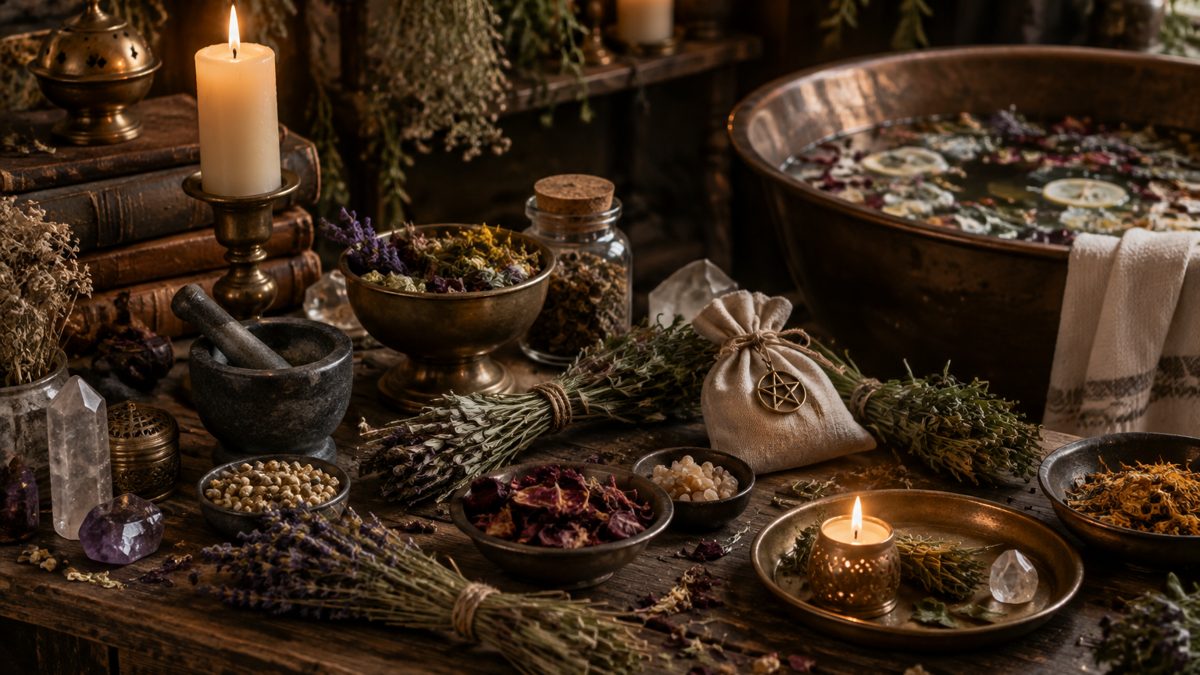
The herbs I return to most often are not rare or mysterious. They are the rosemary beside the kitchen door, the bay leaves in the cupboard, and the mint that would happily take over every pot I own. Welcome to Crossroads Journal. I’m Seraphina, and this is my guide to bringing herbs into a folk witchcraft practice with curiosity, care, and both feet on the ground.
Across many traditions, people have used plants to mark thresholds, bless households, remember the dead, celebrate seasonal changes, and give physical form to a wish. Those practices are not one universal system. Their meanings vary by place, family, religion, and practitioner. Here, I’m offering an adaptable, home-centered approach rather than claiming to reveal a single ancient rulebook.
I approach herbal magic as a practice of symbolism, attention, and belief. A charm can remind us of a boundary; a kitchen ritual can make an ordinary meal feel deliberate. Neither guarantees an outcome, and divination does not establish facts or reliably predict events. Herbal witchcraft belongs alongside practical action, never in place of appropriate professional advice or ordinary precautions.
We’ll work through gathering, drying, storing, sachets, baths, floor washes, smoke, candle arrangements, protection jars, and kitchen rituals before putting everything together in a simple ceremony. You do not need every method, a garden, or an overflowing apothecary. A few correctly identified ingredients, a clear purpose, and a willingness to leave unsafe ideas alone are more than enough.
Looking for the meaning of a single card or ingredient? Keep our Herbs in witchcraft guide open beside you.
How to Use Herbs in Witchcraft: Spells, Baths and Charms
My starting point is always the same: decide what the practice means before deciding what to buy. Are you marking a fresh beginning, expressing gratitude, remembering someone, or creating a moment to reflect on your boundaries? Write the purpose in one ordinary sentence. “I want to make my home feel thoughtfully tended” gives you a more useful starting point than an elaborate list of ingredients with no personal connection.
بعد ذلك، اختر نبتة واحدة يدعم عطرها أو تاريخها أو مظهرها أو استخدامها اليومي تلك النية. ففي بعض الممارسات المعاصرة المستلهمة من التراث الشعبي، يرتبط إكليل الجبل بالتذكّر والحماية، والغار بالأمنيات أو التقدير، واللافندر بالسلام. وهذه أمثلة على ارتباطات متعارف عليها، لا خصائص قابلة للقياس ولا معانٍ يتفق عليها الجميع. وقد يحمل نعناع مطبخ جدتك دلالة لديك أكبر من أي جدول مطابقات.
I like to distinguish an inherited tradition from a personal invention. If I learned a custom from a family member, I say so. If I adapt a published practice, I keep a note of the source. If I invent a rosemary charm because its smell reminds me of home, I call it my own symbolism. That honesty makes a practice richer, not less magical.
There is also no obligation to borrow ceremonial plants or practices from communities whose teachings you do not share. Learn the context of what interests you, respect closed or restricted traditions, and avoid treating distinct cultures as a basket of interchangeable ingredients. Familiar culinary herbs can support a meaningful personal practice without pretending to carry someone else’s authority.
1. Begin with safety, not a correspondence list
A plant’s traditional magical reputation does not establish that it is safe to swallow, breathe, burn, or put on skin. The form matters too: a culinary leaf, concentrated extract, and essential oil are not interchangeable. For the beginner practices in this guide, I leave essential oils out entirely. Never ingest products labeled for incense, crafts, fragrance, or magical use, and never assume an online seller’s spiritual description is a safety assessment.
يستحق السذاب تحذيرًا حازمًا بوجه خاص. فهو سام إذا ابتُلع، وقد يسبب تسممًا خطيرًا، وقد ينتج تفاعلات جلدية شديدة مرتبطة بالتعرض لأشعة الشمس. وهو خطير بصفة خاصة أثناء الحمل. لا أوصي بالسذاب في حمّامات البيت أو الشاي أو الزيوت أو الدخان أو التمائم المحمولة بلا حرص. وإن كان ينمو أصلًا في حديقتك، فتجنّب ملامسته بالجلد المكشوف والتمس إرشادًا بستانيًا موثوقًا قبل التعامل معه. ويمكن لرمز مكتوب أن يحل محله في الطقس.
Mugwort is another plant I would not casually recommend. Avoid it during pregnancy or when trying to conceive, and get qualified advice before any use while breastfeeding. It can also trigger allergic reactions, including in people sensitive to related plants. For this beginner guide, simply leave it out. Claims about dreams or divination are not a reason to accept avoidable exposure, and burning it does not make it harmless.
أبقِ جميع المكوّنات الطقسية بعيدًا عن الأطفال والحيوانات؛ فما يتحمله إنسان بالغ قد يكون خطرًا على حيوان أليف. وفي حالات الحساسية أو الربو أو أسئلة الأدوية أو الحمل أو عدم اليقين بشأن أمان البشرة، استشر طبيبًا أو صيدليًا مختصًا بدلًا من كتاب للمقابلات والمطابقات. وإذا اشتبهت بتعرّض أو تسمّم، فاتصل بمركز السموم المحلي أو بخدمات الطوارئ؛ وإن كان الأمر يخص حيوانًا فاتصل بطبيب بيطري. لا تحاول علاجًا سحريًا ولا تحثّ على التقيؤ ما لم تُوجَّه إلى ذلك.
2. Gather herbs respectfully and identify them with certainty
The simplest beginning is often a small packet of food-grade rosemary or bay from a reputable grocery supplier. You do not have to forage to be a “real” practitioner. If you grow herbs, retain the plant labels and learn the botanical names as well as the common ones. Common names can refer to different species, and resemblance is not enough to establish that a plant is suitable for handling or use.
When gathering outdoors, positively identify the plant using trustworthy references and, where needed, an experienced local botanist or foraging educator. Do not rely on a photograph or identification app alone. If any doubt remains, leave it standing. Avoid roadsides, sprayed areas, industrial land, and places contaminated by animal waste. Obtain permission and check local gathering restrictions; some plants and habitats are protected.
Take only a small amount from a healthy, abundant plant, leaving enough for its continued growth and for wildlife. Avoid uprooting plants or stripping every flower or seed head. For many leafy garden herbs, a dry morning after the dew has evaporated is a convenient harvesting time. Use clean scissors, remove damaged material, and keep different species separate so identification remains clear.
I sometimes pause before cutting to name what I’m gathering and why. That pause is a personal gesture of gratitude, not proof that the plant has granted permission or that harvesting has become ecologically harmless. The practical part still matters: a careful cut, a modest harvest, and an honest decision to leave a struggling plant alone. You can also honor a plant by observing it without taking anything.
3. جفّف الأعشاب جيدًا واحتفظ بسجلات جيدة
Drying is less dramatic than spellwork, but it asks for exactly the quality I value in a practice: patient attention. Sort your harvest promptly. Discard diseased, moldy, or contaminated material rather than trying to rescue it for ritual use. For garden culinary herbs, rinse when appropriate and remove surface water thoroughly. Never assume drying will remove pesticides, toxins, or other contaminants.
يمكن تعليق حزم صغيرة مفككة من الأعشاب الورقية المناسبة في مكان جاف مظلل ذي تيار هواء ثابت. وقد تبقى الحزمة المزدحمة رطبة في وسطها، خاصة في الطقس الرطب. أو انشر الأوراق في طبقة واحدة على شبكة تجفيف نظيفة، أو استخدم مجفف الطعام وفق تعليماته للعشبة المعنية. وأبعد النباتات المجففة عن شحوم الطبخ ومرشّات البيت والحيوانات الفضولية.
Leaves should be crisp rather than cool, limp, or leathery before you seal them away. Drying time varies with the plant, room humidity, and method, so a calendar alone cannot tell you when they are ready. Thick stems may retain moisture after the leaves seem dry. If a stored batch develops condensation, clumping from moisture, visible mold, or a musty smell, discard it.
ضع على كل دفعة ملصقًا يحمل الاسم الشائع، والاسم النباتي إن عُرف، والمصدر، وتاريخ الجمع أو الشراء. وأضف الاستخدام المقصود: «صالح للأكل»، أو «للحرف الخارجية فقط»، أو «التعرف غير مؤكد—لا تستخدم». والأفضل ألا تدخل مادة غير مؤكدة خزانة عملك أصلًا. ملصقاتي بسيطة لا مزخرفة لأنني أريد فهمها فورًا، حتى في مساء متعب تبدو فيه كل ورقة مجففة متشابهة.
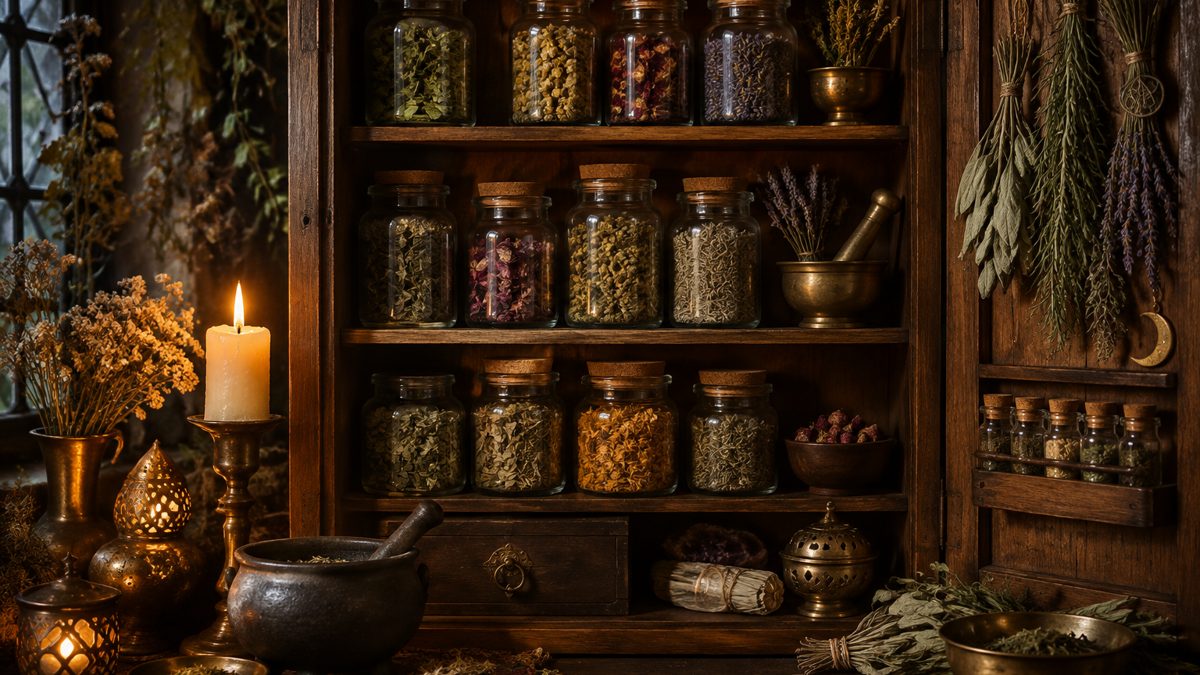
4. Build a small, well-organized herb cupboard
Store fully dried herbs in clean, dry, tightly closing containers away from sunlight, heat, and moisture. A cupboard is usually better than a windowsill or the shelf directly above a stove. Clear jars are convenient for inspection, but they still belong out of strong light. Check supplies periodically, and replace anything that shows deterioration. Older herbs may lose their scent, though age alone is not the only safety consideration.
Keep edible supplies separate from craft ingredients. Once herbs have touched candle wax, fragrance products, floor-cleaning tools, unknown decorations, or a non-food-safe vessel, they do not return to the kitchen. I use different spoons and containers for food and ritual crafts. This is especially important if a jar looks like an ordinary spice jar but contains something intended only for display.
قد تضم مجموعة المبتدئ المفيدة إكليل الجبل والغار والنعناع والزعتر الطهوية الصالحة للطعام، إضافةً إلى اللافندر أو بتلات الورد فقط إذا كانت هويتها وبيانات استخدامها المقصود واضحة. فالزهور التي يبيعها بائعو الزهور ليست صالحة تلقائيًا للطعام أو الاستحمام. اختر المكونات لاستخدامات مخططة فعلًا بدل جمع كل نبات مذكور في كتاب. فثلاث أعشاب مألوفة تُستخدم بتأنٍّ خير من ثلاثين برطمانًا لا تستطيع تحديدها بثقة.
Keep a simple notebook beside your supplies. Record what you used, its source, the symbolic association you chose, and any practical observations. “The sachet shed dust” is useful. So is “I disliked this scent.” If you record dreams or draw a divination card, describe the interpretation as reflection, not evidence that an herb caused an event or revealed another person’s intentions.
5. Make sachets and charm bags with clear intentions
A sachet is a small fabric container for dried material; a charm bag gives that object an explicitly symbolic purpose. I like them because they can be simple, portable, and free of flame. Choose a tightly woven pouch that will not readily shed dust. Avoid powdered herbs, sharp stems, and long dangling cords. Even a securely closed pouch must stay out of reach of children and pets.
لتعويذة منزلية بسيطة، استخدم رشّة من إكليل الجبل المجفف وقطعة صغيرة من الورق مكتوبًا عليها عبارة مثل «ليتني أمارس حدودًا واضحة ومدروسة». يمكن إضافة الغار اختياريًا إن كان له معنى عندك، لكن عشبة واحدة تكفي. تعبّر الصياغة عن أمل والتزام؛ فهي لا تقيم حاجزًا خارقًا للطبيعة ولا تغني عن الأقفال والإنذارات وغيرها من وسائل الحماية العملية.
أمسك الكيس المغلق لحظة وتأمل الفعل المرتبط بالأمنية. ربما تتوقف عن الرد على رسائل العمل أثناء العشاء، أو تجعل مدخل منزلك أيسر في المرور. ضع التميمة في مكان مناسب بعيد عن الأيدي والمخالب الفضولية، لا في الفراش ولا على الجلد مباشرة. ولا تدسّ تمائم نباتية سائبة في مهد طفل أو فراش حيوان أليف أو في أغراض شخص آخر دون موافقته.
Check the bag occasionally for moisture, broken seams, insects, and irritating dust. Retire it whenever it no longer serves a purpose; there is no mandatory magical expiry date. Dispose of the contents according to their materials and local waste guidance. Keeping herbs, paper, and fabric separate at the beginning makes this easier. You do not need to bury a charm or leave it outdoors to complete the practice.
- Choose one intention and write it in a single sentence.
- أضف قرصة صغيرة من عشبة مجففة مألوفة محددة بدقة إلى كيس قماشي سليم.
- أدرج نيّتك المكتوبة، وأغلق الكيس بإحكام، واربطه بفعل عملي واحد.
- ضعه بأمان، ثم افحص حالته بين حين وآخر.
6. Prepare ritual baths without treating the tub like a cauldron
يمكن أن يكون الحمام الطقسي استحمامًا عاديًا يصاحبه نيّة مختارة. والأعشاب اختيارية. بل إن وضع برطمان أعشاب مغلق بأمان على رف خارج منطقة الرذاذ هو أقل الطرق تعرّضًا لإدخال رمزيتها. وإن كان جلدك حساسًا، أو لديك حساسية، أو جلد متضرر، أو حالة صحية ذات صلة، أو شككت في مكوّن ما، فاختر الماء العادي بدل تجربة مستحضر عشبي.
إذا اخترت التلامس النباتي، فاستخدم فقط مكونًا محددًا بدقة تتحمله أصلًا وتدعم إرشادات موثوقة استخدامه موضعيًا. فكونه صالحًا للطعام وحده لا يثبت أمانه على الجلد. وقد يكشف اختبار على مساحة صغيرة عن تهيّج، لكنه لا يضمن أن الحمّام الكامل سيكون آمنًا ولا ينفي حساسية لاحقة. ولا تضف السذاب ولا الشيح ولا الزيوت العطرية ولا خلائط مجهولة ولا مستخلصات مركزة.
A strained, cooled infusion avoids the loose leaves that cling to skin and clog drains. Prepare a weak infusion with the chosen suitable herb in a separate clean vessel, strain it carefully through fine cloth, and add only a modest amount to comfortably warm water. Make it fresh and discard leftovers. Do not use boiling water in the bath, and stop immediately if you notice burning, itching, dizziness, or breathing discomfort.
Keep candles away from the tub, avoid glass vessels on slippery edges, and remember that plant residue or added products can make surfaces slippery. Never add oils as a default ritual ingredient. I prefer to mark the beginning with a spoken sentence and the ending by rinsing, drying, and putting on clean clothes. A shower with a symbolic herb kept outside the water works just as well for this purpose.
7. استخدم غسول الأرضيات بوصفه رعاية منزلية رمزية
Floor washing has a place in several distinct folk and spiritual traditions, with different materials, prayers, and directions of movement. My personal version is simply ordinary cleaning paired with deliberate reflection. Some practitioners move toward a door when symbolically releasing something, or inward when welcoming something. Those directions are conventions within a practice, not universal laws you must obey.
Clean according to the flooring manufacturer’s instructions first. An herbal infusion is not a disinfectant, and it may stain surfaces, leave residue, or damage finishes. Wood, unsealed stone, and specialty flooring can be particularly unforgiving. The safest adaptation is to use your usual compatible cleaning method while keeping the herbs in a closed jar nearby. You retain the symbolism without adding an uncertain substance to the floor.
If the surface guidance permits a particular water-based preparation and you still wish to use one, make it weak, strain it thoroughly, and test an inconspicuous spot. Avoid loose leaves and oils. Never mix homemade washes with bleach, ammonia, or other cleaning products, and do not assume vinegar is suitable for every surface. Keep people and animals away until the floor is dry and any required rinsing is complete.
As I clean, I name the ordinary task behind the ritual: making a room usable, removing tracked-in dirt, or creating a clear entrance. That language prevents “cleansing” from becoming a claim that unseen danger has been objectively removed. Dispose of wash water appropriately for its contents and local guidance, not into a stream or garden as a ceremonial offering. Responsible cleanup is part of the practice.
8. Approach incense and smoke cleansing with restraint
Smoke cleansing is a broad description for practices that use smoke symbolically; it should not erase the specific names, histories, or restrictions of particular ceremonies. I describe a personal household practice plainly rather than borrowing a culturally specific title. Herbs do not need to be burned to be meaningful, and smoke does not disinfect a room or demonstrate that an unwanted presence existed.
All smoke introduces particles and combustion products into the air. Good ventilation does not make exposure harmless. Avoid indoor burning around children, pregnant people, anyone with asthma or other respiratory sensitivities, and animals; birds are especially vulnerable. If you share a home, ask the other occupants before using fragrance or smoke. Their comfort and consent matter more than finishing your planned ritual.
For beginners, I recommend a smoke-free substitute rather than loose herbs on charcoal. Charcoal brings additional heat and carbon monoxide concerns. Do not burn unknown plants, treated decorations, poisonous herbs, essential oils, or kitchen mixtures simply because a recipe calls them “cleansing.” If you use a product intended for incense, follow its directions, use a stable heat-resistant holder and protective surface, and keep it clear of anything combustible.
Never leave burning material unattended, carry smoldering herbs through cramped rooms, disable smoke alarms, or put warm ash into the bin. Extinguish everything fully and confirm it is cold. My favorite substitute is to open a window when conditions allow, tidy a small area, and ring a bell or read an intention. You can also simply sit with a labeled, closed herb jar and let the plant’s meaning be enough.
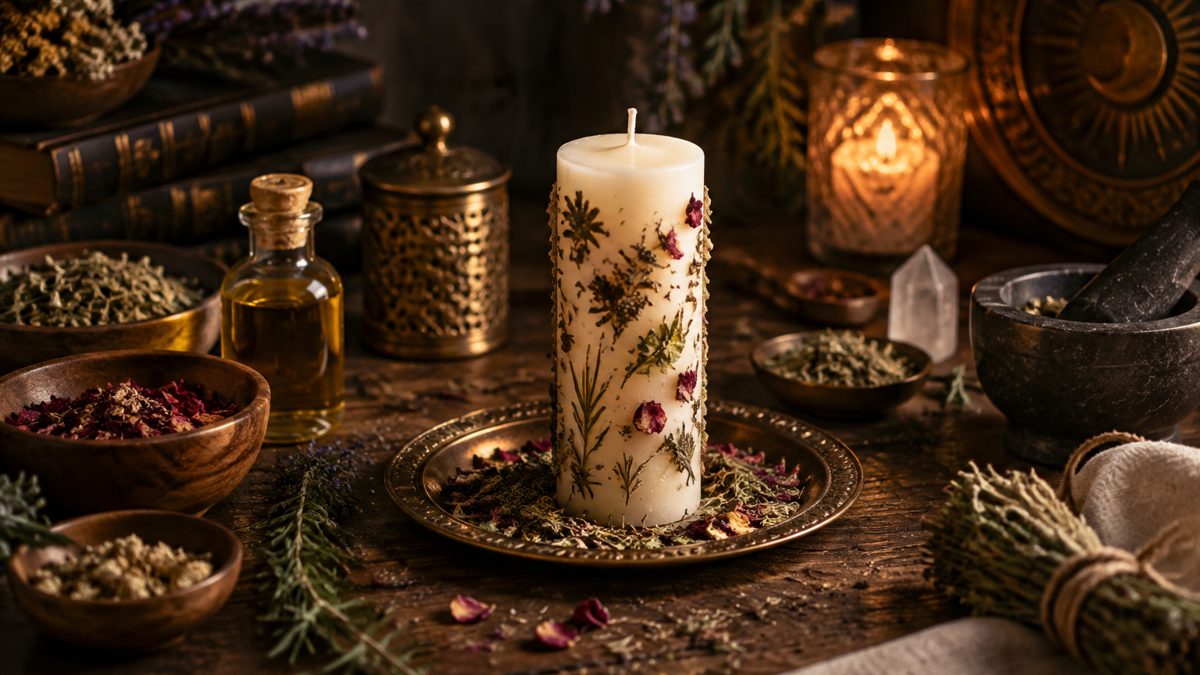
9. Dress a candle ritual without adding a fire hazard
Herbal candle dressing often means coating a candle with oil and rolling it in dried plant material. I do not recommend that method. Dried herbs can ignite, act as additional wicks, and produce unpredictable flames. Plant fragments dropped into melted wax can also become fuel. A candle sold with decorative botanicals is not automatically safe just because it was commercially made.
Instead, dress the ritual setting rather than the candle itself. Use a plain candle in a suitable holder on a stable, heat-resistant surface, following the manufacturer’s instructions and clearances. Keep the herbs in a separate closed container well away from the flame and heat. Do not make a ring of dried leaves around the holder, scatter petals on the candle plate, or place a paper petition beneath a hot vessel.
وتجعل شمعة LED بلا لهب الأمر أسهل. ضعها بجانب برطمان أعشاب ونيّة مكتوبة، مع تأمين البطاريات بعيدًا عن الأطفال والحيوانات الأليفة. هذا هو ترتيبي المفضل حين يتضمن الطقس النظر إلى الداخل أو إغلاق عيني أو الكتابة لبعض الوقت. فالانتباه يشرد بطبيعته أثناء العمل التأملي، وهذا بالضبط ما يجعل اللهب المكشوف غير ضروري.
If you choose a real candle, remain present, keep it clear of drafts and anything combustible, and extinguish it before leaving or becoming sleepy. There is no need to let it burn down completely. Ending a ritual early for safety does not spoil its symbolic purpose. Nor should a flickering flame or cracked container be interpreted as proof of a message; address the physical hazard first.
10. Assemble a dry protection jar and plan its retirement
A protection jar can be a visual reminder of the boundaries and habits you want to maintain. For this guide, keep it dry and uncomplicated: a small, clean container, a pinch of rosemary, an optional bay leaf, and a folded note. You might write, “This home is a place where I practice care and clear limits.” These ingredients express a belief or intention; they do not provide a guaranteed protective effect.
Avoid adding bodily fluids, fresh plants, food scraps, liquids, sharp objects, or unidentified minerals. Wet organic mixtures can spoil, grow mold, or ferment and build pressure in a sealed container. Nails, needles, and broken glass create handling and disposal hazards without being necessary to the symbolism. There is also no reason to seal the lid with hot wax; an ordinary secure closure is sufficient.
Place the jar where it will not fall, overheat, or attract a child or pet. A nonbreakable container may be the better choice in a busy household. Pair the ritual with a concrete check: is the doorway clear, are important contacts easy to find, and have you communicated the boundary you wrote down? The jar can remind you to act, but it cannot take those actions for you.
Decide at the beginning how you will retire the object. You can empty it into appropriate household waste and clean the reusable container. Compost only suitable, uncontaminated plant material if your compost system accepts it; remove paper, string, salt, and other additions as needed. Do not bury jars, leave them in public places, or throw them into water. A quiet ending at home is entirely sufficient.
11. Bring herbal symbolism into everyday cooking
سحر المطبخ هو المكان الذي يبدو فيه الطقس العشبي أكثر طبيعية بالنسبة لي. وقد يكون متواضعًا كإضافة إكليل الجبل إلى خضار مشوية وأنت تفكر في الأشخاص الذين ترجو استقبالهم، أو تحريك النعناع في وصفة مألوفة علامةً على فصل جديد. والطبقة الرمزية لا تغيّر الخصائص الفيزيائية للطعام، ولا ينبغي أن تستلزم مقدارًا غير آمن من أي مكوّن.
Use only correctly identified, food-grade herbs in ordinary culinary quantities and recipes appropriate to them. Follow normal food hygiene, storage, and temperature guidance. Do not cook with herbs taken from charm bags, incense supplies, bath mixtures, or decorative bouquets. “Natural” is not a food-safety category, and a plant’s association with abundance or love does not establish that it belongs in dinner.
احترم كل من يتناول الوجبة. تحقق من الحساسية والتفضيلات والقيود الغذائية ذات الصلة، وكن شفافًا بشأن المكونات. أزل أوراق الغار الكاملة قبل التقديم لأن حوافها الصلبة قد تشكل خطر اختناق أو إصابة. ولا تضف أعشابًا سرًّا ولا تقدّم طبقًا مشتركًا على أنه تعويذة مصممة لتجاوز موافقة أحد. فالضيافة أساس أسلم بكثير من محاولة التحكم في مشاعر ضيف.
Avoid improvising shelf-stable herb-infused oils, particularly with fresh herbs or garlic; improperly prepared and stored oils can present a botulism risk. Use a tested food-safety recipe and its exact storage instructions, or choose a simpler dish. My favorite kitchen ritual needs no preserved preparation at all: cook something familiar, pause before serving, and name one thing you appreciate about the work that brought the food to the table.
12. Try a simple threshold ritual, then reflect
إليك طقسًا خاليًا من الدخان واللهب يجمع ما ورد في هذا الدليل. غايته أن يحدد بداية جديدة في البيت، لا أن يضمن الحماية أو يزيل تهديدًا روحيًا ثابتًا موضوعيًا. ستحتاج إلى برطمان صغير معنون من إكليل الجبل الطهوي المجفف، وقطعة ورق، وقلم، وقطعة قماش مناسبة لتنظيف مدخل بابك. أبقِ العشبة في برطمانها المغلق طوال الوقت.
Choose a time when you can work without rushing. If the doorway is shared, respect other people’s access and belongings. Begin with the ordinary task of clearing clutter and wiping the appropriate surface according to its care instructions. You are not making the entrance ritually perfect. You are giving a small, useful job your full attention and allowing it to represent something larger.
When the steps are finished, spend a few minutes writing about the experience. Did the process help you clarify what “welcome” or “boundary” means to you? Was there a practical task you had been avoiding? These observations are more useful than searching for signs that the ritual worked. If you use divination afterward, treat the result as a prompt for reflection rather than an instruction or factual prediction.
That is the kind of herbal witchcraft I hope to make room for at Crossroads Journal: curious, personal, grounded, and willing to be simple. You may eventually explore a particular regional or family tradition in greater depth, with careful sources and appropriate teachers. For now, one familiar herb and one honestly chosen action are enough. Let the ritual support the life you actually live.
- أخلِ المدخل دون سدّ المخارج، ونظّف سطحًا مناسبًا بالطريقة الموصى بها له.
- Set the closed rosemary jar on a stable surface away from the doorway’s traffic, children, and pets.
- Write one intention, such as “I will make room for welcome while respecting my limits.”
- اقرأ الجملة بصوت عالٍ أو بصمت. تأمّل معنى إكليل الجبل في ممارستك دون التعامل مع هذا الارتباط على أنه أثر موعود.
- Choose one achievable action that expresses the intention: put away shoes, establish a visiting preference, or make space for a guest’s coat.
- أتمم الفعل، وضع الجرّة في مكان آمن، واحتفظ بالورقة أو أعد تدويرها كما تشاء. وبذلك ينتهي الطقس.
These practices are shared as tradition and personal reflection, not as a substitute for medical, legal or financial advice.
واصل التعلّم
- Herbs in witchcraft
- How to read tarot cards
- How to use angel oracle cards
- كيف تقرأ أوراق اللعب
- كيف تستخدم البلّورات في التعويذات
- كيف تستخدم الأعشاب في السحر
- How to read the Dr. Moorne Egyptian Tarot
- How to read dice
- How to read tea leaves
- كيف تستخدم البندول
- كيف تلقي تعويذة بالشموع
- How to make a spell jar
- How to make a sigil
- How to cleanse your home
- How to set up an ancestor altar
- How to open a sacred space
- How to time spells with the moon
- How to work with water and salt
- How to make a protection charm bag
- Read the Journal or visit the shops