How-To Guide
كيف تصنع كيس تميمة للحماية
بقلم Seraphina
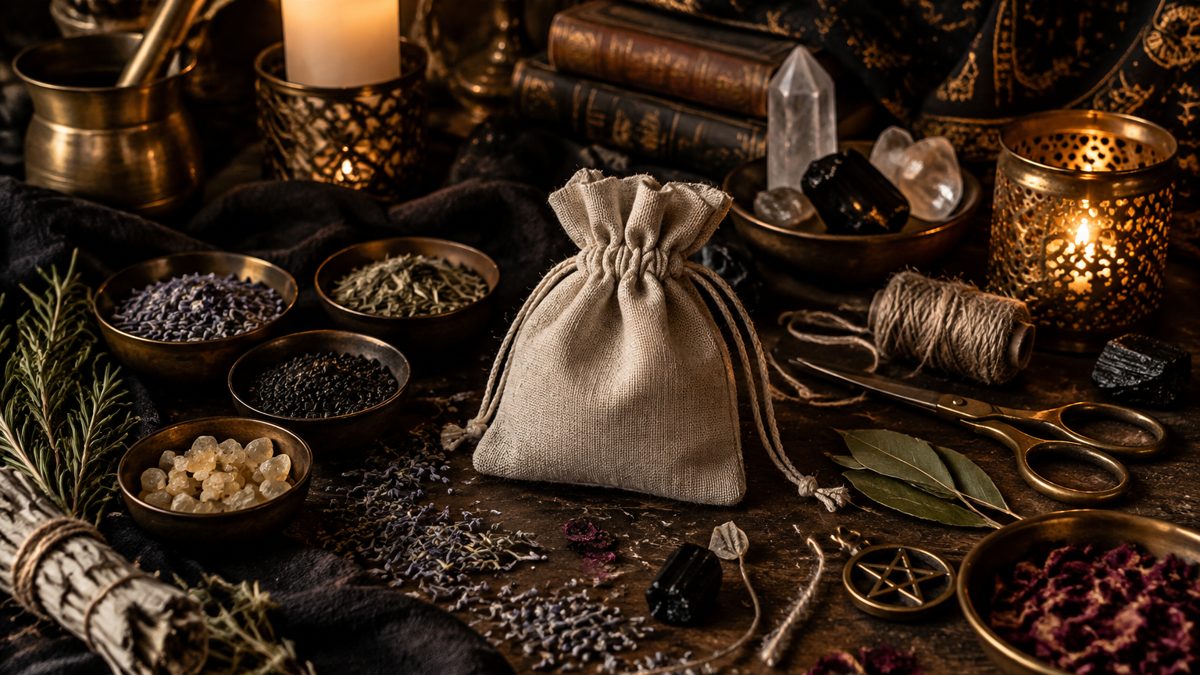
A protection charm bag is a small pouch filled with objects chosen to represent safety, steadiness, boundaries, or care. In different folk and spiritual practices, people carry such bundles, place them near entrances, or keep them among personal belongings. You can approach yours as a spiritual working, a meaningful craft, or a physical reminder of a promise to look after yourself. None of these approaches requires expensive materials or elaborate performance.
The most useful place to begin is with an ordinary question: what does protection mean in your life right now? Perhaps you want to stop answering work messages after dinner, feel more settled during your commute, or remember to check your door before bed. A clear answer gives the bag a purpose. Rather than asking it to prevent every possible difficulty, let it stand for a manageable intention supported by practical action.
This guide explores historical context, ingredient choices, preparation, assembly, and ongoing care. It also includes a complete beginner-friendly example, ways to reflect on your experience without treating coincidence as proof, and advice for adapting the project around allergies, pets, children, and shared spaces. For alternative combinations after you understand the method, use the companion reference page, Charm Bag Recipes.
Throughout, protection magic is presented as tradition, belief, and personal practice, not as a proven way to prevent injury, illness, theft, or abuse. A charm bag cannot replace medical treatment, secure locks, emergency planning, or help from trusted people. Its value may lie in the comfort, attention, and sense of agency you bring to making and using it.
Looking for the meaning of a single card or ingredient? Keep our وصفات أكياس التمائم guide open beside you.
1. Understand the tradition before choosing your approach
People in many places have worn or carried protective objects: inscribed amulets, devotional medals, knotted cords, sewn packets, and bundles containing plants or written words. Their meanings depend on particular communities, religions, and historical circumstances. Similar shapes do not establish a single origin, and a modern drawstring pouch should not be presented as the unchanged descendant of every older protective practice.
Some named traditions have specific cultural settings. Mojo bags, for example, belong to African American hoodoo and should not be treated as a generic label for any herb-filled pouch. Other devotional packets and amulets may involve prayers, preparation methods, or relationships with teachers that a general craft guide cannot reproduce. Learn from reliable sources and practitioners within a tradition when seeking that tradition specifically.
European folk practices also vary considerably by region, period, and household. Red thread, salt, iron, plants, and protective prayers appear in different settings, but their presence does not make every combination authentically Slavic, Irish, or Mediterranean. If you draw on family customs, describe what you actually know. A remembered household practice is meaningful without needing an invented ancient pedigree.
For this guide, protection charm bag means a contemporary personal pouch made with openly available materials and your own intention. That modest description leaves room for spirituality without borrowing authority. You can honor a family tradition where appropriate, or simply make something new and acknowledge it as your own.
2. Define what you want the bag to represent
الحماية كلمة واسعة، فضيّقها قبل جمع المكونات. يمكنك اختيار حدود عاطفية، أو عودة أهدأ إلى البيت، أو انتباه أكبر أثناء السفر، أو ثباتًا خلال الحوارات الصعبة. وتجنّب الأهداف التي تعتمد على التحكم في شخص آخر. فكيس يُقصد به تذكيرك بترك تبادل غير صحي أكثر رسوخًا من كيس يُقصد به جعل أحد يطيع.
Write your purpose in plain language, preferably as one short sentence. For example: I protect my rest by putting my phone away at nine. Another possibility is: I move through my day with attention and seek help when needed. The sentence does not need to sound mystical. It needs to make sense when you read it on an ordinary, tiring afternoon.
Next, name one practical action that supports the intention. For a home-focused bag, this could be checking smoke alarms or repairing a faulty latch. For a work-boundary bag, it could be turning off notifications. For travel, it could be keeping emergency contacts accessible. The charm can mark your commitment, but the action does the practical protective work.
Keep the scope compassionate. You are not promising to remain calm forever or prevent all hardship. A useful intention allows for mistakes, changing circumstances, and support from others. If your wording makes you feel responsible for every bad thing that might happen, rewrite it until it supports you rather than placing another burden on you.
- 1. Name one area of life where you want more steadiness or clearer boundaries.
- 2. Write a short intention focused on your own choices rather than another person's behavior.
- 3. Pair the intention with one realistic safety measure or supportive habit.
3. Gather a small, sensible set of materials
You need a clean, dry fabric pouch, a small piece of paper, a pen, and two or three optional symbolic contents. A pouch roughly the size of your palm is usually sufficient. Cotton or linen is easy to handle, while tightly woven fabric contains loose material better than open mesh. An existing jewelry pouch is perfectly acceptable if it is sound and clean.
If you prefer to sew, gather two small fabric pieces, thread, a needle, and scissors. A drawstring or ribbon closure lets you inspect the contents later. A sewn closure may feel more permanent, but it makes maintenance less convenient. Neither method is inherently more powerful; choose according to your dexterity, available supplies, and how you intend to use the bag.
Possible contents include a little dried rosemary, one intact bay leaf, a short length of thread, or a smooth stone you already own. Each item is optional. A paper intention alone can be enough, especially in a household where herbs, small objects, or scents present problems. Avoid buying a large collection before discovering what is actually comfortable to carry.
Use clean tools and a tray or plate to contain spills. If you include loose herbs, a folded paper packet or small inner pouch can reduce leakage. Keep needles, scissors, threads, and tiny contents away from children and animals during assembly. Gather only what you can store and dispose of responsibly afterward.
4. Choose ingredients for meaning, not promised effects
Ingredient correspondences are symbolic associations, not established physical powers. Rosemary is linked with remembrance and protection in some folk and contemporary magical practices; bay is often associated with honor, achievement, or protective intention. Those meanings are neither universal nor mandatory. You may choose a plant because it recalls a safe family kitchen rather than because a correspondence list assigns it a role.
ينطبق الأمر نفسه على اللون. فقد يوحي الأحمر بالحيوية أو بحدّ وقائي، وقد يستحضر الأزرق الهدوء، وقد يبدو القماش غير المصبوغ بسيطًا ومتأصلًا. وتسند الثقافات المختلفة معاني مختلفة للألوان نفسها. اختر ارتباطًا تفهمه، ولا تقلق إن كان الكيس المتاح لديك بدرجة لون خاطئة وفق نظام شخص آخر.
A stone can represent stability without being rare, expensive, or sold as a crystal. Use a small, smooth, sturdy pebble from a place where collecting is permitted, or one already in your possession. Avoid sharp fragments, friable minerals, and unidentified stones with dusty surfaces. Wash an ordinary washable pebble if needed and let it dry completely before enclosing it.
Salt appears in many protective customs, but it is optional and can complicate a portable bag. It may absorb moisture, escape through fabric, or affect nearby metal. A white thread or written word can represent clarity without loose salt. Do not pour salty contents or salt water onto soil or plants; excess salt can harm them.
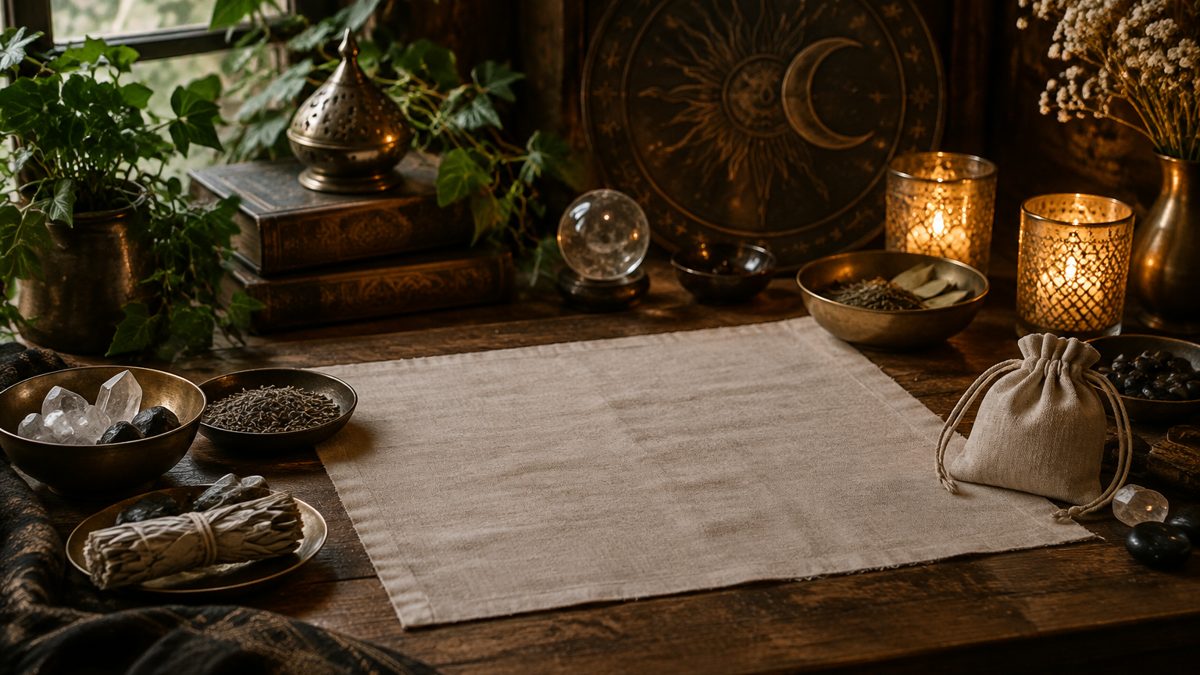
5. جهّز مكانك دون دخان أو لهب غير ضروريين
Preparation can be as simple as clearing a table, washing your hands, and setting out the materials. The purpose is to give yourself enough room and attention to work safely. You do not need to wait for a particular moon phase, purchase a cleansing product, or achieve an unusually peaceful mood before beginning.
If a symbolic clearing helps, open a window when weather and air quality permit, wipe the work surface, or ring a small bell if sound will not disturb anyone. You can also spend a minute looking at the empty pouch and deciding what it will represent. These are ways of marking a transition, not necessary techniques for removing a demonstrable invisible hazard.
Smoke-free preparation is especially sensible around asthma, migraines, birds, and other sensitive animals. Incense and essential oils are not harmless simply because they are natural. Avoid spraying or oiling the pouch: oils can irritate skin, stain fabric, and create exposure risks for pets. Plain, dry materials are generally easier to manage.
A candle is unnecessary. If you choose one as part of your personal practice, keep it in a stable holder on a fire-resistant surface, away from fabric, paper, herbs, and drafts. Never pass the finished bag through flame or leave a burning candle unattended. A battery-operated light offers a much simpler alternative.
- 1. Clear and clean a well-lit work surface.
- 2. Set out only the materials you intend to use, keeping drinks away from dry ingredients.
- 3. Pause briefly, read your intention, and begin when you feel ready.
6. Make or inspect the pouch
Before filling a ready-made pouch, examine the seams, fabric, and closure. Pull gently at the sides to check for gaps. If the weave allows herbs to fall through, use an inner paper packet or choose larger, non-shedding contents. A bag that leaks into your coat or bedding will quickly become an annoyance rather than a reassuring object.
لصنع كيس مخيط بسيط، قصّ مستطيلين من قماش محكم النسج، قياس كل منهما نحو عشرة سنتيمترات في اثني عشر. وهذه القياسات مجرد نقطة بداية. ضع الوجهين اللذين تريدهما في الخارج متقابلين، ثم اخِط الجانبين والقاع، تاركًا الأعلى مفتوحًا. استخدم غرزًا صغيرة محكمة تناسب القماش.
Turn the pouch right side out and check the corners. Fold the raw top edge inward and stitch it down for a neater opening, taking care not to sew the opening shut. You can gather the top with a short ribbon rather than constructing a drawstring channel. Leave enough room above the contents to close it comfortably.
If sewing is uncomfortable or inaccessible, use a purchased pouch or wrap a square of fabric around the contents and tie the gathered corners securely. A charm bag does not become more meaningful because it was difficult to make. Adapt the task to your hands, vision, energy, and available help.
- 1. Inspect a ready-made pouch, or sew the sides and bottom of two fabric rectangles.
- 2. Finish any rough edges and check for openings where contents could escape.
- 3. Test the closure while the pouch is empty, then reopen it for filling.
7. Write the intention and assemble the contents
Now write your chosen intention on a small piece of paper. Include the practical action if it fits comfortably. You do not need a special alphabet, seal, or borrowed sacred symbol. If privacy matters, use a short phrase you understand rather than recording sensitive names, addresses, or details someone might read if the bag is lost.
اطوِ الورقة حتى تتسع دون أن تضغط على الكيس فتشوّه شكله. بعض الممارسات الشخصية تُسند معنى للطي نحو الجسد أو بعيدًا عنه، لكن لا اتجاه مطلوبًا هنا. يمكنك الطي نحوك رمزًا لاستقبال الثبات، أو الطي بترتيب فحسب. فالاتساق مع غايتك أهم من تقليد قاعدة غير مشروحة.
Add the remaining contents one at a time. Name each item's meaning silently or aloud: rosemary for remembering my boundary, thread for keeping that boundary clear, stone for pausing before reacting. These statements are personal interpretations. You are not testing whether an ingredient emits protection or trying to achieve a special sensation.
استخدم حشوًا أقل مما تظن أنك تحتاج. فالكيس المحشو بخفة يُغلق بإحكام أكبر ويسهل فحصه. أبقِ الأوراق المجففة في كيس داخلي إن كانت تتفتت، وتجنّب وضع حجر ثقيل مباشرة على مادة نباتية هشة. وقبل الإغلاق، افحص وجود سيقان حادة أو رطوبة أو حصى سائبة أو أي شيء قد يعلق بالقماش.
- 1. اكتب نيتك واطوها، ثم ضعها داخل الكيس.
- 2. أضف كمية صغيرة من كل مكوّن جاف اخترته، مع ذكر معناه الشخصي إن رغبت.
- 3. رتّب المحتويات بحيث يبقى الكيس ليّنًا مدمجًا سهل الإغلاق.
- 4. Remove any sharp, dusty, damp, or unnecessary material.
8. Close the bag and mark its beginning
Draw the pouch closed or gather its neck with ribbon. Tie a secure knot that can be opened for maintenance. Some traditions give numbers and knots particular meanings, but you do not need a prescribed number of turns. Avoid leaving long dangling cords, especially if the bag will be carried near machinery or kept where animals might investigate.
Hold the closed bag comfortably and read your intention once. You might say: This bag reminds me to respect my limits and take sensible care. If prayer belongs to your religious practice, use a prayer appropriate to that practice. Silence is also a complete option. There is no required script or emotional intensity.
Some practitioners call this stage charging, blessing, or dedicating the charm. Here, dedication is a useful term: you are assigning the object a purpose through attention and meaning. People may understand that spiritually, but the process does not demonstrate a supernatural change. Nothing has gone wrong if the bag feels like ordinary fabric in your hand.
اختم بفعل عملي صغير واحد مرتبط بالنيّة. اضبط ساعات الهدوء في هاتفك، أو ضع جهات اتصال الطوارئ في مكان يسهل الوصول إليه، أو افحص إغلاق حقيبتك اليومية. فربط الصنعة بفعل يمنح الطقس نهاية واضحة ويساعد على منع محاولات متكررة لجعله يبدو مثاليًا.
- 1. أغلق الكيس بإحكام دون سحقه أو حشوه بإفراط.
- 2. Read your intention or offer a personally appropriate prayer.
- 3. Take the practical action you chose, then put away your tools and spare ingredients.
9. Worked example: a bag for protecting evening rest
For a straightforward first project, make a charm bag representing the boundary between work and rest. Gather a small cotton pouch, a piece of paper, a pen, one intact dried bay leaf, and a short blue thread. These are modest household materials, and you can replace the leaf with a paper drawing if plant material is unsuitable.
Write: My evening belongs to rest; I check work messages tomorrow. Choose this wording only if it fits your responsibilities; someone with on-call duties will need a different boundary. The bay leaf can represent your chosen commitment, while blue thread can represent calm. These are the meanings of this example, not universal instructions.
اطوِ الملاحظة حول الورقة برفق دون محاولة صنع رزمة محكمة. ضعها في الكيس مع الخيط القصير وأغلق الكيس. أمسكه لحظة وأنت تقرر متى ستتوقف إشعارات العمل. ثم اضبط هذا الإعداد على جهازك، أو اتفق على نافذة واقعية للتحقق إن تعذّر تعطيل الإشعارات.
Keep the bag in a desk drawer or another dry, secure place associated with ending work. At the transition into evening, look at it or briefly hold it before putting the phone away. Review after a week: did the reminder help you follow your plan? If not, adjust the routine rather than assuming the ingredients were spiritually inadequate.
- 1. Set out the pouch, note paper, dried bay leaf, and short blue thread.
- 2. Write a realistic rest-boundary intention and place it in the bag with the other contents.
- 3. Close the bag and set the corresponding notification schedule or checking window.
- 4. Use the bag as a brief end-of-work cue for one week before reviewing the habit.
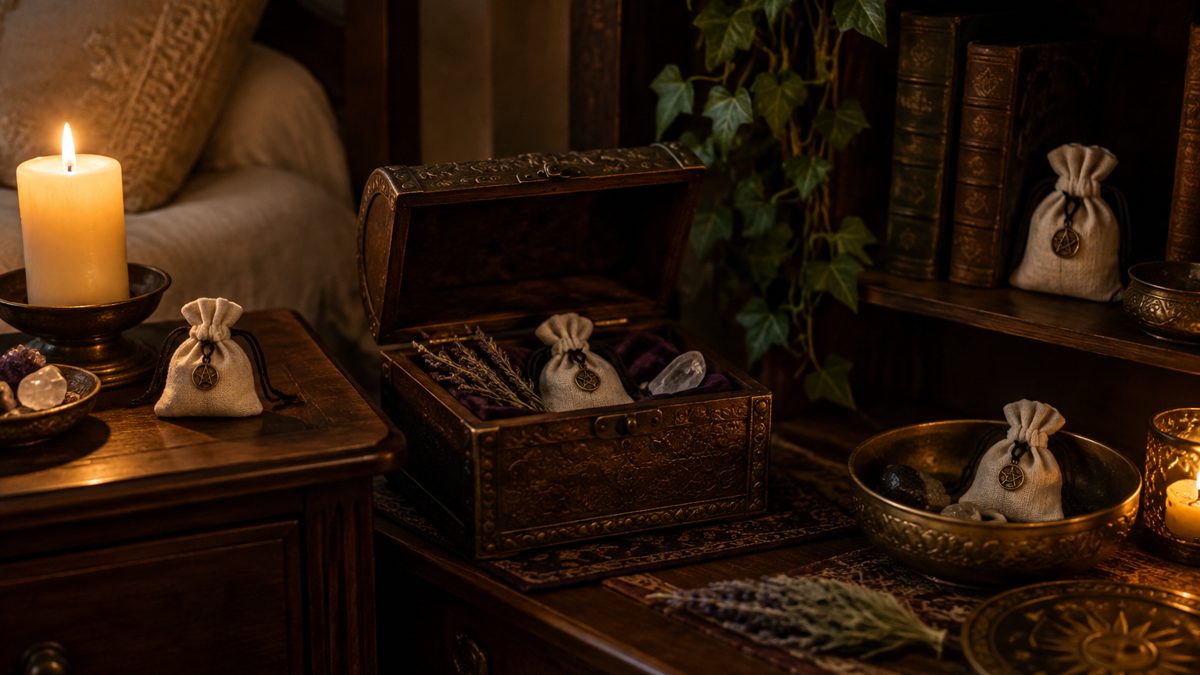
10. Decide where to keep it and how to care for it
Choose a location based on the purpose and the materials. A small pouch might sit in an inside coat pocket, a zipped bag compartment, or a dry drawer near the entrance. It should not obstruct a lock, conceal a safety device, block a doorway, or interfere with vehicle controls. Avoid dangling it from a driver's mirror.
لا تعلّق كيسًا بحبال في سرير الطفل أو عربته أو مكان نومه. وأبعد الأحجار الصغيرة والأعشاب والخيوط عن متناول الأطفال والحيوانات الأليفة. أما تعليق الكيس حول العنق فيعرّض لخطر الحبل والانشباك؛ ولكثير من الناس يكون حمله في جيب مأمون خيارًا أنسب.
Inspect it periodically and after rain, spills, or heavy use. Look for broken seams, dampness, mold, insects, and persistent unpleasant odors. Do not deliberately sniff suspected mold closely. If contents become wet, remove them promptly and discard spoiled material. Clean the pouch according to the fabric's care needs and let it dry fully before reuse.
There is no universal replacement schedule. Dry, intact contents may remain usable for a long time, while a frequently carried pouch may need attention sooner. Refresh it when the materials deteriorate or the intention changes, not because a seller or online rule insists protection expires on a fixed date.
11. Interpret your experience without turning it into a test
After making the bag, you may feel comforted, focused, indifferent, or disappointed. None of these reactions proves whether supernatural protection exists or whether you performed the procedure correctly. Familiar objects and deliberate routines can be meaningful without producing dramatic sensations. Give yourself permission to appreciate the craft at that ordinary level.
ابحث أولًا عن تغيرات يمكن ملاحظتها مرتبطة بأفعالك. هل تذكرت قفل الباب؟ هل توقفت قبل الرد على رسالة مزعجة؟ هل جعل طقس المساء إنهاء العمل أسهل؟ هذه الأسئلة أنفع من عدّ كل صدفة سارة دليلًا على أن الكيس غيّر الأحداث الخارجية.
An accident, argument, broken thread, or lost bag does not establish that someone has cursed you or that the charm absorbed an attack. Materials wear out, objects get misplaced, and difficult events happen. Address the actual problem first. Replace a damaged pouch if you wish, without treating the damage as a demand for escalating rituals or purchases.
Notice if the practice begins increasing anxiety. Repeated checking, constant rebuilding, or feeling unable to leave home without the bag may mean it is no longer serving you well. Step back, simplify, and seek support if fear is disrupting daily life. If there is a concrete threat, use appropriate safety planning and professional or emergency help.
12. Avoid common mistakes and keep the practice ethical
أشيع الأخطاء العملية هو التعقيد المفرط: مكونات كثيرة، وتعليمات متضاربة، والاعتقاد بأن غياب عنصر واحد يفسد كل شيء. ابدأ بورقة واضحة وبضعة محتويات يسهل التعامل معها. فالزهور الطازجة والفاكهة وغيرها من المواد الرطبة قد تتعفن داخل كيس مغلق. كما أن العطور القوية قد تجعل الغرض النهائي مزعجًا في حمله.
Never taste the contents or brew them into tea afterward. A decorative or ritual ingredient is not necessarily food-safe, and essential oils should not be added for casual ingestion. Use correctly identified materials from reliable sources; avoid toxic plants, unknown wild plants, animal remains, bodily fluids, and substances that could contaminate your belongings.
احصل على الموافقة قبل أن تهدي أحدًا تميمة، أو تضع واحدة في بيته، أو تضمّن مادة شخصية مرتبطة به. وينبغي أن ترافق الهدية قائمة بالمكونات دون ضغط للإيمان بها. وتجنّب الإيحاء بأن أحدًا مرض أو تعرض للإساءة أو أصابه سوء الحظ لأنه افتقر إلى حماية روحية. فالمسؤولية عن الأذى لا تقع على من تعرض له.
Retire the bag responsibly when you no longer want it. You can thank it as a personal gesture, then separate reusable fabric, clean stones, and waste. Do not leave it outdoors as litter or bury synthetic fabric, salt, glitter, or unknown minerals. Compost only suitable untreated plant material accepted by your composting setup; place other contents in appropriate household waste.
13. Keep a useful journal and adapt the next version
يجعل دفتر يوميات بسيط الممارسة أسهل فهمًا مع الوقت. سجّل التاريخ ونيّتك والمواد ومعانيها الشخصية والفعل الذي اقترن بالكيس. دوّن البدائل بصدق. فهذا يصنع سجلًا نافعًا دون أن تضطر إلى تذكر ما إذا كانت عشبة أو لون معين قد ظهر في نسخة سابقة.
خلال الأسبوع أو الأسبوعين القادمين، دوّن إدخالات موجزة عن الاستخدام بدل البحث عن علامات. يمكنك أن تسجل: رأيت الكيس، وراجعت طريقي، وخرجت أبكر. أو: نسيت الكيس لكنني احترمت حدّي المسائي مع ذلك. والإدخال الثاني مهم: فالهدف عادة داعمة، لا اعتماد على حمل غرض بإتقان.
عند المراجعة، اسأل ما الذي ساعد، وما الذي أزعجك، وما الذي يحتاج إلى تغيير. ربما كان الكيس ضخمًا، أو سبب العطر انزعاجًا، أو كانت النيّة واسعة جدًا. غيّر عنصرًا واحدًا في كل مرة عند الإمكان لتلاحظ أثره على سهولة الاستخدام. فأنت تصقل أداة شخصية، لا تجري إثباتًا لسببية خارقة.
لنسختك التالية، راجع «وصفات أكياس التمائم» للأفكار مع الاحتفاظ بالأساسيات نفسها: غاية واضحة، ومواد آمنة، وسياق محترم، وفعل عملي. وقد يكون أفضل كيس لك بسيطًا جدًا. ودعه يبقى تذكيرًا بأن الحماية تشمل أيضًا الراحة والدعم والاحتياطات المعقولة والإذن بتغيير رأيك.
- 1. Record the intention, contents, preparation date, and supporting habit.
- 2. دوّن ملاحظات قصيرة عن الاستخدام الفعلي والراحة والسلوك العملي.
- 3. Review after a week or two, keeping what helps and removing what does not.
- 4. Refresh, repurpose, or retire the bag when your needs change.
These practices are shared as tradition and personal reflection, not as a substitute for medical, legal or financial advice.
واصل التعلّم
- وصفات أكياس التمائم
- How to read tarot cards
- How to use angel oracle cards
- كيف تقرأ أوراق اللعب
- كيف تستخدم البلّورات في التعويذات
- كيف تستخدم الأعشاب في السحر
- How to read the Dr. Moorne Egyptian Tarot
- How to read dice
- How to read tea leaves
- كيف تستخدم البندول
- كيف تلقي تعويذة بالشموع
- How to make a spell jar
- How to make a sigil
- How to cleanse your home
- How to set up an ancestor altar
- How to open a sacred space
- How to time spells with the moon
- How to work with water and salt
- How to make a protection charm bag
- Read the Journal or visit the shops