How-To Guide
How to Read the Dr. Moorne Tarot
Von Seraphina
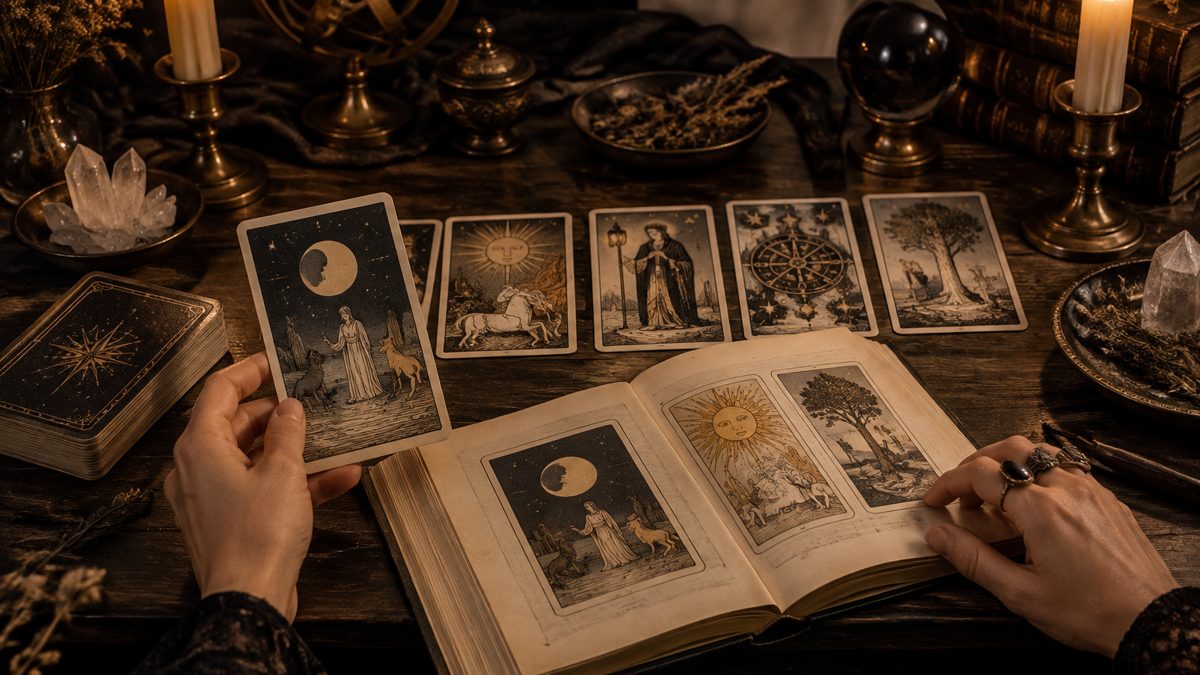
Das Dr.-Moorne-Tarot zu lesen heißt, eine Sprache der Beziehungen zwischen den Karten zu erlernen. Eine Karte liefert ein Thema, eine Person, einen Zustand oder ein Ereignis; ihre Ausrichtung verändert diese Bedeutung; ihre Nachbarn erklären, wer beteiligt ist, was das Ereignis auslöst und wie sich die Umstände entwickeln. Im ganzen Buch wird die Leserin oder der Leser von isolierten Stichworten weg und hin zu den Karten rund um die gerade untersuchte gelenkt.
This guide presents the book’s teaching as a system of cartomantic interpretation, not as established prediction. It follows the supplied numbering and meanings, including their unusual features and occasional tensions. Number 13 is Wedding or Union, Number 17 is Mortality, and Number 20 is Fortune. Familiar meanings from other tarot systems must not replace these.
The essential practice is straightforward: identify the consultant, preserve upright and reversed positions, record the first card actually drawn, and interpret the cards through the book’s specific combinations. Where a practical arrangement is needed below, a simple line of cards is used solely to apply the neighbour rules—not as a spread prescribed by Moorne.
Looking for the meaning of a single card or ingredient? Keep our Dr.-Moorne-Deck: jede Karte guide open beside you.
1. Learn the deck’s numbering before interpreting it
The book describes a deck of 78 cards. Its introduction presents them as hieroglyphs encompassing human actions and feelings, and explains upright and reversed meanings through its account of their adaptation into playing cards. For practical reading, the important consequence is that each numbered card carries several layers: names, upright meanings, reversed meanings, commentary, combinations, and symbolism.
The major cards are Numbers 1–21 and Number 78. Wands occupy Numbers 22–35; Cups, 36–49; Swords, 50–63; and Coins, 64–77. Learn the number alongside the playing-card identity. Number 27 is the Nine of Wands, “Delay or Tardiness”; Number 47 is the Three of Cups, “Success in Business”; Number 76 is the Two of Coins, “Obstacles,” or reversed, “Letter, Documents.”
Do not assume that symbolic titles are interchangeable with practical divinatory meanings. Number 77 reversed has the practical meaning “Fortune, Wealth,” although its symbolism section is headed “Despair.” Number 70 explicitly says its symbolism has nothing to do with its meanings and acceptations, and Number 78 makes a similar distinction. Read the practical entry and commentary before using the mythological explanation.
A useful working note therefore has four parts: number and name; orientation; ordinary meaning; applicable neighbour rule. This prevents an evocative title from overwhelming the more precise instructions.
- 1. Identify the card by Moorne’s number, not by an assumed equivalent in another deck.
- 2. Lies die aufrechte oder umgekehrte Definition, die zu ihrer Position passt.
- 3. Ziehe den Kommentar für Einschränkungen und Bedingungen zurate.
- 4. Durchsuche die Kombinationslisten der beteiligten Karten, bevor du die endgültige Deutung bildest.
2. Choose Number 1 or Number 8 as the consultant card
The consultant is the person for whom the reading is made, also called the querent. The book uses Number 1 for a male consultant and Number 8 for a female consultant. Number 53 states this distinction explicitly when explaining how to identify someone watching the consultant.
Number 1 represents King Thoth, Etteilla, the Genius, chaos, and the querent. Upright, its definitions include “Virtue, goodness, prudence, modesty”; reversed, they include “Wisdom,” talent, imagination, invention, observation, and research. Its representative role does not erase its own favourable character. The surrounding cards show whether the consultant can bring order and achievement into the small society around him.
Nummer 8 steht für die weibliche ratsuchende Person und behält zugleich aufrecht die Bedeutungen „Tugend“, Natur, Rückzug, Gelassenheit und Besinnung, umgekehrt „Sanftmut“, Güte und Aufmerksamkeit. Das Buch nennt ihre Bedeutung in sich völlig günstig, sagt aber, unheilvolle Nachbarn könnten die Aussichten schlecht machen. Die Umkehrung allein macht sie nicht zu einem schlechten Omen, auch wenn ihr Kommentar zugleich vor Schlingen warnt, die der ratsuchenden Person gelegt werden.
Für Nummer 8 gibt es eine besondere Platzierungsanweisung: Wenn sie unter den für eine Frau gezogenen Karten nicht erschienen ist, suche sie unter den beiseitegelegten Karten und lege sie „an den Anfang der ersten Reihe“. Der vorliegende Text enthält keine entsprechende Anweisung zum Heraussuchen für Nummer 1. Bewahre diese Unterscheidung, statt dem Buch ein symmetrisches Verfahren zuzuschreiben.
Neighbourhood to the consultant card makes certain interpretations personal. Number 33, “Enterprise,” is particularly good beside the representative card: an intelligent person of the opposite sex assists the consultant’s business prosperity. Number 53 beside Number 1 or 8 signifies a spy observing the consultant’s actions. Number 15 beside either representative card intensifies its adverse implications and describes an indolent or apathetic character.
Keep directional instructions intact. Number 13 says the consultant enters the marriage when the card representing that person appears to the right of Number 13. That is a specific positional rule, not permission to make every card on the right represent marriage or the future.
- 1. Identify Number 1 or Number 8 according to the book’s male/female distinction.
- 2. Wenn du für eine Frau legst und Nummer 8 fehlt, suche sie heraus und lege sie an den Anfang der ersten Reihe.
- 3. Keep the consultant card’s own meaning as well as its representative function.
- 4. Examine its immediate neighbours for personal help, influence, obstacles, or warnings.
3. Treat upright and reversed as separate instructions
Reversal does not mean a universal weakening, blockage, or opposite. Moorne assigns particular meanings to each orientation. Some cards improve when reversed, some worsen, and others remain favourable or unfavourable in both directions.
Number 6 illustrates a beneficial reversal. Upright, “The Night” describes mysteries, hidden intentions, and dark intrigues. Reversed, “The Day” signifies light, disclosure, and clarification: tangled affairs become clear, more quickly when favourable cards are nearby. Number 54 similarly changes from “Weeping, Separation” upright to “Prosperity, Advantage” reversed, including good business or promotion.
Other reversals change the subject. Number 10 upright concerns “Health, Temperance,” sobriety, conciliation, and domestic peace; reversed, it announces the intervention of a priest or religious minister. Number 45 upright concerns “Inheritance,” whereas reversed it identifies relatives and kinship. Number 44 upright supplies “The Past”; reversed, “The Future.”
Some reversals are strongly adverse. Number 13 changes from Wedding or Union to Frustrated Wedding, requiring adjacent cards to explain the rupture. Number 38 changes from Arrival to Deceits. Number 62 changes from Friendship to Falsehood. Number 76 changes from obstacles and agitation to letters or documents, often insidious contracts, anonymous letters, or judicial papers.
Others preserve their broad quality. Number 7 means Support upright and Protection reversed. Number 20 remains beneficial as Fortune or Advancement. Number 77 gives Happiness and Power upright, Fortune and Wealth reversed. Conversely, Numbers 14, 18, and 59 remain threatening in either orientation.
Lies den gesamten Eintrag, wenn Überschriften und Kommentar in verschiedene Richtungen weisen. Nummer 37 umgekehrt trägt die Überschrift „Glückliche Ehe“, doch ihre Stichwortliste in der Umkehrung enthält ungünstige Beschreibungen einer Frau; ihr Kommentar verheißt dennoch eine Ehe mit einer wohlhabenden oder gut situierten Person. Nummer 3 wird ausdrücklich als schwierig und von Nähe abhängig beschrieben. Presse solche Einträge nicht in eine Regel, nach der jede Umkehrung automatisch schlecht ist.
- 1. Record orientation immediately when revealing a card.
- 2. Use that card’s assigned reversed meaning rather than inventing a generic reversal.
- 3. Keep every orientation required by a combination: “Number 31 reversed” is not the same instruction as Number 31 upright.
- 4. Resolve the reading through commentary and named combinations, while preserving genuine differences within the text.
4. Record the first card actually drawn
The supplied entries give several explicit first-card instructions, but they do not establish a universal doctrine that the first card controls everything. Apply the opening rules where the book actually provides them. Record the first card drawn before adding a missing consultant card to the layout: a card placed at the head afterward did not thereby come out first.
Number 1 has the clearest opening blessing. If it comes out first, “whether upright or reversed,” the book says the consultant receives the protection of the Creator of the World and can count on great prosperity. This opening significance is additional to its ordinary meanings of virtue, prudence, wisdom, and genius.
Nummer 66, der Ritter der Münzen, hat eine weitere besondere Eröffnungsdeutung. Zu seinen gewöhnlichen aufrechten Bedeutungen gehören „Gewinn, Nutzen“, Vorteil, Gunst, Schutz und ein nützliches Geschenk. Erscheint er „am Anfang der Legung“, sagt der Kommentar, sei die ratsuchende Person dazu bestimmt, bedeutende Entdeckungen zu machen, die sowohl persönlich als auch der Menschheit nützen. Anders als bei Nummer 1 sagt diese Stelle nicht ausdrücklich „ob aufrecht oder umgekehrt“; seine umgekehrten Bedeutungen müssen weiterhin gesondert gelesen werden.
Number 71, the Seven of Coins, gives a conditional opening warning. When it appears first and is near Number 18 or Number 76, it foretells a fairly significant loss of money. The warning requires the neighbouring condition, not merely Number 71 appearing somewhere in the reading. Its ordinary upright meaning is Money; reversed, Restlessness and Fear.
Distinguish an opening rule from a stopping custom. Number 77 says that the Egyptians, on seeing it appear, stopped and asked the oracle no further explanations. That statement concerns its appearance at any point, not only its being drawn first. It expresses the extraordinary favour attached to the Ace of Coins.
- 1. Notiere die Nummer und die Ausrichtung der ersten Karte, bevor du etwas umordnest.
- 2. Prüfe die besonderen Eröffnungsregeln der Nummern 1, 66 und 71.
- 3. Prüfe bei der Nummer 71, ob die Nummer 18 oder 76 in der Nähe liegt.
- 4. Deute weiterhin gewöhnliche Nachbarkarten, es sei denn, du veranschaulichst bewusst den für Nummer 77 beschriebenen Brauch des Aufhörens.
5. Read neighbours as a sentence rather than a pile of keywords
Many cards function as questions awaiting an answer. Number 38 asks what is arriving. Number 43 asks what the consultant thinks about or plans. Number 68 identifies the house as the location. Number 29 identifies a conference, but the surrounding cards supply its subject and participants. Number 56 introduces criticism or incidents and asks who causes them, why, and when.
Begin with the card’s grammatical role: person, event, subject, place, timing, or outcome. Then use the book’s combinations to connect it with its neighbours. Avoid supplying names, motives, dates, or detailed events that neither the cards nor their entries contain.
For arrival, Number 38 beside or near Number 71 means that what arrives is money. Beside Number 50, it indicates an abuse of power by a magistrate against the consultant. Beside Number 4, it predicts robbery at a public gathering. “Arrival” alone is therefore not an inherently pleasant promise.
For conversation, Number 29 with Numbers 37 and 48 describes, for a male consultant, a conference with a blonde woman concerning passionate love. Replace Number 48 with Number 49 and the subject becomes legal matters. Here the person and topic are supplied separately by the accompanying cards.
Bei Kritik betrifft Nummer 56 mit Nummer 10 die Gesundheit; mit Nummer 48 leidenschaftliche Lieben; mit Nummer 55 religiöse Angelegenheiten; und mit umgekehrter Nummer 5 das Unglücklichsein. Das sind konkrete Beispiele dafür, wie dieselbe zentrale Tätigkeit unterschiedliche Gegenstände erhält.
For timing, Number 69 announces the rapid effect of neighbouring predictions. The book gives Numbers 64, 13, and 37 as a union between a dark-haired man and a blonde woman; Number 69 adds that it happens quickly. With Number 40 reversed, Number 69 makes the setbacks imminent. This is a named acceleration rule, not a general numerical calendar.
Read both entries when two cards meet. Number 20 with Number 27 is described under Number 20 as success suffering delay, while Number 27 says delay is excepted beside Number 20 or 77. Preserve this tension: fortune qualifies obstruction, but the text does not provide one perfectly uniform timing formula.
- 1. Erkenne das zentrale Thema der gerade gelesenen Karte.
- 2. Inspect the closest cards for a person, cause, location, or qualifying condition.
- 3. Check for an exact numbered combination before making a broader synthesis.
- 4. Respect words such as “before,” “followed by,” “to the right,” and “reversed.”
- 5. Formuliere die belegte Deutung, ohne eine erfundene Vorgeschichte hinzuzufügen.
6. Practise the book’s combinations by subject
Marriage offers especially clear contrasts. Number 13 with Number 35 reversed foretells children. With Number 27 it signifies cooling relations that endanger the marriage, while Number 27’s entry also describes delay to the planned union. With Number 57 it indicates reunion between separated spouses or lovers. With Number 14 it advises mistrusting someone nearby.
The neighbouring card can change the quality of the union dramatically. Number 11 with Number 13 means a forced or compelled marriage. Number 12 with Number 13 foretells a good marriage if prudence is exercised. Number 22 with Number 13 promises an advantageous marriage, with its timing determined by neighbours. Number 8 with Numbers 13 and 25 signifies happy marriage and good news.
Legal combinations are equally specific. Number 9 with Number 16 predicts winning a lawsuit. Number 16 with Number 27 gives delay in litigation; Number 16 reversed near Number 27 reversed indicates probable terrible injustices. Number 76 with Number 16 predicts a favourable ruling in a trial or lawsuit against the consultant.
Für juristisches Personal warnt die Nummer 9 neben der Nummer 14 oder 50 vor Amtspersonen, die vorgeben, den Ratsuchenden zu schützen. Die Nummer 50 neben der Nummer 22 steht für einen Richter von anerkannter Redlichkeit, der trotz der Böswilligkeit anderer Amtspersonen Gerechtigkeit walten lässt. Die umgekehrte Nummer 31 mit der Nummer 50 bedeutet Rechtsstreitigkeiten und Auseinandersetzungen, die nicht gut enden. Die umgekehrte Nummer 26 neben der umgekehrten Nummer 31 bedeutet den Verlust eines Prozesses.
Geld hat seine eigenen Abwandlungen. Nummer 71 neben Nummer 20, 31 oder 45 sagt außergewöhnliches Einkommen durch Geschäfte, Glücksspiel oder Erbschaft voraus. Nummer 40 mit Nummer 77 bedeutet materiellen Reichtum in Gütern oder Bargeld; mit Nummer 76 bedeutet sie moralischen Reichtum. Nummer 31 mit umgekehrter Nummer 32 verheißt großen Erfolg in den finanziellen oder glücksspielbezogenen Belangen, die in ihrem Eintrag beschrieben werden; mit Nummer 38 hingegen sagt sie Täuschung statt Gewinn voraus.
Support becomes identifiable through people. Number 7 with Number 22 means assistance from someone living in the countryside; with Number 36, assistance from a fair-haired man. Number 22 with Number 66 signifies well-paid, honourable employment. Number 74 with Number 66 means an important concession already requested will be obtained.
Verrat erfordert sorgfältige Abfolgen. Nummer 2 mit Nummer 21 kündigt den Verrat eines Freundes an, der nur schwer zu verhindern ist. Folgt Nummer 77 in dieser Verratsfolge, scheitert der Versuch und wendet sich gegen den Verräter; Nummer 63 macht den Verrat unvermeidlich. Nummer 20 mit Nummer 26 bedeutet versuchten Verrat oder Untreue, die durch den Glücksstern der ratsuchenden Person verhindert wird.
Andere Verrats-Kombinationen benennen einen Urheber oder eine Ursache. Nummer 26 mit Nummer 37 deutet auf eine blonde Frau; mit umgekehrter Nummer 45 auf Verwandte; mit Nummer 43 darauf, von den eigenen Gedanken verraten zu werden. Nummer 64 mit Nummer 18 und umgekehrter Nummer 62 beschreibt Täuschung durch einen vertrauten dunkelhaarigen Mann. Das sind die symbolischen Beschreibungen des Buches, kein Beweis, um eine tatsächliche Person zu beschuldigen.
Auch Reisen verändern sich je nach Nachbarkarten. Die Nummer 58 verspricht gewöhnlich eine angenehme Reise, warnt aber mit der Nummer 4 vor Dieben und mit der umgekehrten Nummer 38 vor Raub auf der Reise. Die umgekehrte Nummer 43 neben der Nummer 58 weist auf eine geplante Reise hin. Die Nummer 24 mit der Nummer 56 macht Klatsch zur Ursache einer Trennung; die Nummer 24 mit der umgekehrten Nummer 38 macht Betrug oder Täuschung zur Ursache.
Finally, notice unusual favourable combinations attached to difficult cards. Number 34 with Number 47 reversed foretells an important beneficial business change. Number 34 with Number 42 reversed and Number 48 upright gives romantic satisfactions. Exact combinations are more informative than simply counting how many cards look pleasant.
- 1. Group examples by subject while learning: marriage, law, money, help, betrayal, and travel.
- 2. Präge dir die vollständige Bedingung ein, einschließlich Ausrichtung und jeder dritten Karte.
- 3. Compare a favourable and an unfavourable neighbour for the same central card.
- 4. Translate the combination into one clear sentence before combining it with the rest of the reading.
7. Erkenne die stärksten günstigen und ungünstigen Karten
Numbers 20 and 77 receive the book’s highest favourable language. Number 20 is called “the most beneficial of the 78 Cards,” upright or reversed. It signifies prosperity, honours, promotion, improved circumstances, and true bliss. It improves adjacent meanings and diminishes bad omens. With Number 77 it gives “total success.”
Number 77 is likewise called “the most favorable card” and signifies joy, happiness, well-being, and honour. It modifies surrounding adverse cards. Beside Number 1 it announces Wisdom and Genius; beside Number 5, immense joy unclouded even by passing grief. Next to Number 13 and near Number 20, it predicts a marriage happy in many respects. Keep both cards’ exceptional status without manufacturing a hierarchy the text does not consistently supply.
Other strong benefactors include Number 7, Support or Protection; Number 5, especially upright; Number 41, Victory; and Number 47, Success in Business. Number 32 is favourable in either orientation, except beside Number 4, where it foretells dispossession and warns about gambling gatherings. Number 7’s stated exception is being surrounded on all four sides by unfavourable cards—a condition a single line does not reproduce.
Auf der ungünstigen Seite wird die Nummer 19 „die unglückseligste Karte“ des Decks genannt. Aufrecht bedeutet sie Katastrophe, Armut, Kummer und Unglück; umgekehrt bedeutet sie Gefängnis, Gefangenschaft, Unterdrückung und erzwungene Unterwerfung. Ihr Eintrag sagt ausdrücklich, dass günstige Nachbarkarten ihr schreckliches Omen nicht verbessern.
Number 17 is also described in superlative terms, especially reversed as Ruin and Destruction. It imparts a bad meaning to nearby cards. Its commentary calls for circumspection and notes that some cartomancers remove it from a line when contradictory or obscure predictions confuse the reading. This is a particular practice reported by the book, not a general licence to remove every unwelcome card.
Nummer 14 ist in beiden Ausrichtungen unheilvoll, auch wenn ihre Symbolik umgekehrt eine Gefahr beschreibt, der man mit festem Willen und klarem Verstand widerstehen kann. Nummer 18 bedeutet aufrecht oder umgekehrt Betrug, Verrat und Heuchelei. Nummer 59 ist als Verlust oder Trauer sehr schlecht. Nummer 55 wird trotz ihrer religiösen Titel ausdrücklich als sehr schlechtes Vorzeichen behandelt.
Do not turn these qualities into arithmetic. The book gives particular interactions rather than numerical scores. Its universal-sounding claims can conflict: Number 20 diminishes evil, while Number 19 refuses improvement. Preserve Number 19’s explicit exception instead of saying a fortunate card automatically cancels catastrophe. Likewise, report mortality, illness, or pregnancy as the book’s symbolic meanings, not as medical findings or certain personal outcomes.
8. Learn suit behaviour without replacing individual meanings
The supplied text does not establish a complete elemental doctrine or a rule that a majority suit determines the reading. Suit tendencies can help recognition, but individual entries and combinations remain decisive.
Wands, Numbers 22–35, cover people from the countryside, advice, movement, messages, conferences, wealth, partnerships, and enterprise. They also contain Treachery, Delay, Grief, and Decline. Thus Number 22 can bring honest counsel, Number 25 news, Number 29 negotiation, and Number 32 good society, while Number 26 introduces treachery and Number 27 postponement. Wands are not uniformly fortunate or simply a suit of action.
Cups, Numbers 36–49, include blonde people, arrival, occupation, locality, victory, thought, time, inheritance, anger, business success, passionate love, and law or the table. They are not restricted to romance. Number 43 concerns thinking and projects; Number 44 distinguishes past from future; Number 47 concerns successful business; Number 49 can mean a legal document or banquet.
Die Schwerter, Nummern 50 bis 63, enthalten viele schwierige Bedeutungen: behördliche Autorität, Witwenschaft, Spionage, Weinen, Klatsch, Verlust, Einsamkeit und Entfremdung. Doch die Nummer 57 bedeutet Hoffnungen oder guten Rat, die aufrechte Nummer 62 bedeutet Freundschaft, und die umgekehrte Nummer 54 bedeutet Wohlstand. Die Nummer 58 bringt eine angenehme Reise, sofern ihre Nachbarkarten die Umstände nicht verändern.
Die Münzen, Nummern 64–77, umfassen Geschäftsleute, nützliche Gewinne, Arbeit, das Zuhause, Wirkungen, Geld, die Gegenwart, Liebende, Geschenke, Adel, Hindernisse, Dokumente und Glück. Geld ist wichtig, aber nicht ausschließlich. Nummer 68 verortet Ereignisse im Haus; Nummer 72 verweist auf die Gegenwart; Nummer 73 betrifft Liebende; Nummer 75 betrifft Seelenadel ebenso wie Rang.
Die Nummer 28 liefert eine ausdrückliche Wechselwirkung auf Ebene der Farbe. Ihr Ausflug aufs Land wird in der Nähe einer Kelche-Karte angenehm sein, in der Nähe von Münzen aber Langeweile oder unerträglichen Verdruss hervorrufen. Selbst hier gilt: Lies die konkrete Karte. Die Nummer 46 mit der Nummer 28 besagt, dass der Ausflug schlecht endet. Eine benannte Kombination kann eine allgemeine Farbaussage einschränken.
9. Use a practical line to apply the neighbour rules
Die folgende Anordnung ist eine praktische Hilfe, keine dem Buch zugeschriebene Legung. Lege eine überschaubare Auswahl gezogener Karten in einer waagerechten Reihe aus und bewahre dabei ihre Reihenfolge und Ausrichtung. Es gibt keine festgelegten Positionen für Vergangenheit, Gegenwart, Zukunft, Hindernis oder Ergebnis. Diese Themen müssen sich aus den Karten selbst ergeben.
For this exercise, begin with immediate left and right neighbours. The book also uses “near” without defining a fixed distance, so examine small groups where its combinations require them, without pretending that every card influences every other equally. Record whether a conclusion comes from direct adjacency, a nearby cluster, or an explicit directional sequence.
If Number 8 must be added, place it at the head as instructed and keep a separate record of the original first draw. Do not rearrange cards to manufacture an attractive combination. A line cannot demonstrate every relationship the book mentions, particularly Number 7’s four-sided surrounding condition.
- 1. Nenne den Gegenstand der Befragung, damit die Deutung relevant bleibt.
- 2. Reveal cards into a simple line, recording the first draw and every reversal.
- 3. Identify the consultant card and apply the special retrieval instruction for Number 8 when necessary.
- 4. Lies die gewöhnliche Bedeutung jeder Karte, bevor du benachbarte Paare und kleine Gruppen prüfst.
- 5. Kennzeichne genaue Kombinationen getrennt von allgemeineren kontextbezogenen Deutungen.
- 6. Summarise the subject, supporting influences, difficulties, and advice actually supplied by the entries.
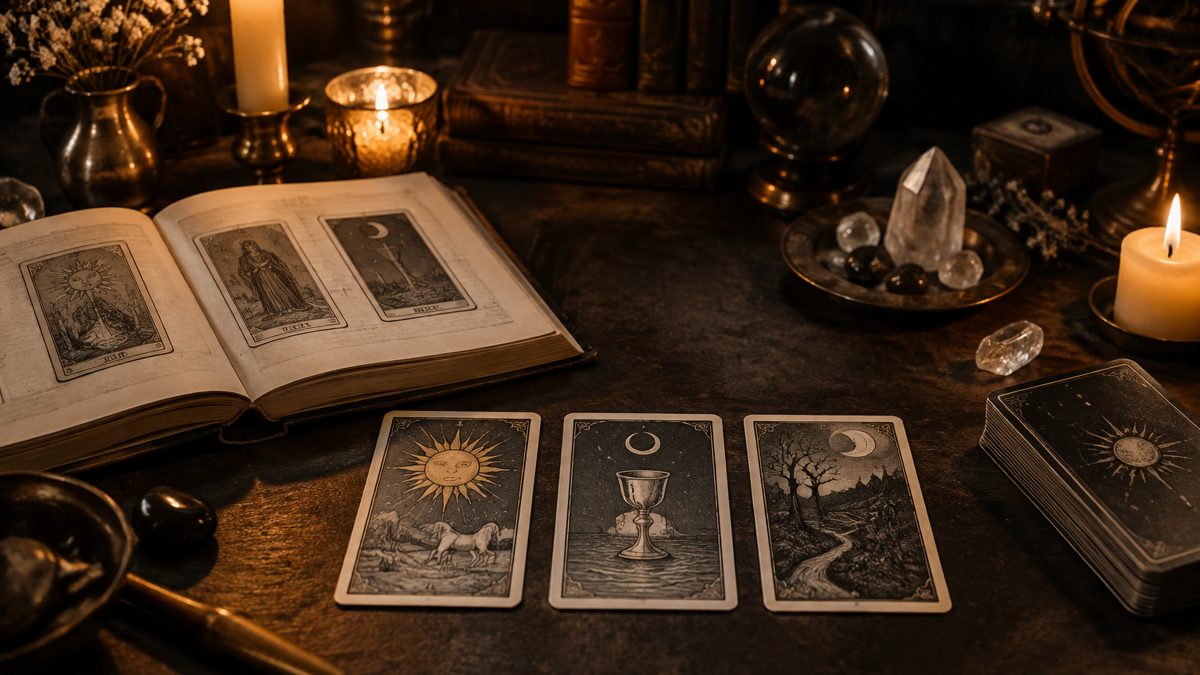
10. Work through a sample reading using only book meanings
Consider a woman asking about a business undertaking and the help available to her. For this illustrative exercise, suppose five cards are drawn in this order: Number 66 upright, Number 22 upright, Number 7 reversed, Number 47 upright, and Number 2 upright. Number 8 has not appeared, so it is retrieved and placed at the head of the line.
Die ausgelegte Reihe lautet somit: 8 aufrecht — 66 aufrecht — 22 aufrecht — 7 umgekehrt — 47 aufrecht — 2 aufrecht. Diese Anordnung hat keine erfundenen Positionsbedeutungen. Nummer 66 bleibt die tatsächlich zuerst gezogene Karte; Nummer 8 steht nur in der ausgelegten Reihe an erster Stelle.
Begin with the opening rule. Number 66 at the start describes significant discoveries of genuine utility to the consultant and others. Its ordinary upright vocabulary adds profit, benefit, favour, protection, or a useful gift. The reading can speak of utility and discovery, but it cannot name an invention or promise a specific sum.
Read Number 8 as the female consultant, retaining its upright meaning of Virtue and placidity. There is no listed special combination between Numbers 8 and 66 in the supplied entries. Therefore, do not invent one. Their connection is simply that the consultant stands beside a card of useful benefit.
Now apply the exact pair 66–22. Number 22 with Number 66 signifies “well-paid and honorable employment.” Number 22 also represents an honest, hardworking, virtuous man generally residing in the country. Its location does not prove he is a farmer: the commentary explicitly makes that distinction.
The next pair, 22–7 reversed, identifies support. Number 7 near Number 22 means help from someone who lives in the countryside. Number 7 reversed retains its favourable character as Protection, timely relief, and effective assistance. These meanings reinforce the employment combination without requiring an invented relationship between the helper and the consultant.
The pair 7 reversed–47 upright supplies another exact rule. Number 47 with Number 7 reversed foretells the complete success of the thoughts and ideas absorbing the consultant. Number 47 itself is Success in Business, favourable progress, relief, and improvement of situation. Its commentary allows achievements outside the artistic professions.
Finally, read 47–2. Number 47 with Number 2 announces theatrical success if the consultant is an author or dramatic actor; otherwise it concerns such success for someone greatly esteemed. Number 2 upright independently contributes clarity, intellectual light, analysis, and lucidity. The specific theatrical clause should remain distinct rather than being silently rewritten as an additional universal business guarantee.
A faithful synthesis would be: “In the book’s language, this is a favourable sequence for useful discovery, honourable paid work, and practical protection. A person associated with the countryside supplies support. The combination of Protection reversed and Success in Business favours the ideas occupying you. The final pair adds the book’s particular indication of theatrical success, applying either to you in that profession or to someone you esteem.”
Notice what the reading does not contain: no exact date, named employer, guaranteed income, diagnosis, or claim that the last position is a formal outcome. Its detail comes from numbered combinations. That is the central discipline of reading Moorne: let orientation establish the meaning, let neighbours specify it, and let the text set the limits of the interpretation.
These practices are shared as tradition and personal reflection, not as a substitute for medical, legal or financial advice.
Weiterlernen
- Dr.-Moorne-Deck: jede Karte
- How to read tarot cards
- How to use angel oracle cards
- So liest du Spielkarten
- So verwendest du Kristalle in Zaubern
- So verwendest du Kräuter in der Hexerei
- How to read the Dr. Moorne Egyptian Tarot
- How to read dice
- How to read tea leaves
- So benutzt du ein Pendel
- Wie man einen Kerzenzauber wirkt
- How to make a spell jar
- How to make a sigil
- How to cleanse your home
- How to set up an ancestor altar
- How to open a sacred space
- How to time spells with the moon
- How to work with water and salt
- How to make a protection charm bag
- Read the Journal oder besuche die shops