How-To Guide
Cómo hacer una bolsita de amuleto de protección
Por Seraphina
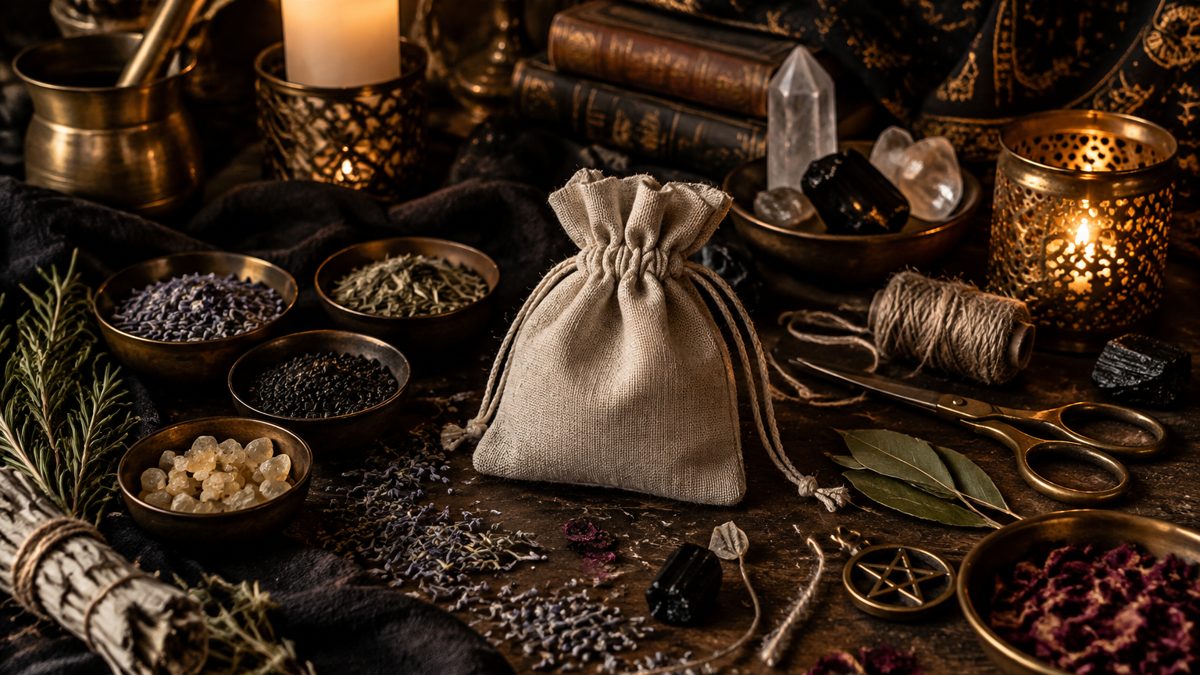
A protection charm bag is a small pouch filled with objects chosen to represent safety, steadiness, boundaries, or care. In different folk and spiritual practices, people carry such bundles, place them near entrances, or keep them among personal belongings. You can approach yours as a spiritual working, a meaningful craft, or a physical reminder of a promise to look after yourself. None of these approaches requires expensive materials or elaborate performance.
The most useful place to begin is with an ordinary question: what does protection mean in your life right now? Perhaps you want to stop answering work messages after dinner, feel more settled during your commute, or remember to check your door before bed. A clear answer gives the bag a purpose. Rather than asking it to prevent every possible difficulty, let it stand for a manageable intention supported by practical action.
This guide explores historical context, ingredient choices, preparation, assembly, and ongoing care. It also includes a complete beginner-friendly example, ways to reflect on your experience without treating coincidence as proof, and advice for adapting the project around allergies, pets, children, and shared spaces. For alternative combinations after you understand the method, use the companion reference page, Charm Bag Recipes.
Throughout, protection magic is presented as tradition, belief, and personal practice, not as a proven way to prevent injury, illness, theft, or abuse. A charm bag cannot replace medical treatment, secure locks, emergency planning, or help from trusted people. Its value may lie in the comfort, attention, and sense of agency you bring to making and using it.
Looking for the meaning of a single card or ingredient? Keep our Recetas de bolsitas de amuleto guide open beside you.
1. Understand the tradition before choosing your approach
People in many places have worn or carried protective objects: inscribed amulets, devotional medals, knotted cords, sewn packets, and bundles containing plants or written words. Their meanings depend on particular communities, religions, and historical circumstances. Similar shapes do not establish a single origin, and a modern drawstring pouch should not be presented as the unchanged descendant of every older protective practice.
Some named traditions have specific cultural settings. Mojo bags, for example, belong to African American hoodoo and should not be treated as a generic label for any herb-filled pouch. Other devotional packets and amulets may involve prayers, preparation methods, or relationships with teachers that a general craft guide cannot reproduce. Learn from reliable sources and practitioners within a tradition when seeking that tradition specifically.
European folk practices also vary considerably by region, period, and household. Red thread, salt, iron, plants, and protective prayers appear in different settings, but their presence does not make every combination authentically Slavic, Irish, or Mediterranean. If you draw on family customs, describe what you actually know. A remembered household practice is meaningful without needing an invented ancient pedigree.
For this guide, protection charm bag means a contemporary personal pouch made with openly available materials and your own intention. That modest description leaves room for spirituality without borrowing authority. You can honor a family tradition where appropriate, or simply make something new and acknowledge it as your own.
2. Define what you want the bag to represent
Protección es una palabra amplia, así que acótala antes de reunir los ingredientes. Podrías elegir límites emocionales, una llegada a casa más serena, mayor atención al viajar o estabilidad durante conversaciones difíciles. Evita las metas que dependan de controlar a otra persona. Una bolsita pensada para recordarte que debes salir de un intercambio poco saludable es más realista que una pensada para que alguien obedezca.
Write your purpose in plain language, preferably as one short sentence. For example: I protect my rest by putting my phone away at nine. Another possibility is: I move through my day with attention and seek help when needed. The sentence does not need to sound mystical. It needs to make sense when you read it on an ordinary, tiring afternoon.
Next, name one practical action that supports the intention. For a home-focused bag, this could be checking smoke alarms or repairing a faulty latch. For a work-boundary bag, it could be turning off notifications. For travel, it could be keeping emergency contacts accessible. The charm can mark your commitment, but the action does the practical protective work.
Keep the scope compassionate. You are not promising to remain calm forever or prevent all hardship. A useful intention allows for mistakes, changing circumstances, and support from others. If your wording makes you feel responsible for every bad thing that might happen, rewrite it until it supports you rather than placing another burden on you.
- 1. Name one area of life where you want more steadiness or clearer boundaries.
- 2. Write a short intention focused on your own choices rather than another person's behavior.
- 3. Acompaña la intención con una medida de seguridad realista o un hábito de apoyo.
3. Reúne un conjunto pequeño y sensato de materiales
You need a clean, dry fabric pouch, a small piece of paper, a pen, and two or three optional symbolic contents. A pouch roughly the size of your palm is usually sufficient. Cotton or linen is easy to handle, while tightly woven fabric contains loose material better than open mesh. An existing jewelry pouch is perfectly acceptable if it is sound and clean.
If you prefer to sew, gather two small fabric pieces, thread, a needle, and scissors. A drawstring or ribbon closure lets you inspect the contents later. A sewn closure may feel more permanent, but it makes maintenance less convenient. Neither method is inherently more powerful; choose according to your dexterity, available supplies, and how you intend to use the bag.
Possible contents include a little dried rosemary, one intact bay leaf, a short length of thread, or a smooth stone you already own. Each item is optional. A paper intention alone can be enough, especially in a household where herbs, small objects, or scents present problems. Avoid buying a large collection before discovering what is actually comfortable to carry.
Use clean tools and a tray or plate to contain spills. If you include loose herbs, a folded paper packet or small inner pouch can reduce leakage. Keep needles, scissors, threads, and tiny contents away from children and animals during assembly. Gather only what you can store and dispose of responsibly afterward.
4. Choose ingredients for meaning, not promised effects
Ingredient correspondences are symbolic associations, not established physical powers. Rosemary is linked with remembrance and protection in some folk and contemporary magical practices; bay is often associated with honor, achievement, or protective intention. Those meanings are neither universal nor mandatory. You may choose a plant because it recalls a safe family kitchen rather than because a correspondence list assigns it a role.
El color funciona de manera similar. El rojo puede sugerir vitalidad o un límite protector, el azul puede evocar calma, y la tela sin teñir puede sentirse sencilla y con los pies en la tierra. Distintas culturas asignan significados diferentes a los mismos colores. Elige una asociación que comprendas y no te preocupes si la bolsita que tienes es del tono equivocado según el sistema de otra persona.
A stone can represent stability without being rare, expensive, or sold as a crystal. Use a small, smooth, sturdy pebble from a place where collecting is permitted, or one already in your possession. Avoid sharp fragments, friable minerals, and unidentified stones with dusty surfaces. Wash an ordinary washable pebble if needed and let it dry completely before enclosing it.
Salt appears in many protective customs, but it is optional and can complicate a portable bag. It may absorb moisture, escape through fabric, or affect nearby metal. A white thread or written word can represent clarity without loose salt. Do not pour salty contents or salt water onto soil or plants; excess salt can harm them.
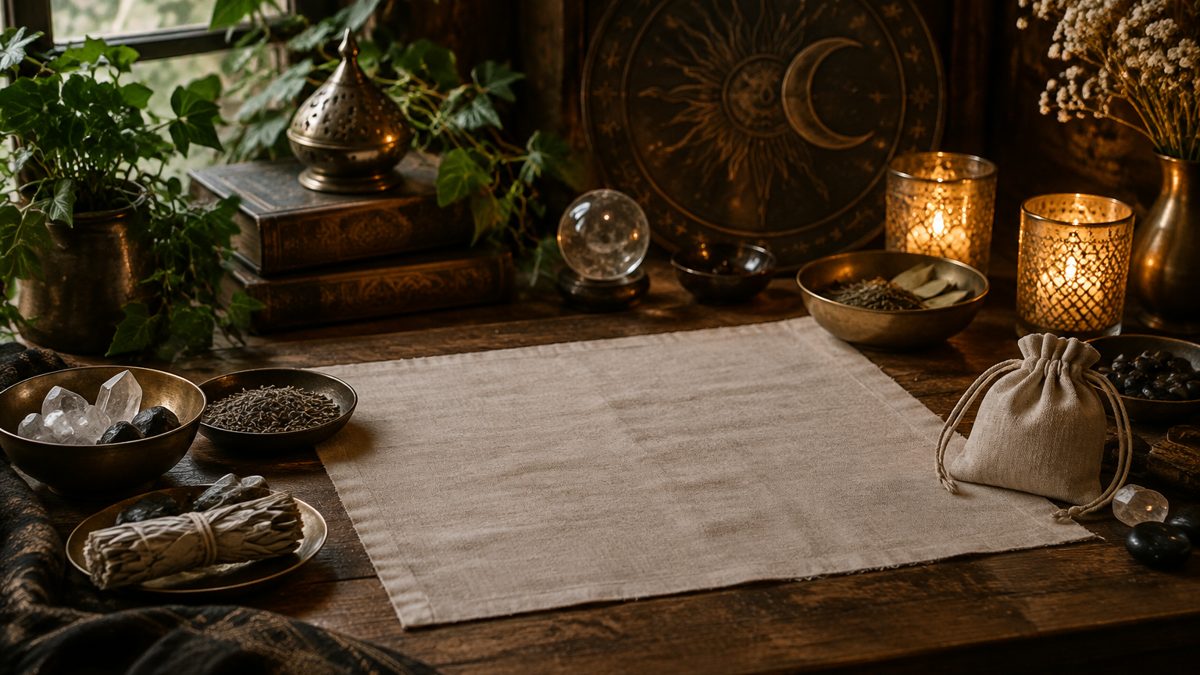
5. Prepara tu espacio sin humo ni llama innecesarios
Preparation can be as simple as clearing a table, washing your hands, and setting out the materials. The purpose is to give yourself enough room and attention to work safely. You do not need to wait for a particular moon phase, purchase a cleansing product, or achieve an unusually peaceful mood before beginning.
Si una limpieza simbólica te ayuda, abre una ventana cuando el clima y la calidad del aire lo permitan, limpia la superficie de trabajo o toca una campanita si el sonido no molestará a nadie. También puedes dedicar un minuto a mirar la bolsita vacía y decidir qué representará. Son maneras de marcar una transición, no técnicas necesarias para eliminar un peligro invisible demostrable.
Smoke-free preparation is especially sensible around asthma, migraines, birds, and other sensitive animals. Incense and essential oils are not harmless simply because they are natural. Avoid spraying or oiling the pouch: oils can irritate skin, stain fabric, and create exposure risks for pets. Plain, dry materials are generally easier to manage.
A candle is unnecessary. If you choose one as part of your personal practice, keep it in a stable holder on a fire-resistant surface, away from fabric, paper, herbs, and drafts. Never pass the finished bag through flame or leave a burning candle unattended. A battery-operated light offers a much simpler alternative.
- 1. Clear and clean a well-lit work surface.
- 2. Set out only the materials you intend to use, keeping drinks away from dry ingredients.
- 3. Pause briefly, read your intention, and begin when you feel ready.
6. Make or inspect the pouch
Antes de llenar una bolsita ya hecha, examina las costuras, la tela y el cierre. Tira suavemente de los lados para comprobar si hay huecos. Si la trama deja caer las hierbas, usa un paquetito interior de papel o elige contenidos más grandes que no se desmenucen. Una bolsa que se desparrama en tu abrigo o en tu ropa de cama pronto se volverá una molestia en lugar de un objeto tranquilizador.
Para una bolsita cosida sencilla, corta dos rectángulos de tela de trama cerrada de aproximadamente diez por doce centímetros cada uno. Estas medidas son solo un punto de partida. Coloca una contra otra las caras que quieres que queden por fuera, luego cose los dos lados y la parte inferior, dejando abierta la parte superior. Usa puntadas pequeñas y firmes, adecuadas para la tela.
Turn the pouch right side out and check the corners. Fold the raw top edge inward and stitch it down for a neater opening, taking care not to sew the opening shut. You can gather the top with a short ribbon rather than constructing a drawstring channel. Leave enough room above the contents to close it comfortably.
If sewing is uncomfortable or inaccessible, use a purchased pouch or wrap a square of fabric around the contents and tie the gathered corners securely. A charm bag does not become more meaningful because it was difficult to make. Adapt the task to your hands, vision, energy, and available help.
- 1. Inspect a ready-made pouch, or sew the sides and bottom of two fabric rectangles.
- 2. Finish any rough edges and check for openings where contents could escape.
- 3. Test the closure while the pouch is empty, then reopen it for filling.
7. Write the intention and assemble the contents
Now write your chosen intention on a small piece of paper. Include the practical action if it fits comfortably. You do not need a special alphabet, seal, or borrowed sacred symbol. If privacy matters, use a short phrase you understand rather than recording sensitive names, addresses, or details someone might read if the bag is lost.
Dobla el papel hasta que quepa sin deformar la bolsita. Algunas prácticas personales atribuyen significado a doblar hacia el cuerpo o alejándolo, pero aquí no se exige ninguna dirección. Puedes doblar hacia ti para simbolizar que acoges la estabilidad, o simplemente doblar con pulcritud. La coherencia con tu propio propósito importa más que imitar una regla sin explicación.
Add the remaining contents one at a time. Name each item's meaning silently or aloud: rosemary for remembering my boundary, thread for keeping that boundary clear, stone for pausing before reacting. These statements are personal interpretations. You are not testing whether an ingredient emits protection or trying to achieve a special sensation.
Usa menos relleno del que crees necesitar. Una bolsita ligeramente llena se cierra con más seguridad y es más fácil de inspeccionar. Guarda las hojas secas en un paquetito interior si se desmenuzan, y evita colocar una piedra pesada directamente contra material vegetal quebradizo. Antes de cerrar, comprueba que no haya tallos afilados, humedad, arenilla suelta ni nada que pueda engancharse en la tela.
- 1. Escribe y dobla tu intención, y luego colócala dentro de la bolsita.
- 2. Añade una pequeña cantidad de cada ingrediente seco elegido, enunciando su significado personal si lo deseas.
- 3. Acomoda el contenido de modo que la bolsita siga siendo blanda, compacta y fácil de cerrar.
- 4. Remove any sharp, dusty, damp, or unnecessary material.
8. Close the bag and mark its beginning
Draw the pouch closed or gather its neck with ribbon. Tie a secure knot that can be opened for maintenance. Some traditions give numbers and knots particular meanings, but you do not need a prescribed number of turns. Avoid leaving long dangling cords, especially if the bag will be carried near machinery or kept where animals might investigate.
Hold the closed bag comfortably and read your intention once. You might say: This bag reminds me to respect my limits and take sensible care. If prayer belongs to your religious practice, use a prayer appropriate to that practice. Silence is also a complete option. There is no required script or emotional intensity.
Some practitioners call this stage charging, blessing, or dedicating the charm. Here, dedication is a useful term: you are assigning the object a purpose through attention and meaning. People may understand that spiritually, but the process does not demonstrate a supernatural change. Nothing has gone wrong if the bag feels like ordinary fabric in your hand.
Termina haciendo una pequeña cosa práctica relacionada con la intención. Configura las horas de silencio de tu teléfono, pon los contactos de emergencia en un lugar accesible o revisa el cierre de tu bolso de diario. Conectar el trabajo manual con una acción da al ritual un final claro y ayuda a evitar repetidos intentos de que se sienta perfecto.
- 1. Cierra la bolsita con firmeza sin apretarla ni sobrecargarla.
- 2. Read your intention or offer a personally appropriate prayer.
- 3. Take the practical action you chose, then put away your tools and spare ingredients.
9. Worked example: a bag for protecting evening rest
For a straightforward first project, make a charm bag representing the boundary between work and rest. Gather a small cotton pouch, a piece of paper, a pen, one intact dried bay leaf, and a short blue thread. These are modest household materials, and you can replace the leaf with a paper drawing if plant material is unsuitable.
Write: My evening belongs to rest; I check work messages tomorrow. Choose this wording only if it fits your responsibilities; someone with on-call duties will need a different boundary. The bay leaf can represent your chosen commitment, while blue thread can represent calm. These are the meanings of this example, not universal instructions.
Dobla la nota alrededor de la hoja con suavidad, sin intentar hacer un paquete apretado. Colócala en la bolsita junto con el hilo corto y cierra la bolsa. Sostenla brevemente mientras decides cuándo dejarán de llegar las notificaciones del trabajo. Luego programa ese ajuste en tu dispositivo, o acuerda un horario realista para revisar si no puedes desactivar las notificaciones.
Keep the bag in a desk drawer or another dry, secure place associated with ending work. At the transition into evening, look at it or briefly hold it before putting the phone away. Review after a week: did the reminder help you follow your plan? If not, adjust the routine rather than assuming the ingredients were spiritually inadequate.
- 1. Dispón la bolsita, el papel para la nota, la hoja seca de laurel y el hilo azul corto.
- 2. Write a realistic rest-boundary intention and place it in the bag with the other contents.
- 3. Close the bag and set the corresponding notification schedule or checking window.
- 4. Use the bag as a brief end-of-work cue for one week before reviewing the habit.
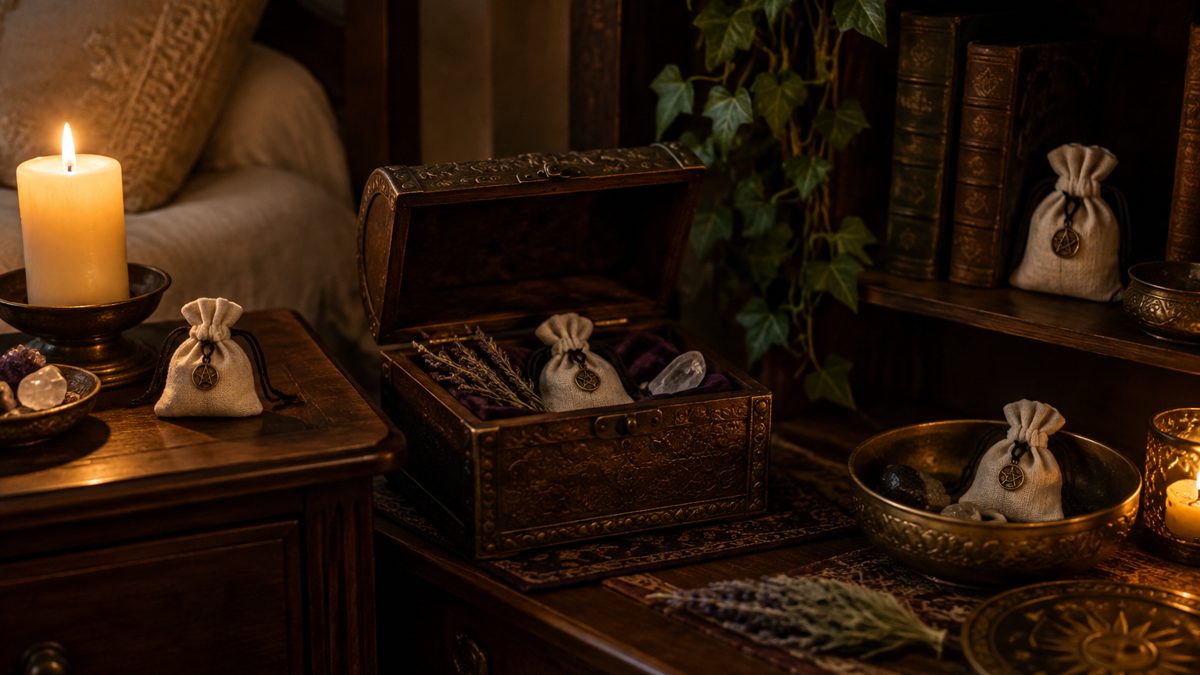
10. Decide dónde guardarla y cómo cuidarla
Choose a location based on the purpose and the materials. A small pouch might sit in an inside coat pocket, a zipped bag compartment, or a dry drawer near the entrance. It should not obstruct a lock, conceal a safety device, block a doorway, or interfere with vehicle controls. Avoid dangling it from a driver's mirror.
No sujetes una bolsita con cordones a la cuna, al cochecito ni al lugar de descanso de un bebé. Mantén las piedras pequeñas, las hierbas y los hilos fuera del alcance de niños y mascotas. Llevar una bolsa colgada del cuello implica riesgos de estrangulamiento y enganche; para muchas personas, llevarla en un bolsillo seguro es la opción más práctica.
Inspect it periodically and after rain, spills, or heavy use. Look for broken seams, dampness, mold, insects, and persistent unpleasant odors. Do not deliberately sniff suspected mold closely. If contents become wet, remove them promptly and discard spoiled material. Clean the pouch according to the fabric's care needs and let it dry fully before reuse.
There is no universal replacement schedule. Dry, intact contents may remain usable for a long time, while a frequently carried pouch may need attention sooner. Refresh it when the materials deteriorate or the intention changes, not because a seller or online rule insists protection expires on a fixed date.
11. Interpret your experience without turning it into a test
After making the bag, you may feel comforted, focused, indifferent, or disappointed. None of these reactions proves whether supernatural protection exists or whether you performed the procedure correctly. Familiar objects and deliberate routines can be meaningful without producing dramatic sensations. Give yourself permission to appreciate the craft at that ordinary level.
Busca primero cambios observables relacionados con tus acciones. ¿Recordaste cerrar la puerta con llave? ¿Hiciste una pausa antes de responder a un mensaje molesto? ¿El ritual vespertino te facilitó terminar el trabajo? Estas preguntas son más útiles que contar cada coincidencia agradable como prueba de que la bolsita alteró acontecimientos externos.
An accident, argument, broken thread, or lost bag does not establish that someone has cursed you or that the charm absorbed an attack. Materials wear out, objects get misplaced, and difficult events happen. Address the actual problem first. Replace a damaged pouch if you wish, without treating the damage as a demand for escalating rituals or purchases.
Notice if the practice begins increasing anxiety. Repeated checking, constant rebuilding, or feeling unable to leave home without the bag may mean it is no longer serving you well. Step back, simplify, and seek support if fear is disrupting daily life. If there is a concrete threat, use appropriate safety planning and professional or emergency help.
12. Avoid common mistakes and keep the practice ethical
El error práctico más común es la complicación excesiva: demasiados ingredientes, instrucciones contradictorias y la creencia de que un solo elemento ausente lo arruina todo. Empieza con una nota clara y unos pocos contenidos manejables. Las flores frescas, la fruta y otros materiales húmedos pueden pudrirse dentro de una bolsita cerrada. Las fragancias fuertes también pueden hacer que el objeto terminado resulte desagradable de llevar.
Never taste the contents or brew them into tea afterward. A decorative or ritual ingredient is not necessarily food-safe, and essential oils should not be added for casual ingestion. Use correctly identified materials from reliable sources; avoid toxic plants, unknown wild plants, animal remains, bodily fluids, and substances that could contaminate your belongings.
Obtén consentimiento antes de regalar un amuleto a alguien, colocarlo en su casa o incluir material personal asociado a esa persona. Un regalo debe ir acompañado de una lista de ingredientes y sin presión para creer en él. Evita sugerir que alguien enfermó, sufrió abusos o padeció desgracias por carecer de protección espiritual. La responsabilidad del daño no recae en la persona dañada.
Retire the bag responsibly when you no longer want it. You can thank it as a personal gesture, then separate reusable fabric, clean stones, and waste. Do not leave it outdoors as litter or bury synthetic fabric, salt, glitter, or unknown minerals. Compost only suitable untreated plant material accepted by your composting setup; place other contents in appropriate household waste.
13. Keep a useful journal and adapt the next version
Un diario sencillo facilita comprender la práctica con el tiempo. Anota la fecha, tu intención, los materiales, sus significados personales y la acción que asociaste a la bolsita. Registra con honestidad las sustituciones. Así tendrás un registro útil sin necesidad de recordar si una hierba o un color concretos aparecieron en una versión anterior.
Durante la próxima semana o dos, haz anotaciones breves sobre el uso en lugar de buscar señales. Podrías escribir: Vi la bolsita, revisé mi ruta y salí más temprano. O: Olvidé la bolsita, pero respeté igualmente mi límite nocturno. La segunda anotación importa: la meta es un hábito de apoyo, no depender de llevar un objeto a la perfección.
En tu revisión, pregúntate qué ayudó, qué te molestó y qué necesita cambiar. Quizá la bolsita era demasiado voluminosa, el aroma te causó molestias o la intención era demasiado amplia. Cambia una característica a la vez cuando sea posible, para notar su efecto en la usabilidad. Estás perfeccionando una herramienta personal, no realizando una prueba de causalidad sobrenatural.
Para tu próxima versión, consulta Recetas de bolsitas de amuleto para obtener ideas, conservando los mismos elementos esenciales: un propósito claro, materiales seguros, un contexto respetuoso y una acción práctica. La mejor bolsita para ti puede ser muy sencilla. Que siga siendo un recordatorio de que la protección también incluye descanso, apoyo, precauciones sensatas y permiso para cambiar de opinión.
- 1. Record the intention, contents, preparation date, and supporting habit.
- 2. Toma notas breves sobre el uso real, la comodidad y el comportamiento práctico.
- 3. Review after a week or two, keeping what helps and removing what does not.
- 4. Refresh, repurpose, or retire the bag when your needs change.
These practices are shared as tradition and personal reflection, not as a substitute for medical, legal or financial advice.
Sigue aprendiendo
- Recetas de bolsitas de amuleto
- How to read tarot cards
- How to use angel oracle cards
- Cómo leer las cartas de la baraja
- Cómo usar cristales en hechizos
- Cómo usar hierbas en la brujería
- How to read the Dr. Moorne Egyptian Tarot
- How to read dice
- How to read tea leaves
- Cómo usar un péndulo
- Cómo lanzar un hechizo con velas
- How to make a spell jar
- How to make a sigil
- How to cleanse your home
- How to set up an ancestor altar
- How to open a sacred space
- How to time spells with the moon
- How to work with water and salt
- How to make a protection charm bag
- Read the Journal o visita la shops