How-To Guide
How to Read Tarot Cards: A Complete Beginner's Guide
Por Seraphina
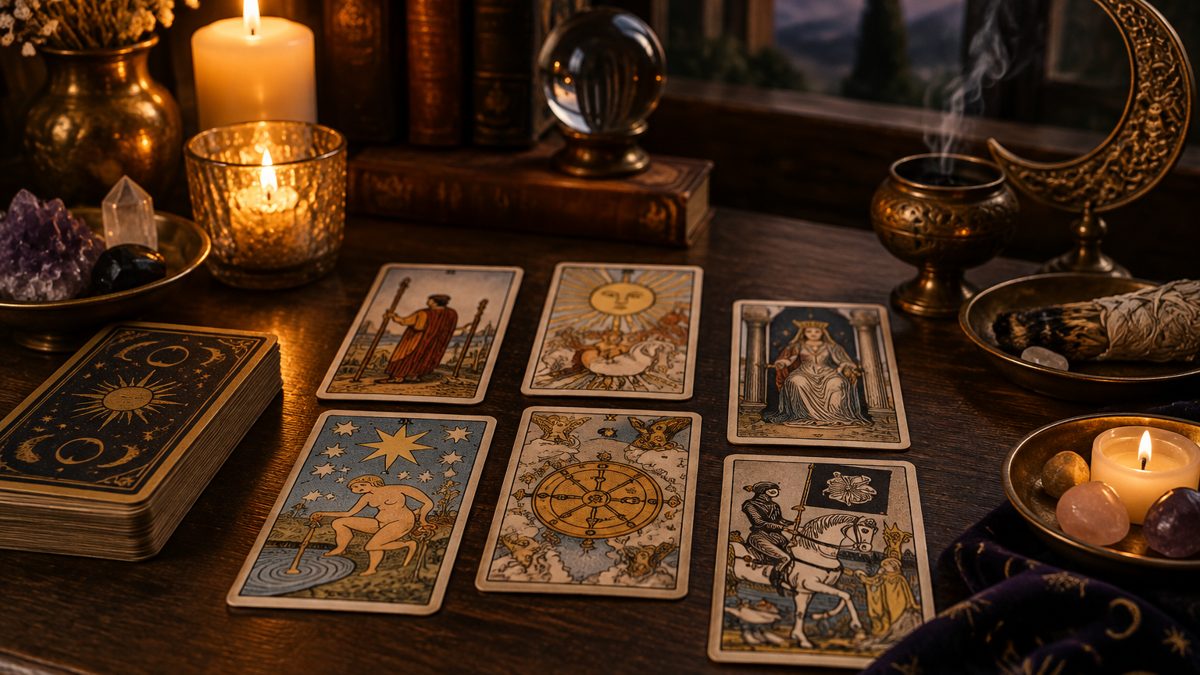
How to Read Tarot Cards: A Complete Beginner's Guide The first thing I want you to know about tarot is that you do not need to memorize seventy-eight definitions before you begin. You need a deck, a little uninterrupted time, and a willingness to look closely. Welcome to Crossroads Journal. I’m Seraphina, and my approach to tarot starts with curiosity rather than certainty: What do you notice? What does an image bring to mind? What might it help you consider?
El tarot tiene una historia como juego de cartas, y las tradiciones adivinatorias y ocultistas se desarrollaron más tarde. Hoy, algunas personas lo abordan como una práctica espiritual, otras como una herramienta de reflexión y otras como ambas cosas. Las creencias sobre la magia, la energía y la adivinación pertenecen a tradiciones particulares y a visiones del mundo personales; no son garantías establecidas de cómo funcionan las cartas. Puedes participar con reflexión sin adoptar creencias que no te parezcan correctas.
In this guide, I’ll walk you through a standard seventy-eight-card deck, from choosing and cleansing it to laying out your first spreads. We’ll explore reversals, connect cards into a coherent story, and work through an illustrative reading together. Most importantly, we’ll keep your judgment and freedom of choice at the center. A tarot reading can offer a perspective to examine, not a verdict you must obey.
Looking for the meaning of a single card or ingredient? Keep our Significados de las cartas del tarot guide open beside you.
1. Get to Know the Seventy-Eight-Card Deck
A standard tarot deck contains twenty-two Major Arcana cards and fifty-six Minor Arcana cards. The Major Arcana include familiar figures such as the Fool, the Magician, the Hermit, and the World. Readers commonly associate these cards with broad themes: beginnings, agency, solitude, change, and completion. I think of them as wide-angle images. They can give a reading a larger thematic frame, but their appearance does not prove that something destined or extraordinary is happening.
The Minor Arcana bring the focus closer to everyday experience. They are divided into four suits, commonly called Wands, Cups, Swords, and Pentacles. Each suit contains an Ace through Ten and four court cards: Page, Knight, Queen, and King. Names vary across decks. You might find Coins instead of Pentacles, or a different set of court titles. Your guidebook should explain the system your deck uses.
In many modern reading traditions, Wands suggest creativity, initiative, and enthusiasm; Cups concern feelings, relationships, and imagination; Swords address thought, language, decisions, and conflict; and Pentacles concern practical activity, resources, routines, and the material world. These are starting points rather than sealed compartments. A Cups card can appear in a creative question, and a Pentacles card can speak to the everyday effort involved in maintaining a friendship.
Court cards can describe people, approaches, roles, or qualities you are developing. They need not represent a person of a particular gender or age. A Queen might suggest a receptive, sustained relationship with a suit’s qualities; a Knight might emphasize how those qualities move into action. Different traditions interpret these roles differently. Begin with your deck’s framework, then let the question, imagery, and surrounding cards refine your interpretation.
2. Elige un mazo con el que quieras pasar tiempo
Para una primera baraja, recomiendo buscar ilustraciones claras, títulos de cartas legibles y una guía que explique tanto las cartas individuales como los métodos básicos de lectura. Una baraja de estilo Rider–Waite–Smith suele resultar conveniente porque muchos recursos para principiantes usan su imaginería y su estructura. Otros sistemas, como el Tarot de Marsella y el Thoth, tienen sus propias tradiciones interpretativas. Ninguno es automáticamente superior, pero aprender resulta más sencillo cuando tu baraja y tu material de referencia hablan un lenguaje visual parecido.
Before buying, look at several cards rather than judging only the cover or the Major Arcana. Can you make out what is happening in the numbered Minor Arcana? Do the images invite attention, or do they leave you feeling disconnected? Consider practical details, too: card size, print contrast, durability, and whether your hands can comfortably shuffle the deck. A beautiful deck that is difficult to handle may be better suited to occasional study than daily practice.
You do not have to receive your first deck as a gift. That is a custom some readers share, not a universal requirement. Nor do you need a rare edition, an expensive cloth, or an elaborate collection of accessories. Choose within your means, preferably from a reputable seller or the creator. One deck you know well can support a rich practice. I would rather see you become familiar with a modest, well-loved deck than feel pressured to assemble a perfect altar before drawing a card.
- Browse sample images of the Major Arcana, numbered Minor Arcana, and court cards.
- Confirm that the deck has seventy-eight cards and identify its underlying tradition.
- Check the guidebook, card dimensions, and ease of reading the artwork.
- Choose the deck that balances accessibility, personal interest, and practical comfort.
3. Cleanse Your Deck and Settle Into the Practice
In some tarot traditions, cleansing is understood as clearing unwanted energy or preparing a deck for spiritual work. Other readers use the same actions symbolically, as a way to mark a fresh beginning. There is no established evidence that cards accumulate spiritual contamination, and cleansing is not required for an accurate or meaningful conversation with the images. If the ritual appeals to you, let it support attention rather than become a rule you are afraid to break.
Mi preferencia es algo sencillo: despejar un espacio, enderezar el mazo y hacer una pausa antes de comenzar. Puedes ordenar las cartas, golpear suavemente la pila o colocarla junto a un objeto que te recuerde tu intención. Algunas tradiciones usan humo, sonido o luz de luna. Ten en cuenta la seguridad contra incendios, las alergias, las mascotas y los materiales del mazo antes de adoptar cualquier método. El humo puede dejar residuos, la luz solar puede desteñir la impresión y la humedad puede dañar las cartas. Lo mejor es mantener la sal y el agua lejos del propio mazo.
El cuidado físico es independiente de la limpieza ritual. Empieza con las manos limpias y secas, sigue los consejos de cuidado del fabricante y guarda las cartas en un lugar seco. Para tu propia preparación, respira unas cuantas veces con comodidad y observa la habitación que te rodea. No necesitas vaciar tu mente ni alcanzar un estado especial. Si te sientes distraído o distraída, anota lo que te ocupa. Si sientes miedo o la compulsión de revisar las cartas una y otra vez, apartarte puede ser el ritual de apertura más útil de todos.
- Choose a clear, comfortable surface with enough room for your intended spread.
- Use a brief symbolic cleansing ritual if you want one; otherwise, simply organize the deck.
- Nombra tu intención en lenguaje corriente, como: «Quiero considerar esta situación con paciencia».
- Decide how long you will spend reading and give yourself permission to stop.
4. Ask Questions That Leave Room for Choice
Una buena pregunta de tarot te da algo que explorar sin fingir que el mazo puede establecer hechos ocultos. Prefiero las preguntas que empiezan con qué o cómo: ¿Qué estoy pasando por alto? ¿Cómo podría abordar esta conversación? ¿Qué apoyaría mi siguiente paso? Estas invitan a reflexionar sobre tu perspectiva y tu comportamiento. También facilitan evaluar una lectura después, porque puedes preguntarte si la interpretación condujo a una idea relevante, en lugar de si una predicción vaga acabó pareciendo encajar.
Try shifting a fixed-outcome question toward agency. Instead of “Will my creative project succeed?” ask, “What can help me develop this project, and what obstacle deserves attention?” Instead of “Does this person secretly dislike me?” ask, “What assumptions am I making about this relationship, and what could I clarify directly?” The cards cannot verify another person’s private thoughts. A spread about your own experience can still help you prepare for a respectful, real-world conversation.
Keep the scope manageable. “What should I do with my entire life?” asks a small arrangement of cards to carry an enormous burden. “What deserves attention as I plan my next month of creative work?” is easier to explore. You can include a time frame as a boundary for reflection, not as a deadline for a prediction. Before shuffling, write the question down and decide which spread positions will address it. That small act prevents the reading from wandering wherever the most dramatic image points.
- Describe the situation in one or two factual sentences.
- Separate what you know from what you suspect or fear.
- Escribe una pregunta abierta centrada en tus decisiones, tu atención o tu comportamiento.
- Choose a spread that matches the question rather than making the question fit an elaborate spread.
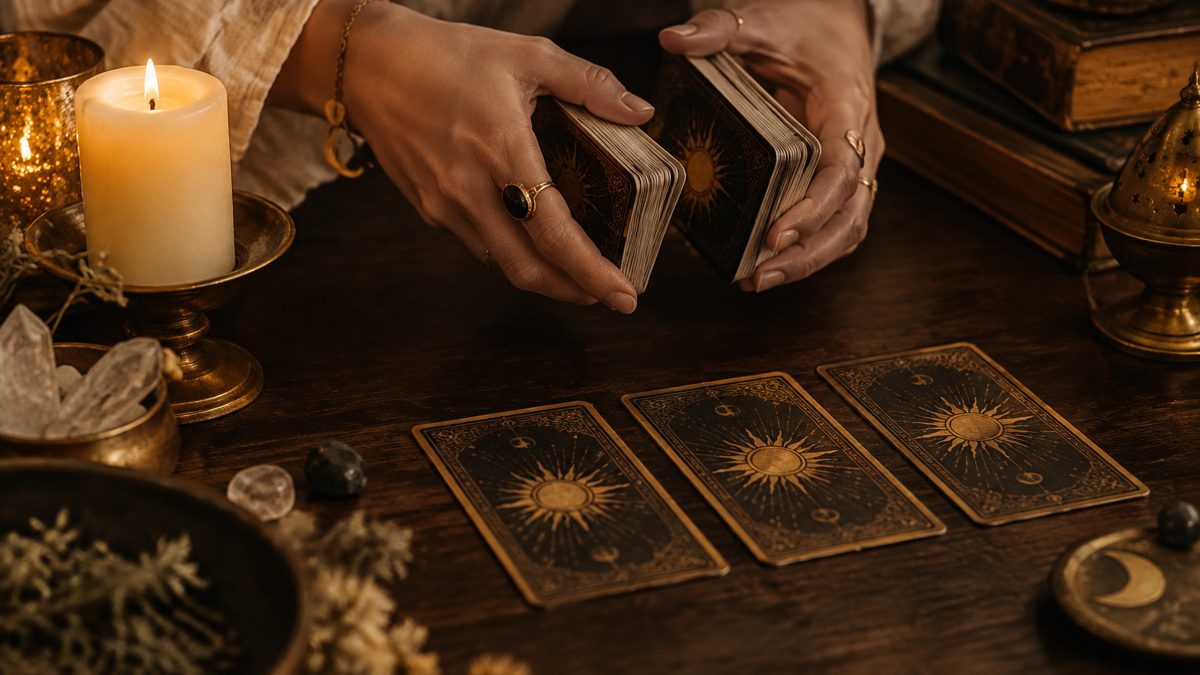
5. Baraja, corta y saca cartas sin darle demasiadas vueltas
Shuffling mixes the cards and gives you a moment to focus. It does not require a particular flourish. An overhand shuffle works well for many decks; gently spreading the cards face down and mixing them across a clean surface is another option. A riffle shuffle may bend or wear stiff cards, so use it only if the deck and your hands tolerate it. You can also divide the deck into smaller piles and recombine them when a large stack is uncomfortable.
Decide antes de empezar si usarás cartas invertidas, es decir, cartas boca abajo en sentido contrario. Si quieres lecturas solo al derecho, mantén las cartas orientadas en la misma dirección al mezclar. Si quieres invertidas, gira una parte del mazo antes de volver a combinarlo. No hace falta lograr una proporción exacta. Del mismo modo, puedes sacar de la parte superior o elegir cartas de un abanico boca abajo. Ningún método ha demostrado ser más revelador; la coherencia simplemente facilita el aprendizaje.
Los lectores a veces llaman «saltadoras» a las cartas que se caen al barajar. Algunos las interpretan, mientras que otros las devuelven al mazo. Elige tu enfoque de antemano para que cada carta caída no se convierta en un mensaje urgente. También sugiero fijar una regla modesta para las aclaratorias: quizá una carta adicional después de haber interpretado la tirada original. Sacar cartas repetidamente hasta que la respuesta resulte tranquilizadora puede convertir una práctica exploratoria en un bucle que genera más incertidumbre.
- Read your question and remind yourself of the spread positions.
- Shuffle using a comfortable method, with or without reversals.
- Stop at a practical point; you do not need a special sensation to tell you when.
- Cut the deck if you wish, then draw the planned number of cards.
- Place each card in its assigned position and record the layout before interpreting it.
6. Comienza con tiradas de una carta y de tres cartas
A one-card reading is a complete practice, not merely a beginner exercise. Give the position a clear purpose, such as “A quality to practice today” or “An aspect of this project to notice.” Look at the card before opening the guidebook. Describe the scene literally: a person carrying something, a doorway, a distant landscape, an overflowing cup. Then move toward interpretation. This sequence helps distinguish what is actually pictured from what you are bringing to the image.
For a three-card reading, label the positions before drawing. Situation, challenge, and helpful approach is a versatile combination. What to acknowledge, what to reconsider, and what to try also works well. Past, present, and future is traditional, but I suggest reading the final position as a possible direction if present patterns continue, not a fixed event. Even then, the cards do not establish what happened in the past or what will happen next.
Lee cada carta dentro de su posición y luego considera la disposición en conjunto. La misma carta puede significar cosas distintas como desafío y como enfoque útil. Por ejemplo, el Cuatro de Espadas en una posición de desafío podría invitarte a considerar si la pausa se ha convertido en evasión; en una posición de enfoque útil, podría sugerir dejar espacio para la reflexión. Ningún significado es automático. Tu situación y las imágenes circundantes deben determinar qué posibilidad es relevante.
- For a one-card spread, write one focused prompt and draw one card.
- List three visible details, consult the guidebook, and write a sentence connecting the card to your prompt.
- For a three-card spread, assign the positions situation, challenge, and helpful approach.
- Draw three cards and interpret each according to its position.
- Finish with one summary sentence and one small action you can choose to take.
7. Lay Out the Celtic Cross Step by Step
The Celtic Cross is a ten-card spread with several established variations. There is no single universally correct set of position names. What matters is choosing a version before drawing and using it consistently. Because this spread offers many interpretive possibilities, I save it for questions with several connected dimensions. For a small daily concern, ten cards can create more noise than insight. You are not becoming a better reader simply by putting more cards on the table.
In the version below, six cards form a central cross and four form a vertical column to its right. Card two lies sideways across card one to identify the crossing influence; that sideways placement is not itself a reversal. If you use reversals, note card two’s original orientation before placing it across the center. Positions concerned with background or environment describe themes to examine, not independently verified facts about events or other people.
Once the spread is laid out, resist interpreting everything at once. Begin with the central pair, then add the foundation and conscious focus. Compare the background with the emerging direction, and only then move up the right-hand column. Read the final card in light of the whole spread. An encouraging final image is not a promise, and a difficult one is not a sentence. End by returning to what the reading suggests you might notice, question, or choose.
- Place card one in the center: the situation as you are currently experiencing it.
- Coloca la carta dos de lado, cruzada sobre ella: un desafío, una tensión o una influencia que complica.
- Place card three below the center: an underlying pattern or foundation to examine.
- Place card four to the left: relevant background or a recent influence.
- Coloca la carta cinco sobre el centro: tu enfoque consciente, tu intención o tu aspiración.
- Place card six to the right: a possible near-term direction if current patterns continue.
- Start a separate vertical column farther right. Place card seven at the bottom: your approach or role.
- Place card eight above card seven: environmental influences or support to consider.
- Place card nine above card eight: hopes and fears, which may overlap.
- Place card ten at the top: a possible trajectory or concluding theme, not a guaranteed outcome.
- Summarize the central tension, available support, and one practical point for reflection.
8. Lee las cartas invertidas como matices, no como malas noticias automáticas
Las cartas invertidas son opcionales. Muchos lectores con experiencia trabajan solo con cartas al derecho y encuentran complejidad a través de las posiciones de la tirada y las cartas vecinas. Si aún estás aprendiendo el mazo, leer solo al derecho puede reducir el número de variables. No estás haciendo una versión incompleta del tarot. Una posición desafiante ya puede revelar una expresión difícil de una carta que, por lo demás, es acogedora, mientras que una posición de apoyo puede mostrar una respuesta constructiva a una imagen inquietante.
If you do read reversals, choose a small interpretive framework. An upside-down card might suggest a quality that is blocked, internalized, excessive, diminished, or being reconsidered. It does not necessarily mean the exact opposite of the upright meaning. The reversed Sun, for instance, could invite reflection on difficulty recognizing satisfaction rather than predict unhappiness. A reversed Knight might raise questions about pace or direction rather than identify a bad person.
Evita recorrer todos los significados posibles de una carta invertida hasta que uno te parezca lo bastante dramático. Pregúntate qué interpretación encaja con la pregunta y la posición con la menor cantidad de suposiciones sin respaldo. Luego sostenla con ligereza. Podrías escribir: “Estoy leyendo esta inversión como atención hacia el interior porque la pregunta se refiere a un proceso creativo privado”. Esa explicación hace visible tu método. Con el tiempo, tu diario te mostrará qué enfoques producen una reflexión útil y cuáles solo te animan a estirar una carta para que encaje en cualquier situación.
9. Combina las cartas y cuenta una historia realista
Start combining cards by noticing patterns. Are several cards from one suit? Are there many court cards or Major Arcana? Does the imagery feel still, busy, open, crowded, solitary, or communal? These observations can guide attention without becoming rigid formulas. Several Swords cards might emphasize thought and communication, but they do not establish that conflict is inevitable. An absent suit is simply an absence in a small selection of cards, not proof that something is missing from your life.
Next, look at relationships between images. A figure facing another card may suggest engagement; a figure turned away may suggest distance. A heavy burden beside a communal scene might invite questions about sharing responsibility. Numbers can add another layer if your reading tradition uses them, but avoid importing so many symbolic systems that you lose sight of the actual question. Visual details are prompts for interpretation, not secret evidence.
Para construir una historia, dale a cada carta una función distinta. Con situación, desafío y enfoque útil, tu resumen podría seguir esta estructura: «Estoy viviendo esto; esta tensión lo complica; esta respuesta podría valer la pena probarla». Usa expresiones como «podría sugerir» y «me pregunto si» cuando la conexión sea incierta. Una historia coherente debe aclarar la tirada, no disfrazar la especulación de conocimiento. Si dos interpretaciones siguen siendo plausibles, nombra ambas en lugar de forzar una sola respuesta.
I also look for the least sensational interpretation that still respects the imagery. Death often concerns endings and transition in modern tarot practice; it should not be treated as a literal prediction of death. The Tower can invite examination of unstable assumptions without forecasting catastrophe. When an image unsettles you, describe it, consult your guidebook, and reconnect it to the question. You can stop the reading if it is no longer helpful.
10. Walk Through a Complete Sample Reading
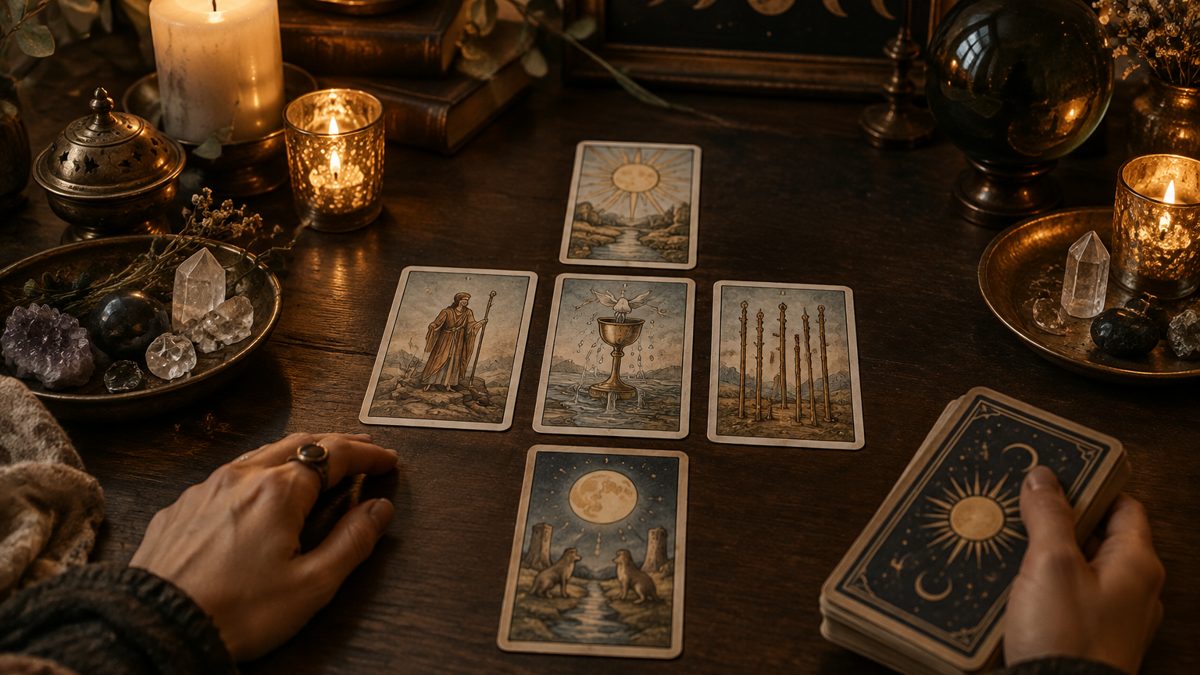
Aquí tienes un ejemplo inventado para aprender, no un testimonio ni una predicción. Supón que la pregunta es: «¿Qué podría ayudarme a retomar un proyecto personal de escritura?». Antes de sacar las cartas, anoto el contexto: el borrador lleva varias semanas sin tocarse y el siguiente paso se siente vago. Elijo tres posiciones: situación, desafío y enfoque útil. Las cartas ilustrativas son el Ocho de Oros al derecho, el Siete de Copas al derecho y la Reina de Espadas al derecho.
For the situation, the Eight of Pentacles shows a craftsperson engaged in repeated work in familiar Rider–Waite–Smith imagery. I notice attention, repetition, and a tangible task. Its conventional association with practice suggests viewing the project as something developed through manageable effort. I would not conclude that the card proves talent or promises publication. I would ask, “Which part of this project becomes easier when I treat it as a skill to practice rather than a test of my worth?”
For the challenge, the Seven of Cups presents several enticing or confusing possibilities. I connect that image to the stated problem cautiously: perhaps the project feels vague because too many versions are competing for attention. That is a hypothesis to check, not a fact revealed by the deck. If the writer actually has one clear plan but little available time, this interpretation needs revision. The card might instead invite reflection on imagined expectations or the distance between planning and doing.
Como enfoque útil, la Reina de Espadas sugiere discernimiento, lenguaje claro y límites dentro de esta tradición de lectura. En conjunto, las cartas ofrecen una posible historia: hay trabajo práctico disponible, las posibilidades en competencia lo complican y una selección clara puede ayudar. Un siguiente paso proporcionado sería elegir una sección, definir qué debe contener un primer borrador y reservar un periodo de escritura manejable. El valor está en comprobar si esa acción ayuda, no en demostrar que las cartas conocían la respuesta.
- Record the question, factual context, position names, cards, and orientations.
- Describe cada imagen antes de asignarle un significado convencional.
- Check whether each proposed interpretation fits the known situation.
- Combina las cartas en un resumen tentativo en lugar de tres definiciones desconectadas.
- Choose a small, reversible action: for example, draft one scene before reconsidering the project’s whole structure.
- Return later to assess the action and interpretation without rewriting the original notes.
11. Keep a Tarot Journal That Helps You Learn
Your tarot journal does not need to be beautiful. A notebook, a plain document, or a simple table is enough. Record the date, deck, question, spread positions, cards, and orientations. Add a few literal observations, the meanings you consulted, your initial interpretation, and any action you chose. Separating observation from interpretation is especially useful. “The figure faces away” describes the artwork; “I am avoiding a conversation” is an inference that deserves examination.
Leave room for follow-up. After an appropriate interval, ask what was useful, what did not fit, and what you might interpret differently now. Keep the original entry intact so you can distinguish your first impression from later knowledge. People naturally remember striking matches and overlook misses; a written record helps counter that tendency. A reading that did not resonate is not a failure you must explain away. It can show that a question was too broad or an interpretation too elaborate.
For steady learning, try studying one card at a time alongside occasional small spreads. Notice how a card’s meaning changes with its position, and compare your own associations with the guidebook rather than replacing one with the other. Protect the privacy of anyone whose reading you record. If your practice begins to feel compulsory, take a break. Familiarity grows through thoughtful attention, not through asking the deck the same question every hour.
- Create a repeatable entry with space for context, observations, interpretation, and follow-up.
- Mark guidebook meanings separately from your personal associations.
- Registra la incertidumbre y las interpretaciones alternativas en lugar de suavizarlas.
- Review several entries periodically for useful patterns, strained connections, and repeated questions.
- Adjust your practice toward what supports reflection and away from what increases dependence.
12. Read Ethically and Keep Your Own Authority
If you read for someone else, begin with consent and a clear explanation of your approach. Ask what they want to explore, whether any topics are off limits, and whether they prefer a reflective or tradition-based spiritual framing. Make clear that interpretations are uncertain and that they can disagree, decline a question, or stop. Do not assume that a person who enjoys tarot shares your beliefs about divination. The reading should leave them with room to think, not pressure to accept your worldview.
Keep boundaries around subjects the cards cannot responsibly settle. Do not use tarot to diagnose conditions, determine pregnancy, predict death, establish legal facts, or direct financial decisions. Refer medical, legal, and financial questions to appropriately qualified professionals. Likewise, cards cannot establish that someone has cheated, committed a crime, or concealed a particular intention. Redirect third-party questions toward the querent’s own observations, boundaries, and options rather than claiming access to another person’s private life.
Never tell someone they are cursed or must purchase a service to prevent misfortune. Do not use frightening imagery to create dependency, and do not promise a particular relationship, achievement, or outcome. If you charge for readings, disclose prices, scope, and relevant terms beforehand. Respect confidentiality, and obtain explicit permission before sharing a reading, even anonymously. When someone is in immediate danger or acute distress, prioritize appropriate real-world support rather than drawing more cards.
Para tus propias lecturas, se aplican la misma amabilidad y la misma mesura. Puedes dejar el mazo a un lado, cambiar tu interpretación o decidir que una tirada no ofreció nada útil hoy. Mi deseo aquí, en Crossroads Journal, es que el tarot se convierta en una práctica de atención cercana: a las imágenes, a los supuestos y a las decisiones que realmente tienes a tu alcance. Empieza con una pregunta y una carta. Deja que el libro guía te ayude, que la experiencia afine tu comprensión y recuerda que el siguiente paso sigue siendo tuyo.
These practices are shared as tradition and personal reflection, not as a substitute for medical, legal or financial advice.
Sigue aprendiendo
- Significados de las cartas del tarot
- How to read tarot cards
- How to use angel oracle cards
- Cómo leer las cartas de la baraja
- Cómo usar cristales en hechizos
- Cómo usar hierbas en la brujería
- How to read the Dr. Moorne Egyptian Tarot
- How to read dice
- How to read tea leaves
- Cómo usar un péndulo
- Cómo lanzar un hechizo con velas
- How to make a spell jar
- How to make a sigil
- How to cleanse your home
- How to set up an ancestor altar
- How to open a sacred space
- How to time spells with the moon
- How to work with water and salt
- How to make a protection charm bag
- Read the Journal o visita la shops