How-To Guide
How to Open and Close a Sacred Space
Por Seraphina
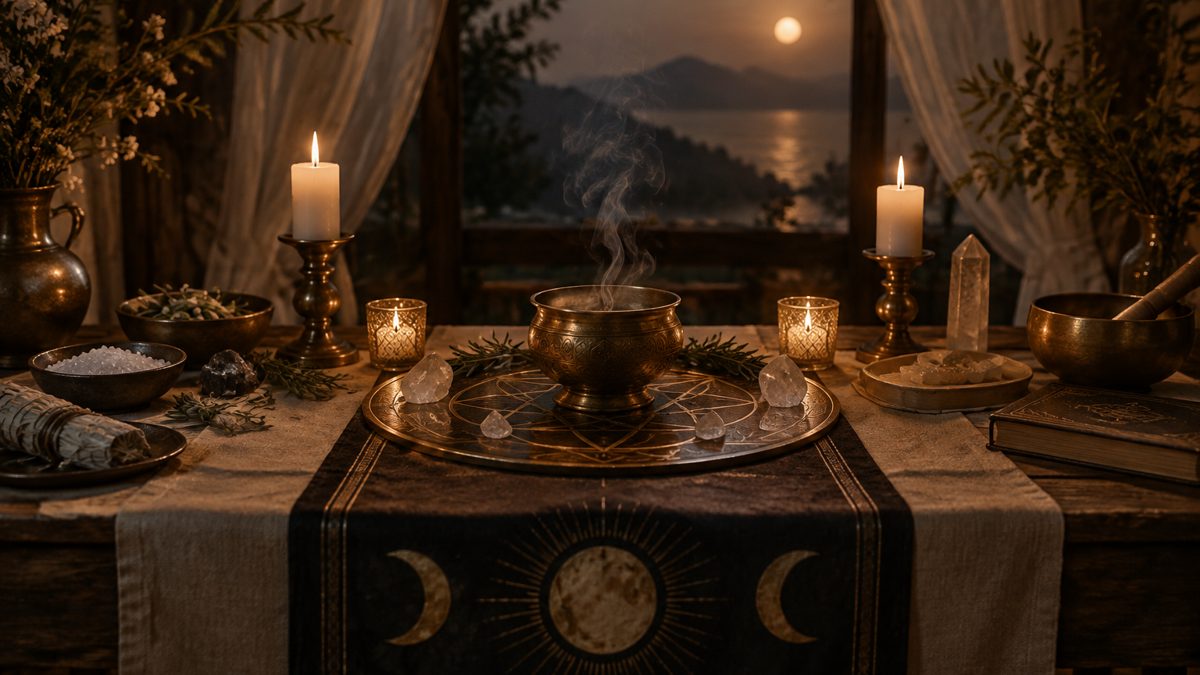
Opening a sacred space is a way of setting ordinary time apart. You might do it before meditation, prayer, seasonal observance, divination, or simply a quiet conversation with yourself. In many spiritual traditions, the process involves preparing a place, stating an intention, and marking a beginning. Closing completes that structure: you acknowledge what happened, bring the practice to an end, and return your attention to daily life.
Sacred does not have to mean elaborate, expensive, or tied to a particular religion. A kitchen chair beside a glass of water can support a meaningful practice, just as a carefully tended altar can. What matters is that the arrangement fits your beliefs, respects other people, and helps you give the moment deliberate attention. You do not need to experience anything unusual for the practice to be worthwhile.
People understand sacred space differently. Some believe they are inviting divine presence, honoring ancestors, or establishing spiritual protection. Others understand the same actions as symbolic boundaries that support concentration and reflection. This guide makes room for those differences without treating supernatural effects as proven or guaranteed. You can adapt the language throughout, including using entirely secular wording.
For Crossroads Journal, I recommend beginning with a small, repeatable practice rather than collecting elaborate instructions. Below, we will explore historical context, practical preparation, opening and closing procedures, a worked example, and ways to reflect afterward. The companion reference page, Sacred Space Tools, can help you compare optional materials, but nothing on a shopping list is a requirement for a sincere beginning.
Looking for the meaning of a single card or ingredient? Keep our Herramientas para el espacio sagrado guide open beside you.
1. Comprende el propósito de un espacio sagrado
Un espacio sagrado crea una distinción entre lo que estás haciendo ahora y todo lo demás que compite por tu atención. Esa distinción puede ser física, como extender un paño, o temporal, como reservar diez minutos sin interrupciones. A menudo es ambas cosas. La apertura te dice que la práctica ha comenzado; el cierre te dice que está completa.
Think of the boundary as a container for your attention rather than a barrier you must maintain perfectly. Sounds from outside, wandering thoughts, or a pet entering the room do not automatically spoil the practice. You can notice the interruption, decide whether anything needs attention, and return. If circumstances require you to stop, stopping is a responsible choice.
Choose a purpose narrow enough to guide the session. 'I will reflect on how to approach a difficult conversation' gives you more direction than 'I will solve my whole life.' Suitable purposes include expressing gratitude, sitting with grief, celebrating a transition, or preparing for a devotional practice. A specific intention also makes it easier to recognize when you have done enough.
Sacred space should support your agency, not make you dependent on ritual. You remain free to revise the wording, leave the room, answer an urgent call, or abandon a method that feels wrong for you. No opening statement obliges you to continue. If the practice increases fear rather than offering structure, simplify it or take a break.
2. Learn from history without flattening traditions
Across many cultures, people have distinguished places and times for worship, remembrance, healing, and community ceremony. Household shrines, dedicated religious buildings, pilgrimage sites, and temporary ceremonial spaces illustrate that broad human pattern. Their purposes and rules are not interchangeable, however. A shared interest in sacred place does not mean every tradition teaches the same method of opening one.
Some modern Pagan and ceremonial practices include casting a circle, acknowledging directions, or invoking particular deities. These methods vary between traditions and teachers. They should not be presented as a universal ancient formula. Historical sources, modern adaptations, and personal inventions can all contribute to contemporary practice, but it is helpful to name which kind of material you are using.
Las prácticas populares domésticas también varían según la región, la familia, la religión y la época histórica. Una vela ante una imagen devocional, un umbral cuidadosamente mantenido o una costumbre doméstica estacional pueden tener significados que se pierden al sacarlos de contexto. Si exploras una herencia particular, busca estudios fiables y relatos de personas arraigadas en esa tradición en lugar de suponer que todas las costumbres populares pertenecen a un solo sistema.
El método de esta guía es un marco contemporáneo flexible, no una iniciación a un linaje específico. Puedes usar oraciones conocidas o costumbres domésticas heredadas cuando corresponda. Evita copiar ceremonias que requieren permiso de la comunidad, formación o responsabilidades religiosas que no has asumido. La curiosidad respetuosa incluye aceptar que algunas prácticas no te corresponde reproducirlas.
3. Gather a few useful materials
Your essential supplies are a reasonably safe place, a little time, and a clear intention. Everything else is optional. A chair, clean surface, and notebook are enough for many sessions. If you enjoy a visual focal point, choose one object that supports the purpose: a stone, family photograph, meaningful image, or ordinary cup reserved for quiet reflection.
Light can help mark the occasion, but an LED candle works well when open flames are unsuitable. A small bowl of water may symbolize clarity or renewal. A bell can mark the beginning and end, though a spoken sentence or a gentle tap on the table serves the same structural role. Choose items for their meaning and usefulness rather than supposed necessity.
Para tu primera sesión, limítate a tres o cuatro objetos. Demasiados materiales pueden convertir la preparación en una complicada prueba de si todo es correcto. Herramientas para el espacio sagrado ofrece una referencia complementaria para explorar opciones más adelante. Empieza aprendiendo qué te ayuda a concentrarte; añade objetos solo cuando puedas explicar qué aportan.
Keep symbolic materials separate from food and drink. Water placed on an altar may collect dust or contain unsafe additions, so do not assume it is suitable for drinking. If you want a drink afterward, set out a separate clean glass. Label any herbal preparations clearly, and keep small objects, oils, matches, and breakable vessels away from children and animals.
4. Choose and prepare the location
Elige un lugar donde puedas sentarte o estar de pie con comodidad sin bloquear una puerta ni crear un riesgo de tropiezo. Una habitación privada es conveniente, pero la privacidad no es esencial si la práctica es tranquila y discreta. En un hogar compartido, una disposición temporal sobre una bandeja puede ser más práctica que un altar permanente que ocupe un espacio común.
Clean enough to make the area usable, not immaculate. Move clutter away from your feet, wipe the surface, and make room for your materials. Physical cleaning is a straightforward preparation with practical benefits. If you also regard it as symbolically clearing old concerns, that meaning can sit alongside the ordinary task without requiring claims about invisible contamination.
Consider sound, light, temperature, and access. Silence phone notifications if you can, while allowing urgent contacts through when needed. Use lighting that lets you move safely. Keep mobility aids within reach, and choose a posture that suits your body. You do not need to kneel, stand for long periods, or sit on the floor to make the space meaningful.
Outdoors, follow local access rules and choose durable ground away from fragile plants or nesting wildlife. Check weather, daylight, and fire restrictions. Avoid leaving candles, ribbons, crystals, food, or offerings behind. A place can matter deeply without being altered. In public settings, keep your belongings compact and avoid claiming exclusive use of a shared area.
- 1. Select a stable surface and a comfortable place to sit or stand.
- 2. Despeja los caminos de paso y retira los peligros inmediatos.
- 3. Dispón solo los materiales que esperas usar y ten un cuaderno a mano.
- 4. Decide la duración de la sesión y, si te resulta útil, programa un temporizador suave.
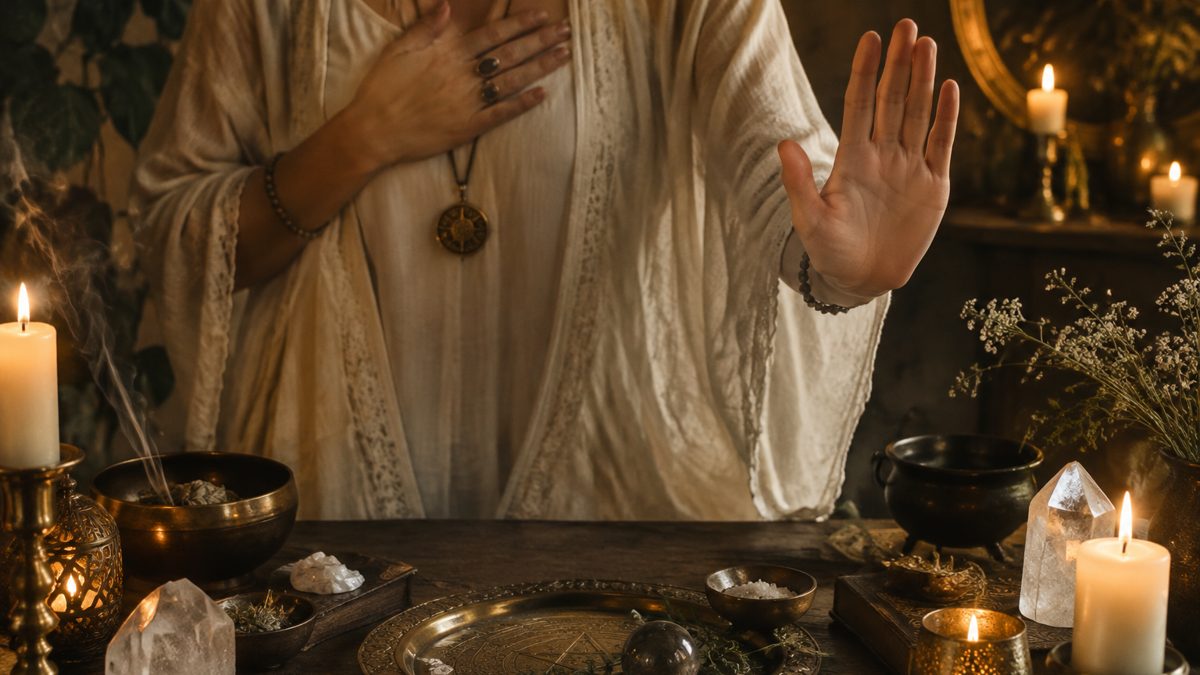
5. Prepárate y expresa tus límites
Before opening, check your ordinary needs. Are you thirsty, cold, exhausted, or overdue for a meal? Addressing those needs is not a distraction from spiritual practice; it makes the practice more manageable. Avoid beginning when intoxicated or too tired to supervise a flame. A brief session when you are comfortable is preferable to an ambitious one when you are struggling.
Let your breathing remain natural. You might notice three easy breaths and the support beneath your feet or body. There is no need to hold your breath, breathe rapidly, or force yourself into an altered state. If focusing inward makes you uncomfortable, keep your eyes open and describe a few ordinary objects you can see instead.
Expresa tanto tu propósito como tus límites prácticos. Por ejemplo: «Voy a dedicar quince minutos a considerar lo que necesito esta semana. Me detendré si me siento abrumado». Si el lenguaje espiritual encaja con tus creencias, puedes añadir una oración pidiendo sabiduría o cuidado. Mantén las palabras comprensibles y libres de promesas que no pienses cumplir.
Decide cómo manejarás las interrupciones antes de que ocurran. Podrías hacer una pausa en silencio, atender el asunto y retomar con una frase, o cerrar la sesión por completo. Así evitas que un ruido inesperado se convierta en una crisis. También puedes elegir una sencilla regla personal: ningún compromiso importante, mensaje ni decisión financiera hasta que hayas terminado y reflexionado.
6. Open the space step by step
The opening establishes a beginning, a purpose, and a boundary for your activity. It need not be dramatic. Perform the following sequence slowly enough to notice what you are doing, but do not worry about exact timing. If a phrase feels awkward or conflicts with your beliefs, replace it with something that feels sincere.
A symbolic boundary can be as simple as the edges of your cloth or the area around your chair. You do not have to walk a circle, scatter a line of salt, or visualize a perfect wall of light. If you enjoy visualization, imagine a comfortable boundary as a personal focusing exercise rather than proof that physical dangers cannot reach you.
Las invitaciones son opcionales. En una práctica devocional establecida, podrías dirigirte a una deidad u honrar a los ancestros según costumbres conocidas. Una alternativa laica es nombrar cualidades como la paciencia, el valor y la honestidad. No estás obligado ni obligada a invitar a seres o fuerzas no especificados. Evita un lenguaje que cree obligaciones que no entiendes o que no deseas.
Finish the opening with a clear statement that the space is ready. After that, begin the activity you planned instead of repeatedly checking whether the opening worked. The useful signs are ordinary ones: you know your purpose, you have made time for it, and you can proceed safely. Sensations, visions, or dramatic changes in mood are not admission requirements.
- 1. Settle into a comfortable posture and notice the room around you.
- 2. Mark the beginning by switching on a light, sounding a bell softly, or saying, 'I begin this time of reflection.'
- 3. Expresa tu intención en una o dos frases.
- 4. Identify your symbolic boundary: 'For this practice, this small area is set aside for quiet attention.'
- 5. Ofrece una oración opcional, un reconocimiento o una declaración de las cualidades que deseas aportar.
- 6. Say, 'The space is open for this purpose,' and start your chosen activity.
7. Trabaja dentro del espacio sin forzar una experiencia
Once the opening is complete, keep the main practice simple. You might meditate, read a prayer, write about a question, or observe a seasonal object. Choose one activity rather than trying to fit every spiritual interest into the session. A clear focus lets the opening serve its purpose instead of becoming an elaborate prelude to an unfocused hour.
If you use divination, treat its images or themes as prompts for reflection rather than verified predictions. A card, symbol, or intuitive impression can suggest questions worth considering, but it should not replace evidence, informed judgment, or professional advice. Avoid making medical, legal, or financial decisions solely from something that occurs during a ritual.
Thoughts will wander. You may remember laundry, feel restless, or notice boredom. None of this means the space has failed. Gently return to the activity, or write the distracting task on a separate slip of paper for later. If the practice is becoming an exercise in self-criticism, reduce its length and choose a simpler task.
Strong emotion can also arise, especially during remembrance or grief work. You can cry, pause, change position, or end early. If you feel disoriented or overwhelmed, look around, name where you are, and attend to immediate physical comfort. Spiritual practice can complement support, but it is not a substitute for mental health care when distress is persistent or severe.
8. Close the space clearly and calmly
Closing gives the session a definite ending. It can include gratitude, a statement of completion, and the ordinary actions of putting things away. You do not need to feel entirely resolved before you close. A useful session may end with an unanswered question, a difficult feeling, or a decision to seek more information.
Si hiciste reconocimientos devocionales, concluyelos de una manera coherente con tu tradición. En una práctica personal, basta con un sencillo agradecimiento. Evita tratar las palabras como una contraseña peligrosa que debe recitarse a la perfección. Desde una perspectiva práctica, lo que importa es que reconozcas que la actividad ha terminado y puedas volver a tus responsabilidades ordinarias.
Some traditions prescribe a particular order for releasing directions or closing a circle. Follow that structure if it belongs to your established practice. This general method requires no special direction of movement. You can simply acknowledge that the symbolic boundary is ending, remove the focal objects, and let the room resume its everyday use.
If you forgot to close earlier, do not panic. You can acknowledge the ending now and check for practical issues such as an unattended candle, spilled water, or materials within a pet's reach. Forgetting a closing phrase is not evidence that something harmful has happened. Use the experience to make your next routine easier to remember.
- 1. Stop the main activity and take a moment to notice how you feel.
- 2. Offer any appropriate thanks or devotional farewell.
- 3. Say, 'This practice is complete. I release this boundary and return to everyday attention.'
- 4. Extinguish candles fully, switch off ritual lights, and check the area.
- 5. Put materials away and dispose of temporary items responsibly.
- 6. Drink clean water if wanted, stretch gently, and choose one ordinary next task.
9. Sigue un ejemplo práctico
Imagina una práctica nocturna de quince minutos centrada en prepararte para una conversación difícil. Usas una silla, una vela LED y un cuaderno en la mesa de la cocina. El objetivo no es controlar la respuesta de otra persona ni garantizar un acuerdo. Es aclarar lo que quieres comunicar e identificar un siguiente paso respetuoso.
First, clear enough table space to write comfortably. Let anyone sharing the room know you would appreciate a few quiet minutes, without insisting that they participate. Sit down, feel the chair supporting you, and switch on the candle. Say, 'I am setting aside this time to approach tomorrow's conversation with honesty and care.'
Mark the tabletop as your temporary boundary, then write three headings: what happened, what I feel, and what I can request. Spend a few minutes separating observable events from assumptions about the other person's motives. If you notice anger or anxiety, name it without turning it into proof that the conversation will go badly. Draft one sentence that expresses your request clearly.
Cuando suene el temporizador, lee tu frase una vez. Agradécete por haber dedicado tiempo, o ofrece un reconocimiento devocional apropiado. Di que la sesión ha terminado, apaga la vela y guarda el cuaderno. Más tarde, revisa el borrador con juicio ordinario. El resultado práctico podría ser una petición más clara, no una señal mística ni una promesa sobre la conversación.

10. Interpreta los resultados sin sobreinterpretarlos
Empieza con los resultados observables. ¿La apertura te ayudó a comenzar? ¿El límite redujo las distracciones? ¿El cierre te facilitó dejar de pensar en la actividad y seguir adelante? Estas preguntas ofrecen una evaluación más fiable de tu rutina que buscar una confirmación extraordinaria. Una sesión tranquila y sin sucesos puede haber cumplido igualmente su propósito.
Physical sensations have many possible explanations. Warmth, tingling, chills, tears, or a sense of spaciousness may relate to posture, temperature, expectation, emotion, or attention. You can record them without settling immediately on a cause. If you interpret an experience spiritually, identify that as your interpretation rather than presenting it as established fact.
Del mismo modo, el parpadeo de una vela, los patrones del humo y los ruidos de la casa tienen causas ordinarias, como corrientes de aire, el estado de la mecha, la ventilación y los movimientos del edificio. Investiga primero los problemas de seguridad. No sigas usando una vela que echa humo porque su comportamiento parezca significativo. Que un objeto se caiga o que un temporizador falle no conlleva automáticamente una advertencia o un mensaje.
Look for patterns across several sessions rather than drawing large conclusions from one evening. Perhaps silence helps you more than music, or morning practice feels easier than late-night reflection. If the practice repeatedly leaves you frightened, preoccupied with signs, or unable to return to daily tasks, pause it and consider talking with a trusted person or qualified professional.
11. Recognize and correct common mistakes
A common beginner's mistake is overcomplication. Elaborate tools, unfamiliar prayers, and long sequences can make the practice feel like an examination. Reduce the routine to a beginning signal, an intention, one activity, and a closing statement. Once that structure feels comfortable, you can decide whether anything else genuinely improves it.
Otro error es tratar la incomodidad como prueba de que debes realizar más rituales. Volver a abrir, volver a limpiar o repetir una frase hasta que se sienta perfecta puede crear un ciclo de comprobación en lugar de tranquilidad. Establece una rutina modesta y permite que quede completa. Si la repetición se vuelve difícil de resistir o interfiere con tu vida diaria, busca apoyo en lugar de añadir más reglas.
Borrowed language can also get in the way. If you do not believe in the beings or cosmology named in a script, reciting it may feel hollow or unsettling. Use language you understand. Respect for tradition does not require pretending to belong to it; a transparent personal practice is better than claiming authority or ancestry you do not have.
Por último, evita saltarte el regreso a lo ordinario. Pasar directamente de un ritual emocional a una discusión, a conducir o a un trabajo exigente puede dejarte distraído. Date unos minutos para reorientarte cuando haga falta. Por otro lado, no conviertas el enraizamiento en otro requisito rígido: a veces guardar un cuaderno y lavar tu taza es toda la transición que necesitas.
12. Keep safety, consent, and environmental care central
Para las velas, usa soportes estables y resistentes al calor, bien lejos de cortinas, papel, ropa suelta y cualquier otra cosa que pueda arder. Nunca dejes una llama sin vigilancia y no quemes materiales en un cuenco o vaso común. Ten a mano un equipo adecuado de seguridad contra incendios y respeta las restricciones locales. Cuando los niños, las mascotas, el cansancio o el poco espacio generen incertidumbre, elige una luz sin llama.
Smoke and fragrance are optional, not signs of authenticity. Incense, burning herbs, and essential oils can irritate breathing or cause other problems; some are especially hazardous around animals. Choose smoke-free and fragrance-free methods when suitability is uncertain. Do not ingest herbs, oils, ritual salt, or unknown preparations, and check with a qualified clinician or pharmacist before using medicinal herbs.
No viertas agua salada sobre plantas ni suelo, donde la sal puede dañar el crecimiento. Evita echar cera, aceites, purpurina u ofrendas de comida en cursos de agua o espacios al aire libre. Desecha los materiales según su contenido y la normativa local. El agua simple y la gratitud expresada en voz alta suelen ser las alternativas más sencillas. Nunca dejes una ofrenda donde la fauna silvestre pueda comer algo dañino o acostumbrarse a la comida humana.
Obtain consent before including another person, using their belongings, touching them, or making recordings. In groups, explain what will happen and make participation optional. Do not claim a ritual can override someone's consent, cure illness, or replace practical protection from danger. A meaningful sacred boundary never substitutes for locks, safeguarding, medical care, or a real-world safety plan.
13. Journal, review, and build a sustainable practice
Mantén tu diario lo bastante breve como para que realmente lo uses. Anota la fecha, la duración aproximada, la intención, los materiales y la actividad principal. Añade unas palabras sobre cómo te sentías antes y después. No necesitas una prosa pulida ni un relato de cada sensación. Un registro breve y fáctico suele revelar patrones útiles con más claridad que una narración elaborada.
Separa la observación de la interpretación. “Me sentí más tranquilo después de escribir” registra una experiencia; “mi oración fue escuchada” expresa una interpretación espiritual. Ambas pueden pertenecer a un diario personal si las distingues. Incluye el contexto ordinario, como dormir mal, el ruido de fondo o un día especialmente estresante, para que la reflexión posterior no atribuya cada cambio al ritual.
After several sessions, review one question at a time. Was the length manageable? Did you use every object? Did the closing help you move on? Change one element and see whether the practice becomes more comfortable or useful. Keep sensitive journals private, especially if they contain other people's information, and avoid recording details you have no legitimate reason to preserve.
Let repetition build familiarity rather than obligation. You may practice daily, seasonally, or only when you need a deliberate pause. Missing a session creates no debt. The enduring skill is learning to begin with intention, remain attentive without forcing an experience, and finish with care. A sacred space can be modest, temporary, and entirely your own while leaving room for the life around it.
- 1. Write one sentence describing what you intended to do.
- 2. Anota lo que realmente ocurrió, manteniendo las observaciones separadas de las interpretaciones.
- 3. Note any practical or safety adjustment for next time.
- 4. Elige una próxima acción útil y deja que la sesión termine.
These practices are shared as tradition and personal reflection, not as a substitute for medical, legal or financial advice.
Sigue aprendiendo
- Herramientas para el espacio sagrado
- How to read tarot cards
- How to use angel oracle cards
- Cómo leer las cartas de la baraja
- Cómo usar cristales en hechizos
- Cómo usar hierbas en la brujería
- How to read the Dr. Moorne Egyptian Tarot
- How to read dice
- How to read tea leaves
- Cómo usar un péndulo
- Cómo lanzar un hechizo con velas
- How to make a spell jar
- How to make a sigil
- How to cleanse your home
- How to set up an ancestor altar
- How to open a sacred space
- How to time spells with the moon
- How to work with water and salt
- How to make a protection charm bag
- Read the Journal o visita la shops