How-To Guide
Cómo usar hierbas en la brujería: hechizos, baños y amuletos
Por Seraphina
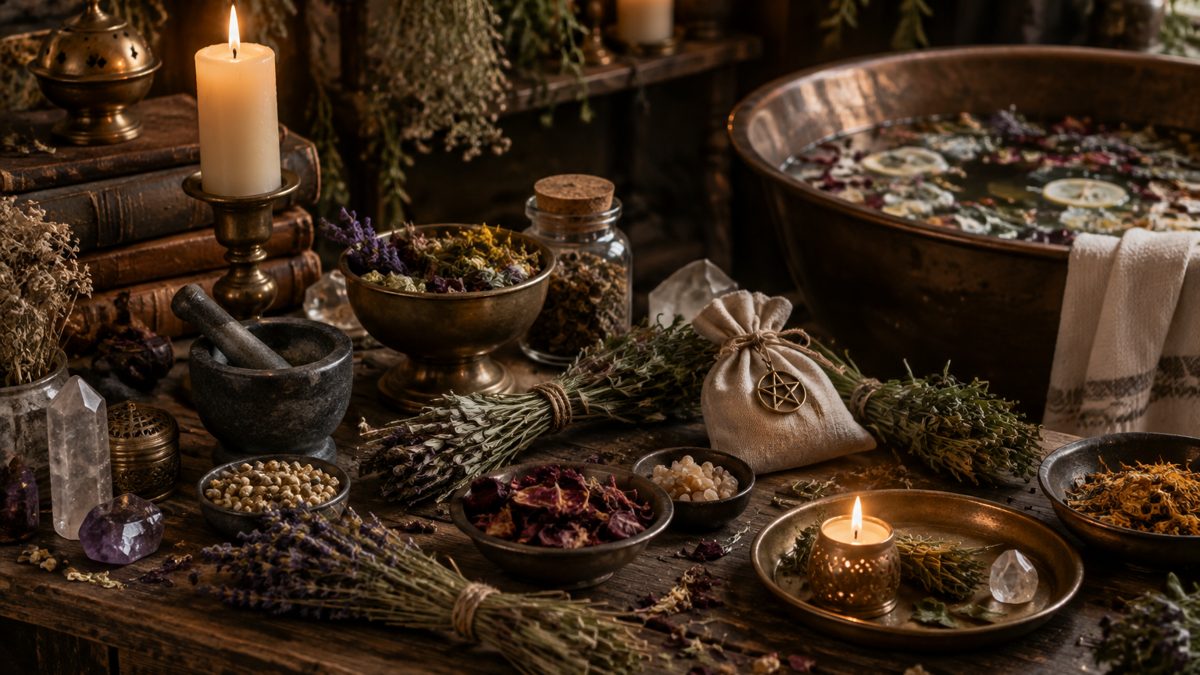
The herbs I return to most often are not rare or mysterious. They are the rosemary beside the kitchen door, the bay leaves in the cupboard, and the mint that would happily take over every pot I own. Welcome to Crossroads Journal. I’m Seraphina, and this is my guide to bringing herbs into a folk witchcraft practice with curiosity, care, and both feet on the ground.
En muchas tradiciones, las personas han usado plantas para marcar umbrales, bendecir hogares, recordar a los difuntos, celebrar los cambios de estación y dar forma física a un deseo. Esas prácticas no son un sistema universal único. Sus significados varían según el lugar, la familia, la religión y quien las practica. Aquí ofrezco un enfoque adaptable y centrado en el hogar, sin pretender revelar un único libro de reglas ancestral.
I approach herbal magic as a practice of symbolism, attention, and belief. A charm can remind us of a boundary; a kitchen ritual can make an ordinary meal feel deliberate. Neither guarantees an outcome, and divination does not establish facts or reliably predict events. Herbal witchcraft belongs alongside practical action, never in place of appropriate professional advice or ordinary precautions.
We’ll work through gathering, drying, storing, sachets, baths, floor washes, smoke, candle arrangements, protection jars, and kitchen rituals before putting everything together in a simple ceremony. You do not need every method, a garden, or an overflowing apothecary. A few correctly identified ingredients, a clear purpose, and a willingness to leave unsafe ideas alone are more than enough.
Looking for the meaning of a single card or ingredient? Keep our Hierbas en la brujería guide open beside you.
Cómo usar hierbas en la brujería: hechizos, baños y amuletos
My starting point is always the same: decide what the practice means before deciding what to buy. Are you marking a fresh beginning, expressing gratitude, remembering someone, or creating a moment to reflect on your boundaries? Write the purpose in one ordinary sentence. “I want to make my home feel thoughtfully tended” gives you a more useful starting point than an elaborate list of ingredients with no personal connection.
Después, elige una planta cuyo aroma, historia, aspecto o uso cotidiano respalde esa intención. En algunas prácticas contemporáneas de inspiración popular, el romero se asocia con el recuerdo y la protección, el laurel con los deseos o el reconocimiento, y la lavanda con la paz. Son ejemplos de asociaciones tradicionales, no de propiedades medibles ni de significados universalmente compartidos. La menta de la cocina de tu abuela puede tener más significado para ti que una tabla de correspondencias.
I like to distinguish an inherited tradition from a personal invention. If I learned a custom from a family member, I say so. If I adapt a published practice, I keep a note of the source. If I invent a rosemary charm because its smell reminds me of home, I call it my own symbolism. That honesty makes a practice richer, not less magical.
There is also no obligation to borrow ceremonial plants or practices from communities whose teachings you do not share. Learn the context of what interests you, respect closed or restricted traditions, and avoid treating distinct cultures as a basket of interchangeable ingredients. Familiar culinary herbs can support a meaningful personal practice without pretending to carry someone else’s authority.
1. Begin with safety, not a correspondence list
A plant’s traditional magical reputation does not establish that it is safe to swallow, breathe, burn, or put on skin. The form matters too: a culinary leaf, concentrated extract, and essential oil are not interchangeable. For the beginner practices in this guide, I leave essential oils out entirely. Never ingest products labeled for incense, crafts, fragrance, or magical use, and never assume an online seller’s spiritual description is a safety assessment.
La ruda merece una advertencia especialmente firme. Es tóxica si se ingiere, puede causar intoxicaciones graves y provocar reacciones cutáneas severas asociadas a la exposición solar. Es particularmente peligrosa durante el embarazo. No recomiendo la ruda para baños caseros, tés, aceites, humo ni amuletos manipulados sin cuidado. Si ya crece en tu jardín, evita el contacto con la piel descubierta y busca orientación hortícola fiable antes de manipularla. Un símbolo escrito puede sustituirla en un ritual.
La artemisa es otra planta que no recomendaría a la ligera. Evítala durante el embarazo o cuando intentes concebir, y busca asesoramiento calificado antes de cualquier uso durante la lactancia. También puede provocar reacciones alérgicas, incluso en personas sensibles a plantas emparentadas. Para esta guía de principiantes, simplemente déjala fuera. Las afirmaciones sobre sueños o adivinación no son motivo para aceptar una exposición evitable, y quemarla no la vuelve inofensiva.
Mantén todos los ingredientes rituales lejos de niños y animales; algo que tolera un adulto humano puede ser peligroso para una mascota. Ante alergias, asma, dudas sobre medicamentos, embarazo o seguridad incierta para la piel, consulta a un profesional clínico o a un farmacéutico apropiado en lugar de un libro de correspondencias. Si sospechas exposición o envenenamiento, comunícate con el servicio local de toxicología o con los servicios de emergencia; si se trata de un animal, con un veterinario. No intentes un remedio mágico ni provoques el vómito a menos que te lo indiquen.
2. Recolecta las hierbas con respeto e identifícalas con certeza
The simplest beginning is often a small packet of food-grade rosemary or bay from a reputable grocery supplier. You do not have to forage to be a “real” practitioner. If you grow herbs, retain the plant labels and learn the botanical names as well as the common ones. Common names can refer to different species, and resemblance is not enough to establish that a plant is suitable for handling or use.
When gathering outdoors, positively identify the plant using trustworthy references and, where needed, an experienced local botanist or foraging educator. Do not rely on a photograph or identification app alone. If any doubt remains, leave it standing. Avoid roadsides, sprayed areas, industrial land, and places contaminated by animal waste. Obtain permission and check local gathering restrictions; some plants and habitats are protected.
Take only a small amount from a healthy, abundant plant, leaving enough for its continued growth and for wildlife. Avoid uprooting plants or stripping every flower or seed head. For many leafy garden herbs, a dry morning after the dew has evaporated is a convenient harvesting time. Use clean scissors, remove damaged material, and keep different species separate so identification remains clear.
I sometimes pause before cutting to name what I’m gathering and why. That pause is a personal gesture of gratitude, not proof that the plant has granted permission or that harvesting has become ecologically harmless. The practical part still matters: a careful cut, a modest harvest, and an honest decision to leave a struggling plant alone. You can also honor a plant by observing it without taking anything.
3. Seca bien las hierbas y lleva buenos registros
Secar es menos dramático que el trabajo de hechizos, pero exige exactamente la cualidad que más valoro en una práctica: la atención paciente. Clasifica tu cosecha sin demora. Desecha el material enfermo, mohoso o contaminado en lugar de intentar rescatarlo para uso ritual. En las hierbas culinarias de jardín, enjuágalas cuando corresponda y elimina bien el agua de la superficie. Nunca supongas que el secado eliminará pesticidas, toxinas u otros contaminantes.
Los manojos pequeños y sueltos de hierbas de hoja adecuadas pueden colgarse en un lugar seco y sombreado con circulación de aire constante. Un manojo apretado puede quedar húmedo en el centro, sobre todo con clima húmedo. Como alternativa, extiende las hojas en una sola capa sobre una rejilla de secado limpia, o usa un deshidratador de alimentos según sus instrucciones para la hierba específica. Mantén las plantas en secado lejos de la grasa de cocina, los aerosoles domésticos y los animales curiosos.
Leaves should be crisp rather than cool, limp, or leathery before you seal them away. Drying time varies with the plant, room humidity, and method, so a calendar alone cannot tell you when they are ready. Thick stems may retain moisture after the leaves seem dry. If a stored batch develops condensation, clumping from moisture, visible mold, or a musty smell, discard it.
Etiqueta cada lote con el nombre común, el nombre botánico cuando se conozca, el origen y la fecha de recolección o compra. Añade el uso previsto: “apto para alimentos”, “solo para manualidades externas” o “identificación incierta: no usar”. Lo ideal es que el material incierto nunca llegue a tu alacena de trabajo. Mis etiquetas son sencillas más que pintorescas porque quiero entenderlas de inmediato, incluso en una tarde cansada en que todas las hojas secas se parecen bastante.
4. Build a small, well-organized herb cupboard
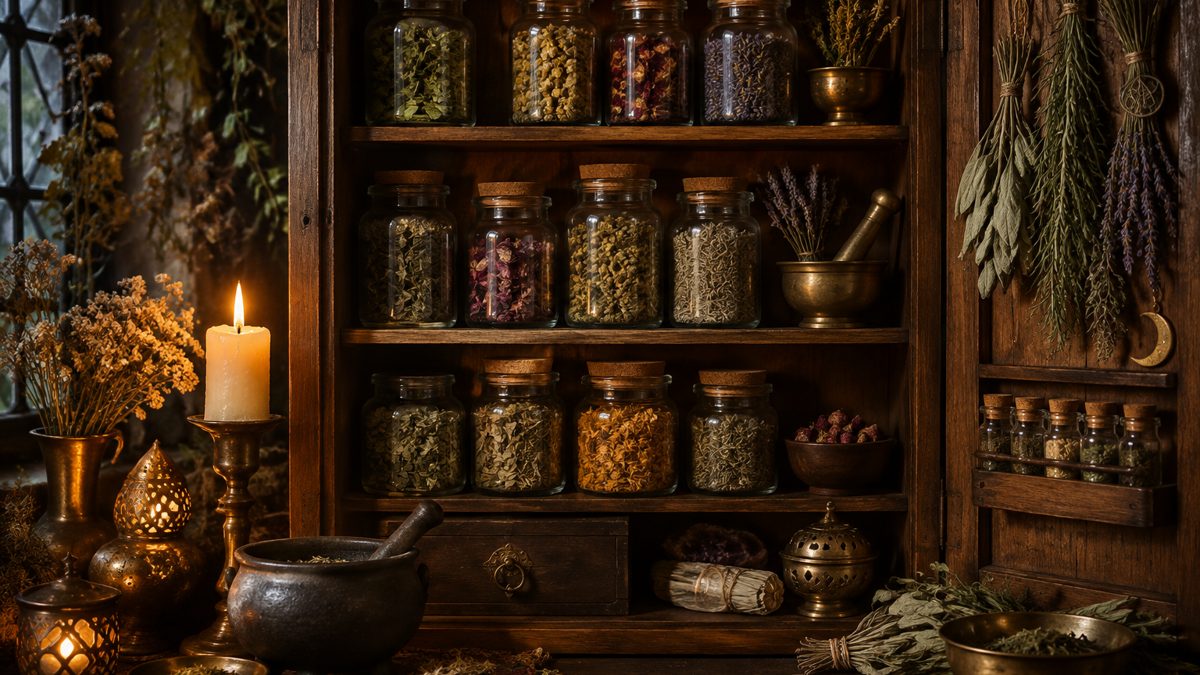
Store fully dried herbs in clean, dry, tightly closing containers away from sunlight, heat, and moisture. A cupboard is usually better than a windowsill or the shelf directly above a stove. Clear jars are convenient for inspection, but they still belong out of strong light. Check supplies periodically, and replace anything that shows deterioration. Older herbs may lose their scent, though age alone is not the only safety consideration.
Keep edible supplies separate from craft ingredients. Once herbs have touched candle wax, fragrance products, floor-cleaning tools, unknown decorations, or a non-food-safe vessel, they do not return to the kitchen. I use different spoons and containers for food and ritual crafts. This is especially important if a jar looks like an ordinary spice jar but contains something intended only for display.
Una colección útil para principiantes podría incluir romero, laurel, menta y tomillo culinario aptos para alimentos, además de lavanda o pétalos de rosa solo si su identidad y su etiquetado de uso previsto son claros. Las flores que venden las floristerías no son automáticamente aptas para comida o baños. Elige ingredientes para usos realmente planeados en lugar de coleccionar todas las plantas mencionadas en un libro. Tres hierbas conocidas usadas con atención valen más que treinta frascos que no puedes identificar con seguridad.
Keep a simple notebook beside your supplies. Record what you used, its source, the symbolic association you chose, and any practical observations. “The sachet shed dust” is useful. So is “I disliked this scent.” If you record dreams or draw a divination card, describe the interpretation as reflection, not evidence that an herb caused an event or revealed another person’s intentions.
5. Make sachets and charm bags with clear intentions
A sachet is a small fabric container for dried material; a charm bag gives that object an explicitly symbolic purpose. I like them because they can be simple, portable, and free of flame. Choose a tightly woven pouch that will not readily shed dust. Avoid powdered herbs, sharp stems, and long dangling cords. Even a securely closed pouch must stay out of reach of children and pets.
Para un sencillo hechizo doméstico, usa una pizca de romero seco y un pequeño trozo de papel con una frase como «Que practique límites claros y reflexivos». El laurel puede ser un añadido opcional si tiene significado para ti, pero una sola hierba es suficiente. Las palabras expresan una esperanza y un compromiso; no establecen una barrera sobrenatural ni reemplazan las cerraduras, las alarmas u otras protecciones prácticas.
Sostén un momento la bolsita cerrada y piensa en la acción conectada con el deseo. Quizá dejes de responder mensajes de trabajo durante la cena o mantengas tu entrada más despejada. Coloca el amuleto en un lugar adecuado e inaccesible para manos o patas curiosas, en lugar de ponerlo entre la ropa de cama o contra la piel desnuda. No metas amuletos botánicos sueltos en una cuna, en la cama de una mascota ni entre las pertenencias de otra persona sin su consentimiento.
Check the bag occasionally for moisture, broken seams, insects, and irritating dust. Retire it whenever it no longer serves a purpose; there is no mandatory magical expiry date. Dispose of the contents according to their materials and local waste guidance. Keeping herbs, paper, and fabric separate at the beginning makes this easier. You do not need to bury a charm or leave it outdoors to complete the practice.
- Choose one intention and write it in a single sentence.
- Añade una pequeña pizca de una hierba seca conocida y correctamente identificada a una bolsita de tela en buen estado.
- Incluye tu intención escrita, cierra la bolsita con firmeza y vincúlala con una acción práctica.
- Colócalo de forma segura y revisa su estado periódicamente.
6. Prepare ritual baths without treating the tub like a cauldron
Un baño ritual puede ser un baño común acompañado de una intención elegida. Las hierbas son opcionales. De hecho, colocar un frasco de hierbas cerrado de forma segura en un estante fuera de la zona de salpicaduras es la manera de menor exposición de incluir su simbolismo. Si tienes la piel sensible, alergias, la piel lesionada, alguna condición de salud relevante o dudas sobre un ingrediente, elige agua simple en lugar de experimentar con una preparación herbal.
Si eliges el contacto botánico, usa solo un ingrediente correctamente identificado que ya toleres y que una guía fiable respalde para uso tópico. Que sea apto para alimentos no establece por sí solo la seguridad para la piel. Una prueba en una zona pequeña puede revelar irritación, pero no puede garantizar que un baño completo sea seguro ni descartar una alergia posterior. No añadas ruda, artemisa, aceites esenciales, mezclas desconocidas ni extractos concentrados.
A strained, cooled infusion avoids the loose leaves that cling to skin and clog drains. Prepare a weak infusion with the chosen suitable herb in a separate clean vessel, strain it carefully through fine cloth, and add only a modest amount to comfortably warm water. Make it fresh and discard leftovers. Do not use boiling water in the bath, and stop immediately if you notice burning, itching, dizziness, or breathing discomfort.
Keep candles away from the tub, avoid glass vessels on slippery edges, and remember that plant residue or added products can make surfaces slippery. Never add oils as a default ritual ingredient. I prefer to mark the beginning with a spoken sentence and the ending by rinsing, drying, and putting on clean clothes. A shower with a symbolic herb kept outside the water works just as well for this purpose.
7. Usa los lavados de suelo como un cuidado simbólico del hogar
Floor washing has a place in several distinct folk and spiritual traditions, with different materials, prayers, and directions of movement. My personal version is simply ordinary cleaning paired with deliberate reflection. Some practitioners move toward a door when symbolically releasing something, or inward when welcoming something. Those directions are conventions within a practice, not universal laws you must obey.
Clean according to the flooring manufacturer’s instructions first. An herbal infusion is not a disinfectant, and it may stain surfaces, leave residue, or damage finishes. Wood, unsealed stone, and specialty flooring can be particularly unforgiving. The safest adaptation is to use your usual compatible cleaning method while keeping the herbs in a closed jar nearby. You retain the symbolism without adding an uncertain substance to the floor.
If the surface guidance permits a particular water-based preparation and you still wish to use one, make it weak, strain it thoroughly, and test an inconspicuous spot. Avoid loose leaves and oils. Never mix homemade washes with bleach, ammonia, or other cleaning products, and do not assume vinegar is suitable for every surface. Keep people and animals away until the floor is dry and any required rinsing is complete.
As I clean, I name the ordinary task behind the ritual: making a room usable, removing tracked-in dirt, or creating a clear entrance. That language prevents “cleansing” from becoming a claim that unseen danger has been objectively removed. Dispose of wash water appropriately for its contents and local guidance, not into a stream or garden as a ceremonial offering. Responsible cleanup is part of the practice.
8. Approach incense and smoke cleansing with restraint
La limpieza con humo es una descripción amplia de prácticas que usan el humo de forma simbólica; no debe borrar los nombres, las historias ni las restricciones de ceremonias particulares. Describo una práctica doméstica personal con sencillez en lugar de tomar prestado un título culturalmente específico. Las hierbas no necesitan quemarse para ser significativas, y el humo no desinfecta una habitación ni demuestra que existiera una presencia no deseada.
All smoke introduces particles and combustion products into the air. Good ventilation does not make exposure harmless. Avoid indoor burning around children, pregnant people, anyone with asthma or other respiratory sensitivities, and animals; birds are especially vulnerable. If you share a home, ask the other occupants before using fragrance or smoke. Their comfort and consent matter more than finishing your planned ritual.
For beginners, I recommend a smoke-free substitute rather than loose herbs on charcoal. Charcoal brings additional heat and carbon monoxide concerns. Do not burn unknown plants, treated decorations, poisonous herbs, essential oils, or kitchen mixtures simply because a recipe calls them “cleansing.” If you use a product intended for incense, follow its directions, use a stable heat-resistant holder and protective surface, and keep it clear of anything combustible.
Never leave burning material unattended, carry smoldering herbs through cramped rooms, disable smoke alarms, or put warm ash into the bin. Extinguish everything fully and confirm it is cold. My favorite substitute is to open a window when conditions allow, tidy a small area, and ring a bell or read an intention. You can also simply sit with a labeled, closed herb jar and let the plant’s meaning be enough.
9. Prepara un ritual con velas sin añadir un riesgo de incendio
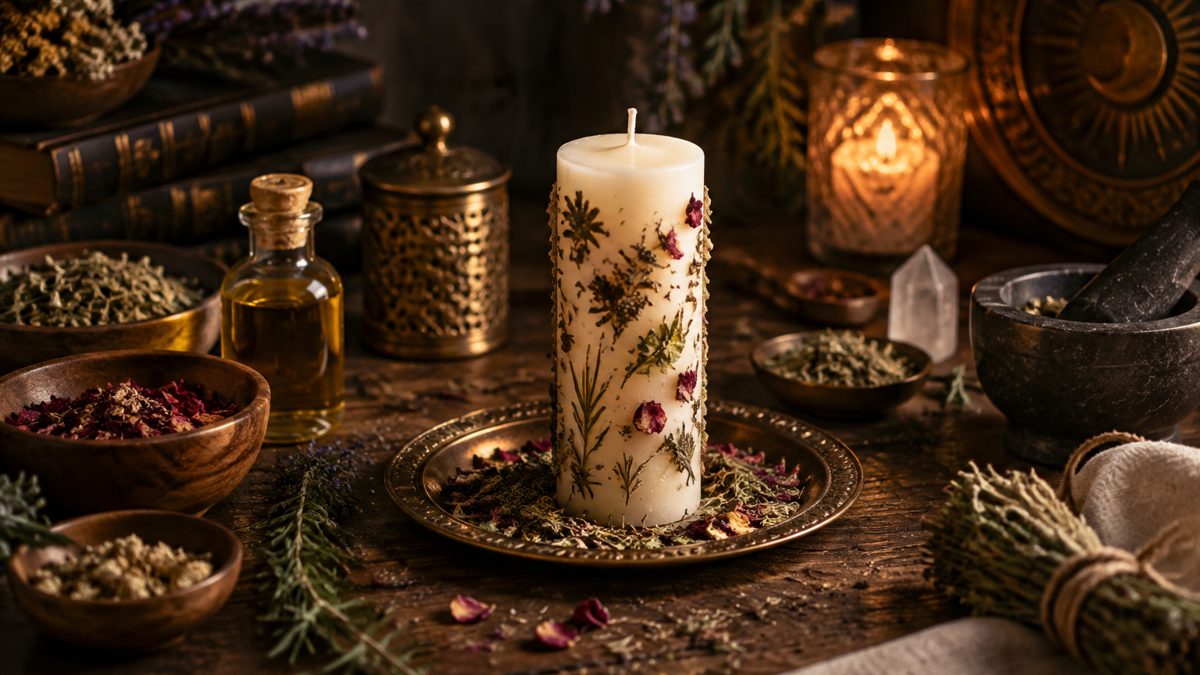
Herbal candle dressing often means coating a candle with oil and rolling it in dried plant material. I do not recommend that method. Dried herbs can ignite, act as additional wicks, and produce unpredictable flames. Plant fragments dropped into melted wax can also become fuel. A candle sold with decorative botanicals is not automatically safe just because it was commercially made.
Instead, dress the ritual setting rather than the candle itself. Use a plain candle in a suitable holder on a stable, heat-resistant surface, following the manufacturer’s instructions and clearances. Keep the herbs in a separate closed container well away from the flame and heat. Do not make a ring of dried leaves around the holder, scatter petals on the candle plate, or place a paper petition beneath a hot vessel.
Una vela LED sin llama lo hace todavía más fácil. Colócala junto a un frasco de hierbas y una intención escrita, con las pilas fuera del alcance de niños y mascotas. Este es mi arreglo preferido cuando el ritual implica mirar hacia dentro, cerrar los ojos o escribir durante un rato. La atención divaga de forma natural durante el trabajo reflexivo, y por eso mismo una llama abierta no debería ser un requisito esencial.
If you choose a real candle, remain present, keep it clear of drafts and anything combustible, and extinguish it before leaving or becoming sleepy. There is no need to let it burn down completely. Ending a ritual early for safety does not spoil its symbolic purpose. Nor should a flickering flame or cracked container be interpreted as proof of a message; address the physical hazard first.
10. Assemble a dry protection jar and plan its retirement
A protection jar can be a visual reminder of the boundaries and habits you want to maintain. For this guide, keep it dry and uncomplicated: a small, clean container, a pinch of rosemary, an optional bay leaf, and a folded note. You might write, “This home is a place where I practice care and clear limits.” These ingredients express a belief or intention; they do not provide a guaranteed protective effect.
Avoid adding bodily fluids, fresh plants, food scraps, liquids, sharp objects, or unidentified minerals. Wet organic mixtures can spoil, grow mold, or ferment and build pressure in a sealed container. Nails, needles, and broken glass create handling and disposal hazards without being necessary to the symbolism. There is also no reason to seal the lid with hot wax; an ordinary secure closure is sufficient.
Place the jar where it will not fall, overheat, or attract a child or pet. A nonbreakable container may be the better choice in a busy household. Pair the ritual with a concrete check: is the doorway clear, are important contacts easy to find, and have you communicated the boundary you wrote down? The jar can remind you to act, but it cannot take those actions for you.
Decide at the beginning how you will retire the object. You can empty it into appropriate household waste and clean the reusable container. Compost only suitable, uncontaminated plant material if your compost system accepts it; remove paper, string, salt, and other additions as needed. Do not bury jars, leave them in public places, or throw them into water. A quiet ending at home is entirely sufficient.
11. Bring herbal symbolism into everyday cooking
La brujería de cocina es donde el ritual herbal me resulta más natural. Puede ser tan modesta como añadir romero a unas verduras asadas mientras piensas en las personas que esperas recibir, o mezclar menta en una receta conocida como marca de una nueva estación. La capa simbólica no cambia las propiedades físicas de la comida y nunca debe exigir una cantidad insegura de un ingrediente.
Use only correctly identified, food-grade herbs in ordinary culinary quantities and recipes appropriate to them. Follow normal food hygiene, storage, and temperature guidance. Do not cook with herbs taken from charm bags, incense supplies, bath mixtures, or decorative bouquets. “Natural” is not a food-safety category, and a plant’s association with abundance or love does not establish that it belongs in dinner.
Respeta a todas las personas que comen. Comprueba alergias, preferencias y restricciones dietéticas pertinentes, y sé transparente sobre los ingredientes. Retira las hojas de laurel enteras antes de servir, porque sus bordes rígidos pueden suponer un riesgo de atragantamiento o lesión. No añadas hierbas en secreto ni presentes un plato compartido como un hechizo diseñado para anular el consentimiento de alguien. La hospitalidad es una base mucho más sólida que intentar controlar los sentimientos de un invitado.
Avoid improvising shelf-stable herb-infused oils, particularly with fresh herbs or garlic; improperly prepared and stored oils can present a botulism risk. Use a tested food-safety recipe and its exact storage instructions, or choose a simpler dish. My favorite kitchen ritual needs no preserved preparation at all: cook something familiar, pause before serving, and name one thing you appreciate about the work that brought the food to the table.
12. Prueba un ritual sencillo de umbral y luego reflexiona
Aquí tienes un ritual sin humo ni llama que reúne toda la guía. Su propósito es marcar un nuevo comienzo en casa, no garantizar protección ni eliminar una amenaza espiritual objetivamente establecida. Necesitarás un frasquito etiquetado de romero culinario seco, una hoja de papel, un bolígrafo y un paño adecuado para limpiar tu puerta. Mantén la hierba en su frasco cerrado durante todo el proceso.
Choose a time when you can work without rushing. If the doorway is shared, respect other people’s access and belongings. Begin with the ordinary task of clearing clutter and wiping the appropriate surface according to its care instructions. You are not making the entrance ritually perfect. You are giving a small, useful job your full attention and allowing it to represent something larger.
When the steps are finished, spend a few minutes writing about the experience. Did the process help you clarify what “welcome” or “boundary” means to you? Was there a practical task you had been avoiding? These observations are more useful than searching for signs that the ritual worked. If you use divination afterward, treat the result as a prompt for reflection rather than an instruction or factual prediction.
That is the kind of herbal witchcraft I hope to make room for at Crossroads Journal: curious, personal, grounded, and willing to be simple. You may eventually explore a particular regional or family tradition in greater depth, with careful sources and appropriate teachers. For now, one familiar herb and one honestly chosen action are enough. Let the ritual support the life you actually live.
- Despeja la entrada sin bloquear las salidas y limpia una superficie adecuada con el método recomendado para ella.
- Set the closed rosemary jar on a stable surface away from the doorway’s traffic, children, and pets.
- Escribe una intención, como “Haré espacio para la bienvenida respetando mis límites”.
- Lee la frase en voz alta o en silencio. Considera el significado del romero en tu práctica sin tratar esa asociación como un efecto prometido.
- Choose one achievable action that expresses the intention: put away shoes, establish a visiting preference, or make space for a guest’s coat.
- Completa la acción, guarda el frasco en un lugar seguro y conserva o recicla el papel como prefieras. El ritual ha terminado.
These practices are shared as tradition and personal reflection, not as a substitute for medical, legal or financial advice.
Sigue aprendiendo
- Hierbas en la brujería
- How to read tarot cards
- How to use angel oracle cards
- Cómo leer las cartas de la baraja
- Cómo usar cristales en hechizos
- Cómo usar hierbas en la brujería
- How to read the Dr. Moorne Egyptian Tarot
- How to read dice
- How to read tea leaves
- Cómo usar un péndulo
- Cómo lanzar un hechizo con velas
- How to make a spell jar
- How to make a sigil
- How to cleanse your home
- How to set up an ancestor altar
- How to open a sacred space
- How to time spells with the moon
- How to work with water and salt
- How to make a protection charm bag
- Read the Journal o visita la shops