How-To Guide
How to Read Tea Leaves
Por Seraphina
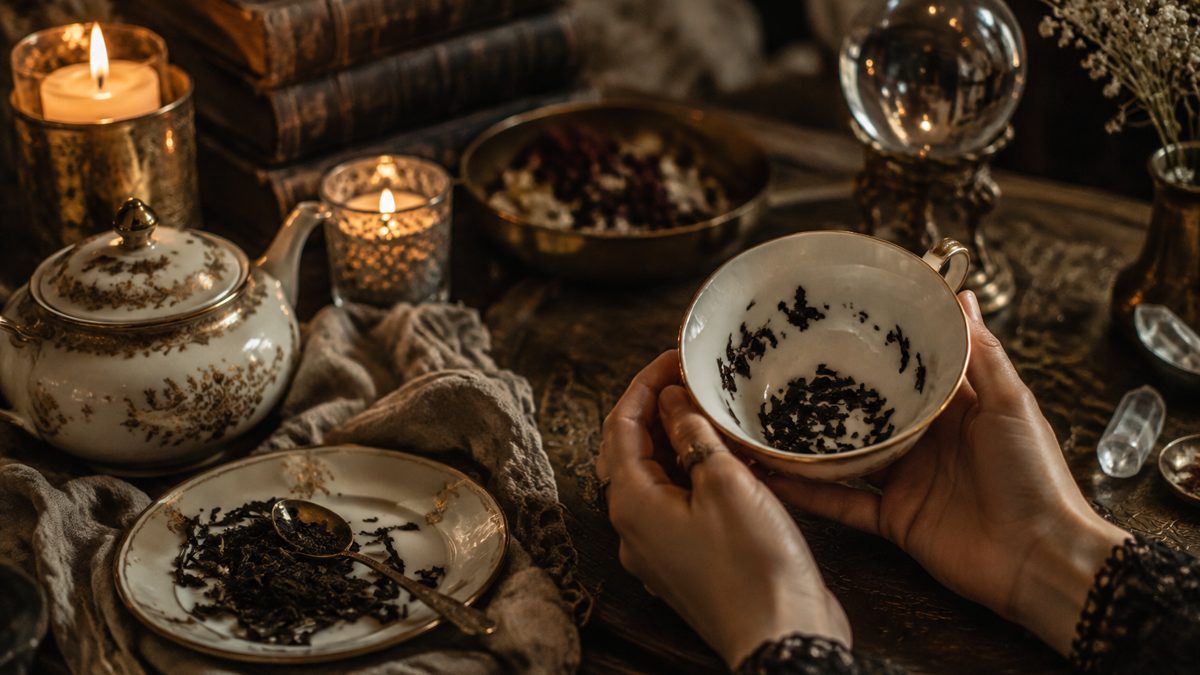
Reading tea leaves begins with an ordinary pleasure: making a cup of tea and giving yourself time to notice it. After the tea is mostly finished, the leaves left behind form shapes that a reader interprets through symbolism, association, and context. You do not need an elaborate collection of tools or a special gift to begin exploring this traditional practice.
Frequentemente chamada de tasseografia ou tasseomancia, a leitura de folhas de chá pertence a uma família mais ampla de práticas que interpretam padrões em xícaras. Algumas pessoas a encaram como adivinhação, outras como um ritual reflexivo ou uma conversa criativa consigo mesmas. Não há evidência científica estabelecida de que as folhas de chá prevejam acontecimentos futuros. Seu valor prático pode estar nas perguntas, conexões e possibilidades que elas ajudam você a considerar.
This guide takes you from choosing a suitable cup to recording a complete reading. Along the way, you will learn how different traditions organize the cup, how to recognize shapes without forcing them, and how to turn an impression into a thoughtful interpretation. The aim is not to memorize every possible symbol, but to develop a consistent, gentle way of looking.
Keep the companion reference page, Tea Leaf Symbols and Meanings, nearby when you want ideas for a particular image. Use it as a starting point rather than a final authority: a bird, bridge, or tree can mean different things in different contexts. Your question, personal associations, and the surrounding patterns all deserve a place in the reading.
Looking for the meaning of a single card or ingredient? Keep our Símbolos das folhas de chá guide open beside you.
1. Entenda a história sem transformá-la em uma única história de origem
Tea-leaf reading has no neatly documented beginning that explains every modern practice. Tea drinking has a long history in China, but that fact alone does not establish where the familiar method of swirling leaves in a handled cup originated. Accounts that give one ancient date, one inventor, or an unbroken universal lineage usually simplify a more complicated story.
A forma reconhecível em muitos guias em inglês desenvolveu-se junto com a difusão do hábito de tomar chá pela Europa e pela Grã-Bretanha. O entretenimento doméstico, os costumes de adivinhação e os manuais impressos posteriores ajudaram a divulgar métodos e listas de símbolos. Salões de chá comerciais e leitores especializados também contribuíram para sua visibilidade. Casas diferentes podiam compartilhar o processo básico e discordar sobre quase todos os detalhes da interpretação.
Related practices read coffee grounds or other beverage sediment, including traditions associated with Turkish coffee and communities across the Balkans and Middle East. These practices have their own histories and social settings; they should not be treated as interchangeable versions of one generic ritual. Learning from a particular community means respecting its terminology, customs, and boundaries.
You may encounter instructions to use the left hand, turn the cup clockwise, or swirl exactly three times. Such rules can be meaningful within a family or teaching tradition, but they are not universal requirements. When learning, distinguish between a documented custom, a modern reader's preference, and your own adaptation. That distinction keeps the practice both honest and welcoming.
2. Gather a simple, workable tea-reading kit
Start with a clean, light-colored cup and a matching saucer. A broad bowl with a smooth interior makes leaves easier to see than a narrow mug with dark glaze or busy decoration. A handle provides a convenient reference point for mapping the cup. Ordinary household crockery is perfectly suitable; you do not need an antique fortune-telling cup.
Loose-leaf black tea is a useful beginner choice because its darker pieces usually stand out against a pale cup. Choose small or medium leaves rather than powdery tea dust or very large rolled leaves. Large leaves can make a few bulky clumps, while fine dust can coat the surface so evenly that distinct shapes become difficult to recognize.
You will also need drinking water, a kettle, a teaspoon, a timer if you use one, and a notebook. A tray or washable cloth can catch drips during inversion. Good daylight or a steady lamp helps you see the actual pattern. A phone camera is optional, but photographs make it easier to revisit your observations without reconstructing them from memory.
Use tea sold for drinking, and check its ingredients if it contains flavorings, flowers, or herbs. Avoid adding glitter, essential oils, unknown plants, or craft materials to a cup you will drink from. If you prefer not to consume caffeine, a familiar food-grade caffeine-free infusion can work, though its pieces may behave differently. Safety matters more than achieving a traditional appearance.
3. Prepare your space and choose a useful question
Escolha uma mesa estável onde você possa manusear água quente com conforto e examinar a xícara. Libere espaço suficiente para a chaleira, o pires e o caderno. Silencie as notificações se isso ajudar a se acomodar, mas não confunda uma atmosfera elaborada com um requisito. Uma tranquila mesa de cozinha é tão adequada quanto um espaço ritual cuidadosamente arrumado.
Antes de preparar o chá, decida o que você quer que a leitura explore. Perguntas abertas costumam levar a uma reflexão mais útil do que exigências de uma previsão fixa. Experimente perguntar o que merece atenção em um projeto criativo, como você poderia encarar uma mudança que se aproxima ou que apoio você deixou de notar. Mantenha a pergunta estreita o bastante para que as imagens tenham um contexto significativo.
Evite usar a xícara para estabelecer os pensamentos privados de outra pessoa, provar infidelidade, diagnosticar uma doença ou resolver uma decisão financeira urgente. Os padrões do chá não podem verificar essas coisas. Se uma situação exige evidências, aconselhamento profissional ou uma conversa direta, comece por aí. Uma leitura pode explorar seus sentimentos sobre a situação sem fingir fornecer fatos que faltam.
Take a few easy breaths and notice your present mood. There is no need to empty your mind or enter a special state. Simply recording that you feel hopeful, anxious, tired, or distracted can help later, because mood influences which shapes you notice and what stories you attach to them.
- 1. Clear and wipe the table, then arrange the cup, saucer, tea, and notebook within comfortable reach.
- 2. Write one open-ended question in your notebook before looking for any symbols.
- 3. Note your mood and any outcome you are especially hoping for or afraid of.
- 4. Decida que você pode parar, fazer uma pausa ou deixar a leitura inconclusiva.
4. Prepare o chá e beba-o com tranquilidade
For a first attempt, use roughly half a teaspoon of loose tea in a small cup, then adjust future servings to suit the leaf size and your taste. Too many leaves can cover the interior; too few may leave little to examine. This is a practical starting point, not a spiritually significant measurement or a strict brewing rule.
Heat the water according to the tea's instructions and pour carefully, leaving room below the rim. Let the tea steep as directed, remembering that unstrained leaves will continue brewing while you drink. If it becomes unpleasantly strong, use fewer leaves or a milder tea next time. There is no benefit in forcing yourself to finish a bitter cup.
For the clearest first reading, keep the tea plain. Milk can obscure the interior, and undissolved sweeteners or other additions may create marks that are not leaves. If you need a sweetener, dissolve it fully and note that choice. This recommendation is about visibility, not ritual purity; your comfort and dietary needs remain more important.
Allow the tea to cool to a safe drinking temperature. Sip slowly, letting the leaves settle between sips, and leave a small amount of liquid with the sediment. You do not need to swallow any leaves. If loose leaves bother you, brew strained tea for drinking and add a small spoonful of the cooled, wet leaves afterward, clearly treating this as an adapted method.
- 1. Put a modest amount of food-grade loose tea into the clean cup.
- 2. Acrescente água na temperatura recomendada e deixe o chá em infusão.
- 3. Wait until it is comfortable to drink, then sip without deliberately swallowing leaves.
- 4. Stop with the leaves and about a teaspoon or two of liquid remaining; adjust if the leaves cannot move freely.
5. Gire, escorra e revele o padrão
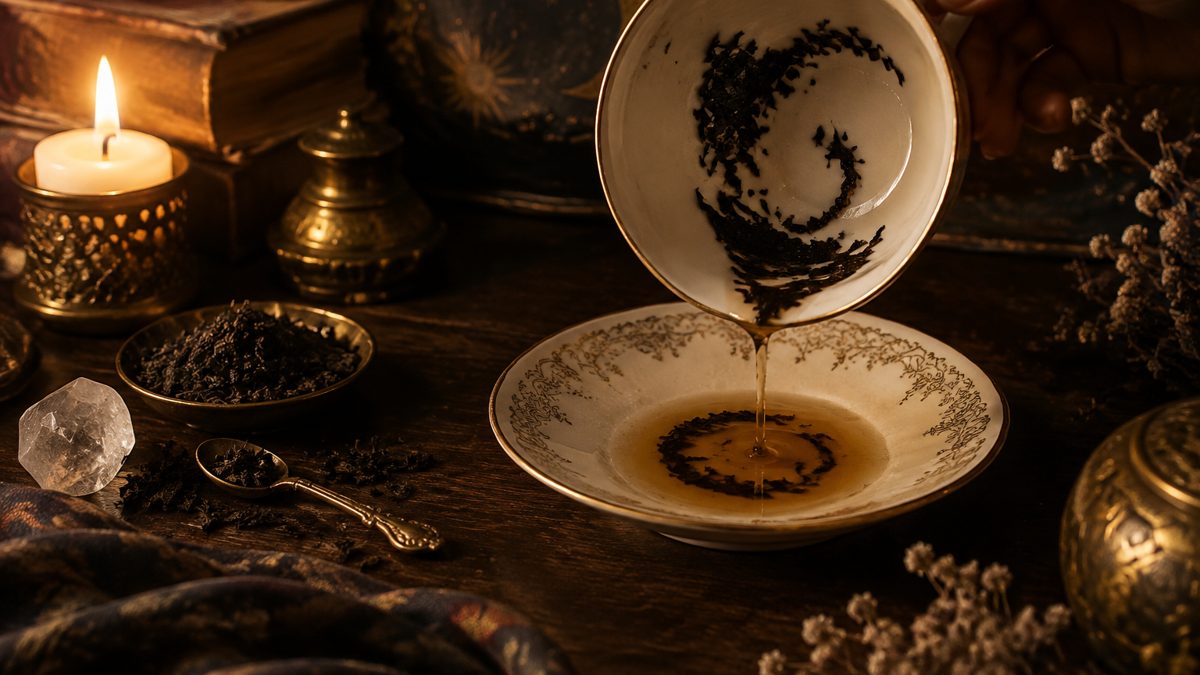
Once only a little liquid remains, gently rotate the cup so the wet leaves travel around its interior. The aim is to distribute them, not fling them over the rim. Many modern instructions suggest three swirls, sometimes with a particular hand or direction. You may follow that convention, but consistency matters more than the number.
Place the saucer on a stable surface before turning the cup over. If the cup still holds enough liquid to spill widely, carefully pour off a little first. Invert the cup onto the saucer and allow it to drain briefly. Around half a minute is a useful experiment, although leaf size and cup shape will affect the result.
Lift the cup slowly and keep the saucer beneath it until any final drips stop. Some leaves will cling to the walls, some will gather near the base, and some may fall onto the saucer. For a first reading, focus only on the cup. Including the saucer is an optional extension, not something you must interpret.
Resist the urge to rearrange awkward leaves or repeat the process until you get an attractive image. The original arrangement is your observation material, including its blank spaces and ambiguity. If everything slides into one wet lump, you can acknowledge a preparation problem and try again later rather than inventing a meaning for a technical mishap.
- 1. Segure com firmeza a xícara já fria e gire suavemente o líquido restante pelo interior.
- 2. If following a three-swirl convention, complete three comfortable rotations without splashing.
- 3. Vire a xícara de cabeça para baixo sobre o pires e deixe escorrer o excesso de líquido.
- 4. Lift it carefully, photograph the untouched pattern, and begin with a whole-cup observation.
6. Choose a cup map before interpreting individual symbols
Um mapa da xícara dá às posições um papel simbólico constante. Uma convenção moderna comum trata a alça como referência para a pessoa que recebe a leitura, geralmente chamada de consulente. Os padrões próximos a ela podem então ser associados a preocupações pessoais, ao lar ou à experiência imediata. Outros leitores atribuem significados diferentes, por isso registre o mapa que escolher em vez de presumir que seja universal.
Outra convenção conhecida associa a borda a assuntos próximos, as paredes do meio a situações em desenvolvimento e a base a preocupações de longo prazo ou mais profundas. São categorias simbólicas, não relógios confiáveis. Evite converter a distância exata de uma folha até a borda em uma data prometida. Uma distinção ampla entre preocupações imediatas e de fundo geralmente basta.
Alguns sistemas interpretam os lados esquerdo e direito como passado e futuro, vida interior e exterior, ou o que está partindo e o que está chegando. Você não precisa de todas essas camadas ao mesmo tempo. Na verdade, combinar vários mapas incompatíveis pode permitir que você justifique quase qualquer conclusão. Comece com a referência da asa e três zonas de altura, e só então acrescente complexidade se ela continuar útil.
Set the handle toward you when you first record positions. You can rotate the cup to inspect a shape, but note where that shape sits in the original orientation. Otherwise, a cluster may migrate from one symbolic area to another simply because you turned the cup. A quick sketch with a marked handle prevents this common confusion.
7. Procure formas sem forçar o reconhecimento
Begin with the whole arrangement rather than hunting immediately for a heart or a familiar animal. Is the cup sparse or crowded? Are most leaves near the rim, scattered across the walls, or concentrated at the base? Notice lines, clusters, gaps, and connections. These observations give individual shapes a setting instead of leaving them as isolated dictionary entries.
Next, identify two or three clear forms. A branching line might resemble a tree; an arch might suggest a bridge; a compact cluster with an extending point could look like a bird. Describe the visible features before naming the object. Writing 'curved line joining two clumps' is more precise than jumping straight to 'a successful reunion.'
As pessoas reconhecem naturalmente formas familiares em padrões ambíguos, uma tendência frequentemente chamada de pareidolia. Isso não torna o exercício inútil, mas explica por que leitores diferentes podem ver coisas diferentes na mesma xícara. Trate o reconhecimento como uma interpretação imaginativa, e não como prova de que uma mensagem externa foi colocada ali especificamente para você.
If a shape only appears after repeated turning, squinting, and persuasion, mark it as uncertain or leave it out. You are allowed to see nothing recognizable in part of the cup. Empty space does not automatically mean loneliness, and an untidy cluster does not automatically signal trouble. Good observation includes knowing when there is too little information.
8. Interprete os símbolos pelo contexto, não por veredictos fixos
Once you have identified a plausible image, explore three sources of meaning: the associations found in a chosen reference, your personal response, and the reading's question. A tree, for example, can suggest growth, roots, family, shelter, or gradual development. In a question about studying, steady learning might be a more relevant association than family history.
Consult Tea Leaf Symbols and Meanings for possibilities, but do not keep searching through references until you find the answer you want. Symbol lists often disagree because they reflect different authors and traditions. Choose an interpretation that fits the visible shape and question, while acknowledging reasonable alternatives. A reference should broaden your thinking, not overrule your judgment.
Consider how images relate spatially. A bridge beside two separate clusters could invite reflection on connection between groups. A winding line near a tree might suggest a gradual route toward stability. These are constructed symbolic narratives, not facts about future events. Keep the language exploratory: 'This could reflect' is more responsible than 'This proves.'
Termine traduzindo a leitura em uma pergunta ou em uma ação sob o seu controle. Se um pássaro lembra comunicação, talvez você precise redigir um e-mail ou pedir esclarecimentos. A xícara não pode garantir uma resposta. Uma interpretação útil aumenta a sua capacidade de escolher com cuidado, em vez de fazê-lo se sentir dependente de sinais.
9. Acompanhe um exemplo prático, da xícara à ação concreta
Imagine uma leitura de prática com a pergunta: 'O que merece minha atenção ao começar um projeto de escrita compartilhado?' Este é um exemplo ilustrativo, não o relato da experiência de uma cliente real. O leitor usa a asa da xícara como ponto de referência pessoal, a borda para preocupações imediatas, o meio para assuntos em desenvolvimento e a base para temas de fundo.
Near the rim and handle, a small cluster resembles a bird, though it could also be a leaf. Halfway down the opposite wall, an arch appears to join two groups of tea leaves. At the base, a branching shape looks more clearly like a tree. The reader records those observations and labels the bird identification as uncertain.
Using familiar symbolic associations, the reader considers communication for the bird, cooperation for the bridge, and steady growth for the tree. In the context of a shared project, those ideas suggest discussing expectations, connecting different working styles, and allowing time for development. Another plausible tree association is established habits, which raises a useful question about whose routines will shape the collaboration.
The final interpretation is modest: 'This pattern invites me to clarify communication and create a workable structure before expecting quick progress.' Nothing in the cup establishes whether the project will succeed or whether the collaborator is trustworthy. The practical outcome is to arrange a planning conversation, agree on responsibilities, and set a review date based on the actual schedule.
- 1. Record the question and chosen cup map before interpreting.
- 2. List the bird-like cluster, connecting arch, and branching base shape, including their locations and uncertainty.
- 3. Compare relevant meanings and note at least one alternative interpretation.
- 4. Escolha um passo concreto: converse com o colaborador sobre funções, prazos e preferências de comunicação.
10. Recognize common mistakes and troubleshoot gently
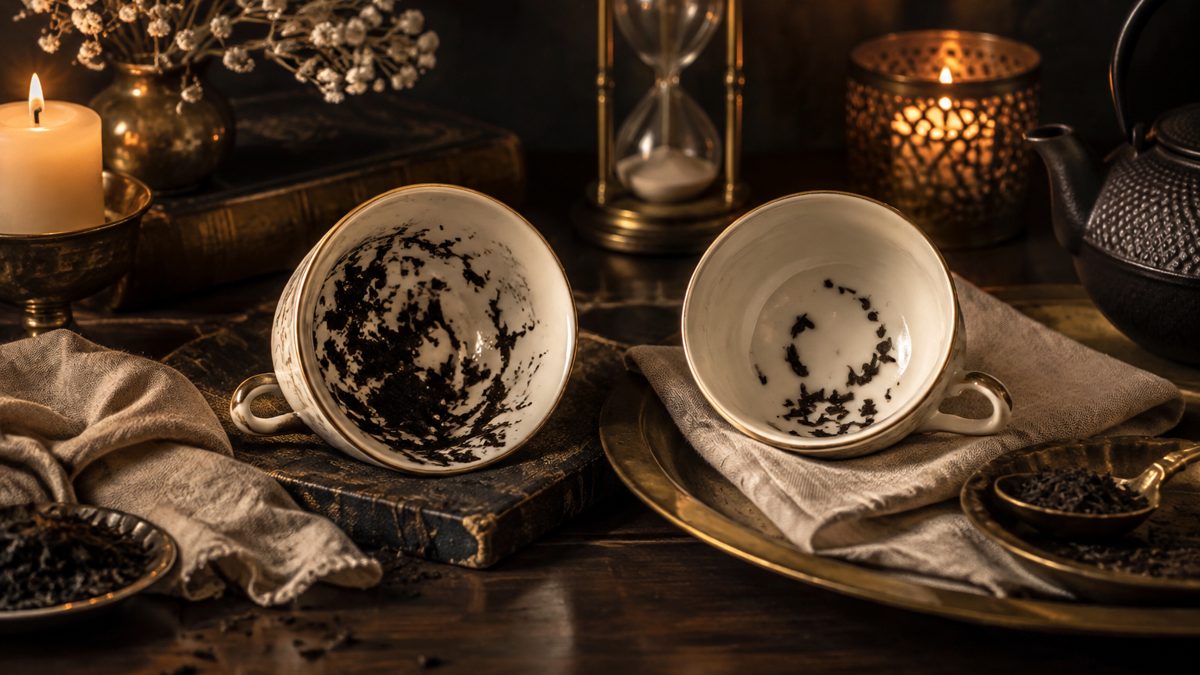
A cup covered in sludge usually calls for a practical adjustment, not a dramatic interpretation. Try less tea, larger leaf pieces, or slightly less remaining liquid. If all the leaves fall onto the saucer, experiment with retaining a little more moisture before inversion. Change one variable at a time so you can learn what works with your particular cup.
Another common mistake is trying to interpret every fragment. A single cup can contain dozens of suggestive marks, and assigning all of them significance produces a confusing story. Choose a few clear images and one or two overall features. A short, coherent reading is often more useful than an elaborate catalogue of symbols that contradict one another.
Be alert to confirmation bias: the tendency to notice details that support what you already believe. If you expect an argument, a pointed cluster may become a weapon while a connecting line goes unnoticed. Write an alternative reading before settling on your preferred one. Ask what you would see if the question concerned friendship rather than conflict.
Repeatedly reading the same question can also turn reflection into reassurance-seeking. If you feel compelled to make another cup until the answer becomes comforting, stop for the day. Return to the real-world information available to you. An unclear reading is not a failure, and you do not owe any pattern a conclusion.
11. Keep the practice physically safe and ethically grounded
Os riscos mais imediatos são os comuns: queimaduras, derramamentos, louça quebrada e ingredientes inadequados. Use uma xícara intacta, própria para alimentos; peças antigas ou decorativas podem não ser adequadas para bebidas quentes. Mantenha a água quente longe de crianças e animais de estimação. Espere até que a xícara esteja confortável ao toque antes de girá-la ou virá-la.
Check tea blends for allergens, caffeine, and herbs that may be unsuitable during pregnancy, with particular conditions, or alongside medicines. Familiarity in folklore does not establish safety for ingestion. Ask a pharmacist or qualified clinician when uncertain, and do not drink unidentified foraged plants. Drinking tea is optional; an adapted practice with cooled leaves avoids pressure to consume it.
Candles, incense, and ritual additives are unnecessary. If you use a candle, place it in a stable holder away from loose fabric and never leave it unattended. Avoid smoke where it affects breathing or exposes pets. Never add essential oils or nonfood ritual materials to drinking tea. If your separate ritual uses salt water, do not pour it onto plants or garden soil.
Ao ler para outra pessoa, peça permissão, combine o tema e deixe claro que a leitura é interpretativa e não uma previsão verificada. Nunca anuncie morte, doença, gravidez, maldições ou desastre inevitável a partir de uma forma. Não assuste alguém para que compre um remédio. Proteja a privacidade da pessoa, evite promessas e apoie o direito dela de rejeitar qualquer interpretação que não pareça útil.
12. Keep a journal that preserves what you actually saw
Um diário de leitura de chá ajuda a separar a observação da interpretação e da visão tardia. Registre a data, a pergunta, o tipo de chá, a quantidade aproximada, a xícara usada e o método de preparo. Inclua seu estado de ânimo e o mapa da xícara. Esses detalhes podem parecer banais, mas podem explicar por que uma sessão produz formas distintas e outra produz pouco mais que um aglomerado denso de folhas.
Photograph the cup before much handling, ideally from above and from an angle that shows the walls. Note the handle position in each image or sketch. Then list the shapes in plain descriptive language, marking unclear ones. Keep this original record intact rather than rewriting it after subsequent events make one interpretation feel especially compelling.
In a separate paragraph, write the associations you considered and the interpretation you chose. Include alternatives, questions raised, and any action you plan to take. Later, record what happened without treating a broad resemblance as proof of prediction. Remember to notice mismatches, forgotten symbols, and ordinary explanations as carefully as apparent correspondences.
Review several entries for usefulness rather than supernatural accuracy. Did the practice help you identify a concern, prepare a conversation, or slow down before reacting? Did it leave you more anxious? Your journal can show whether the practice supports you. If it repeatedly encourages fear or dependency, changing your approach or taking a break is sensible.
- 1. Record preparation, mood, question, and the mapping convention used.
- 2. Add an unedited photograph or sketch and a factual description of the visible shapes.
- 3. Write possible meanings, uncertainty, and one practical takeaway in a separate interpretation entry.
- 4. Volte mais tarde para registrar resultados e utilidade sem alterar as anotações originais.
13. Close the reading and develop your own steady practice
Termine resumindo a leitura em duas ou três frases. Nomeie o tema principal, reconheça o que permanece incerto e identifique algum próximo passo útil. Você não precisa de um ritual de encerramento dramático. Um simples momento de gratidão, uma respiração tranquila ou fechar o caderno podem marcar a volta à atividade comum.
Descarte as folhas com atenção e lave a xícara e o pires. As folhas de chá puras geralmente podem ir para um sistema de compostagem doméstica adequado, mas evite empilhar repetidamente folhas molhadas diretamente em volta de plantas de casa, onde podem favorecer o mofo. Não deixe o chá usado parado por longos períodos e mantenha folhas com cafeína fora do alcance de animais de estimação.
For practice, use the same cup and map for several sessions while varying only what needs practical adjustment. Read occasionally rather than turning every decision into a consultation. You might examine a cup with a trusted friend and compare observations before discussing meanings. Different impressions can teach flexibility, provided neither person insists that their interpretation is the only valid one.
The heart of tea-leaf reading is attentive looking joined with thoughtful storytelling. Tradition offers a framework, reference pages offer possibilities, and experience helps you recognize your own habits of interpretation. Let the cup open a conversation rather than close a decision. The most grounded reading leaves you with room to think, ask questions, and choose your next step freely.
These practices are shared as tradition and personal reflection, not as a substitute for medical, legal or financial advice.
Continue aprendendo
- Símbolos das folhas de chá
- How to read tarot cards
- How to use angel oracle cards
- Como ler cartas de baralho
- Como usar cristais em feitiços
- Como usar ervas na bruxaria
- How to read the Dr. Moorne Egyptian Tarot
- How to read dice
- How to read tea leaves
- Como usar um pêndulo
- Como lançar um feitiço de vela
- How to make a spell jar
- How to make a sigil
- How to cleanse your home
- How to set up an ancestor altar
- How to open a sacred space
- How to time spells with the moon
- How to work with water and salt
- How to make a protection charm bag
- Read the Journal ou visite o shops