How-To Guide
Como Usar Ervas na Bruxaria: Feitiços, Banhos e Amuletos
Por Seraphina
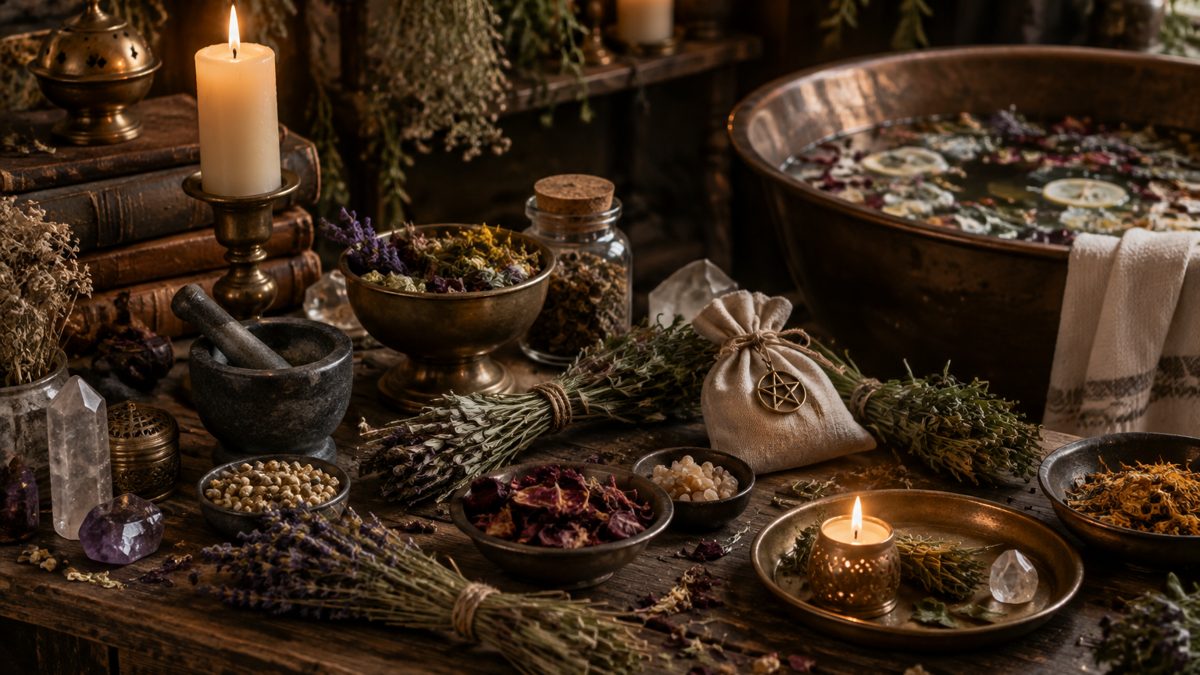
The herbs I return to most often are not rare or mysterious. They are the rosemary beside the kitchen door, the bay leaves in the cupboard, and the mint that would happily take over every pot I own. Welcome to Crossroads Journal. I’m Seraphina, and this is my guide to bringing herbs into a folk witchcraft practice with curiosity, care, and both feet on the ground.
Em muitas tradições, as pessoas usaram plantas para marcar limiares, abençoar lares, lembrar os mortos, celebrar mudanças sazonais e dar forma física a um desejo. Essas práticas não formam um sistema universal único. Seus significados variam conforme o lugar, a família, a religião e o praticante. Aqui, ofereço uma abordagem adaptável e centrada no lar, e não a pretensão de revelar um único livro de regras antigo.
I approach herbal magic as a practice of symbolism, attention, and belief. A charm can remind us of a boundary; a kitchen ritual can make an ordinary meal feel deliberate. Neither guarantees an outcome, and divination does not establish facts or reliably predict events. Herbal witchcraft belongs alongside practical action, never in place of appropriate professional advice or ordinary precautions.
We’ll work through gathering, drying, storing, sachets, baths, floor washes, smoke, candle arrangements, protection jars, and kitchen rituals before putting everything together in a simple ceremony. You do not need every method, a garden, or an overflowing apothecary. A few correctly identified ingredients, a clear purpose, and a willingness to leave unsafe ideas alone are more than enough.
Looking for the meaning of a single card or ingredient? Keep our Herbs in witchcraft guide open beside you.
Como Usar Ervas na Bruxaria: Feitiços, Banhos e Amuletos
My starting point is always the same: decide what the practice means before deciding what to buy. Are you marking a fresh beginning, expressing gratitude, remembering someone, or creating a moment to reflect on your boundaries? Write the purpose in one ordinary sentence. “I want to make my home feel thoughtfully tended” gives you a more useful starting point than an elaborate list of ingredients with no personal connection.
Em seguida, escolha uma planta cujo aroma, história, aparência ou uso cotidiano apoie essa intenção. Em algumas práticas contemporâneas de inspiração popular, o alecrim é associado à memória e à proteção, o louro a desejos ou reconhecimento, e a lavanda à paz. Esses são exemplos de associações tradicionais, não propriedades mensuráveis nem significados universalmente compartilhados. A hortelã da cozinha da sua avó pode ter mais significado para você do que uma tabela de correspondências.
I like to distinguish an inherited tradition from a personal invention. If I learned a custom from a family member, I say so. If I adapt a published practice, I keep a note of the source. If I invent a rosemary charm because its smell reminds me of home, I call it my own symbolism. That honesty makes a practice richer, not less magical.
There is also no obligation to borrow ceremonial plants or practices from communities whose teachings you do not share. Learn the context of what interests you, respect closed or restricted traditions, and avoid treating distinct cultures as a basket of interchangeable ingredients. Familiar culinary herbs can support a meaningful personal practice without pretending to carry someone else’s authority.
1. Begin with safety, not a correspondence list
A plant’s traditional magical reputation does not establish that it is safe to swallow, breathe, burn, or put on skin. The form matters too: a culinary leaf, concentrated extract, and essential oil are not interchangeable. For the beginner practices in this guide, I leave essential oils out entirely. Never ingest products labeled for incense, crafts, fragrance, or magical use, and never assume an online seller’s spiritual description is a safety assessment.
A arruda merece um aviso especialmente firme. É tóxica se engolida, pode causar intoxicação grave e produzir reações cutâneas severas associadas à exposição ao sol. É particularmente perigosa durante a gravidez. Não recomendo a arruda para banhos caseiros, chás, óleos, fumaça ou amuletos de manuseio solto. Se ela já cresce no seu jardim, evite o contato com a pele nua e busque orientação hortícola confiável antes de manuseá-la. Um símbolo escrito pode substituí-la em um ritual.
A artemísia é outra planta que eu não recomendaria casualmente. Evite-a durante a gravidez ou ao tentar engravidar, e busque orientação qualificada antes de qualquer uso durante a amamentação. Ela também pode provocar reações alérgicas, inclusive em pessoas sensíveis a plantas aparentadas. Neste guia para iniciantes, simplesmente deixe-a de fora. Afirmações sobre sonhos ou adivinhação não são motivo para aceitar uma exposição evitável, e queimá-la não a torna inofensiva.
Mantenha todos os ingredientes rituais longe de crianças e animais; algo tolerado por um adulto pode ser perigoso para um animal de estimação. Em caso de alergias, asma, dúvidas sobre medicamentos, gravidez ou segurança para a pele, consulte um profissional de saúde ou farmacêutico adequado, e não um livro de correspondências. Se houver suspeita de exposição ou envenenamento, entre em contato com o centro de controle de intoxicações local ou com os serviços de emergência; no caso de um animal, procure um veterinário. Não tente um remédio mágico nem provoque vômito, a menos que seja orientado a fazê-lo.
2. Colha as ervas com respeito e identifique-as com certeza
The simplest beginning is often a small packet of food-grade rosemary or bay from a reputable grocery supplier. You do not have to forage to be a “real” practitioner. If you grow herbs, retain the plant labels and learn the botanical names as well as the common ones. Common names can refer to different species, and resemblance is not enough to establish that a plant is suitable for handling or use.
When gathering outdoors, positively identify the plant using trustworthy references and, where needed, an experienced local botanist or foraging educator. Do not rely on a photograph or identification app alone. If any doubt remains, leave it standing. Avoid roadsides, sprayed areas, industrial land, and places contaminated by animal waste. Obtain permission and check local gathering restrictions; some plants and habitats are protected.
Take only a small amount from a healthy, abundant plant, leaving enough for its continued growth and for wildlife. Avoid uprooting plants or stripping every flower or seed head. For many leafy garden herbs, a dry morning after the dew has evaporated is a convenient harvesting time. Use clean scissors, remove damaged material, and keep different species separate so identification remains clear.
I sometimes pause before cutting to name what I’m gathering and why. That pause is a personal gesture of gratitude, not proof that the plant has granted permission or that harvesting has become ecologically harmless. The practical part still matters: a careful cut, a modest harvest, and an honest decision to leave a struggling plant alone. You can also honor a plant by observing it without taking anything.
3. Seque bem as ervas e mantenha bons registros
Secar é menos dramático do que fazer feitiços, mas exige exatamente a qualidade que valorizo em uma prática: atenção paciente. Selecione a colheita logo. Descarte material doente, mofado ou contaminado em vez de tentar salvá-lo para uso ritual. No caso de ervas culinárias do jardim, enxágue quando apropriado e retire bem a água da superfície. Nunca presuma que a secagem removerá pesticidas, toxinas ou outros contaminantes.
Pequenos maços soltos de ervas folhosas adequadas podem ser pendurados em um local seco e sombreado, com circulação de ar constante. Um maço apertado pode ficar úmido no meio, sobretudo em clima úmido. Como alternativa, espalhe as folhas em uma única camada sobre uma tela de secagem limpa ou use um desidratador de alimentos conforme as instruções para a erva específica. Mantenha as plantas em secagem longe de gordura de cozinha, sprays domésticos e animais curiosos.
Leaves should be crisp rather than cool, limp, or leathery before you seal them away. Drying time varies with the plant, room humidity, and method, so a calendar alone cannot tell you when they are ready. Thick stems may retain moisture after the leaves seem dry. If a stored batch develops condensation, clumping from moisture, visible mold, or a musty smell, discard it.
Etiquete cada lote com o nome popular, o nome botânico quando conhecido, a origem e a data de colheita ou compra. Acrescente o uso pretendido: “próprio para alimentação”, “apenas para artesanato externo” ou “identificação incerta — não usar”. Idealmente, material incerto nunca chega a entrar no seu armário de trabalho. Minhas etiquetas são simples, e não pitorescas, porque quero entendê-las de imediato, inclusive numa noite cansada em que todas as folhas secas parecem bastante parecidas.
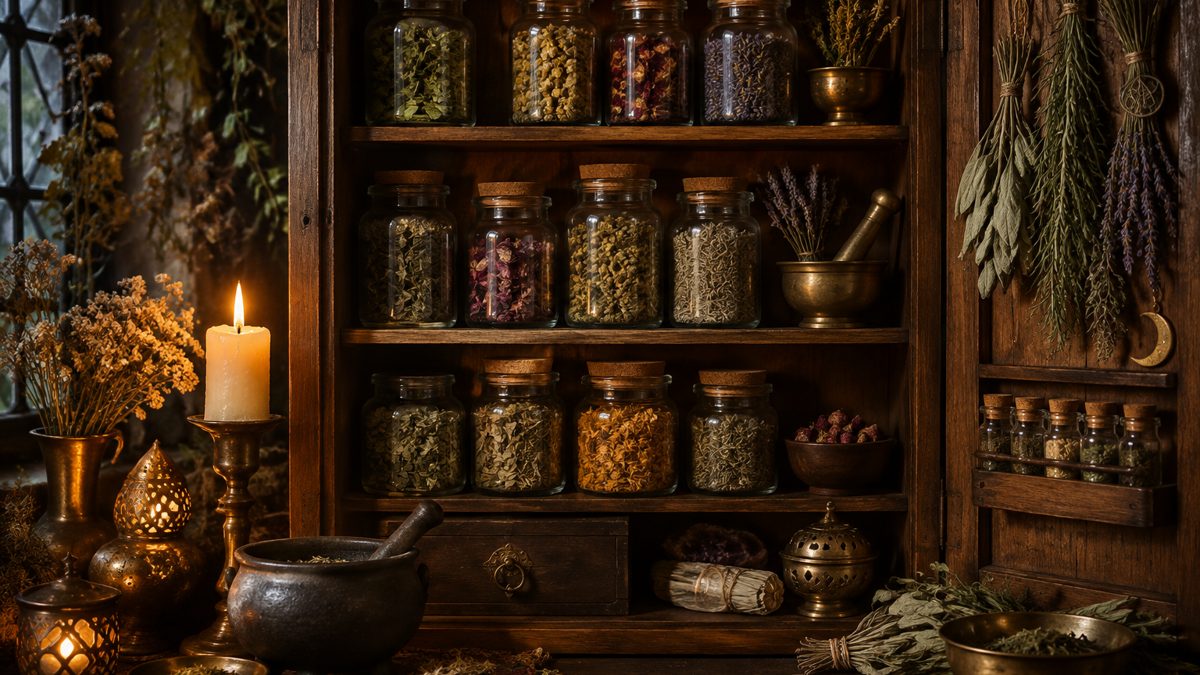
4. Build a small, well-organized herb cupboard
Store fully dried herbs in clean, dry, tightly closing containers away from sunlight, heat, and moisture. A cupboard is usually better than a windowsill or the shelf directly above a stove. Clear jars are convenient for inspection, but they still belong out of strong light. Check supplies periodically, and replace anything that shows deterioration. Older herbs may lose their scent, though age alone is not the only safety consideration.
Keep edible supplies separate from craft ingredients. Once herbs have touched candle wax, fragrance products, floor-cleaning tools, unknown decorations, or a non-food-safe vessel, they do not return to the kitchen. I use different spoons and containers for food and ritual crafts. This is especially important if a jar looks like an ordinary spice jar but contains something intended only for display.
Uma coleção inicial útil pode incluir alecrim, louro, hortelã e tomilho de uso culinário, além de lavanda ou pétalas de rosa somente se a identidade e o uso indicado no rótulo estiverem claros. Flores vendidas por floristas não são automaticamente adequadas para alimentos ou banhos. Escolha ingredientes para usos realmente planejados, em vez de colecionar todas as plantas mencionadas em um livro. Três ervas familiares usadas com atenção valem mais do que trinta potes que você não sabe identificar com segurança.
Keep a simple notebook beside your supplies. Record what you used, its source, the symbolic association you chose, and any practical observations. “The sachet shed dust” is useful. So is “I disliked this scent.” If you record dreams or draw a divination card, describe the interpretation as reflection, not evidence that an herb caused an event or revealed another person’s intentions.
5. Make sachets and charm bags with clear intentions
A sachet is a small fabric container for dried material; a charm bag gives that object an explicitly symbolic purpose. I like them because they can be simple, portable, and free of flame. Choose a tightly woven pouch that will not readily shed dust. Avoid powdered herbs, sharp stems, and long dangling cords. Even a securely closed pouch must stay out of reach of children and pets.
Para um amuleto doméstico simples, use uma pitada de alecrim seco e um pequeno pedaço de papel com uma frase como “Que eu pratique limites claros e ponderados.” O louro pode ser um acréscimo opcional se tiver significado para você, mas uma só erva basta. As palavras expressam uma esperança e um compromisso; não criam uma barreira sobrenatural nem substituem fechaduras, alarmes ou outras proteções práticas.
Segure por um instante o saquinho fechado e pense na ação ligada ao desejo. Talvez você pare de responder mensagens de trabalho durante o jantar ou mantenha a sua entrada mais fácil de atravessar. Coloque o amuleto em um lugar adequado, fora do alcance de mãos ou patas curiosas, e não entre roupas de cama nem contra a pele nua. Não coloque amuletos botânicos soltos em um berço, numa caminha de animal ou entre os pertences de outra pessoa sem consentimento.
Check the bag occasionally for moisture, broken seams, insects, and irritating dust. Retire it whenever it no longer serves a purpose; there is no mandatory magical expiry date. Dispose of the contents according to their materials and local waste guidance. Keeping herbs, paper, and fabric separate at the beginning makes this easier. You do not need to bury a charm or leave it outdoors to complete the practice.
- Choose one intention and write it in a single sentence.
- Acrescente uma pequena pitada de uma erva seca familiar, corretamente identificada, a um saquinho de tecido em bom estado.
- Inclua sua intenção escrita, feche o saquinho com firmeza e conecte-o a uma ação prática.
- Coloque-o com segurança e verifique seu estado periodicamente.
6. Prepare ritual baths without treating the tub like a cauldron
Um banho ritual pode ser um banho comum acompanhado de uma intenção escolhida. As ervas são opcionais. Na verdade, colocar um pote de ervas fechado com segurança em uma prateleira fora da zona de respingos é a forma de menor exposição de incluir seu simbolismo. Se você tem pele sensível, alergias, pele ferida, uma condição de saúde relevante ou dúvida sobre algum ingrediente, escolha água pura em vez de experimentar uma preparação de ervas.
Se optar pelo contato com plantas, use apenas um ingrediente corretamente identificado que você já tolere e que orientações confiáveis recomendem para uso tópico. A condição de grau alimentício, por si só, não garante segurança para a pele. Um teste em área pequena pode revelar irritação, mas não garante que um banho completo seja seguro nem descarta uma alergia posterior. Não acrescente arruda, artemísia, óleos essenciais, misturas desconhecidas nem extratos concentrados.
A strained, cooled infusion avoids the loose leaves that cling to skin and clog drains. Prepare a weak infusion with the chosen suitable herb in a separate clean vessel, strain it carefully through fine cloth, and add only a modest amount to comfortably warm water. Make it fresh and discard leftovers. Do not use boiling water in the bath, and stop immediately if you notice burning, itching, dizziness, or breathing discomfort.
Keep candles away from the tub, avoid glass vessels on slippery edges, and remember that plant residue or added products can make surfaces slippery. Never add oils as a default ritual ingredient. I prefer to mark the beginning with a spoken sentence and the ending by rinsing, drying, and putting on clean clothes. A shower with a symbolic herb kept outside the water works just as well for this purpose.
7. Use lavagens de piso como cuidado simbólico do lar
Floor washing has a place in several distinct folk and spiritual traditions, with different materials, prayers, and directions of movement. My personal version is simply ordinary cleaning paired with deliberate reflection. Some practitioners move toward a door when symbolically releasing something, or inward when welcoming something. Those directions are conventions within a practice, not universal laws you must obey.
Clean according to the flooring manufacturer’s instructions first. An herbal infusion is not a disinfectant, and it may stain surfaces, leave residue, or damage finishes. Wood, unsealed stone, and specialty flooring can be particularly unforgiving. The safest adaptation is to use your usual compatible cleaning method while keeping the herbs in a closed jar nearby. You retain the symbolism without adding an uncertain substance to the floor.
If the surface guidance permits a particular water-based preparation and you still wish to use one, make it weak, strain it thoroughly, and test an inconspicuous spot. Avoid loose leaves and oils. Never mix homemade washes with bleach, ammonia, or other cleaning products, and do not assume vinegar is suitable for every surface. Keep people and animals away until the floor is dry and any required rinsing is complete.
As I clean, I name the ordinary task behind the ritual: making a room usable, removing tracked-in dirt, or creating a clear entrance. That language prevents “cleansing” from becoming a claim that unseen danger has been objectively removed. Dispose of wash water appropriately for its contents and local guidance, not into a stream or garden as a ceremonial offering. Responsible cleanup is part of the practice.
8. Approach incense and smoke cleansing with restraint
Limpeza com fumaça é uma descrição ampla para práticas que usam a fumaça de modo simbólico; ela não deve apagar os nomes, as histórias ou as restrições específicas de cerimônias particulares. Descrevo uma prática doméstica pessoal de forma simples, em vez de tomar emprestado um título culturalmente específico. As ervas não precisam ser queimadas para ter significado, e a fumaça não desinfeta um cômodo nem demonstra que existia uma presença indesejada.
All smoke introduces particles and combustion products into the air. Good ventilation does not make exposure harmless. Avoid indoor burning around children, pregnant people, anyone with asthma or other respiratory sensitivities, and animals; birds are especially vulnerable. If you share a home, ask the other occupants before using fragrance or smoke. Their comfort and consent matter more than finishing your planned ritual.
For beginners, I recommend a smoke-free substitute rather than loose herbs on charcoal. Charcoal brings additional heat and carbon monoxide concerns. Do not burn unknown plants, treated decorations, poisonous herbs, essential oils, or kitchen mixtures simply because a recipe calls them “cleansing.” If you use a product intended for incense, follow its directions, use a stable heat-resistant holder and protective surface, and keep it clear of anything combustible.
Never leave burning material unattended, carry smoldering herbs through cramped rooms, disable smoke alarms, or put warm ash into the bin. Extinguish everything fully and confirm it is cold. My favorite substitute is to open a window when conditions allow, tidy a small area, and ring a bell or read an intention. You can also simply sit with a labeled, closed herb jar and let the plant’s meaning be enough.
9. Vista um ritual de vela sem criar risco de incêndio
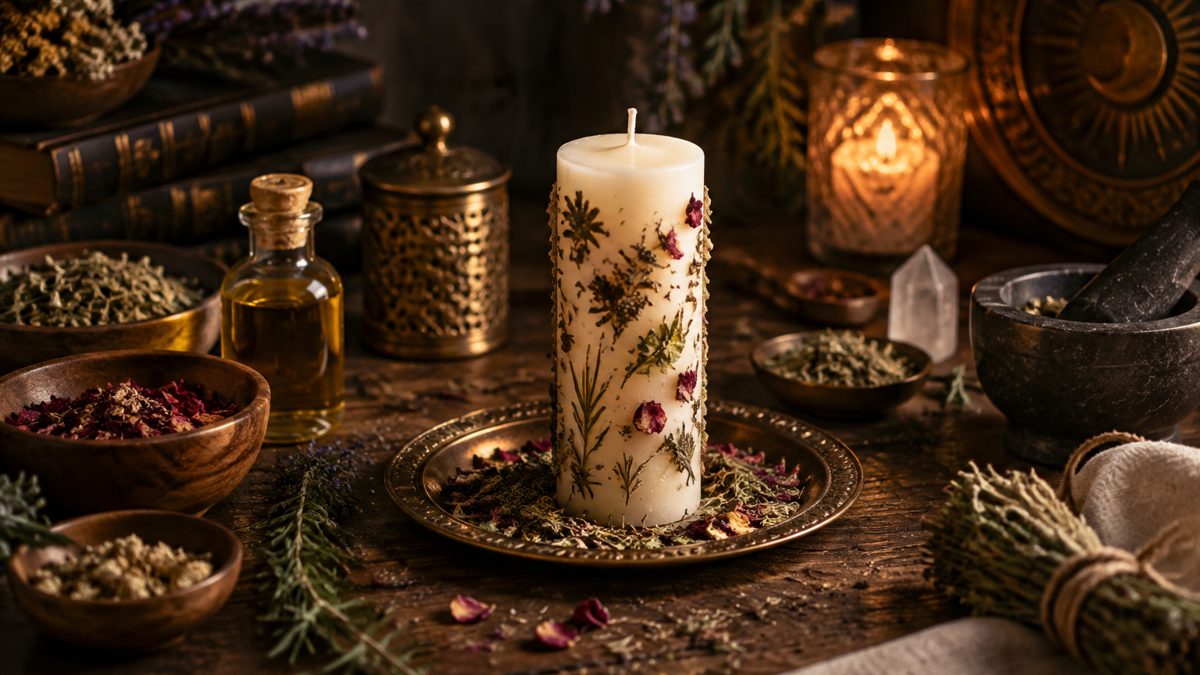
Herbal candle dressing often means coating a candle with oil and rolling it in dried plant material. I do not recommend that method. Dried herbs can ignite, act as additional wicks, and produce unpredictable flames. Plant fragments dropped into melted wax can also become fuel. A candle sold with decorative botanicals is not automatically safe just because it was commercially made.
Instead, dress the ritual setting rather than the candle itself. Use a plain candle in a suitable holder on a stable, heat-resistant surface, following the manufacturer’s instructions and clearances. Keep the herbs in a separate closed container well away from the flame and heat. Do not make a ring of dried leaves around the holder, scatter petals on the candle plate, or place a paper petition beneath a hot vessel.
Uma vela de LED sem chama facilita ainda mais. Coloque-a ao lado de um pote de ervas e de uma intenção escrita, com as pilhas protegidas longe de crianças e animais de estimação. Este é o arranjo que prefiro quando o ritual envolve olhar para dentro, fechar os olhos ou escrever por um tempo. A atenção naturalmente vagueia no trabalho reflexivo, e é justamente por isso que uma chama aberta não deveria ser um requisito essencial.
If you choose a real candle, remain present, keep it clear of drafts and anything combustible, and extinguish it before leaving or becoming sleepy. There is no need to let it burn down completely. Ending a ritual early for safety does not spoil its symbolic purpose. Nor should a flickering flame or cracked container be interpreted as proof of a message; address the physical hazard first.
10. Assemble a dry protection jar and plan its retirement
A protection jar can be a visual reminder of the boundaries and habits you want to maintain. For this guide, keep it dry and uncomplicated: a small, clean container, a pinch of rosemary, an optional bay leaf, and a folded note. You might write, “This home is a place where I practice care and clear limits.” These ingredients express a belief or intention; they do not provide a guaranteed protective effect.
Avoid adding bodily fluids, fresh plants, food scraps, liquids, sharp objects, or unidentified minerals. Wet organic mixtures can spoil, grow mold, or ferment and build pressure in a sealed container. Nails, needles, and broken glass create handling and disposal hazards without being necessary to the symbolism. There is also no reason to seal the lid with hot wax; an ordinary secure closure is sufficient.
Place the jar where it will not fall, overheat, or attract a child or pet. A nonbreakable container may be the better choice in a busy household. Pair the ritual with a concrete check: is the doorway clear, are important contacts easy to find, and have you communicated the boundary you wrote down? The jar can remind you to act, but it cannot take those actions for you.
Decide at the beginning how you will retire the object. You can empty it into appropriate household waste and clean the reusable container. Compost only suitable, uncontaminated plant material if your compost system accepts it; remove paper, string, salt, and other additions as needed. Do not bury jars, leave them in public places, or throw them into water. A quiet ending at home is entirely sufficient.
11. Bring herbal symbolism into everyday cooking
A bruxaria de cozinha é onde o ritual com ervas me parece mais natural. Pode ser algo tão modesto quanto acrescentar alecrim a legumes assados pensando nas pessoas que você deseja acolher, ou misturar hortelã numa receita conhecida como marca de uma nova estação. A camada simbólica não altera as propriedades físicas do alimento e nunca deve exigir uma quantidade insegura de um ingrediente.
Use only correctly identified, food-grade herbs in ordinary culinary quantities and recipes appropriate to them. Follow normal food hygiene, storage, and temperature guidance. Do not cook with herbs taken from charm bags, incense supplies, bath mixtures, or decorative bouquets. “Natural” is not a food-safety category, and a plant’s association with abundance or love does not establish that it belongs in dinner.
Respeite todos que vão comer a refeição. Verifique alergias, preferências e restrições alimentares relevantes, e seja transparente quanto aos ingredientes. Retire as folhas de louro inteiras antes de servir, pois suas bordas rígidas podem causar engasgo ou ferimentos. Não acrescente ervas em segredo nem apresente um prato compartilhado como um feitiço destinado a anular o consentimento de alguém. A hospitalidade é um alicerce muito mais sólido do que tentar controlar os sentimentos de um convidado.
Avoid improvising shelf-stable herb-infused oils, particularly with fresh herbs or garlic; improperly prepared and stored oils can present a botulism risk. Use a tested food-safety recipe and its exact storage instructions, or choose a simpler dish. My favorite kitchen ritual needs no preserved preparation at all: cook something familiar, pause before serving, and name one thing you appreciate about the work that brought the food to the table.
12. Experimente um ritual simples de limiar e depois reflita
Eis um ritual sem fumaça e sem chama que reúne tudo o que o guia apresentou. Seu propósito é marcar um novo começo em casa, não garantir proteção nem remover uma ameaça espiritual objetivamente comprovada. Você vai precisar de um pequeno pote etiquetado com alecrim culinário seco, uma folha de papel, uma caneta e um pano adequado para limpar a entrada da sua casa. Mantenha a erva no pote fechado o tempo todo.
Choose a time when you can work without rushing. If the doorway is shared, respect other people’s access and belongings. Begin with the ordinary task of clearing clutter and wiping the appropriate surface according to its care instructions. You are not making the entrance ritually perfect. You are giving a small, useful job your full attention and allowing it to represent something larger.
When the steps are finished, spend a few minutes writing about the experience. Did the process help you clarify what “welcome” or “boundary” means to you? Was there a practical task you had been avoiding? These observations are more useful than searching for signs that the ritual worked. If you use divination afterward, treat the result as a prompt for reflection rather than an instruction or factual prediction.
That is the kind of herbal witchcraft I hope to make room for at Crossroads Journal: curious, personal, grounded, and willing to be simple. You may eventually explore a particular regional or family tradition in greater depth, with careful sources and appropriate teachers. For now, one familiar herb and one honestly chosen action are enough. Let the ritual support the life you actually live.
- Limpe a entrada sem bloquear as saídas e higienize uma superfície adequada usando o método recomendado para ela.
- Set the closed rosemary jar on a stable surface away from the doorway’s traffic, children, and pets.
- Escreva uma intenção, como “Vou abrir espaço para o acolhimento respeitando os meus limites.”
- Leia a frase em voz alta ou em silêncio. Considere o significado do alecrim na sua prática sem tratar essa associação como um efeito prometido.
- Choose one achievable action that expresses the intention: put away shoes, establish a visiting preference, or make space for a guest’s coat.
- Conclua a ação, guarde o pote em segurança e conserve ou recicle o papel como preferir. O ritual está encerrado.
These practices are shared as tradition and personal reflection, not as a substitute for medical, legal or financial advice.
Continue aprendendo
- Herbs in witchcraft
- How to read tarot cards
- How to use angel oracle cards
- Como ler cartas de baralho
- Como usar cristais em feitiços
- Como usar ervas na bruxaria
- How to read the Dr. Moorne Egyptian Tarot
- How to read dice
- How to read tea leaves
- Como usar um pêndulo
- Como lançar um feitiço de vela
- How to make a spell jar
- How to make a sigil
- How to cleanse your home
- How to set up an ancestor altar
- How to open a sacred space
- How to time spells with the moon
- How to work with water and salt
- How to make a protection charm bag
- Read the Journal ou visite o shops