How-To Guide
How to Make a Spell Jar
Ni Seraphina
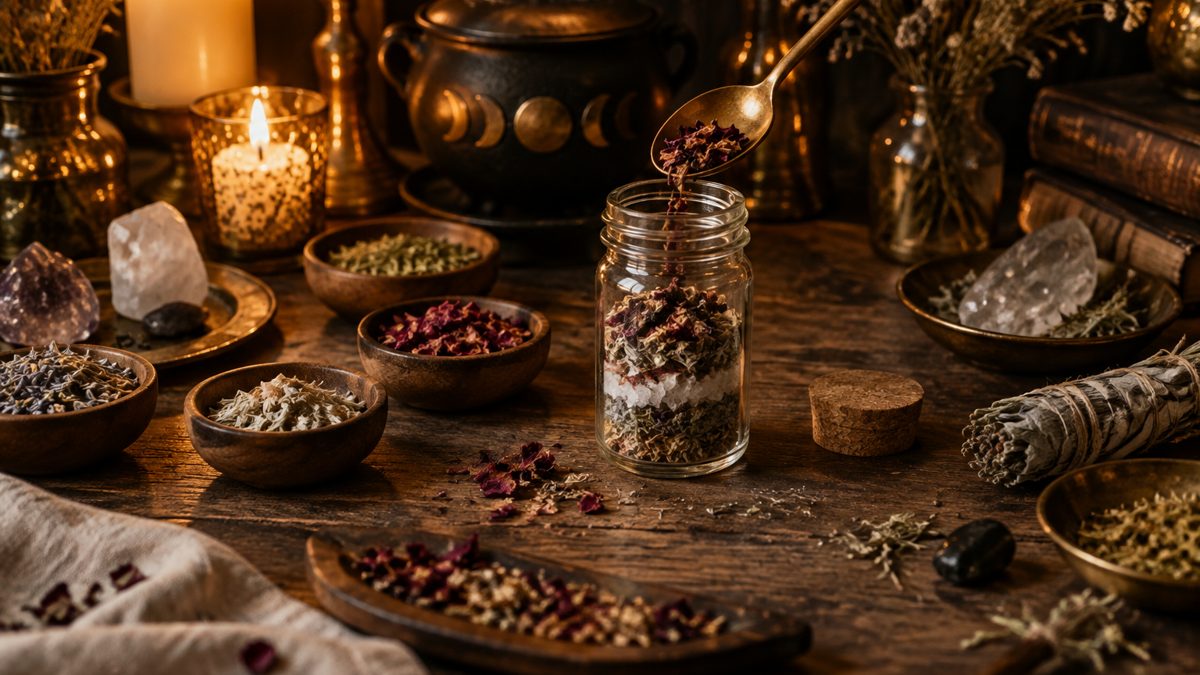
A spell jar is a small container assembled with objects that represent an intention: perhaps a steadier home life, greater confidence, a fresh beginning, or a more consistent creative practice. In contemporary witchcraft and personal ritual, the jar gives an otherwise invisible wish a tangible form. You choose what belongs inside, arrange it deliberately, and decide how it will remind you of the life you want to cultivate.
People understand this practice in different ways. Some approach it through spiritual beliefs about magic, prayer, or relationships with the natural world. Others treat it as a symbolic exercise that supports reflection and action. Neither approach requires you to pretend that a jar guarantees an outcome. There is no reliable evidence that a spell jar can control events, cure illness, change someone’s feelings, or produce money by supernatural means.
The most useful starting point is not an expensive collection of crystals or an elaborate list of correspondences. It is a clear purpose, a safe container, and a willingness to connect your ritual with ordinary choices. A clean jam jar, a piece of paper, and one meaningful household object can be enough. The care you bring matters more than how closely your jar resembles a photograph.
This guide walks you through the background, materials, preparation, assembly, and ongoing care of a spell jar. You will also find a complete worked example, ways to interpret your experience without overreading coincidences, and guidance for recording what you learn. For ingredient combinations organized around particular intentions, visit the companion reference page, Spell Jar Recipes, after you understand the basic method.
Looking for the meaning of a single card or ingredient? Keep our Spell jar recipes guide open beside you.
1. Unawain ang kasaysayan nang hindi pinapatag ang iba't ibang tradisyon
Putting meaningful things into containers is not a new idea, but there is no single, universal history of the spell jar. Protective deposits, charm bottles, devotional containers, and household amulets appear in different places and periods. Similar materials or shapes do not necessarily mean that these practices share an origin, purpose, or spiritual framework. A modern jar should not automatically be described as an ancient, unchanged tradition.
One documented example is the witch bottle associated with early modern Britain and later contexts. Historical examples could contain pins, nails, and bodily materials, and were associated with protection or countering suspected witchcraft. They were not simply decorative jars for attracting pleasant experiences. Their contents also make them poor models for a beginner’s practical project: you do not need sharp metal, bodily fluids, or buried glass to make a meaningful contemporary jar.
Container-based workings also appear in African American Hoodoo and other living traditions, where specific materials and procedures may have meanings rooted in community history and practice. These should not be treated as interchangeable with European folk customs, modern Pagan witchcraft, or social-media recipes. If you want to learn a particular tradition, seek sources grounded in it and distinguish openly shared information from practices that require relationships, training, or permission.
For an accessible personal practice, describe your work honestly: a contemporary spell jar inspired by your own symbolism and whatever well-sourced traditions you have actually studied. Avoid calling an improvised recipe authentically Slavic, Indigenous, or otherwise culturally specific without support. Respectful curiosity leaves room for differences. It also frees you from the idea that you must copy somebody else’s inherited practice to create a thoughtful ritual of your own.
2. Choose an intention you can influence
Begin with one purpose rather than asking a single jar to transform every part of your life. Confidence before presentations, a calmer evening routine, or consistent progress on a job search gives you something workable. A broad wish such as “make everything better” may express a real need, but it offers little guidance when you choose ingredients or decide what to do after the ritual.
Write the intention in language that feels honest. You do not have to declare something already true when it is not. “I am learning to speak clearly and prepare steadily” may feel more grounded than “I am always fearless.” Leave room for uncertainty, mixed emotions, and gradual change. A useful intention points toward a direction without demanding perfect thoughts or an uninterrupted good mood.
Keep the focus on your choices and boundaries rather than another person’s obedience. For relationships, you might choose openness to mutual affection, courage to communicate, or recovery after disappointment. Avoid intentions that demand a particular person love you, forgive you, or remain with you. Whatever your spiritual beliefs, consent and autonomy are sound foundations for a personal practice.
Finally, pair the intention with an ordinary action. A study jar might accompany a regular revision session; a household harmony jar might accompany a shared cleaning agreement. If your concern involves illness, abuse, debt, or legal trouble, seek appropriate practical help. A ritual can sit beside care, planning, and professional support, but it should not delay or replace them.
- 1. Sumulat ng isang pangungusap na nagpapangalan sa katangian, gawi, o hangganang nais mong suportahan.
- 2. Check that the sentence concerns your own conduct rather than controlling someone else.
- 3. Pumili ng isang makatotohanang kilos na magagawa mo sa loob ng susunod na linggo.
3. Gather a small, practical set of materials
Choose a small, intact container with a secure lid. A reused food jar is usually suitable for a dry, decorative project once it has been washed and completely dried. Check the rim and body for chips or cracks. If broken glass would be a particular risk in your household, a durable non-glass container can serve the same symbolic purpose.
Your basic kit can be very simple: the container, a small piece of paper, a pen, and one to three dry objects. These might include a ribbon, a clean button, a paper shape, or a small quantity of a familiar dried culinary herb. A tray beneath your work helps contain spills. An exterior label can record the date and warn that the contents are not food.
Crystals, elaborate bottles, special inks, candles, and purchased ritual kits are optional. You do not need to spend money to demonstrate commitment. If you use stones, choose ones you can identify and leave them dry; some minerals can shed fibers, contain hazardous substances, or react poorly with water. Painted glass or a colored paper token can provide symbolism without those uncertainties.
Plan for storage before buying or collecting anything. A tiny jar needs fewer materials, takes up less space, and creates less waste when you eventually dismantle it. Avoid collecting plants from protected areas or taking natural objects without permission. Where identification is uncertain, leave the plant alone. A written name or drawing can represent an ingredient you cannot safely or ethically obtain.
4. Choose ingredients for meaning, not rigid promises
Ingredient correspondences are symbolic associations, not proven mechanisms. Different books, teachers, regions, and practitioners may assign different meanings to the same herb or color. Rosemary might represent remembrance in your jar, while a red thread might suggest courage, connection, or a boundary. Choose associations you understand, and write down why they fit rather than assuming there is one correct dictionary.
Personal meaning can be especially useful. A button from a garment you wore during a proud moment may represent confidence more clearly than an unfamiliar purchased crystal. A paper doorway can symbolize a new beginning. Keep sentimental objects replaceable where possible: a photograph or written description is often wiser than sealing an irreplaceable keepsake into a mixture that may stain or damage it.
Prefer a few compatible dry ingredients for your first project. Fresh flowers, fruit, honey, and other wet or sugary additions can introduce moisture, attract pests, or encourage spoilage. Mixed organic ingredients in a closed container may ferment and build pressure. Shelf life cannot be assumed simply because an ingredient is edible on its own. A dry paper symbol can stand in for a sticky or perishable material.
Isaalang-alang ang lahat ng kasama sa iyong espasyo, kabilang ang mga hayop. Ang mga pamilyar na halamang-gamot at pampalasa ay maaari pa ring magdulot ng allergy o panganib kung malunok ng mga alagang hayop. Hindi kailangan ang mga essential oil at maaari itong makairita o makapinsala, lalo na sa ilang hayop. Iwasan ang mga di-kilalang pulbos, di-matukoy na halaman, at sangkap na pinili lamang dahil sinasabi ng resipe na makapangyarihan ang mga ito. Hindi kailanman dahilan ang simbolikong silbi upang balewalain ang tunay na katangian ng isang materyal.
5. Prepare your space and yourself
Preparation begins with ordinary cleanliness. Wash a reused container with dish soap, rinse it, and allow every surface, including the lid and its grooves, to dry thoroughly. Do not pour boiling water into glass that is not designed for sudden temperature changes. Set your materials on a stable, uncluttered surface away from food preparation, open flames, and the edge of a table.
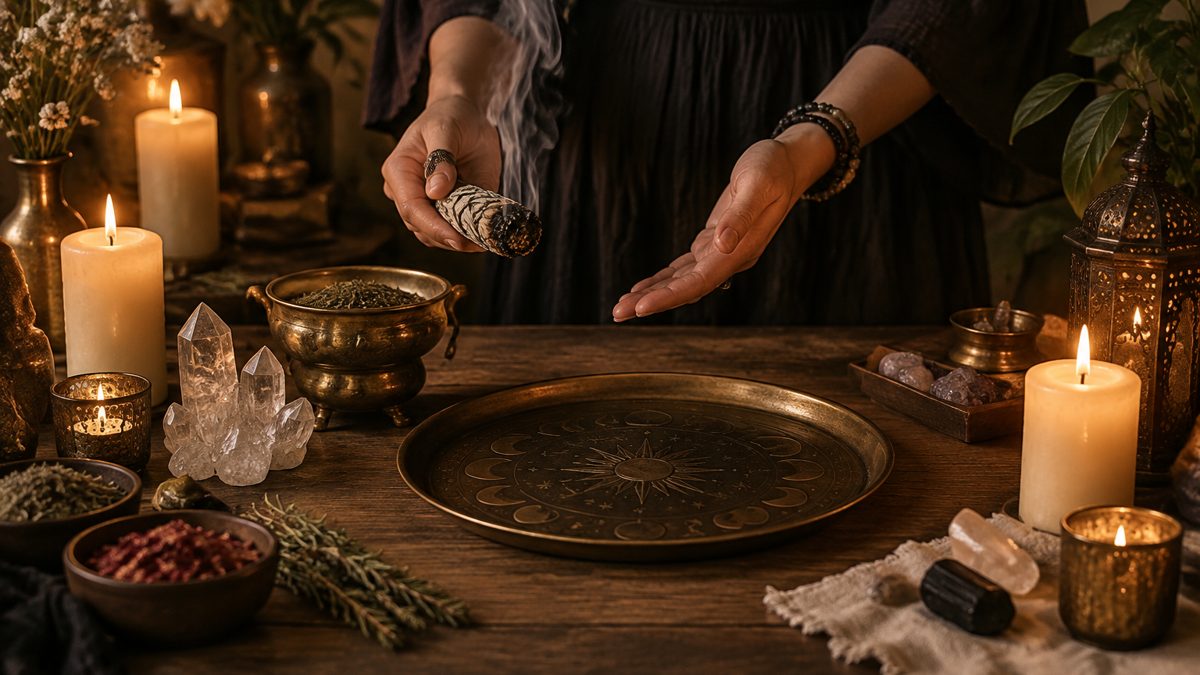
If cleansing is part of your spiritual practice, distinguish that symbolic act from physical cleaning. A spoken welcome, a brief silence, a gentle sound, or a moment of visualization can mark the transition into ritual. None is required for the container to become usable. You do not need smoke, salt, or a particular moon phase to give yourself permission to begin.
Smoke-free preparation is often the most practical choice, particularly in shared housing or around people with asthma, children, and animals. Burning herbs and incense adds airborne particles and introduces fire risk. Strong fragrance can also be uncomfortable even when nobody has a diagnosed sensitivity. A comfortable, breathable room is a better foundation than an atmosphere that looks ceremonial but leaves someone coughing.
Maglaan ng sandali upang mapansin ang iyong kalagayan ng isip nang hindi iginigiit ang ganap na kalmado. Maaari kang gumawa ng maalalahaning garapon habang nagdadalamhati, nag-aalala, o pagod, basta kaya mong hawakan nang ligtas ang mga materyales. Kung nakararamdam ka ng panggigipit na ulitin ang paglilinis hanggang maging perpekto, huminto. Ang paghahanda ay dapat lumikha ng sapat na espasyo para sa sinasadyang mga pagpili, hindi maging pagsusulit na kailangan mong ipasa bago maiwasan ang masamang bagay.
- 1. Linisin at patuyuing mabuti ang lalagyan, pagkatapos ay ilagay ito sa isang tray.
- 2. Arrange only the materials you intend to use.
- 3. Silence distractions if helpful, and take a few comfortable breaths.
- 4. Read your intention once and confirm the practical action attached to it.
6. Assemble the jar step by step
Write your intention on a piece of paper small enough to fit without forcing it against the glass. Add the date if you wish. Some practitioners fold papers toward themselves to symbolize inviting something in, or away to symbolize release. These are optional conventions rather than universal rules. Fold the paper in whatever way is useful and consistent with your chosen meaning.
Ilagay ang papel at mga sangkap sa garapon nang sapat na mabagal upang mapansin mo kung ano ang kinakatawan ng bawat isa. Maaari mong bigkasin nang malakas ang mga kahulugang iyon, isipin nang tahimik, o simpleng buuin ang mga bagay nang may pag-iingat. Hindi kailangan ng banyagang wika o hiram na panawagan. Ang mga payak na salitang tulad ng “Ipinaaalala sa akin ng sinulid na ito na bumalik sa ugali” ay kayang magdala ng buong layunin ng ritwal.
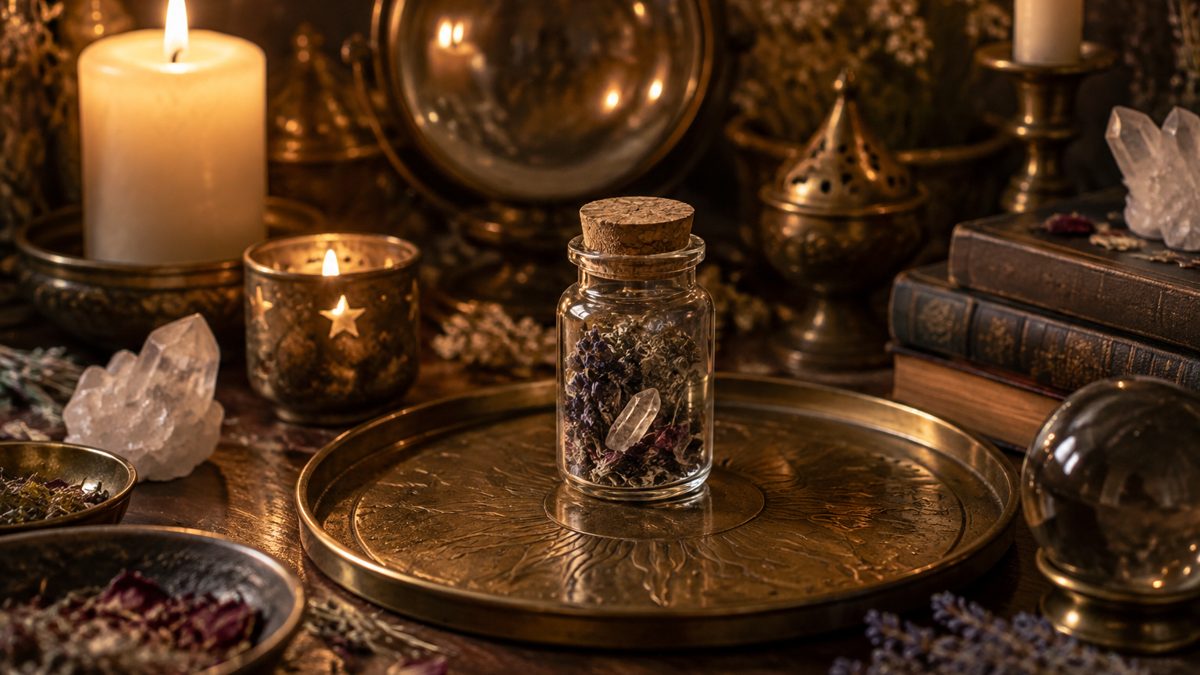
Layering is optional. Attractive bands of herbs or salt are common in photographs, but loose materials may shift as soon as the jar moves. That does not spoil the work. Leave enough room to close the container easily, and avoid packing brittle or sharp objects under pressure. If an ingredient spills, clean it up; you do not need to interpret the accident as a warning.
When the contents are in place, read your intention again and connect it to your next action. This is the point where the jar becomes more than a collection of attractive objects: it receives a defined role in your routine. You can finish immediately or sit quietly for a minute. A lengthy ceremony is not inherently more meaningful than a brief, attentive one.
- 1. Write and fold your intention paper.
- 2. Place the paper inside the dry container.
- 3. Add each chosen object, naming its symbolic purpose if helpful.
- 4. Leave space beneath the lid and check that the rim is clean.
- 5. Close the jar and state the next practical step you will take.
7. Close, label, and place the jar safely
A fitted lid is a complete closure. Wax is decorative and symbolic, not necessary, and it does not reliably preserve perishable contents or make a jar tamper-proof. For a beginner, a paper band or a neatly tied piece of thread offers an easier alternative. Keep loose cords short and inaccessible to children and animals, which can swallow them or become entangled.
If you include a candle in the surrounding ritual, keep it separate from the jar in a stable, nonflammable holder. Never balance a candle on the lid or heat a sealed container. Ordinary glass can crack, and paper, dried plants, ribbon, and wax decorations can ignite. A battery-operated candle provides a visual focus without introducing an open flame.
Label the jar with the date and a brief description, particularly if its contents resemble seasonings or tea. “Ritual materials: not for eating or drinking” helps prevent confusion. Store it separately from food and medicine. A meaningful container should not create a guessing game for a housemate, visitor, child, or anyone cleaning your space.
Choose a location suited to both the intention and the household. A study jar might sit on a protected shelf near your desk; a private intention might belong in a drawer. Keep it away from heat, direct sun, damp windowsills, and places where it could fall. Visibility can help you remember your intention, but constant display is not required.
8. Halimbawang isinagawa: isang garapon para sa tuloy-tuloy na gawi sa pagsulat
For a first project, choose an intention with a clear behavioral counterpart: “I make room for a short writing session three times a week.” This wording does not demand inspiration, publication, or perfect confidence. It supports a habit you can influence. The jar’s role is to cue the session, not to guarantee creative success or replace the work of writing.
Gather a clean, dry small jar with a lid, a paper square, a pen, a short piece of blue thread, and three small paper circles. In this example, blue represents a calm approach, the thread represents continuity, and the three circles represent three weekly sessions. These are deliberately chosen personal meanings, not claims about universal color or number correspondences.
Isulat ang intensyon at pumili ng pinakamababang sesyon na akma sa iyong kalagayan, tulad ng sampung minuto. Tiklupin ang papel, ilagay ito sa loob, at idagdag ang sinulid at mga bilog. Isara ang garapon at sabihin, kung nais mo, “Mahalaga ang maliliit na sesyon. Bumabalik ako nang hindi humihingi ng kasakdalan.” Lagyan ito ng etiketa ng petsa, at ilagay kung saan mo ito makikita pag-upo mo para magsulat.
Test the arrangement for two weeks. Each time you notice the jar at your planned writing time, open your document or notebook before deciding whether you feel inspired. If three sessions prove unrealistic, revise the schedule rather than blaming yourself or the materials. The helpful result is a workable relationship with writing, not proof that the objects possess a measurable supernatural force.
- 1. Choose three possible writing times and put them in your calendar.
- 2. Assemble the dry paper-and-thread jar using the method above.
- 3. Complete the first short session within the next day if practical.
- 4. Record completed sessions and obstacles for two weeks.
- 5. Adjust the routine based on what actually helped.
9. Keep the practice useful without constant maintenance
Pagkatapos buuin, magpasya kung gaano kadalas mong babalikan ang garapon. Karaniwang sapat na ang maikling lingguhang pagbabalik para sa gawaing nakatuon sa ugali. Maaari mong hawakan ang saradong takip, basahing muli ang iyong intensyon sa iyong talaarawan, at piliin ang susunod na kilos. Opsyonal ang araw-araw na atensyon. Ang paglaktaw ng isang araw ay hindi lumilikha ng utang, hindi nag-aanyaya ng parusa, at hindi nangangailangan ng pang-emergency na ritwal ng pag-aayos.
Some practitioners describe renewing attention as charging or feeding a working. If that language fits your beliefs, keep the method safe and proportionate. Renewing your commitment through words or reflection avoids adding liquid, food, smoke, or heat. A jar does not need repeated ingredient additions, and changing its contents may introduce moisture or complicate later disposal.
Check its physical condition occasionally without deliberately sniffing the contents. Look for condensation, discoloration, mold, leakage, lid distortion, or damage. These are material concerns, not reliable spiritual messages. If you notice unexpected pressure or active leaking, do not heat, shake, or casually open the container. Keep it away from people and animals and seek local guidance for safe handling and disposal.
You can also stop maintaining a jar because its purpose no longer fits. A ritual is allowed to have an ending. If checking it becomes compulsive, frightening, or expensive, put it away and simplify your practice. Consider support from a trusted person or mental health professional if ritual anxiety begins interfering with sleep, relationships, finances, or everyday responsibilities.
10. Interpret results with curiosity and perspective
Choose a review date before you start looking for signs. For a routine or skill, two to four weeks can provide useful observations, though complex goals may need much longer. Ask whether your actions changed, whether the reminder was helpful, and whether the goal still matters. Those questions are more informative than searching every day for a dramatic event.
Separate what happened from what you think it means. “I sent two applications after seeing the jar” is an observation. “The jar caused an employer to contact me” is a causal interpretation that the observation cannot establish. Other people’s decisions, chance, preparation, social conditions, and timing all influence outcomes. A personal ritual does not remove those factors.
Coincidences can feel meaningful without serving as proof. You may enjoy noticing a repeated color or an encouraging conversation, while recognizing that attention changes what stands out. Likewise, settling ingredients, faded paper, cracked glass, or mold have ordinary physical explanations. Damage should prompt a safety check, not an assumption that you have been cursed or that someone is attacking you.
If the desired change does not happen, do not conclude that you lacked purity, belief, or worth. Reconsider the goal, the action plan, and the obstacles. Sometimes the jar offered comfort but little practical assistance; sometimes it simply was not useful. You are free to retain the ritual, revise it, or abandon it without treating the outcome as a judgment on yourself.
11. Avoid the most common beginner mistakes
The first mistake is overcomplication. Ten ingredients, several color systems, an exact planetary hour, and a long spoken script can obscure a straightforward intention. Start with a small number of elements you can explain in your own words. You can explore additional techniques later, but more objects do not establish greater power or make a ritual more legitimate.
Isa pang karaniwang pagkakamali ang paghahalo ng mga materyales nang hindi isinasaalang-alang kung paano sila kumikilos. Ang asin ay umaakit ng halumigmig sa ilang kondisyon at maaaring mag-ambag sa kalawang ng metal sa mamasa-masang halo. Ang langis ay nagmamantsa sa papel at hindi ginagawang ligtas na itago ang halo. Ang sariwang halaman ay nabubulok. Bago magdagdag ng anuman, itanong pareho ang “Ano ang kahulugan nito sa akin?” at “Ano ba talaga ang gagawin ng materyal na ito sa loob ng saradong garapon?”
Recipe anxiety can also get in the way. If you lack a particular herb, you can use a paper symbol, choose another ingredient whose meaning fits, or leave it out. When following a specific tradition, learn which substitutions are appropriate within that practice rather than assuming everything is interchangeable. For a personal contemporary jar, honest simplicity is preferable to pretending an improvised recipe is historically exact.
Finally, avoid treating secrecy, spending, or constant correction as requirements. Privacy may be valuable, but showing someone a jar does not establish that it has been ruined. Buying another kit cannot guarantee a better outcome. If you keep restarting because something feels imperfect, step back and return to the original purpose. The practice should support your life, not consume your attention.
12. Put safety, consent, and responsible disposal first
Treat the contents as nonfood once assembled. Do not drink infused liquid, taste ingredients, apply mixtures to skin, or give them to another person or animal. A jar assembled for symbolism is not a tested medicine, cosmetic, or preserved food. If someone swallows an unsafe or unknown ingredient, contact local poison-control services or urgent medical care; for pets, contact a veterinarian.
Respect consent and shared property. Do not hide jars in someone else’s home, workplace, vehicle, or garden, or use another person’s hair, bodily materials, or private belongings without permission. Avoid leaving glass in public spaces or near waterways. Even a kindly intended working can become intrusive when another person has to discover, handle, or dispose of it.
When an ordinary dry jar has served its purpose, dismantle it on a tray and separate materials according to local waste rules. Reuse the container after suitable cleaning if it held only safe materials. Compost only clean plant matter accepted by your compost system. Paper coatings, glitter, wax, mixed minerals, synthetic thread, and other additions may make the contents unsuitable for composting.
Do not bury the jar or empty salt, salty water, oils, or unknown mixtures onto soil or into waterways. Salt can harm plants and soil organisms, while glass and decorative materials remain as hazards. For moldy, chemically contaminated, pressurized, or otherwise uncertain contents, avoid unnecessary handling and consult local disposal guidance. A respectful ending is one that protects people, animals, and the place you live.
- 1. Mark the practice complete with a simple statement or written note.
- 2. Suriin ang kondisyon ng lalagyan bago hawakan ang laman nito.
- 3. Ihiwalay ang mga ligtas at tuyong materyales para magamit muli o maitapon nang wasto.
- 4. Clean reusable equipment and wash your hands.
- 5. Record what you learned before deciding whether to make another jar.
13. Keep a journal and develop your own thoughtful practice
Your journal does not need to be elaborate. Record the date, intention, ingredients, chosen meanings, planned action, and review date. Note any source that shaped the recipe, including its cultural context where relevant. This makes it easier to distinguish a personal invention from something you learned within a particular tradition, and helps prevent memories from becoming more certain than your notes support.
At each review, record observable changes before interpretation. What did you do? What became easier or harder? Did the jar remind you to act, provide comfort, or become something you worried about? Include practical circumstances such as workload, illness, available support, and schedule changes. These details help you understand your experience without assigning every success or setback to the ritual.
Keep notes short enough that you will actually use them. Three headings can be sufficient: what I intended, what happened, and what I will change. Protect personal information if the journal includes relationships, health concerns, or financial details. You can use initials, keep sensitive pages somewhere private, or focus on your own choices rather than documenting another person’s life.
When you are ready to experiment, use Spell Jar Recipes as a companion reference rather than a set of compulsory formulas. Change one element at a time if you want to notice how different symbols or routines affect your experience. The strongest foundation is a practice you can explain honestly, conduct safely, and leave behind when necessary: a small container for attention, meaning, and deliberate action.
These practices are shared as tradition and personal reflection, not as a substitute for medical, legal or financial advice.
Magpatuloy sa pag-aaral
- Spell jar recipes
- How to read tarot cards
- How to use angel oracle cards
- Paano magbasa ng playing cards
- Paano gumamit ng mga kristal sa mga spell
- Paano gumamit ng mga halamang-gamot sa witchcraft
- How to read the Dr. Moorne Egyptian Tarot
- How to read dice
- How to read tea leaves
- Paano gumamit ng pendulum
- How to cast a candle spell
- How to make a spell jar
- How to make a sigil
- How to cleanse your home
- How to set up an ancestor altar
- How to open a sacred space
- How to time spells with the moon
- How to work with water and salt
- How to make a protection charm bag
- Read the Journal or visit the shops