How-To Guide
How to Set Up an Ancestor Altar
Ni Seraphina
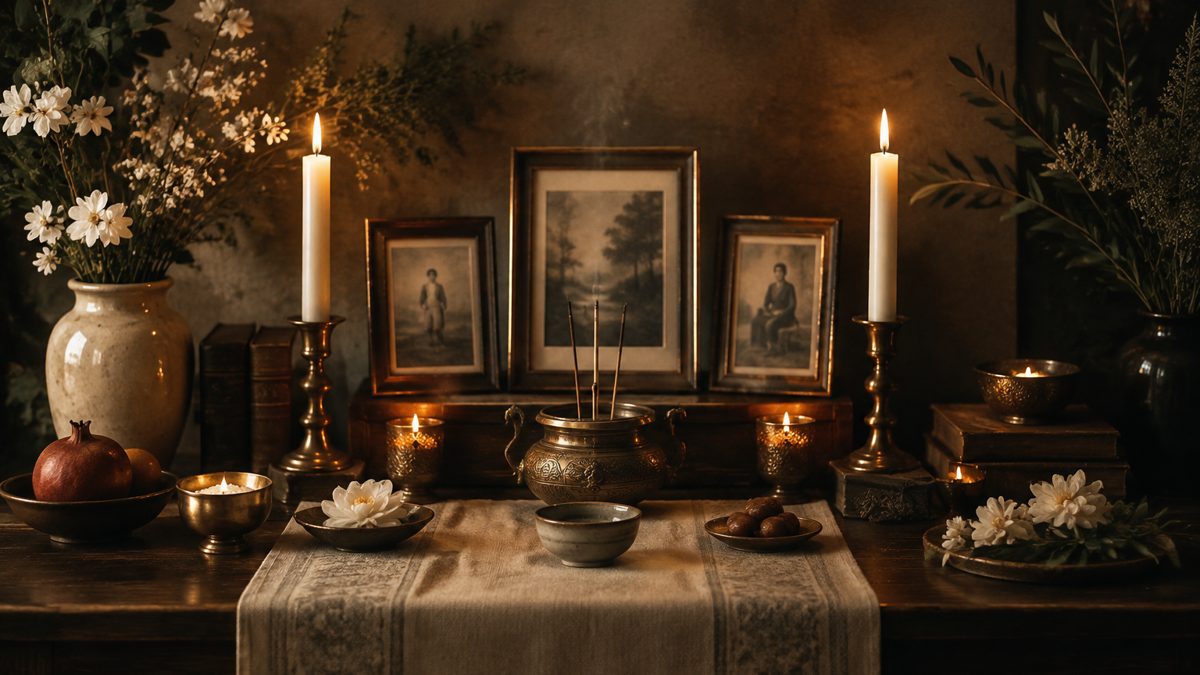
An ancestor altar is a dedicated place to remember those who came before you. It can hold photographs, names, meaningful objects, and small offerings, but its heart is attention rather than decoration. For some people, tending an altar is a religious or spiritual practice. For others, it is a grounded way to preserve family stories, express gratitude, and make room for grief.
You do not need an impressive collection of ritual tools, a complete family tree, or certainty about the afterlife to begin. A clean shelf, a handwritten name, and a few quiet minutes can be enough. The most useful starting question is not whether your altar looks correct, but whether it supports remembrance in a way that feels honest, respectful, and sustainable.
Ancestor relationships can also be complicated. Adoption, migration, enslavement, estrangement, displacement, and missing records can interrupt access to family history. Some relatives caused harm. This guide makes room for those realities: you can honor chosen family, acknowledge unknown predecessors, set firm boundaries, or decide that a memorial practice without spiritual language suits you best.
We will move from cultural context and practical preparation into a simple setup, an adaptable ritual, and ongoing care. Throughout, spiritual interpretations are presented as matters of tradition and personal belief, not proven effects. For a more focused look at materials and suitable gifts, use the companion reference page, Ancestor Altar Items and Offerings, alongside this guide.
Looking for the meaning of a single card or ingredient? Keep our Ancestor altar items guide open beside you.
1. Understand the history without treating every tradition as the same
People have long maintained relationships with the dead through household shrines, graveside visits, seasonal observances, prayers, and shared meals. These practices arise in many different religious and cultural settings. They may express obligations to family, beliefs about an afterlife, collective identity, or continuing affection. Their similarities do not make them interchangeable, and no single modern altar arrangement represents them all.
Sa ilang pamayanang Tsino, may mahalagang lugar ang mga tablet at handog para sa mga ninuno sa mga pagdiriwang ng sambahayan at angkan. Maaaring magpanatili ang mga sambahayang Budista sa Hapon ng butsudan na nauugnay sa debosyong Budista at gawain ng pag-alaala. Ang mga ofrenda ng Día de Muertos sa Mexico ay kabilang sa iba't ibang rehiyonal at pampamilyang tradisyon. Bawat halimbawa ay may sariling kasaysayan, kahulugan, at inaasahan; hindi makapagbibigay ang maikling pangkalahatang-ideya ng mga tagubilin sa pagsasagawa nito.
Ancestor observances also appear in diverse African and African diasporic religions, European folk customs, and many Indigenous traditions. Some practices are public, while others depend on initiation, community membership, or family teaching. Avoid assuming that an appealing photograph or a commercial ritual kit gives permission to reproduce a sacred arrangement. Where a living tradition matters to you, learn from people authorized to teach it.
If you are creating a personal remembrance altar rather than following an inherited practice, say so plainly. You can use ordinary materials and your own words without claiming an ancient pedigree. If you do have family customs, begin by asking relatives about memorial meals, anniversary observances, prayers, and objects kept for the dead. Everyday recollections may offer more guidance than an elaborate shopping list.
2. Decide whom you are honoring and establish boundaries
Define the purpose of your altar before choosing objects. You might want to remember a beloved grandparent, preserve names that are being forgotten, or reflect on the work of people who made your life possible. A clear purpose helps you avoid filling the space with items that feel impressive but carry little personal meaning. One sentence is enough to begin.
The word ancestor often refers to deceased relatives, but some personal practices also honor adoptive family, chosen family, mentors, and community predecessors. Distinguish these relationships rather than claiming a lineage you do not hold. You can give a teacher a place of remembrance without suggesting that you inherited their religious authority, cultural identity, or right to perform restricted ceremonies.
Hindi ka obligadong igalang ang mapang-abusong kamag-anak o makipagkasundo sa sinumang nanakit sa iyo. Ang altar ay maaaring tumuon sa mga partikular na tao sa halip na sa buong lahi. Kung may kabuluhan sa iyo ang espirituwal na wika, maaari mo itong ialay sa mabubuting ninuno na ang alaala ay sumusuporta sa iyong kapakanan. Ipinapahayag ng pahayag na iyon ang personal na hangganan, hindi garantiya ng supernatural na proteksyon.
Unknown ancestry does not make the practice less valid. A card reading 'For the predecessors whose names I do not know' can acknowledge missing history without inventing details. Keep living relatives separate from those being memorialized unless your tradition teaches otherwise. Most importantly, allow yourself to postpone or stop the practice if it intensifies distress rather than helping you carry it.
3. Choose a suitable location and an appropriate scale
Choose a place where you can pause comfortably and maintain ordinary cleanliness. A shelf, small table, mantel, or sturdy tray may work. You do not need a separate room, a particular compass direction, or a location hidden from daylight unless your own tradition calls for one. Practical access usually matters more than creating an atmosphere that is difficult to sustain.
Consider how the space functions throughout the day. Avoid placing an altar where someone might knock it over, where water could spill into electronics, or where offerings would obstruct food preparation. A bedroom may be suitable for a simple memorial arrangement, but choose another location if thinking about loss there makes sleeping harder. Personal comfort is useful information, not a spiritual failure.
In shared housing, discuss visible displays, fragrances, flames, and food offerings with the people affected. Roommates do not need to share your beliefs to deserve consideration. If privacy is important, a remembrance box can hold a photograph, a cloth, and a notebook. Open it for a short practice and close it afterward, putting any food or water away separately.
Start smaller than you think you need. An altar with three meaningful objects is easier to care for than a crowded display of fragile possessions. Leave enough room to remove a dish without catching sleeves or upsetting other items. If children, pets, or mobility needs are part of your household, make accessibility and stability part of the design from the beginning.
4. Gather a few meaningful materials
The essentials are a stable surface and something that identifies the person or people you are remembering. That might be a photograph, a written name, a family recipe, or a symbolic object. A cloth is optional, as are candles, flowers, incense, and offering bowls. Use what you already own whenever possible; spending more does not make remembrance more sincere.
Choose representations carefully. A copied photograph protects the original from spills and light exposure. A written name works well when photographs are unavailable or emotionally difficult. Objects can tell a story: a sewing tool may recall a relative's craft, while a recipe card may preserve their handwriting. Avoid displaying irreplaceable items where heat, moisture, or handling could damage them.
A small washable dish can hold an offering, and a stable cup can hold water if water fits your practice. An LED candle provides a visible focal point without an open flame. Flowers are optional; a drawing or fabric bloom can serve a similar decorative role. Check any real plant for toxicity to household animals before bringing it into the space.
Keep a notebook nearby, along with a pen and any information you want to preserve. Label uncertain identifications rather than treating guesses as facts. The companion page, Ancestor Altar Items and Offerings, can help you compare materials, but resist buying everything at once. Begin with a few items and let your actual use of the altar reveal what, if anything, is missing.
5. Ihanda ang ibabaw at kalmahin ang sarili
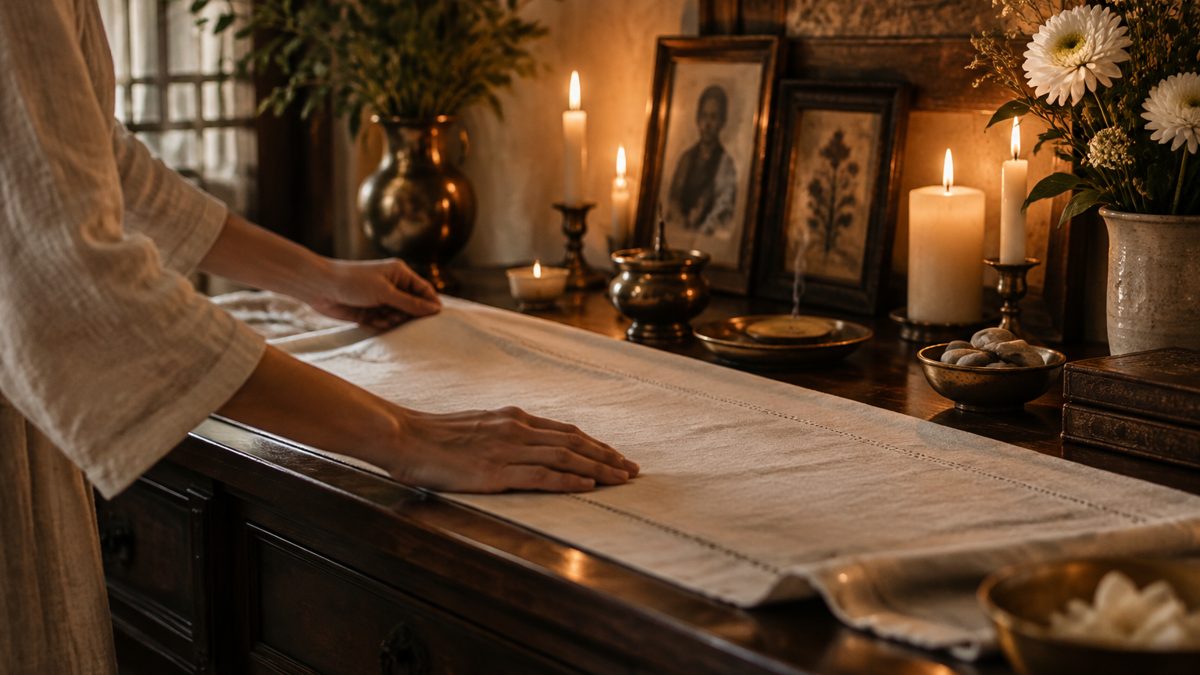
Preparation can be entirely practical. Clear the surface, remove dust, and clean it with a product suitable for the material. Wash offering dishes and dry everything thoroughly. A tidy area reduces spills and makes the altar easier to maintain. Cleaning may also carry symbolic meaning for you, but ordinary care does not need a supernatural explanation to be worthwhile.
Smoke cleansing is not necessary. Smoke can irritate lungs, trigger migraines, affect animals, and create problems in shared buildings. Essential oils and strongly scented sprays are not automatically safer substitutes. If you want a symbolic transition, open a curtain, wash your hands, arrange a fresh cloth, or sit quietly for a moment. Choose an action that does not compromise anyone's comfort.
Before beginning, notice your emotional state. Are you curious, grieving, distracted, or hoping for an answer to an urgent problem? You do not need to feel perfectly calm, but it helps to know what you are bringing to the practice. Consider a brief first session rather than a prolonged ritual, particularly if the loss is recent or family memories are painful.
Write down a simple intention that names what you can actually do. 'I will remember my grandfather and preserve one story about him' is clearer than demanding a sign. You might also decide how the session will end and whom you can contact if difficult feelings arise. Preparation should support your sense of choice, not create pressure to have a dramatic experience.
- 1. Clear and clean the chosen surface, then let it dry completely.
- 2. Check that the arrangement will be stable and away from heat, electrical hazards, and household traffic.
- 3. Magtipon lamang ng mga bagay na balak mong gamitin sa unang sesyong ito.
- 4. Write one sentence describing your purpose and choose a manageable stopping time.
6. Arrange the altar step by step
There is no universal layout for a personal ancestor altar. If you belong to a tradition with specific arrangements, follow reliable instruction within that tradition. Otherwise, organize the space so its meaning is easy for you to understand. A central photograph or name card, a meaningful object beside it, and an offering dish toward the front make a simple starting point.
Place heavier items on a secure part of the surface and keep liquids where they are unlikely to tip. Use a waterproof coaster or tray beneath a water vessel. Do not lean unstable frames against an open flame or place candles beneath shelves. If a safe flame-free arrangement is all your space allows, it is a complete and valid arrangement.
Give each item a reason to be there. A stone might recall a shared walk, while a copied letter might preserve a familiar expression. You do not need to assign universal meanings to colors, directions, or materials. Personal associations are enough for a personal memorial practice, provided you are not presenting them as rules inherited from a culture you have not studied.
Once everything is in place, step back and test the practical details. Can you lift the cup easily? Can you wipe the surface without dismantling a precarious stack? Does seeing the photograph feel supportive? Adjust the arrangement freely. The first setup is a draft, not a binding commitment, and moving an object does not require interpreting it as an omen.
- 1. Lay down an optional cloth or protective tray without loose edges that could catch or pull.
- 2. Position the photograph, names, or symbolic representation where you can see it comfortably.
- 3. Add one or two memory objects, leaving room for cleaning and safe handling.
- 4. Place any offering dish or water cup on a protected, stable area.
- 5. Add an optional LED candle and remove anything that makes the arrangement crowded or unsafe.
7. Choose offerings and plan their removal
An offering is something deliberately given within a religious, spiritual, or memorial practice. Depending on the tradition, it may express hospitality, gratitude, obligation, or affection. In a personal practice, a glass of water, a flower, a favorite food, or a written memory can serve that purpose. None is a payment that guarantees contact, luck, healing, or a desired outcome.
Pumili ng mga handog na isinasaalang-alang ang tao at ang iyong kalagayan. Ang paboritong awit na marahang pinatutugtog ay maaaring mas makabuluhan kaysa sa mamahaling pagkain. Ang pagbabasa ng tula, pag-aayos ng bagay ng pamilya, o pagsuporta sa layuning pinahahalagahan ng tao ay maaari ding maging gawa ng pag-alaala. Kung nagbabalik ng mahihirap na karanasan sa pamilya ang pagkain, gumamit ng handog na hindi pagkain sa halip na pilitin ang diumano'y tamang pagpili.
Plan disposal before placing anything on the altar. Perishable food should not sit at room temperature for more than two hours, or one hour above 90°F or 32°C. Follow stricter local guidance where applicable. Whether offerings are later eaten varies by tradition, but food safety still applies; discard food that has been exposed to contamination, pests, smoke residue, or unsafe temperatures.
Do not leave offerings in parks, waterways, or wildlife habitats. Food can attract animals, and materials labeled natural may still cause harm. Compost only suitable items accepted by your system, and use ordinary waste disposal when necessary. Never pour salt water onto soil or plants. Dispose of plain water through an appropriate household drain rather than turning disposal into an environmental burden.
8. Hold a simple first remembrance ritual
Your first session can last five or ten minutes. The goal is to establish a repeatable practice, not to force an unusual state of mind. Sit or stand comfortably, with your eyes open if that feels steadier. Take a few ordinary breaths. Turn on an LED candle if you use one, or simply look at the names and objects you have arranged.
Begin with words that fit your beliefs. You might say, 'I am here to remember those whose care helped shape my life.' If addressing the dead directly does not feel right, speak about them instead. Silence is also an option. There is no need to borrow unfamiliar sacred language or pretend to hold convictions you do not have.
Offer one specific memory rather than trying to summarize a whole life. Describe a meal, a journey, a lesson, or an ordinary act of care. You can also acknowledge complexity: affection and disappointment sometimes belong in the same story. If you make a promise, keep it modest and within your control, such as recording a recipe or contacting a relative who welcomes contact.
Close deliberately by thanking the people you remembered, turning off the light, and returning your attention to the room. Remove time-sensitive offerings and wash your hands if needed. Ending the session does not abandon the relationship. A clear beginning and ending can help remembrance fit into daily life without becoming an obligation that occupies all your attention.
- 1. Maupo sa tabi ng altar at pangalanan ang iyong layunin sa sarili mong mga salita.
- 2. Place an optional offering and identify whom or what you are remembering.
- 3. Read a name, share one memory, or spend a brief period in quiet reflection.
- 4. Choose one practical act of remembrance, if you want to take one.
- 5. Close the session, switch off or safely extinguish any light, and handle offerings promptly.
9. Isang halimbawang isinagawa: isang maliit na altar para sa isang lola
Imagine someone creating a personal memorial altar for a grandmother who loved cooking and mending clothes. This is a hypothetical example, not a report of someone's spiritual results. The person has a narrow shelf, a curious cat, and no wish to burn incense. They choose a copied photograph, a handwritten recipe, and an LED candle, keeping the arrangement compact.
Before setting up, they clean the shelf and place the recipe inside a protective sleeve. They decide against displaying a loose sewing needle because it could fall or be swallowed. Instead, they use a photograph of the grandmother's sewing basket. They also leave out flowers until they can confirm a suitable variety is safe around their cat.
For the first session, they place a small serving of the grandmother's favorite bread on a dish while remaining nearby. They say her name, describe helping in the kitchen, and read the recipe aloud. Their practical commitment is to make a digital copy of the recipe for relatives who would appreciate it, without pressuring anyone to participate in the altar practice.
Afterward, they remove the food, put away the dish, and note that the session brought both sadness and warmth. They do not treat those feelings as proof of a visitation. A week later, they realize the recipe is more meaningful than additional decorations, so the altar stays simple. The example succeeds through thoughtful care and remembrance, not through an unusual sign.
10. Interpret experiences without turning them into proof
People may notice strong emotions, vivid memories, dreams, or coincidences after beginning a remembrance practice. Some understand these through their spiritual beliefs; others see them as ordinary responses to focused attention and grief. You can leave the interpretation open. An experience may matter deeply to you without establishing that an ancestor caused it or communicated a specific instruction.
Start with observable details before deciding what they mean. A candle flame moves because of airflow and fuel conditions; water evaporates; old frames can shift on uneven surfaces. These events are not reliable methods of communication. If something unexpected happens, check the practical explanation first, particularly when fire, structural stability, or household safety might be involved.
Do not use perceived signs to make high-stakes medical, financial, legal, or relationship decisions. A dream about a relative can prompt reflection, but it cannot verify a diagnosis or tell you whether someone is trustworthy. Consult relevant professionals and real-world evidence. If you use divination as part of your own tradition, treat its interpretation as reflective material rather than unquestionable authority.
Nothing unusual happening is not a rejection or a failed ritual. Useful outcomes may be remembering a forgotten detail, establishing a comforting routine, or identifying questions for family research. If the practice leads to fear, compulsive checking, disrupted sleep, or experiences that are difficult to manage, pause it. Seek grounded support from someone you trust or a qualified mental health professional.
11. Avoid common mistakes and keep care manageable
A common mistake is collecting more objects than you can comfortably maintain. Crowding makes cleaning harder and may shift attention toward appearance rather than relationship. Remove items that no longer serve the purpose you defined. You can rotate photographs or keep an archive elsewhere; every treasured possession does not need to be on display at the same time.
Another mistake is adopting a demanding schedule out of fear. Daily attention may suit some people, while weekly or occasional remembrance is more realistic for others. Missing a day does not establish that anyone is angry with you. Choose a rhythm that supports your life, and avoid making promises that turn a comforting practice into a source of guilt.
Neglected offerings are a practical problem, not a moral verdict. Stale water, spoiled food, and wilted flowers can create odors, stains, or pests. Replace water regularly, wash vessels, and inspect the area for damage. If maintenance repeatedly slips, switch to dry, nonfood materials and an LED candle. Simplifying is often the most respectful response to limited energy or time.
You may also discover that the altar no longer feels helpful. It is acceptable to change its focus, cover photographs temporarily, or pack everything away. Clean the objects, dispose of offerings responsibly, and store fragile materials safely. A closing note or quiet acknowledgment can mark the transition if desired. You do not need a frightening explanation or a paid ritual to stop.
12. Make safety, consent, and ethical respect part of the practice
Kung gagamit ka ng tunay na kandila, ilagay ito sa matatag at hindi-nasusunog na lalagyan sa ibabaw na hindi nasusunog, malayo sa mga larawan, tela, bulaklak, at iba pang madaling masunog. Sundin ang tagubilin ng gumawa tungkol sa agwat. Huwag kailanman iwanang nagliliyab nang walang bantay o habang natutulog, at huwag magsunog ng kandila kung saan maaabot ng mga bata o hayop. Iniiwasan ng LED na kandila ang mga panganib ng bukas na apoy.
Herbs, incense, oils, and decorative botanicals require their own precautions. Natural does not mean harmless: plants may be toxic, smoke may worsen respiratory conditions, and concentrated oils can harm people or animals. Do not ingest ritual mixtures, unknown plants, or essential oils. Do not burn unidentified materials, and avoid loose dried herbs near flames. Fragrance-free practice is always an option.
Treat family information as private unless you have permission to share it. An altar photograph posted online can reveal names, dates, addresses, or sensitive relationships. Ask before publishing living relatives' stories or images. Do not take belongings, cemetery objects, soil, plants, or cultural materials without permission. A respectful practice does not create an entitlement to someone else's property, history, or sacred places.
Be wary of anyone who claims that your ancestors are angry and demands urgent payment to prevent disaster. No practitioner can guarantee supernatural contact or outcomes. If you seek religious instruction, look for transparent teaching and accountable community relationships rather than fear-based sales. The altar should support your agency and values, not make you dependent on threats, expensive purchases, or another person's approval.
13. Journal, preserve stories, and let the practice evolve
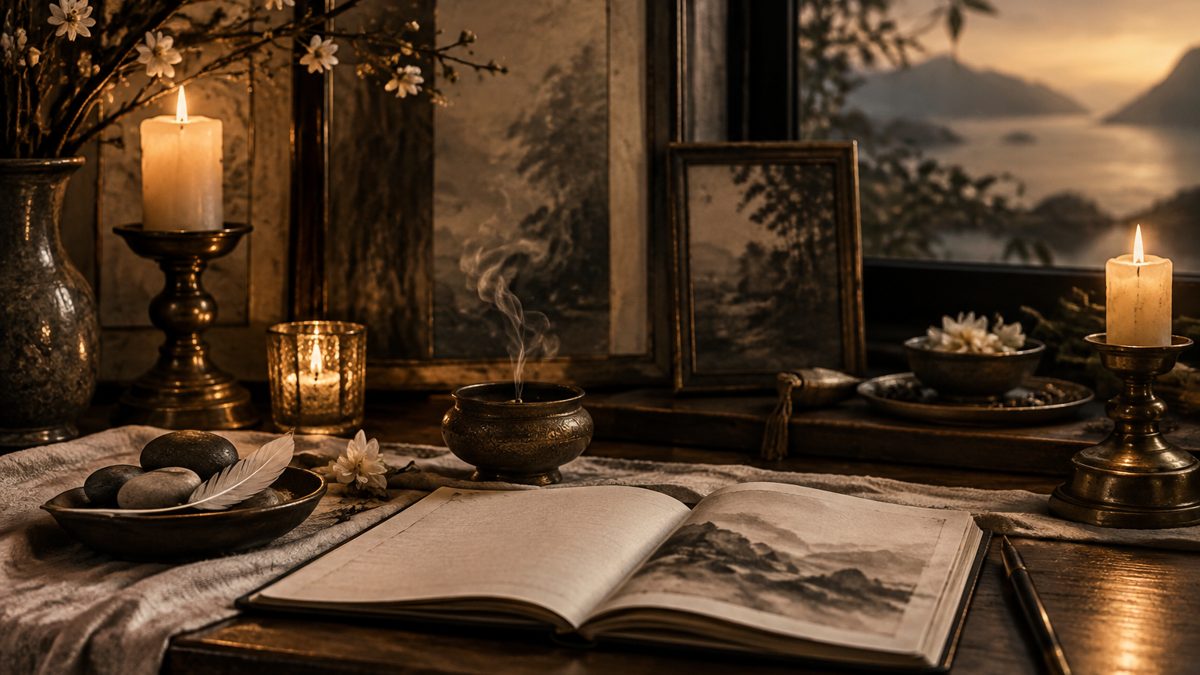
A journal gives your practice a record without requiring every session to produce a revelation. Note the date, whom you remembered, what you did, and how you felt before and afterward. Keep observations separate from interpretations. 'I remembered a summer visit' is an observation; 'I wondered whether this memory felt like encouragement' identifies an interpretation without presenting it as established fact.
Gumamit ng mga gabay na tanong na patungo sa mga tiyak na alaala at praktikal na pag-aaruga. Anong pahayag ang madalas gamitin ng taong ito? Ano ang itinuro niya sa pamamagitan ng pang-araw-araw na gawa? Aling kuwento ng pamilya ang kailangang suriin? Anong nakasasamang huwaran ang nais mong itigil nang ulitin? Maaari mo ring itala ang hindi mo alam. Mas kapaki-pakinabang ang tapat na mga puwang kaysa sa gawa-gawang katiyakan, lalo na kapag iniingatan ang kasaysayan para sa iba.
When researching, distinguish documents, personal recollections, and family lore. Record where a detail came from and whether accounts disagree. Ask relatives for consent before recording conversations, and accept that some will not want to participate. Keep digital copies of important photographs and notes in more than one secure location, with clear labels that do not depend entirely on your memory.
Review the practice after a month or another comfortable interval. Does it help you remember, grieve, or act according to your values? Is the upkeep manageable? You may prefer fewer objects, shorter sessions, or a seasonal observance instead. An ancestor altar need not remain unchanged to remain meaningful. Its lasting value may be the care you bring to memory and the living relationships you nurture afterward.
- 1. After a session, record one observation, one feeling, and any question that arose.
- 2. Mark interpretations as possibilities rather than facts, and note sources for family information.
- 3. Choose an optional practical follow-up, such as labeling a photograph or preserving a recipe.
- 4. Suriin paminsan-minsan ang iyong mga tala at iangkop ang altar upang suportahan ang iyong kapakanan at magagamit na oras.
These practices are shared as tradition and personal reflection, not as a substitute for medical, legal or financial advice.
Magpatuloy sa pag-aaral
- Ancestor altar items
- How to read tarot cards
- How to use angel oracle cards
- Paano magbasa ng playing cards
- Paano gumamit ng mga kristal sa mga spell
- Paano gumamit ng mga halamang-gamot sa witchcraft
- How to read the Dr. Moorne Egyptian Tarot
- How to read dice
- How to read tea leaves
- Paano gumamit ng pendulum
- How to cast a candle spell
- How to make a spell jar
- How to make a sigil
- How to cleanse your home
- How to set up an ancestor altar
- How to open a sacred space
- How to time spells with the moon
- How to work with water and salt
- How to make a protection charm bag
- Read the Journal or visit the shops