How-To Guide
How to Time Spells with the Moon
Ni Seraphina
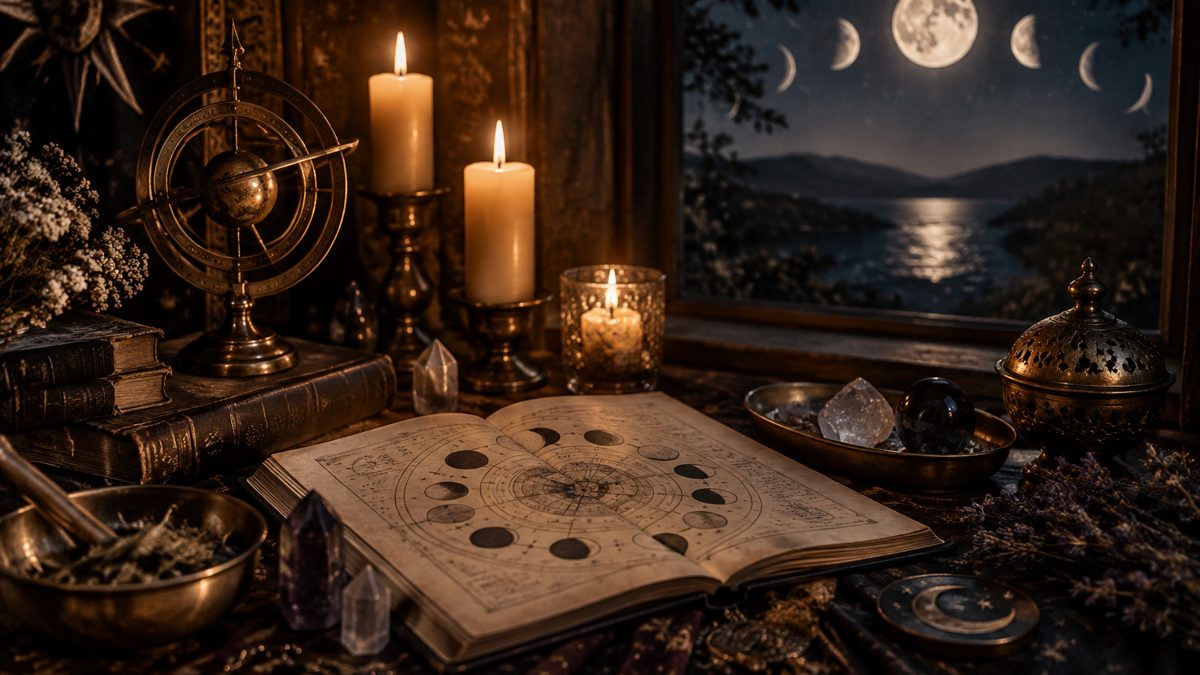
The Moon offers a gentle way to organize a magical practice: begin, build, celebrate, release, and rest. For many contemporary practitioners, its changing appearance becomes a calendar for intention rather than a promise of supernatural results. Learning to time spells with the Moon is therefore partly about tradition and partly about noticing when a particular ritual helps you act with greater clarity.
You do not need to see the Moon from your window, own an elaborate altar, or stay awake until an exact astronomical minute. A notebook, a reliable lunar calendar, and a few quiet minutes are enough to begin. Clouds do not change the lunar phase, and working indoors can be every bit as meaningful as standing beneath an open sky.
This guide approaches spellwork as a personal spiritual practice, not a scientifically established method for controlling events. Ritual may provide space for reflection, emotional expression, and commitment, but it cannot guarantee love, money, healing, or protection. The most useful lunar practice keeps symbolic actions connected to ordinary actions you can actually take.
Tutuklasin natin ang mga tradisyon sa likod ng pagtutugma sa buwan, pipili ng angkop na materyales, bubuo ng mauulit na pamamaraan, at susundan ang isang intensyon sa buong siklo. Itabi sa malapit ang kasamang pahina ng sanggunian, Moon Phase Meanings, kapag nais mo ng mabilis na paalala sa simbolismo ng mga yugto. Dito, nakatuon tayo sa pagbabago ng mga ugnayang iyon tungo sa maingat, ligtas, at magagawang rutina.
Looking for the meaning of a single card or ingredient? Keep our Mga kahulugan ng yugto ng buwan guide open beside you.
1. Understand where lunar spell timing comes from
Libu-libong taon nang minamasdan ng mga tao ang Buwan upang itala ang panahon, ayusin ang mga ritwal na panrelihiyon, at gabayan ang buhay ayon sa panahon. Lumilitaw ang mga kalendaryong lunar at lunisolar sa maraming kultura, ngunit hindi nangangahulugang iisang sistema ng mahika sa buwan ang ibinahagi ng mga kulturang iyon. Ang kalendaryo ng pista, kaugaliang pansaka, at aklat ng spell ay maaaring bumanggit sa Buwan sa magkakaibang dahilan.
Surviving sources from the ancient Mediterranean include lunar deities and magical practices involving celestial timing. Later European astrological magic also considered the Moon, sometimes alongside planetary hours and zodiacal positions. These approaches could be considerably more complex than choosing a waxing Moon for increase or a waning Moon for release.
Many modern witchcraft and Pagan guides use a simplified pattern: waxing for growth, full for culmination, and waning for reduction. These associations are familiar and useful within those practices, but they are not universal laws or a single unchanged ancient inheritance. Modern systems often combine historical influences with newer interpretations.
If you follow a particular lineage, religion, or cultural tradition, begin with its own teachings rather than assuming a general guide overrides them. If you are developing an independent practice, name that honestly. You can build a meaningful relationship with the lunar cycle without claiming initiation, borrowing restricted ceremonies, or presenting personal preferences as ancient rules.
2. Alamin ang siklo bago piliin ang iyong oras
A complete cycle of lunar phases lasts about 29.5 days. The phases describe how much of the Moon’s sunlit half we see from Earth, not a physical change in the Moon itself. The astronomical new Moon occurs when the Moon is near the Sun’s direction in our sky; around full Moon, it appears opposite the Sun.
For a beginner, four broad divisions are sufficient. New Moon can symbolize beginnings or inward reflection. Waxing Moon, between new and full, can symbolize growth and development. Full Moon can represent visibility, gratitude, or culmination. Waning Moon, between full and new, can symbolize release, simplification, and closure.
Hinahati ng ilang mananaliksik ang siklo sa walong yugto, na nagbibigay sa mga crescent, quarter, at gibbous ng sarili nilang tema. Ang iba naman ay pinag-iiba ang madilim na Buwan at ang bagong Buwan, marahil ay itinatabi ang madilim na panahon para sa pahinga at ang unang nakikitang crescent para sa mga simula. Dahil iba-iba ang terminolohiya, isulat ang mga kahulugang balak mong gamitin.
The phase occurs at the same instant worldwide, but its local clock time and sometimes its calendar date differ by time zone. The Moon’s apparent orientation also varies with location, making simple rules about which side is illuminated unreliable everywhere. Use a calendar configured for your location rather than guessing from a picture.
3. Match the phase to the action, not just the wish
Begin with the kind of change you want to support. An intention to establish a study habit has a building quality and may fit a waxing phase. An intention to reduce unnecessary commitments has a releasing quality and may fit a waning phase. The symbolic match should help you understand your next action, not make you anxious about choosing incorrectly.
Most situations contain more than one possible intention. After a breakup, you might work toward releasing attachment during the waning Moon, then cultivate self-respect during the waxing Moon. For a job search, you could use a new Moon to clarify priorities, a waxing Moon to support applications, and a full Moon to acknowledge your efforts.
Keep the focus on your own choices whenever possible. Instead of asking a ritual to make someone contact you, choose an intention such as communicating honestly or accepting uncertainty. Instead of trying to force a promotion, support preparation, professional visibility, and the confidence to ask about advancement.
There is no need to wait weeks before addressing an urgent problem. Seek medical care, secure your accounts, respond to deadlines, and ask for help when needed. If you want a ritual alongside those actions, use the phase available or work without lunar timing. A symbolic calendar should support your life, not obstruct it.
4. Gather a small, practical set of supplies
Your essential supplies are a reliable phase calendar, something to write with, and a place where you can pause without immediate interruption. A phone note works as well as a bound journal. Choose a calendar that distinguishes the actual phase from astrological interpretations so you can tell astronomical information from a particular belief system.
Ang mga opsyonal na bagay ay maaaring kandilang de-baterya, batong makahulugan na sa iyo, maliit na mangkok, o piraso ng sinulid. Bigyan ng malinaw na layunin ang bawat bagay. Ang bato ay maaaring kumatawan sa katatagan, habang ang sinulid ay sa pagpapatuloy. Ang mga kahulugang ito ay maaaring personal sa halip na kunin mula sa takdang listahan ng ugnayan.
You do not need rare herbs, expensive crystals, or a purchased spell kit. Using what you already own keeps the practice accessible and reduces waste. If you buy supplies, look for honest material descriptions and clear prices. Be cautious of sellers who claim that expensive additions are necessary to remove a curse or prevent disaster.
Keep ordinary safety in view when selecting ritual materials. Avoid loose threads or small stones around young children and animals. Choose unscented, flameless options if smoke or fragrance causes symptoms. A simple ritual with paper and a lamp is preferable to an elaborate arrangement that makes your home less safe.
5. Prepare your intention and your space
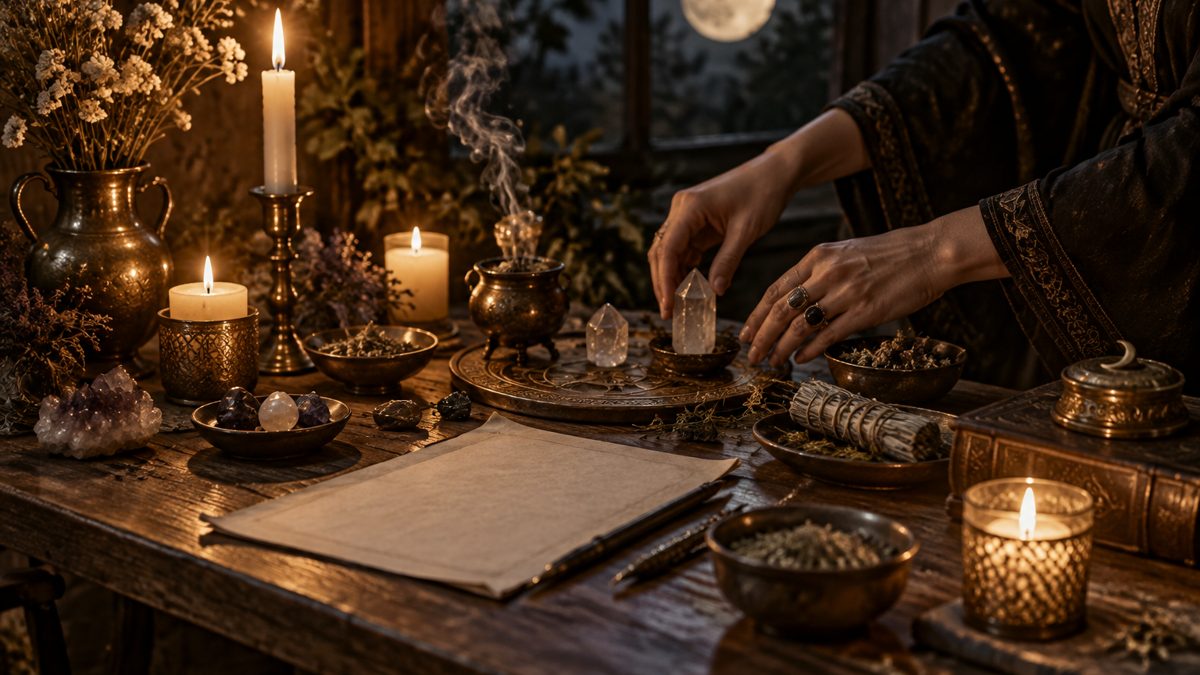
Preparation begins by translating a broad desire into a workable statement. Wanting a better life is understandable, but it leaves you without a clear next step. An intention such as making time for two focused job applications this week gives the ritual a practical direction and makes later reflection more useful.
Choose wording that is honest about your circumstances. You do not have to declare yourself fearless when you feel afraid, or prosperous when you are struggling. A statement about practicing courage or taking one manageable financial step can hold hope without denying reality. Your intention should feel supportive rather than like an order you must obey.
Prepare the space through ordinary cleaning first: clear a small surface, remove trip hazards, and put away anything distracting. If symbolic cleansing matters to you, consider a brief silence, a gentle sound, or wiping the surface with a suitable cleaning cloth. Smoke, salt, and scented sprays are optional, not requirements.
Finally, decide how much time and energy you can reasonably offer. A five-minute practice can be complete. If you are exhausted, distressed, or short on privacy, simplify the ritual or postpone it without self-blame. Preparation is about creating enough steadiness to participate, not achieving a perfectly calm state.
- 1. Write your intention in one sentence, centered on your choices or actions.
- 2. Name one practical action that would support it within the next week.
- 3. Choose a safe space and remove unnecessary materials.
- 4. Set a short time limit and decide how you will close the ritual.
6. Choose a workable lunar window
Once your intention is clear, consult your calendar and select a matching phase. Beginners usually benefit from a broad window rather than an exact minute. If you associate waxing with growth, any convenient evening within that part of the cycle can support a growth-themed ritual under your chosen system.
Some practitioners use the evening nearest the full Moon; others work across several nights surrounding it. These are ritual conventions, not scientifically established periods of greater magical effectiveness. Decide on a convention that suits your practice, record it, and avoid changing the rule afterward simply to explain why an outcome disappointed you.
Exact timing may matter within certain astrological traditions, but it is an optional layer for a general lunar practice. Zodiac signs, planetary hours, and other conditions can quickly become overwhelming. Learn one variable at a time if those systems interest you, using sources that explain their assumptions rather than presenting every rule as universally binding.
Fit your chosen window around sleep, work, caregiving, and accessibility. You can perform a lunar ritual during daylight because the phase is not limited to the hours when the Moon is visible. Set a reminder for a suitable moment, and include a backup time so a missed evening does not become a crisis.
7. Perform a simple lunar spell step by step
Isang kapaki-pakinabang na batayang istruktura ay ang dumating, pangalanan ang iyong intensyon, magsagawa ng isang simbolikong kilos, at magtapos sa praktikal na pangako. Ang pag-uulit ng istrukturang ito ay nagpapahintulot sa yugto na magbigay ng pagkakaiba nang hindi ka pinipilit na gumawa ng detalyadong seremonya bawat buwan. Ituring ito bilang huwarang maaari mong iangkop, hindi pagsusulit na dapat mong ipasa.
Begin by noticing your surroundings and letting your breathing settle naturally. You do not need prolonged breath-holding, intense visualization, or an altered state. If inward attention makes you uncomfortable, keep your eyes open and focus on the chair beneath you or a familiar object nearby. Comfort is more important than dramatic atmosphere.
Para sa simbolikong kilos, pumili ng bagay na malinaw na konektado sa iyong intensyon. Maaari kang maglagay ng nakasulat na pangako sa mangkok sa ritwal ng lumalaking buwan, magpakita ng tala ng pag-unlad sa kabilugan, o pagpupunit ng lumang listahan ng gawain sa ritwal ng humihinang buwan. Ipinapahayag ng kilos ang kahulugan; hindi nito ginagarantiyahan ang panlabas na pangyayari.
Close deliberately so the practice has a recognizable ending. Put your materials away, turn off the lamp or extinguish any flame, and note your next action. You may feel peaceful, emotional, distracted, or entirely ordinary afterward. None of these experiences proves that the ritual succeeded or failed.
- 1. Suriin ang yugto at itala ang petsa, lokal na oras, at intensyon.
- 2. Sit or stand comfortably and notice three ordinary things around you.
- 3. Basahin ang iyong intensyon nang malakas o sa isip, gamit ang mga salitang natural sa pakiramdam.
- 4. Perform one safe symbolic action that matches your intention and chosen phase.
- 5. Name the practical action you will take and when you will take it.
- 6. Close the ritual, put supplies away, and write a brief journal entry.
8. Worked example: build a steady writing practice
Imagine that you want to write regularly but keep waiting for inspiration. Choose an intention within your control: completing three fifteen-minute writing sessions each week for one lunar cycle. This does not require the Moon to produce creativity. The cycle simply gives your experiment a beginning, a development period, and a review.
At the new Moon, clear a small writing space and record why the practice matters to you. Choose your session times and place a notebook where you will see it. Your ritual might consist of turning on a desk lamp, reading your intention, and writing one sentence. Schedule the next session before closing.
During the waxing Moon, repeat the short ritual before your planned sessions. Add a small mark to your journal each time you complete one, allowing the growing pattern to reflect the phase’s symbolism. At full Moon, read a few lines you have written and acknowledge the effort, without requiring the work to be excellent.
During the waning Moon, examine what made the habit harder. Perhaps your sessions were too long or your phone interrupted you. Release one obstacle through an ordinary change, such as moving the phone outside the room. At the next new Moon, decide whether to continue, shorten the sessions, or choose a different goal.
- 1. New Moon: write the intention and schedule three short sessions for the coming week.
- 2. Waxing Moon: complete the sessions and record practical obstacles without judgment.
- 3. Kabilugan ng Buwan: suriin ang iyong nagawa at kilalanin ang tiyak na pag-unlad.
- 4. Waning Moon: remove one obstacle and adjust the schedule if needed.
- 5. Next new Moon: evaluate the month using your notes rather than memory alone.
9. Interpret results without turning everything into a sign
Bago ang ritwal, tukuyin kung ano ang balak mong obserbahan. Kung ang layunin mo ay tungkol sa isang gawi, itala kung isinagawa mo ito. Kung tungkol sa komunikasyon, itala kung ikaw ang nagsimula ng usapan. Mas kapaki-pakinabang ang malilinaw na obserbasyon kaysa sa pagpapasya pagkatapos na anumang pangyayari, gaano man kawalang-kaugnayan, ay dapat kumatawan sa tagumpay.
Distinguish your inner experience from external outcomes. Feeling calmer after a ritual is a valid personal observation, but it does not establish that lunar timing caused the change. A favorable reply, a chance meeting, or an unexpected opportunity can have many explanations. You can appreciate an event without treating it as proof of supernatural influence.
Dreams, repeated images, and coincidences may provide material for personal reflection. Ask what an image brings to mind rather than assuming it delivers an objective instruction. Do not base medical, legal, financial, or relationship decisions solely on perceived signs. Use reliable information and qualified advice where appropriate.
Kung walang nagbago, hindi mo naipakita na kulang ang iyong espirituwal na halaga o nag-anyaya ka ng parusa. Balikan ang intensyon, ang iyong mga kilos, at ang mga salik na wala sa iyong kontrol. Marahil ay kailangan ng layunin ang mas maraming oras, ibang estratehiya, o panlabas na suporta. Katanggap-tanggap din ang magpasyang kaunti lamang ang dagdag ng pagtutugma sa buwan sa iyong gawain at itigil ito.
10. Keep a journal that helps you learn
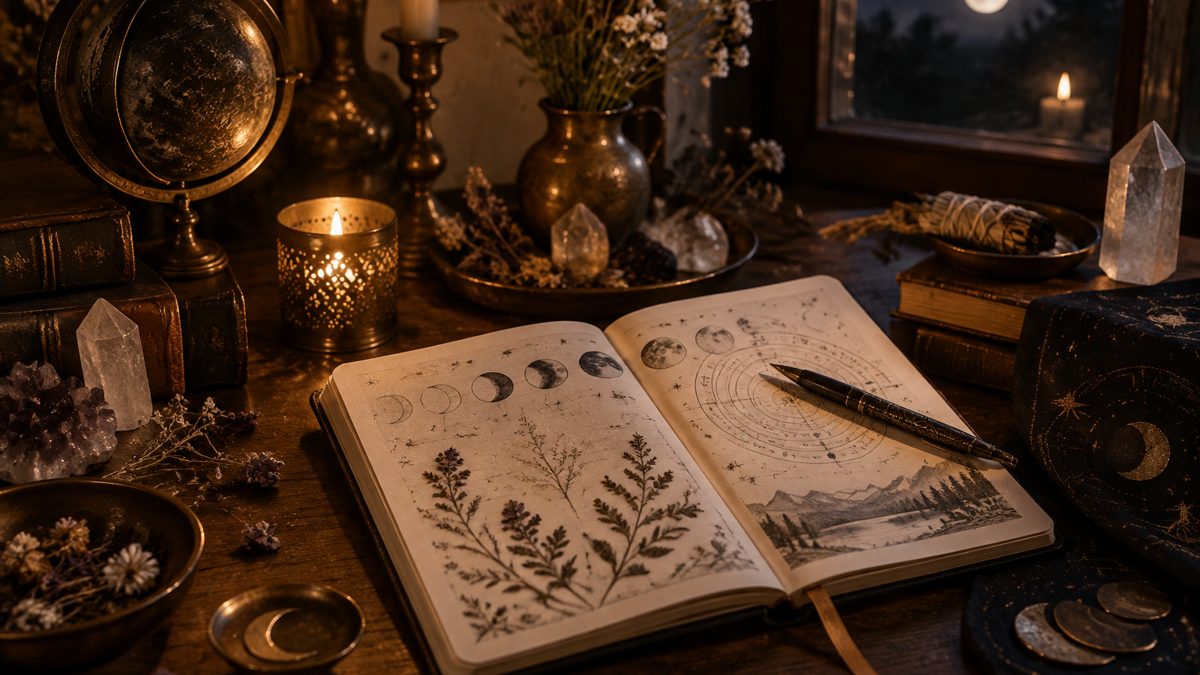
Pinakamakatulong ang talaarawan ng buwan kapag itinatala nito ang kahulugan at ang mga karaniwang pangyayari. Isama ang petsa, yugto, intensyon, kilos ng ritwal, at praktikal na pagsunod. Magdagdag ng maikling tala tungkol sa mood o enerhiya kung interesado ka, ngunit iwasang gawing isa pang mabigat na gawain ang talaarawan. Sapat na ang ilang tumpak na pangungusap.
Record context that could affect your experience, such as poor sleep, illness, a deadline, or a supportive conversation. Otherwise, it is easy to attribute every shift in mood or productivity to the Moon. Context helps you recognize that your life contains many interacting influences rather than one controlling rhythm.
Separate what happened from what you think it means. You might record that you completed two applications, then separately note that the ritual helped you feel organized. This distinction leaves room for interpretation without confusing it with observation. Include disappointments and uneventful sessions as readily as memorable ones.
Review several cycles before deciding that you notice a personal pattern. Even then, your journal is not a controlled experiment and cannot establish lunar causation. Its value lies in discovering preferences and useful routines. Protect its privacy, especially if it contains financial details, sensitive feelings, or information about other people.
- 1. Before the ritual: record your intention, phase, and planned action.
- 2. Kaagad pagkatapos: itala kung ano ang ginawa mo at kung ano ang naramdaman mo nang hindi pinipilit ang interpretasyon.
- 3. At the review date: record observable outcomes and relevant circumstances.
- 4. Pagkatapos ng ilang siklo: tukuyin ang mga kapaki-pakinabang na gawi at pasimplehin ang anumang nakararamdam ng bigat.
11. Avoid the most common timing mistakes
Ang unang pagkakamali ay ang pagturing na mas mahalaga ang oras kaysa sa kilos. Ang paghihintay sa perpektong Buwan ay maaaring maging kagalang-galang na anyo ng pag-iwas. Kung magsasara bukas ang isang aplikasyon, isumite ito bukas. Maaari mong markahan ang pagsisikap sa pamamagitan ng maikling ritwal pagkatapos, sa halip na palampasin ang tunay na pagkakataon alang-alang sa simbolikong kagustuhan.
Another mistake is combining too many systems at once. A phase, a zodiac sign, a planetary hour, a candle color, and a long list of correspondences can create so many conditions that no moment feels suitable. Start with one intention and one lunar phase. Add complexity only when it deepens understanding rather than increasing worry.
Repeatedly redoing a spell because it did not feel perfect can also become draining. Decide in advance what counts as completion, then allow the ritual to end. If spiritual routines begin consuming excessive time, causing fear, or feeling compulsory, pause them and consider speaking with a mental health professional.
Finally, avoid rewriting the rules to protect every interpretation. If you believe a particular window matters, record that belief before the ritual instead of blaming an unfavorable outcome on a newly discovered condition. A grounded practice leaves space for uncertainty, ordinary disappointment, and the possibility that a method is not useful to you.
12. Unahin ang kaligtasan at etika bago ang ambiance
Para sa gawaing may kandila, gumamit ng matatag at hindi-nasusunog na lalagyan sa malinis na ibabaw na malayo sa mga kurtina, papel, buhok, at manggas. Huwag kailanman iwanang walang bantay ang apoy o hayaang magliyab habang natutulog ka. Iwasang palamutian ang mga kandila ng maluwag na halamang-gamot o langis na maaaring magpataas ng panganib sa sunog. Ang kandilang de-baterya ay ganap na alternatibo, hindi mas mababang bersyon.
Herbs, incense, and essential oils require care even when marketed as natural. Do not ingest unknown plants, ritual oils, or mixtures intended for external use. Smoke and scents can aggravate respiratory conditions, and some substances are hazardous to pets. Avoid burning materials in shared spaces without consent, and check plant identity and relevant safety guidance before use.
Moon water is water used symbolically in some practices; moonlight does not disinfect it. For drinking, use potable water and normal clean, covered food-storage practices, without stones or unsafe additives. Do not pour salt water onto plants or soil, where it can cause damage. Keep wax, glitter, thread, oils, and nonfood offerings out of waterways and wildlife areas.
Ethically, favor intentions about your own conduct, boundaries, and opportunities rather than another person’s obedience or intimacy. Obtain consent before including someone in a ritual or using their belongings. Never use spellwork instead of urgent care, abuse support, or practical security. If observing outdoors, choose a safe location and do not trespass or sacrifice sleep to reach it.
13. Build a sustainable practice over time
You do not need to perform a spell at every phase. Begin with one monthly ritual and one review, or choose a waxing and waning pair. A manageable rhythm is more likely to remain meaningful than a demanding schedule. Let the practice fit your capacity through illness, caregiving, changing work hours, and ordinary busy seasons.
Over time, notice which parts genuinely help. Perhaps preparing the space makes it easier to concentrate, while elaborate wording distracts you. Perhaps reviewing an intention at full Moon feels useful, but exact timing does not. Keep what supports reflection and responsible action, while remaining clear about what belongs to tradition, belief, or personal preference.
If you want to study further, compare sources rather than collecting rules indiscriminately. Look for authors who identify their traditions, distinguish historical evidence from modern interpretation, and acknowledge limits. Use Moon Phase Meanings as a quick companion reference, then return to your own notes when deciding how those meanings fit your actual life.
The heart of lunar timing is a rhythm you can revisit: choose, tend, notice, and adjust. Let the Moon remind you that beginnings and endings both deserve attention, without asking it to carry responsibility for every outcome. A thoughtful practice leaves you more able to participate in your life, not more afraid of choosing the wrong night.
These practices are shared as tradition and personal reflection, not as a substitute for medical, legal or financial advice.
Magpatuloy sa pag-aaral
- Mga kahulugan ng yugto ng buwan
- How to read tarot cards
- How to use angel oracle cards
- Paano magbasa ng playing cards
- Paano gumamit ng mga kristal sa mga spell
- Paano gumamit ng mga halamang-gamot sa witchcraft
- How to read the Dr. Moorne Egyptian Tarot
- How to read dice
- How to read tea leaves
- Paano gumamit ng pendulum
- How to cast a candle spell
- How to make a spell jar
- How to make a sigil
- How to cleanse your home
- How to set up an ancestor altar
- How to open a sacred space
- How to time spells with the moon
- How to work with water and salt
- How to make a protection charm bag
- Read the Journal or visit the shops