How-To Guide
How to Use Angel Oracle Cards: A Step-by-Step Guide
Ni Seraphina
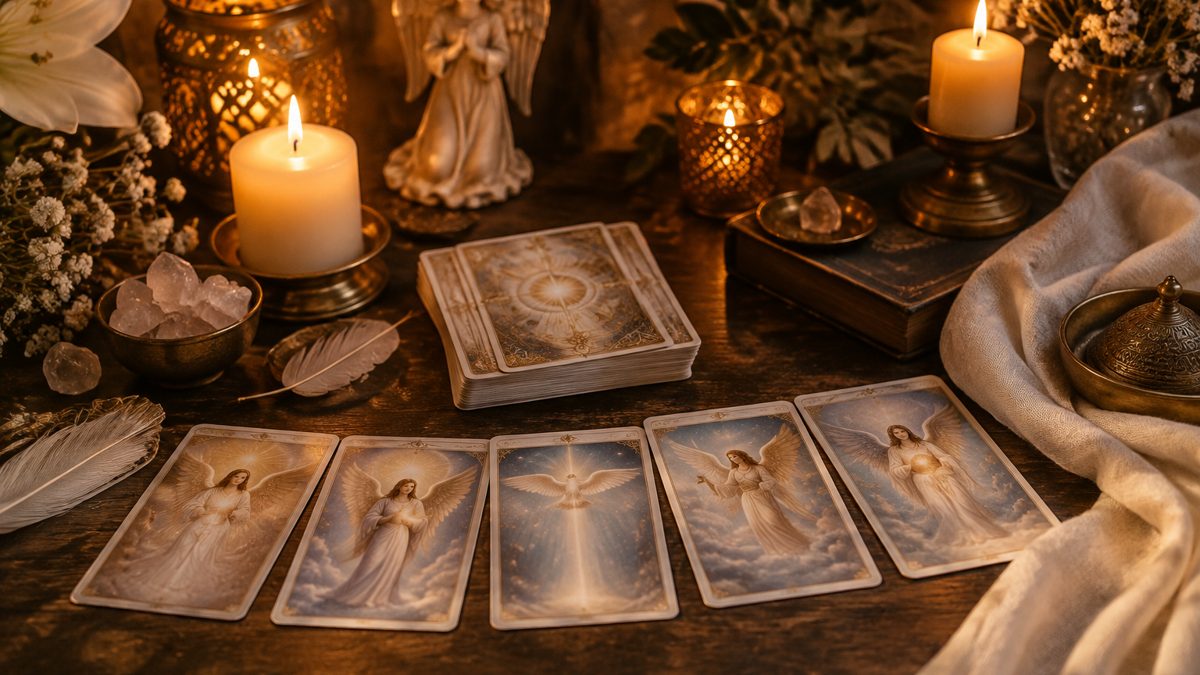
How to Use Angel Oracle Cards: A Step-by-Step Guide
There is something quietly inviting about a deck of cards waiting on a table: the painted wings, the unfamiliar symbols, the possibility of pausing long enough to hear yourself think. At Crossroads Journal, I like to approach practices like this with warmth and curiosity, but also with both feet on the ground. Angel oracle cards can belong to a spiritual tradition, a personal ritual, or a reflective journaling practice. You do not have to pretend certainty about the unseen to explore what the images bring to mind.
Ako si Seraphina, at simple ang aking lapit: hayaang magbukas ng pag-uusap ang mga baraha sa halip na magsara ng tanong. Naniniwala ang ilang mambabasa na nag-aalok ang angel oracle deck ng gabay mula sa mga anghel o iba pang mabubuting espirituwal na nilalang. Ang iba naman ay nauunawaan ang karanasan sa pamamagitan ng simbolismo, intuwisyon, at kung paano maaaring ibunyag ng maalalahaning pahiwatig ang isang bagay na gumagalaw na pala sa ilalim ng pang-araw-araw na abala. Hindi magkapareho ang mga pananaw na iyon, ngunit alinman sa dalawa ay maaaring sumuporta sa sinadya at makabuluhang gawain kung nananatili kang tapat sa kung ano ang pinaniniwalaan mo at kung ano ang hindi mo alam.
This guide will take you from choosing your first deck to making a small reading your own. We will cover intention and prayer, daily draws, beginner-friendly spreads, interpretation, archangel traditions, journaling, and a complete sample reading. There is no requirement to buy elaborate tools, memorize a hidden system, or receive a dramatic sign. A deck, a little time, and permission to stay curious are enough to begin.
Looking for the meaning of a single card or ingredient? Keep our Angel oracle card meanings guide open beside you.
1. Understand what angel oracle cards are
Ang angel oracle cards ay mga ilustradong baraha na dinisenyo batay sa imahen ng anghel, espirituwal na tema, o mga mensaheng iniuugnay sa gabay at pampalakas-loob. Ang isang baraha ay maaaring may salitang tulad ng pasensya, tapang, o pagbabagong-buhay. Ang isa naman ay maaaring pangalanan ang isang arkanghel o ilarawan ang pintuan, hardin, parol, o pares ng pakpak. Karamihan sa mga deck ay may gabay na aklat na nagpapaliwanag ng nilalayong simbolismo ng lumikha at nagmumungkahi ng mga paraan ng pagbasa ng mga baraha. Walang iisang namamahalang istruktura: nag-iiba mula deck patungong deck ang bilang ng baraha, wika, at pinagbabatayang paniniwala.
Within angel-oriented spiritual practice, readers may regard drawing a card as an invitation to receive a message from a benevolent presence. That is a matter of belief, not an established mechanism or a guarantee of supernatural communication. I find it helpful to make that distinction early. A reading can feel moving, timely, or deeply personal without proving where the experience came from. You can honor its emotional significance while leaving the larger metaphysical question open.
You can also use these cards without treating them as divination. A picture of a bridge might prompt you to consider a transition; a card about kindness might encourage you to examine your tone in a difficult conversation. In that approach, the deck supplies a subject for reflection rather than information about hidden events. The usefulness lies in the attention you bring to the prompt and the choices you make afterward.
Before your first reading, write one sentence describing your own starting point. Perhaps you believe angels can offer spiritual guidance. Perhaps you are exploring a family tradition. Perhaps you simply enjoy symbolic art. None of those positions requires performing conviction you do not feel. I would rather begin with an honest question than build a ritual around someone else’s certainty.
2. Know how oracle cards differ from tarot
Tarot and oracle cards share a family resemblance: both use images that can be arranged and interpreted. Their structures, however, differ. A conventional tarot deck contains 78 cards, divided into 22 Major Arcana cards and 56 Minor Arcana cards. The Minor Arcana usually comprises four suits, each with numbered and court cards. Decks vary in naming and imagery, but that underlying framework gives tarot readers a shared vocabulary across many editions.
Oracle decks do not follow one universal pattern. A creator might build a small collection of brief affirmations or a larger system with several categories and layered symbolism. An angel oracle deck might focus entirely on archangels, organize its cards around virtues, or mix angels with broader contemporary spiritual themes. Its guidebook is therefore especially useful: you are learning that particular creator’s system rather than assuming the rules of another deck apply.
Angel oracle cards often emphasize reassurance and constructive reflection, although not every deck is gentle in tone. Tarot can accommodate a broader dramatic range within its established symbolism, including conflict, endings, uncertainty, and change. Neither format is inherently more spiritually powerful, more accurate, or more suitable for everyone. The better starting point is the one whose imagery and structure help you ask thoughtful questions without feeling pressured or confused.
Hindi mo kailangang matutunan ang tarot bago gumamit ng angel oracle deck. Hindi mo rin kailangang ipasok dito ang mga teknik ng tarot. Opsyonal ang mga baliktad na kahulugan, detalyadong ayos, at ugnayan sa astrolohiya o iba pang sistema maliban kung tahasang kasama ang mga ito sa deck. Para sa baguhan, iminumungkahi kong aralin muna ang deck ayon sa sarili nitong mga tuntunin. Mas maituturo sa iyo ng isang malinaw na baraha at matiyagang tanong ang tungkol sa iyong mga gawi bilang mambabasa kaysa sa detalyadong ayos na hindi mo kayang bigyang-kahulugan nang komportable.
3. Choose a deck you can meet with curiosity
Magsimula sa likhang-sining, ngunit huwag tumigil doon. Maglalaan ka ng oras sa masusing pagtingin sa mga larawang ito, kaya pansinin kung nag-aanyaya ba ang mga ito ng atensyon o nag-iiwan sa iyo ng pagkagambala. May mga deck na gumagamit ng tradisyonal na imaheng panrelihiyon; ang iba naman ay nagpapakita ng mga anghel sa pamamagitan ng makabagong ilustrasyong pantasya, abstraktong liwanag, o tanawin ng kalikasan. Walang kinakailangang estetika. Pipili ako ng deck na nagpapahinto sa akin upang pagmasdan ang larawan sa halip na yaong pakiramdam kong dapat kong hangaan.
Susunod, basahin ang ilang halimbawang mensahe ng baraha at sipi mula sa gabay na aklat kung mayroon. Nag-iiwan ba ang wika ng puwang para sa pagkilatis? Mahabagin ba ito nang hindi iginigiit na ang bawat kahirapan ay may simpleng espirituwal na paliwanag? Mas gusto ko ang pananalitang nag-aanyaya ng pagninilay kaysa sa pananalitang nagpapahayag ng di-maiiwasang tadhana. Mag-ingat sa mga deck o kaugnay na serbisyong gumagamit ng takot, nag-aangking natatangi ang kanilang akses sa katotohanan, o nagmumungkahing kailangan mong bumili ng iba pa upang alisin ang di-nakikitang banta.
Isaalang-alang din ang mga praktikal na detalye. Komportable ba ang paghawak at pagbaraha mo ng mga baraha? Nababasa ba ang print? Ipinapaliwanag ba ng gabay na aklat kung paano binuo ang deck at kung paano ito gamitin? Kung interesado ka sa isang partikular na tradisyong panrelihiyon, tingnan ang mga pinagkunan ng lumikha sa halip na ipalagay na ang imahen ng anghel ay nangangahulugang tapat na kinakatawan ng deck ang tradisyong iyon. Madalas na pinaghahalo ng mga makabagong oracle system ang mga ideya mula sa iba't ibang lugar.
You do not need an expensive deck, and you do not need someone else to give you your first one. Buying your own is perfectly reasonable. A borrowed or secondhand deck can also work if its condition and provenance are acceptable to you. Set a modest limit before browsing, choose one deck, and give yourself time to learn it. Familiarity usually offers more to a reflective practice than a rapidly growing collection.
- Look at several actual cards, not only the cover artwork.
- Read the deck description and a guidebook sample to understand its tone and beliefs.
- Check card size, readability, availability, and price.
- Choose a deck that encourages reflection without demanding unquestioning obedience.
4. Prepare a simple, comfortable reading space
A reading space need not resemble an altar in a photograph. A clear corner of a kitchen table can be enough. The purpose is to create a little room for attention, not to impress an imagined spiritual audience. Put down your phone if possible, move anything that might spill, and gather your deck, guidebook, and notebook. If your household is busy, even a few uninterrupted minutes may be more practical than waiting for perfect silence.
Some readers cleanse or bless their decks before use. In various contemporary spiritual practices, that might involve prayer, a symbolic tap on the deck, sound, or placing the cards beside a meaningful object. These actions are understood through tradition and personal belief; they are not necessary to make a deck usable. If you enjoy a welcoming ritual, choose one that is simple and safe. Avoid smoke where it would bother people or animals, and keep cards away from flames, water, and damaging sunlight.
I like the idea of beginning by getting acquainted rather than trying to activate anything. Look through the cards in order. Notice repeated colors, recurring symbols, and words that feel particularly inviting or uncomfortable. Read the creator’s introduction. This first pass helps you recognize the visual language of the deck and reduces the pressure to produce an immediate, meaningful reading. It is also a chance to spot themes you may want to approach carefully.
Decide how long your session will last before you start. Ten quiet minutes can hold a complete reading: settle, ask, draw, reflect, close. A time boundary helps prevent a simple question from becoming an afternoon of repeated draws. If the setting is distracting or you are too tired to engage, you can put the deck away. Missing a session does not damage a relationship with your cards or require a corrective ritual.
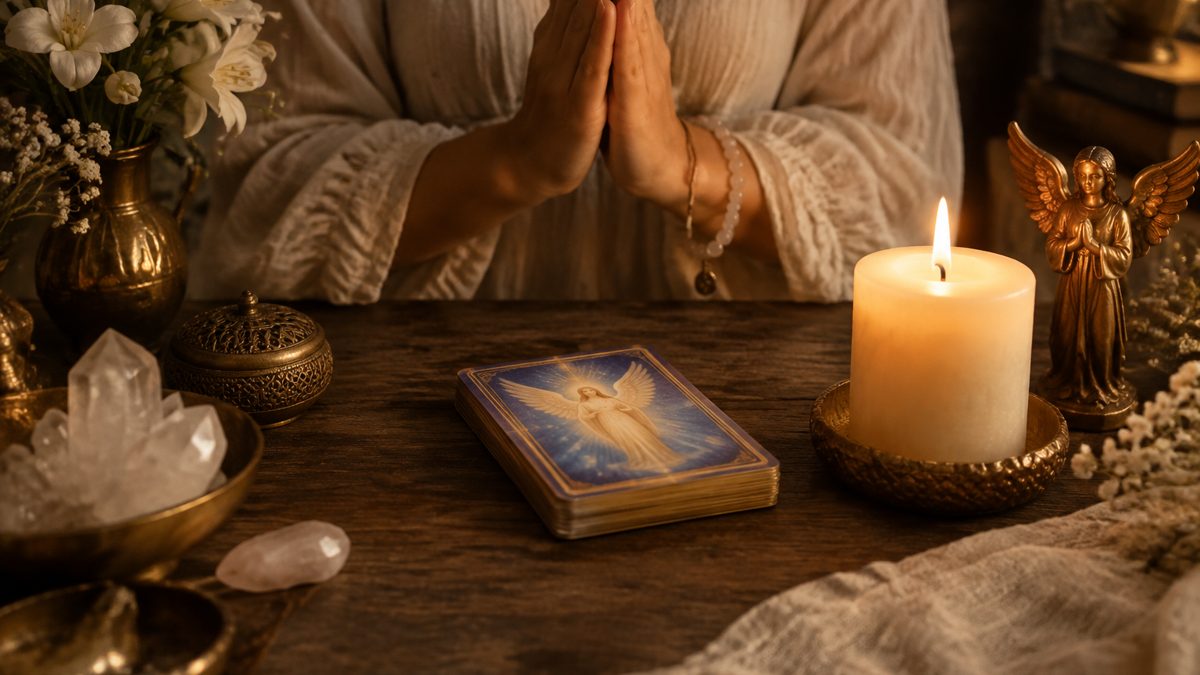
5. Set an intention or offer a prayer
Ang intensyon ay nagbibigay ng direksyon sa pagbasa. Hindi ito kailangang detalyado, at hindi nito pinipilit ang partikular na resulta. Bago magbaraha, itanong kung ano talaga ang hinahanap mo: ginhawa, pananaw, paksa para sa talaarawan, o paraan ng pag-iisip sa iyong susunod na karaniwang kilos. Mahalaga ang maliit na paglilinaw na iyon. Ang tanong kung paano lalapit sa isang pag-uusap ay nagbibigay-daan sa mas kapaki-pakinabang na pagninilay kaysa sa pagpupumilit na malaman nang eksakto kung ano ang lihim na iniisip ng ibang tao.
If prayer belongs to your spiritual practice, you may begin by addressing God, angels, or a benevolent presence in language consistent with your beliefs. A simple prayer could ask for clarity, compassion, and the wisdom to keep your own judgment. You might also ask that the practice remain grounded in kindness toward yourself and others. No particular wording is required, and an awkward sentence is not a spiritual mistake.
Kung mas gusto mo ang pamamaraang hindi relihiyoso, sabihin nang malinaw ang iyong layunin: maglalaan ka ng ilang minuto upang magnilay, obserbahan ang iyong mga tugon, at pag-isipan ang isang makatulong na susunod na hakbang. Maaari mong ipatong ang iyong mga kamay sa deck o huminga nang maginhawa. Maaaring markahan ng mga kilos na ito ang paglipat mula sa karaniwang gawain tungo sa nakatutok na atensyon nang walang inaangking di-nakikitang puwersa. Piliin ang tila tapat sa iyo sa halip na manghiram ng ritwal na nagpapailang sa iyo.
Keep your question open-ended and within your own sphere of action. Ask what deserves your attention, what perspective you might be overlooking, or what quality you want to bring to a situation. Avoid treating the cards as a way to obtain consent, read someone’s private thoughts, or settle factual matters that require evidence. When your question concerns another person, turn it gently toward your own communication, boundaries, or assumptions.
- Name the topic in one sentence, without trying to solve every part of it.
- Pumili ng bukas na tanong tulad ng: Ano ang makatutulong sa akin na lapitan ito nang may pag-iisip?
- Offer a prayer if it fits your beliefs, or state a secular intention.
- Remind yourself that the cards are prompts to consider, not commands to obey.
6. Shuffle and begin with a daily one-card draw
There is no universally correct way to shuffle an oracle deck. You can use an overhand shuffle, cut the cards into piles, or spread them face down and mix them gently on a clean surface. Choose a method that suits your hands and does not damage the cards. Once you have shuffled, draw from the top or select one from a face-down fan. The method need not be mysterious to feel intentional.
Ang pang-araw-araw na pagbunot ay isa sa pinakasimpleng paraan ng pag-aaral. Sa halip na humingi ng hula, itanong kung anong tema ang maaari mong pagnilayan ngayon. Ilagay ang baraha kung saan mo ito nakikita, basahin ang pamagat, at pansinin ang larawan bago buksan ang gabay na aklat. Bigyan ang sarili ng sandali upang bumuo ng unang impresyon. Hindi ka kumukuha ng pagsusulit, at walang gantimpala sa pag-uulit ng paliwanag ng lumikha nang salita por salita.
Kung may ilang baraha na nalaglag habang nagbabaraha ka, may mga pagpipilian ka. Itinuturing ng ilang mambabasa na makabuluhan ang mga ito; ang iba naman ay itinuturing itong karaniwang pagkadulas at ibinabalik sa deck. Magtakda ng tuntunin nang maaga upang hindi ka magpalit ng pamamaraan dahil lamang mas gusto mo ang isang resulta kaysa sa iba. Pareho ito sa mga barahang nakabaligtad. Maliban kung may kahulugang baligtad ang iyong deck o sadya mo itong tinanggap, ibalik ang baraha sa patayong posisyon.
Most importantly, let one card be enough. If the message feels puzzling or disappointing, note that response instead of immediately replacing it. Repeatedly drawing until you receive reassurance can make the practice less reflective and more urgent. You may also decide that a card does not resonate today. That is an acceptable result. A daily practice is an invitation, not an obligation, and occasional draws work just as well for learning at your own pace.
- Maglaan ng humigit-kumulang limang minuto at pumili ng simpleng tanong.
- Shuffle in a comfortable way, then draw one card.
- Write down its title and your first observation.
- Basahin ang gabay na aklat at pumili ng isang makatotohanang pagninilay o kilos.
- At the end of the day, briefly revisit the note without forcing a connection.
7. Try a few clear, beginner-friendly spreads
Ang spread ay simpleng ayos kung saan may tinukoy na papel ang bawat baraha. Tinutulungan ng mga posisyon na paliitin ang interpretasyong kung hindi ay malawak. Sa halip na hilingin sa tatlong baraha na ipaliwanag ang lahat, maaari mong italaga ang isa sa sitwasyon, ang isa sa nalimutang pananaw, at ang isa sa posibleng susunod na hakbang. Isulat ang mga posisyon bago bumunot. Pinipigilan ka nitong tahimik na baguhin ang tanong upang umangkop sa alinmang baraha ang lumitaw.
For a two-card reading, try: what I am noticing, and what else I could consider. The first position gives you a place to examine your current focus; the second invites a wider view. It is a useful arrangement when you feel caught between a familiar reaction and a more thoughtful response. Neither card needs to describe objective reality. Both can function as lenses through which to examine your understanding.
For three cards, I like: where my attention is, what could support me, and one action I can choose. The final position is deliberately modest. It asks for a possibility within your control rather than an instruction from an unquestionable authority. Another useful three-card spread is: what I appreciate, what I am learning, and what I am ready to simplify. That version works especially well for a weekly reflection.
Keep the positions visible while you interpret. A courage card in a support position might prompt you to remember a skill you already have; in an action position, it might suggest preparing for an honest conversation. Resist expanding every reading with extra clarifying cards. If a position remains unclear, return to its question, consult the guidebook, or leave a note to revisit it. Uncertainty is not a failure of the spread.
- Choose a two- or three-card layout and write down the meaning of each position.
- Shuffle while holding the overall question in mind.
- Lay the cards from left to right in the order drawn.
- Interpret each card within its assigned position before looking for connections.
- Summarize the reading in one or two sentences.
8. Interpret messages without surrendering your judgment
Start with what is actually on the card. Describe the image as though you were explaining it to someone who cannot see it: a figure stands beside an open gate, the background is blue, a lantern hangs from one hand. Then notice your associations. Perhaps the gate suggests opportunity to you, while the lantern suggests preparation. Separating observation from interpretation makes it easier to see how your own experiences shape the reading.
Next, read the guidebook. Treat it as the creator’s explanation, not an infallible verdict. You may discover a symbol you overlooked or find that the written message differs from your first impression. Hold those possibilities side by side. Ask which interpretation best fits the question without stretching the facts. A card about forgiveness, for example, need not mean reconciliation, renewed access, or abandoning a boundary.
Look for practical meaning rather than dramatic certainty. A rest card does not establish why you feel tired, and a card about abundance does not predict material gain. It might instead prompt you to notice what you already have or reconsider an expectation. Cards are not substitutes for medical, legal, or financial expertise, and they cannot establish facts about those subjects. Use appropriate information and qualified help when a decision calls for them.
Be especially careful with fear-based interpretations. A dark image is not evidence of a curse, an approaching disaster, or a hostile presence. Likewise, a comforting image cannot promise safety or a particular outcome. Our minds naturally notice patterns and remember striking matches; keeping track of misses and ambiguous results helps preserve perspective. I ask three questions before accepting an interpretation: Is it compassionate? Is it plausible as reflection? Does it leave me free to choose?
9. Explore archangels as a spiritual tradition
Many angel oracle decks feature archangels, but the traditions behind those figures are not uniform. Angels appear in Jewish, Christian, and Islamic traditions, with differences in names, roles, texts, and devotional practices. Contemporary oracle creators may also draw on later esoteric teachings and modern spiritual systems. A deck that presents a neat list of archangels and corresponding colors is offering a particular framework, not necessarily a universal religious teaching.
In many Christian contexts, Michael is associated with protection and spiritual struggle, Gabriel with divine messages, and Raphael with healing, especially through the Book of Tobit, whose scriptural status differs among traditions. Modern angel practices may adapt these associations into reflective themes such as courage, communication, and care. Those symbolic themes do not establish that calling on a figure will produce an external result. When a deck makes a specific claim about tradition, its sources deserve a look.
If archangel devotion fits your beliefs, you might choose one figure to learn about through reputable sources from the relevant tradition. Read about the historical or textual context before adding correspondences from a deck. You could then offer a respectful prayer, draw a card, and reflect on a quality associated with that figure. Avoid assuming that traditions are interchangeable or that one guidebook speaks for every community that honors angels.
Maaari mo ring gamitin ang mga larawan sa simbolikong paraan, habang malinaw na iba ito sa debosyonal na gawain. Ang imahen ni Michael ay maaaring mag-anyaya ng pagninilay sa isang hangganan; ang kay Gabriel ay maaaring humimok ng atensyon sa kung paano mo ipinapahayag ang iyong sarili. Hindi kinakailangang makipag-ugnayan sa pinangalanang nilalang, makadama ng presensya, o tumanggap ng tanda. Kung salungat sa iyong pananampalataya ang isang gawain o hindi ka komportable rito, isantabi ito. Kasama sa paggalang ang paggalang sa sarili mong mga limitasyon.
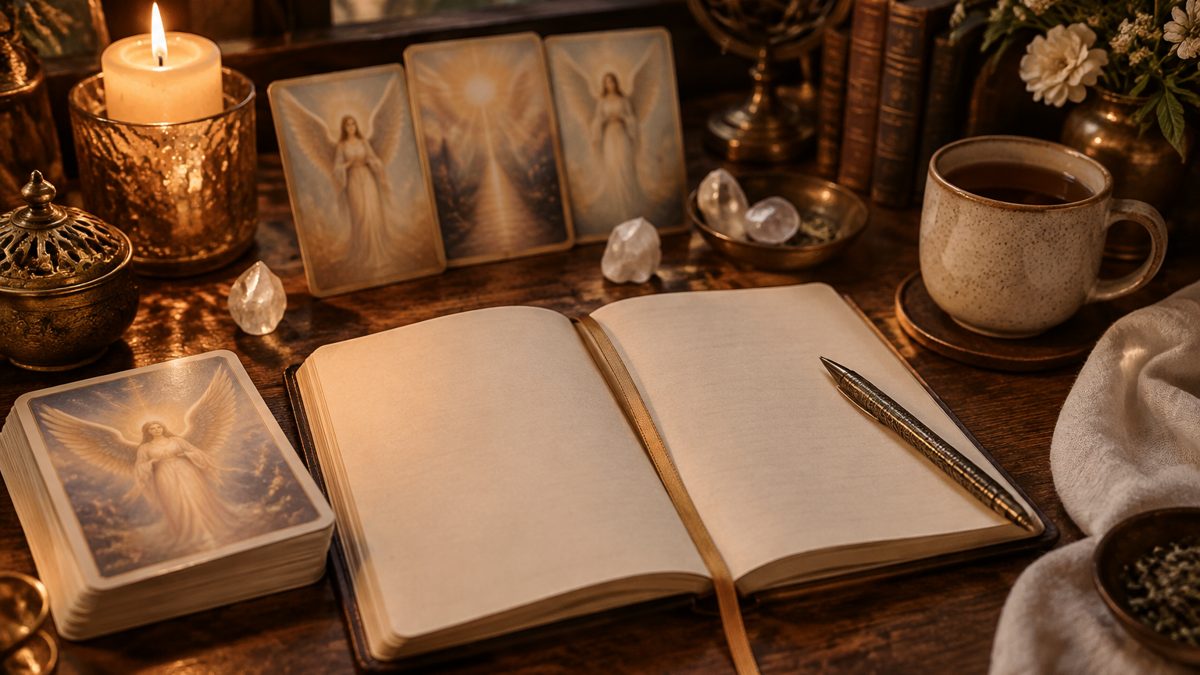
10. Keep a journal that welcomes honest observation
An oracle journal does not need to be beautiful to be useful. A plain notebook or a simple digital document will do. Record the date, your question, the deck, the card or cards drawn, and a few sentences about your response. Include the spread positions if you used them. These details give you a reliable record rather than relying on memory, which tends to highlight the most striking or emotionally satisfying moments.
Separate the card’s wording from your interpretation. You might note that the card’s title is Patience, while your response is that you feel rushed about a creative project. Then add what the guidebook contributed and what you actually intend to do. This distinction prevents a personal association from gradually becoming something you remember as an explicit message. It also helps you recognize which parts of the reading came from your existing knowledge of the situation.
Leave room for disagreement. Write down when a reading felt irrelevant, when you could not make sense of it, and when a suggested action did not suit your circumstances. Honest notes are more valuable than a record edited into a string of apparent confirmations. If the same card appears repeatedly, it may be interesting to reflect on, but repetition alone does not prove an outside message. You can explore the theme without assigning it special authority.
Review your journal after a few weeks. Look for patterns in your questions and reactions rather than trying to calculate the deck’s power. Are you repeatedly seeking permission to rest? Do you keep asking about a conversation you could prepare for directly? The most useful discovery may concern your own habits of attention. Protect the journal’s privacy, especially if you write about other people, and avoid presenting your impressions as facts about them.
- Itala ang tanong, mga baraha, at mga posisyon ng spread.
- Ilarawan ang iyong unang reaksyon bago idagdag ang interpretasyon ng gabay na aklat.
- Choose one small action, or note that no action is needed.
- Revisit the entry later and record what happened without rewriting the original reading.
- Notice recurring concerns while allowing for coincidence and ordinary repetition.
11. Walk through a sample three-card reading
Here is an illustrative reading using invented card titles, not a quotation from a published deck or a report of an actual supernatural message. Imagine that you have been postponing a personal writing project. You ask: What could help me return to this project in a thoughtful, manageable way? Your positions are where my attention is, what could support me, and one action I can choose. You draw Listening, Kindness, and Open Door.
In the first position, Listening might prompt you to examine how much advice you have been collecting. Perhaps you have read so many suggestions that you can no longer hear your own preferences clearly. That is one interpretation, not a fact established by the card. You test it against your experience: have you really been seeking more input instead of beginning? If not, Listening could invite another relevant reflection, such as noticing what originally attracted you to the project.
In the support position, Kindness might suggest changing the standard by which you judge a first attempt. Instead of expecting a polished piece immediately, you could allow an untidy draft. Notice how the interpretation stays connected to the question. It does not promise that kindness will make the project successful, and it does not claim that every obstacle is merely an attitude problem. It offers a possible way to make returning less intimidating.
In the action position, Open Door could suggest creating one small opening rather than planning a complete transformation. You decide to spend fifteen minutes outlining a scene tomorrow. Your summary becomes: I may be overwhelmed by outside advice; a gentler standard could help me begin; I will try one short writing session. You record that plan and close the reading. Tomorrow, whether you write or not, you can examine what helped and what got in the way. The value of the reading rests in the reflection and experiment, not in treating three cards as a prediction.
12. Close the reading and build a sustainable practice
Closing a reading can be very simple. Gather the cards, write your final thought, and return the deck to its box or another suitable place. If gratitude belongs to your practice, offer thanks in your own words. If you prefer a secular closing, acknowledge the time you gave yourself. A closing ritual marks the end of the session; it does not need to seal an invisible doorway or protect you from consequences for doing something incorrectly.
Choose a rhythm that fits your life. You might draw one card on quiet mornings, use a three-card spread each weekend, or reach for the deck only when you want a journaling prompt. There is no spiritual attendance record. If daily draws become repetitive, try reading less often or spending more time with a single image. Learning the deck includes noticing when it supports reflection and when another activity would serve you better.
Keep a few boundaries visible. Do not let a card override clear evidence, another person’s consent, or your own considered judgment. Avoid repeatedly checking the same question in search of certainty. If you notice that you feel unable to make ordinary choices without drawing, or that readings leave you increasingly frightened or preoccupied, put the cards away and reconnect with everyday sources of support. A reflective tool should remain something you can freely choose not to use.
What I hope you carry from this guide is not a perfect technique, but a gentle balance: imagination alongside discernment, tradition alongside curiosity, and meaningful ritual alongside ordinary action. Angel oracle cards can offer a language for reflection if that language speaks to you. They do not have to explain your future or solve your life. Sometimes the most worthwhile reading ends with a modest sentence in a notebook, a clearer question, and the willingness to take one thoughtful step.
These practices are shared as tradition and personal reflection, not as a substitute for medical, legal or financial advice.
Magpatuloy sa pag-aaral
- Angel oracle card meanings
- How to read tarot cards
- How to use angel oracle cards
- Paano magbasa ng playing cards
- Paano gumamit ng mga kristal sa mga spell
- Paano gumamit ng mga halamang-gamot sa witchcraft
- How to read the Dr. Moorne Egyptian Tarot
- How to read dice
- How to read tea leaves
- Paano gumamit ng pendulum
- How to cast a candle spell
- How to make a spell jar
- How to make a sigil
- How to cleanse your home
- How to set up an ancestor altar
- How to open a sacred space
- How to time spells with the moon
- How to work with water and salt
- How to make a protection charm bag
- Read the Journal or visit the shops