How-To Guide
How to Use Herbs in Witchcraft: Spells, Baths and Charms
Ni Seraphina
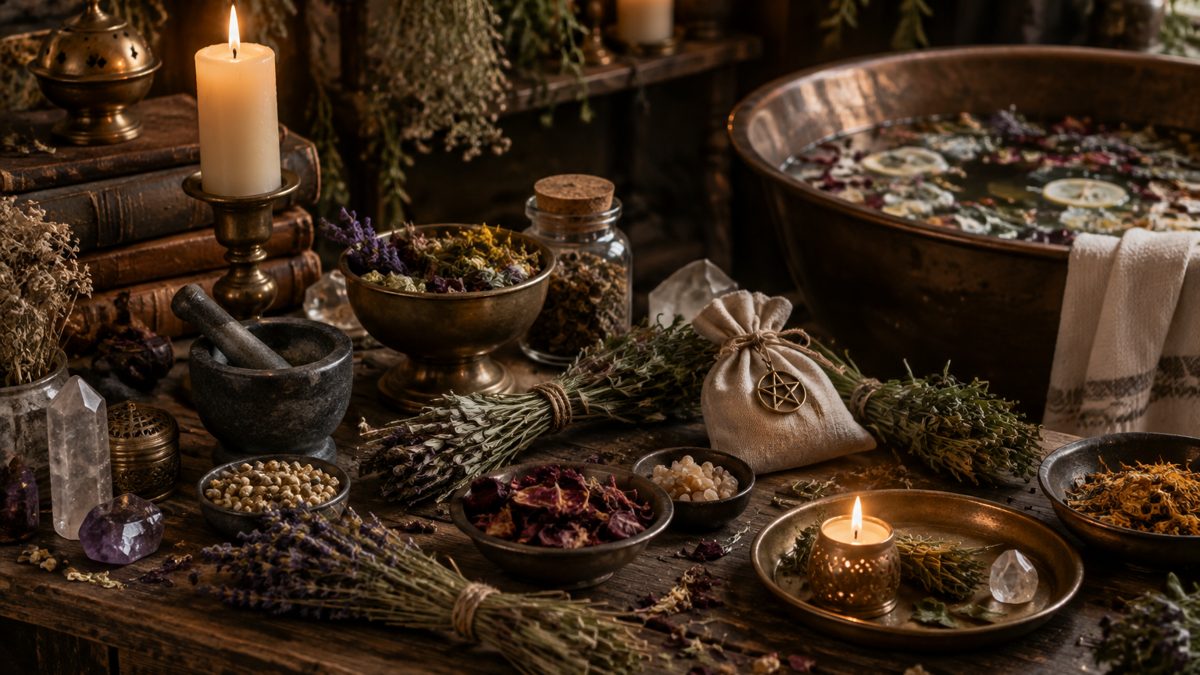
The herbs I return to most often are not rare or mysterious. They are the rosemary beside the kitchen door, the bay leaves in the cupboard, and the mint that would happily take over every pot I own. Welcome to Crossroads Journal. I’m Seraphina, and this is my guide to bringing herbs into a folk witchcraft practice with curiosity, care, and both feet on the ground.
Across many traditions, people have used plants to mark thresholds, bless households, remember the dead, celebrate seasonal changes, and give physical form to a wish. Those practices are not one universal system. Their meanings vary by place, family, religion, and practitioner. Here, I’m offering an adaptable, home-centered approach rather than claiming to reveal a single ancient rulebook.
I approach herbal magic as a practice of symbolism, attention, and belief. A charm can remind us of a boundary; a kitchen ritual can make an ordinary meal feel deliberate. Neither guarantees an outcome, and divination does not establish facts or reliably predict events. Herbal witchcraft belongs alongside practical action, never in place of appropriate professional advice or ordinary precautions.
We’ll work through gathering, drying, storing, sachets, baths, floor washes, smoke, candle arrangements, protection jars, and kitchen rituals before putting everything together in a simple ceremony. You do not need every method, a garden, or an overflowing apothecary. A few correctly identified ingredients, a clear purpose, and a willingness to leave unsafe ideas alone are more than enough.
Looking for the meaning of a single card or ingredient? Keep our Herbs in witchcraft guide open beside you.
How to Use Herbs in Witchcraft: Spells, Baths and Charms
My starting point is always the same: decide what the practice means before deciding what to buy. Are you marking a fresh beginning, expressing gratitude, remembering someone, or creating a moment to reflect on your boundaries? Write the purpose in one ordinary sentence. “I want to make my home feel thoughtfully tended” gives you a more useful starting point than an elaborate list of ingredients with no personal connection.
Next, choose one plant whose scent, history, appearance, or everyday use supports that intention. In some contemporary folk-inspired practices, rosemary is associated with remembrance and protection, bay with wishes or recognition, and lavender with peace. These are examples of customary associations, not measurable properties or universally shared meanings. Your grandmother’s kitchen mint may carry more significance for you than a correspondence chart.
I like to distinguish an inherited tradition from a personal invention. If I learned a custom from a family member, I say so. If I adapt a published practice, I keep a note of the source. If I invent a rosemary charm because its smell reminds me of home, I call it my own symbolism. That honesty makes a practice richer, not less magical.
There is also no obligation to borrow ceremonial plants or practices from communities whose teachings you do not share. Learn the context of what interests you, respect closed or restricted traditions, and avoid treating distinct cultures as a basket of interchangeable ingredients. Familiar culinary herbs can support a meaningful personal practice without pretending to carry someone else’s authority.
1. Begin with safety, not a correspondence list
A plant’s traditional magical reputation does not establish that it is safe to swallow, breathe, burn, or put on skin. The form matters too: a culinary leaf, concentrated extract, and essential oil are not interchangeable. For the beginner practices in this guide, I leave essential oils out entirely. Never ingest products labeled for incense, crafts, fragrance, or magical use, and never assume an online seller’s spiritual description is a safety assessment.
Nararapat sa rue ang lalo pang mariing babala. Nakalalason ito kapag nalunok, maaaring magdulot ng malubhang pagkalason, at maaaring maging sanhi ng matinding reaksyon sa balat kaugnay ng sikat ng araw. Lalo itong mapanganib sa panahon ng pagbubuntis. Hindi ko inirerekomenda ang rue para sa paligo sa bahay, tsaa, langis, usok, o agimat na maluwag ang hawak. Kung tumutubo na ito sa iyong hardin, iwasan ang pagdikit sa hubad na balat at humingi ng maaasahang gabay sa paghahalaman bago ito hawakan. Maaaring ipalit dito sa ritwal ang isang nakasulat na simbolo.
Mugwort is another plant I would not casually recommend. Avoid it during pregnancy or when trying to conceive, and get qualified advice before any use while breastfeeding. It can also trigger allergic reactions, including in people sensitive to related plants. For this beginner guide, simply leave it out. Claims about dreams or divination are not a reason to accept avoidable exposure, and burning it does not make it harmless.
Keep all ritual ingredients away from children and animals; something tolerated by an adult human may be dangerous to a pet. For allergies, asthma, medication questions, pregnancy, or uncertain skin safety, consult an appropriate clinician or pharmacist rather than a correspondence book. If exposure or poisoning is suspected, contact your local poison service or emergency services; for an animal, contact a veterinarian. Do not attempt a magical remedy or induce vomiting unless instructed.
2. Gather herbs respectfully and identify them with certainty
The simplest beginning is often a small packet of food-grade rosemary or bay from a reputable grocery supplier. You do not have to forage to be a “real” practitioner. If you grow herbs, retain the plant labels and learn the botanical names as well as the common ones. Common names can refer to different species, and resemblance is not enough to establish that a plant is suitable for handling or use.
When gathering outdoors, positively identify the plant using trustworthy references and, where needed, an experienced local botanist or foraging educator. Do not rely on a photograph or identification app alone. If any doubt remains, leave it standing. Avoid roadsides, sprayed areas, industrial land, and places contaminated by animal waste. Obtain permission and check local gathering restrictions; some plants and habitats are protected.
Take only a small amount from a healthy, abundant plant, leaving enough for its continued growth and for wildlife. Avoid uprooting plants or stripping every flower or seed head. For many leafy garden herbs, a dry morning after the dew has evaporated is a convenient harvesting time. Use clean scissors, remove damaged material, and keep different species separate so identification remains clear.
I sometimes pause before cutting to name what I’m gathering and why. That pause is a personal gesture of gratitude, not proof that the plant has granted permission or that harvesting has become ecologically harmless. The practical part still matters: a careful cut, a modest harvest, and an honest decision to leave a struggling plant alone. You can also honor a plant by observing it without taking anything.
3. Dry herbs thoroughly and keep good records
Drying is less dramatic than spellwork, but it asks for exactly the quality I value in a practice: patient attention. Sort your harvest promptly. Discard diseased, moldy, or contaminated material rather than trying to rescue it for ritual use. For garden culinary herbs, rinse when appropriate and remove surface water thoroughly. Never assume drying will remove pesticides, toxins, or other contaminants.
Ang maliliit at maluwag na bigkis ng angkop na madahong halamang-gamot ay maaaring isabit sa tuyo at malilim na lugar na may tuloy-tuloy na daloy ng hangin. Ang siksik na bigkis ay maaaring manatiling basa sa gitna, lalo na sa mahalumigmig na panahon. Bilang alternatibo, ikalat ang mga dahon sa isang patong sa malinis na pantuyong salaan, o gumamit ng food dehydrator ayon sa tagubilin nito para sa partikular na halamang-gamot. Ilayo ang mga pinatutuyong halaman sa taba ng pagluluto, panlinis na spray, at mausisang hayop.
Leaves should be crisp rather than cool, limp, or leathery before you seal them away. Drying time varies with the plant, room humidity, and method, so a calendar alone cannot tell you when they are ready. Thick stems may retain moisture after the leaves seem dry. If a stored batch develops condensation, clumping from moisture, visible mold, or a musty smell, discard it.
Label each batch with the common name, botanical name when known, source, and gathering or purchase date. Add the intended use: “food-grade,” “external craft only,” or “identification uncertain—do not use.” Ideally, uncertain material never enters your working cupboard at all. My labels are plain rather than picturesque because I want to understand them immediately, including on a tired evening when every dried leaf looks rather similar.
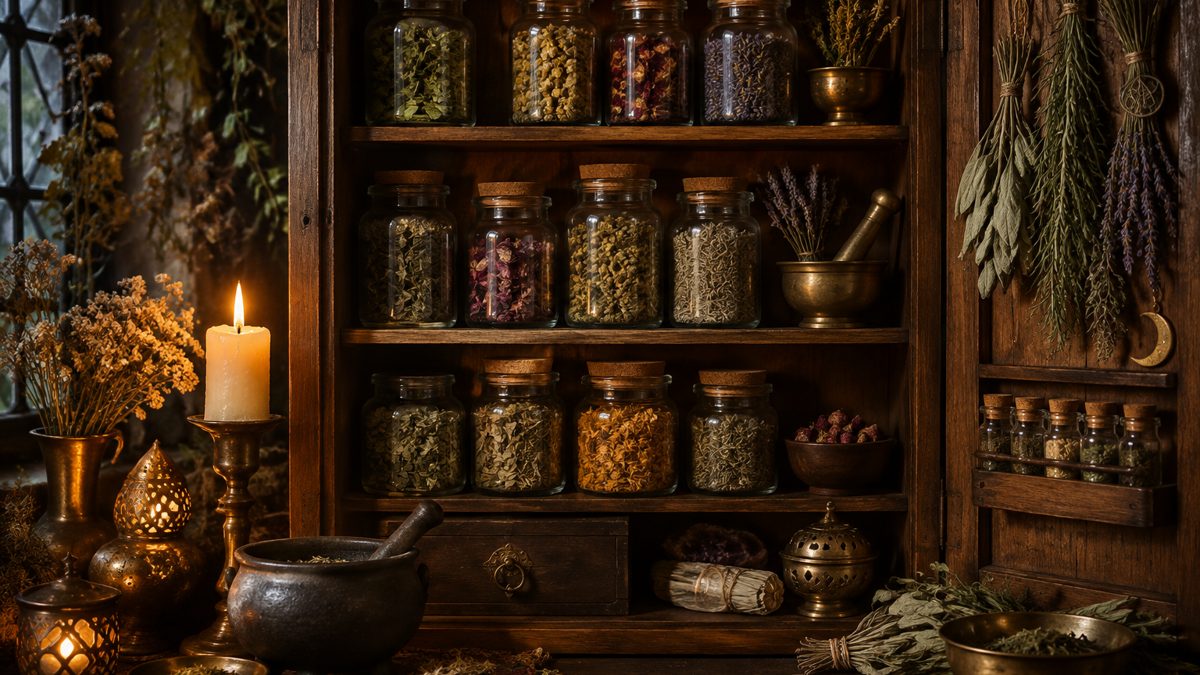
4. Build a small, well-organized herb cupboard
Store fully dried herbs in clean, dry, tightly closing containers away from sunlight, heat, and moisture. A cupboard is usually better than a windowsill or the shelf directly above a stove. Clear jars are convenient for inspection, but they still belong out of strong light. Check supplies periodically, and replace anything that shows deterioration. Older herbs may lose their scent, though age alone is not the only safety consideration.
Keep edible supplies separate from craft ingredients. Once herbs have touched candle wax, fragrance products, floor-cleaning tools, unknown decorations, or a non-food-safe vessel, they do not return to the kitchen. I use different spoons and containers for food and ritual crafts. This is especially important if a jar looks like an ordinary spice jar but contains something intended only for display.
Ang kapaki-pakinabang na koleksyon ng baguhan ay maaaring may rosemary na pang-pagkain, laurel, yerba buena, at thyme na pangluto, kasama ang lavender o talulot ng rosas kung malinaw lamang ang pagkakakilanlan at nakatalang gamit ng mga ito. Ang mga bulaklak na ibinebenta ng mga florist ay hindi awtomatikong angkop sa pagkain o paligo. Pumili ng mga sangkap para sa mga aktuwal na planadong gamit sa halip na kolektahin ang bawat halamang nabanggit sa aklat. Mas mainam ang tatlong pamilyar na halamang-gamot na pinag-isipang gamitin kaysa sa tatlumpung garapon na hindi mo tiyak na makikilala.
Keep a simple notebook beside your supplies. Record what you used, its source, the symbolic association you chose, and any practical observations. “The sachet shed dust” is useful. So is “I disliked this scent.” If you record dreams or draw a divination card, describe the interpretation as reflection, not evidence that an herb caused an event or revealed another person’s intentions.
5. Make sachets and charm bags with clear intentions
A sachet is a small fabric container for dried material; a charm bag gives that object an explicitly symbolic purpose. I like them because they can be simple, portable, and free of flame. Choose a tightly woven pouch that will not readily shed dust. Avoid powdered herbs, sharp stems, and long dangling cords. Even a securely closed pouch must stay out of reach of children and pets.
Para sa isang simpleng pang-tahanang agimat, gumamit ng isang kurot ng tuyong rosemary at isang maliit na papel na may nakasulat na pariralang tulad ng “Nawa'y magsanay ako ng malinaw at maalalahaning mga hangganan.” Maaaring idagdag ang laurel kung may kahulugan ito sa iyo, ngunit sapat na ang isang halamang-gamot. Ang mga salita ay nagpapahayag ng pag-asa at pangako; hindi ito lumilikha ng kapangyarihang harang na supernatural at hindi rin ito pamalit sa mga kandado, alarma, o iba pang praktikal na proteksyon.
Hold the closed bag for a moment and consider the action connected to the wish. Perhaps you will stop answering work messages during dinner or keep your entryway easier to navigate. Place the charm somewhere suitable and inaccessible to curious hands or paws, rather than in bedding or against bare skin. Do not tuck loose botanical charms into a crib, pet bed, or another person’s belongings without consent.
Check the bag occasionally for moisture, broken seams, insects, and irritating dust. Retire it whenever it no longer serves a purpose; there is no mandatory magical expiry date. Dispose of the contents according to their materials and local waste guidance. Keeping herbs, paper, and fabric separate at the beginning makes this easier. You do not need to bury a charm or leave it outdoors to complete the practice.
- Choose one intention and write it in a single sentence.
- Magdagdag ng maliit na kurot ng pamilyar at wastong natukoy na tuyong halamang-gamot sa matibay na telang supot.
- Isama ang iyong nakasulat na intensyon, isara nang ligtas ang supot, at ugnayin ito sa isang praktikal na kilos.
- Ilagay ito nang ligtas, pagkatapos ay suriin paminsan-minsan ang kondisyon nito.
6. Prepare ritual baths without treating the tub like a cauldron
Ang ritwal na paligo ay maaaring karaniwang pagligo na sinasamahan ng piniling intensyon. Opsyonal ang mga halamang-gamot. Sa katunayan, ang paglalagay ng saradong garapon ng halamang-gamot sa istante sa labas ng saklaw ng tilamsik ang may pinakamababang pagkakalantad na paraan upang isama ang simbolismo nito. Kung sensitibo ang balat mo, may allergy, may sugat sa balat, may kaugnay na kondisyong pangkalusugan, o hindi sigurado sa isang sangkap, pumili ng payak na tubig sa halip na mag-eksperimento sa halamang-gamot na paghahanda.
Kung pipiliin mo ang pagdikit ng halaman sa balat, gumamit lamang ng wastong natukoy na sangkap na kaya na ng iyong katawan at sinusuportahan ng maaasahang gabay para sa panlabas na gamit. Ang katayuang pang-pagkain lamang ay hindi nagpapatunay ng kaligtasan sa balat. Ang pagsubok sa maliit na bahagi ay maaaring magbunyag ng iritasyon, ngunit hindi nito magagarantiyahan na ligtas ang buong paligo o maiiwasan ang kalaunang allergy. Huwag magdagdag ng rue, mugwort, essential oil, di-kilalang halo, o konsentradong katas.
A strained, cooled infusion avoids the loose leaves that cling to skin and clog drains. Prepare a weak infusion with the chosen suitable herb in a separate clean vessel, strain it carefully through fine cloth, and add only a modest amount to comfortably warm water. Make it fresh and discard leftovers. Do not use boiling water in the bath, and stop immediately if you notice burning, itching, dizziness, or breathing discomfort.
Keep candles away from the tub, avoid glass vessels on slippery edges, and remember that plant residue or added products can make surfaces slippery. Never add oils as a default ritual ingredient. I prefer to mark the beginning with a spoken sentence and the ending by rinsing, drying, and putting on clean clothes. A shower with a symbolic herb kept outside the water works just as well for this purpose.
7. Use floor washes as symbolic household tending
Floor washing has a place in several distinct folk and spiritual traditions, with different materials, prayers, and directions of movement. My personal version is simply ordinary cleaning paired with deliberate reflection. Some practitioners move toward a door when symbolically releasing something, or inward when welcoming something. Those directions are conventions within a practice, not universal laws you must obey.
Clean according to the flooring manufacturer’s instructions first. An herbal infusion is not a disinfectant, and it may stain surfaces, leave residue, or damage finishes. Wood, unsealed stone, and specialty flooring can be particularly unforgiving. The safest adaptation is to use your usual compatible cleaning method while keeping the herbs in a closed jar nearby. You retain the symbolism without adding an uncertain substance to the floor.
If the surface guidance permits a particular water-based preparation and you still wish to use one, make it weak, strain it thoroughly, and test an inconspicuous spot. Avoid loose leaves and oils. Never mix homemade washes with bleach, ammonia, or other cleaning products, and do not assume vinegar is suitable for every surface. Keep people and animals away until the floor is dry and any required rinsing is complete.
As I clean, I name the ordinary task behind the ritual: making a room usable, removing tracked-in dirt, or creating a clear entrance. That language prevents “cleansing” from becoming a claim that unseen danger has been objectively removed. Dispose of wash water appropriately for its contents and local guidance, not into a stream or garden as a ceremonial offering. Responsible cleanup is part of the practice.
8. Approach incense and smoke cleansing with restraint
Smoke cleansing is a broad description for practices that use smoke symbolically; it should not erase the specific names, histories, or restrictions of particular ceremonies. I describe a personal household practice plainly rather than borrowing a culturally specific title. Herbs do not need to be burned to be meaningful, and smoke does not disinfect a room or demonstrate that an unwanted presence existed.
All smoke introduces particles and combustion products into the air. Good ventilation does not make exposure harmless. Avoid indoor burning around children, pregnant people, anyone with asthma or other respiratory sensitivities, and animals; birds are especially vulnerable. If you share a home, ask the other occupants before using fragrance or smoke. Their comfort and consent matter more than finishing your planned ritual.
For beginners, I recommend a smoke-free substitute rather than loose herbs on charcoal. Charcoal brings additional heat and carbon monoxide concerns. Do not burn unknown plants, treated decorations, poisonous herbs, essential oils, or kitchen mixtures simply because a recipe calls them “cleansing.” If you use a product intended for incense, follow its directions, use a stable heat-resistant holder and protective surface, and keep it clear of anything combustible.
Never leave burning material unattended, carry smoldering herbs through cramped rooms, disable smoke alarms, or put warm ash into the bin. Extinguish everything fully and confirm it is cold. My favorite substitute is to open a window when conditions allow, tidy a small area, and ring a bell or read an intention. You can also simply sit with a labeled, closed herb jar and let the plant’s meaning be enough.
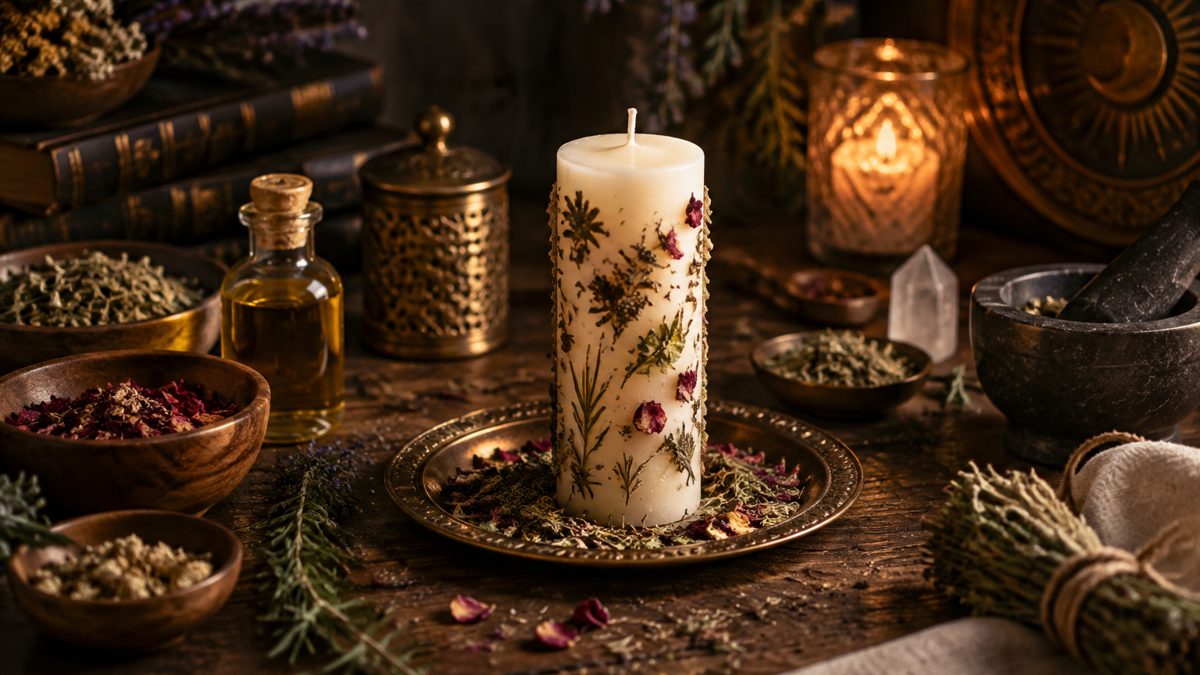
9. Dress a candle ritual without adding a fire hazard
Herbal candle dressing often means coating a candle with oil and rolling it in dried plant material. I do not recommend that method. Dried herbs can ignite, act as additional wicks, and produce unpredictable flames. Plant fragments dropped into melted wax can also become fuel. A candle sold with decorative botanicals is not automatically safe just because it was commercially made.
Instead, dress the ritual setting rather than the candle itself. Use a plain candle in a suitable holder on a stable, heat-resistant surface, following the manufacturer’s instructions and clearances. Keep the herbs in a separate closed container well away from the flame and heat. Do not make a ring of dried leaves around the holder, scatter petals on the candle plate, or place a paper petition beneath a hot vessel.
Mas pinadadali pa ito ng walang-apoy na LED na kandila. Ilagay ito sa tabi ng garapon ng halamang-gamot at nakasulat na intensyon, na ang mga baterya ay nakalagay nang ligtas na malayo sa mga bata at alagang hayop. Ito ang aking mas gustong ayos kapag ang ritwal ay may kinalaman sa pagtingin sa loob, pagpikit, o matagal na pagsulat. Natural na naglalayag ang atensyon sa mapagnilay na gawain, kaya't hindi dapat maging mahalagang kinakailangan ang bukas na apoy.
If you choose a real candle, remain present, keep it clear of drafts and anything combustible, and extinguish it before leaving or becoming sleepy. There is no need to let it burn down completely. Ending a ritual early for safety does not spoil its symbolic purpose. Nor should a flickering flame or cracked container be interpreted as proof of a message; address the physical hazard first.
10. Assemble a dry protection jar and plan its retirement
A protection jar can be a visual reminder of the boundaries and habits you want to maintain. For this guide, keep it dry and uncomplicated: a small, clean container, a pinch of rosemary, an optional bay leaf, and a folded note. You might write, “This home is a place where I practice care and clear limits.” These ingredients express a belief or intention; they do not provide a guaranteed protective effect.
Avoid adding bodily fluids, fresh plants, food scraps, liquids, sharp objects, or unidentified minerals. Wet organic mixtures can spoil, grow mold, or ferment and build pressure in a sealed container. Nails, needles, and broken glass create handling and disposal hazards without being necessary to the symbolism. There is also no reason to seal the lid with hot wax; an ordinary secure closure is sufficient.
Place the jar where it will not fall, overheat, or attract a child or pet. A nonbreakable container may be the better choice in a busy household. Pair the ritual with a concrete check: is the doorway clear, are important contacts easy to find, and have you communicated the boundary you wrote down? The jar can remind you to act, but it cannot take those actions for you.
Decide at the beginning how you will retire the object. You can empty it into appropriate household waste and clean the reusable container. Compost only suitable, uncontaminated plant material if your compost system accepts it; remove paper, string, salt, and other additions as needed. Do not bury jars, leave them in public places, or throw them into water. A quiet ending at home is entirely sufficient.
11. Bring herbal symbolism into everyday cooking
Kitchen witchery is where herbal ritual feels most natural to me. It can be as modest as adding rosemary to roast vegetables while thinking about the people you hope to welcome, or stirring mint into a familiar recipe as a marker of a new season. The symbolic layer does not change the food’s physical properties, and it should never require an unsafe amount of an ingredient.
Use only correctly identified, food-grade herbs in ordinary culinary quantities and recipes appropriate to them. Follow normal food hygiene, storage, and temperature guidance. Do not cook with herbs taken from charm bags, incense supplies, bath mixtures, or decorative bouquets. “Natural” is not a food-safety category, and a plant’s association with abundance or love does not establish that it belongs in dinner.
Igalang ang lahat ng kumakain ng pagkain. Suriin ang allergy, kagustuhan, at mahahalagang paghihigpit sa pagkain, at maging bukas tungkol sa mga sangkap. Alisin ang buong dahon ng laurel bago ihain dahil ang matitigas na gilid nito ay maaaring magdulot ng pagkabulunan o pinsala. Huwag palihim na magdagdag ng halamang-gamot o ituring ang pinagsasaluhang ulam bilang spell na dinisenyo upang labagin ang pahintulot ng iba. Mas matibay na pundasyon ang mabuting pagtanggap kaysa sa pagsubok na kontrolin ang damdamin ng panauhin.
Avoid improvising shelf-stable herb-infused oils, particularly with fresh herbs or garlic; improperly prepared and stored oils can present a botulism risk. Use a tested food-safety recipe and its exact storage instructions, or choose a simpler dish. My favorite kitchen ritual needs no preserved preparation at all: cook something familiar, pause before serving, and name one thing you appreciate about the work that brought the food to the table.
12. Try a simple threshold ritual, then reflect
Narito ang isang ritwal na walang usok at walang apoy na pinagsasama ang buong gabay. Ang layunin nito ay markahan ang bagong simula sa tahanan, hindi garantiyahan ang proteksyon o alisin ang isang obhetibong napatunayang banta sa espiritu. Kakailanganin mo ang maliit na garapon na may etiketa ng tuyong rosemary na pangluto, isang papel, isang panulat, at isang telang angkop panlinis ng iyong pintuan. Panatilihin ang halamang-gamot sa nakasarang garapon sa buong oras.
Choose a time when you can work without rushing. If the doorway is shared, respect other people’s access and belongings. Begin with the ordinary task of clearing clutter and wiping the appropriate surface according to its care instructions. You are not making the entrance ritually perfect. You are giving a small, useful job your full attention and allowing it to represent something larger.
When the steps are finished, spend a few minutes writing about the experience. Did the process help you clarify what “welcome” or “boundary” means to you? Was there a practical task you had been avoiding? These observations are more useful than searching for signs that the ritual worked. If you use divination afterward, treat the result as a prompt for reflection rather than an instruction or factual prediction.
That is the kind of herbal witchcraft I hope to make room for at Crossroads Journal: curious, personal, grounded, and willing to be simple. You may eventually explore a particular regional or family tradition in greater depth, with careful sources and appropriate teachers. For now, one familiar herb and one honestly chosen action are enough. Let the ritual support the life you actually live.
- Clear the entrance without blocking exits, and clean a suitable surface using its recommended method.
- Set the closed rosemary jar on a stable surface away from the doorway’s traffic, children, and pets.
- Write one intention, such as “I will make room for welcome while respecting my limits.”
- Basahin ang pangungusap nang malakas o sa isip. Pagnilayan ang kahulugan ng rosemary sa iyong gawain nang hindi itinuturing ang ugnayang iyon bilang ipinangakong epekto.
- Choose one achievable action that expresses the intention: put away shoes, establish a visiting preference, or make space for a guest’s coat.
- Complete the action, put the jar safely away, and keep or recycle the paper as you prefer. The ritual is finished.
These practices are shared as tradition and personal reflection, not as a substitute for medical, legal or financial advice.
Magpatuloy sa pag-aaral
- Herbs in witchcraft
- How to read tarot cards
- How to use angel oracle cards
- Paano magbasa ng playing cards
- Paano gumamit ng mga kristal sa mga spell
- Paano gumamit ng mga halamang-gamot sa witchcraft
- How to read the Dr. Moorne Egyptian Tarot
- How to read dice
- How to read tea leaves
- Paano gumamit ng pendulum
- How to cast a candle spell
- How to make a spell jar
- How to make a sigil
- How to cleanse your home
- How to set up an ancestor altar
- How to open a sacred space
- How to time spells with the moon
- How to work with water and salt
- How to make a protection charm bag
- Read the Journal or visit the shops