How-To Guide
How to Read Tarot Cards: A Complete Beginner's Guide
Ni Seraphina
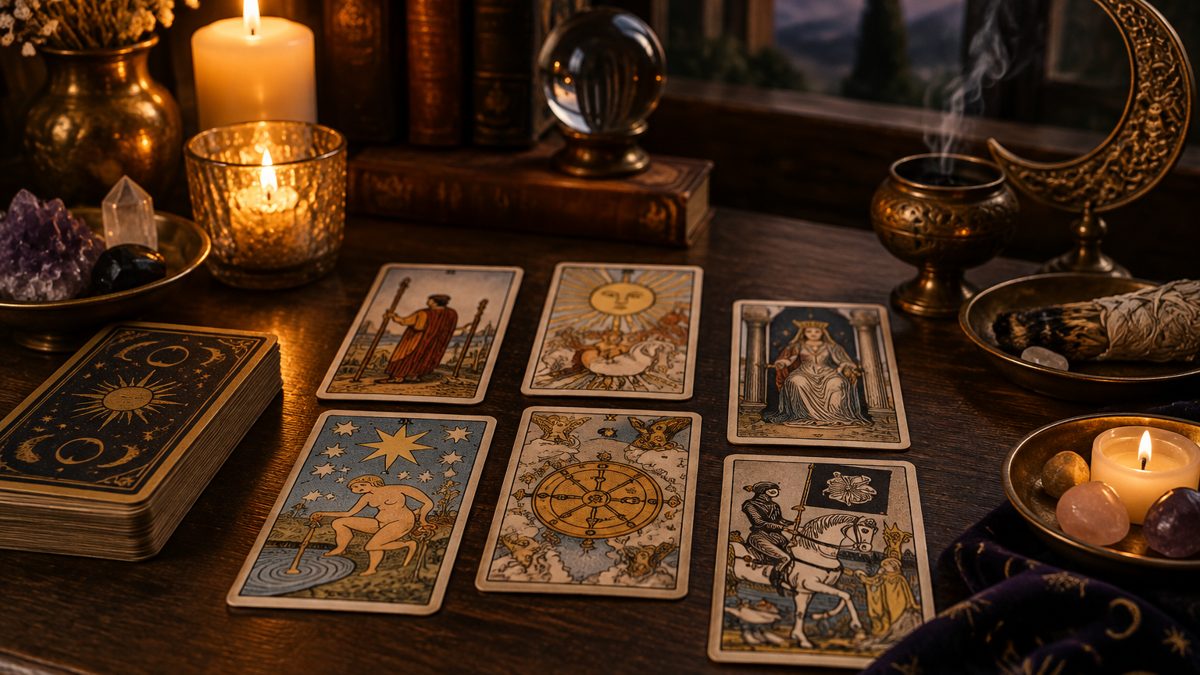
How to Read Tarot Cards: A Complete Beginner's Guide The first thing I want you to know about tarot is that you do not need to memorize seventy-eight definitions before you begin. You need a deck, a little uninterrupted time, and a willingness to look closely. Welcome to Crossroads Journal. I’m Seraphina, and my approach to tarot starts with curiosity rather than certainty: What do you notice? What does an image bring to mind? What might it help you consider?
May kasaysayan ang tarot bilang larong baraha, at ang mga tradisyong panghuhula at okulto ay umunlad nang kalaunan. Ngayon, ang ilan ay lumalapit dito bilang espirituwal na gawain, ang ilan bilang kasangkapan sa pagninilay, at ang ilan bilang pareho. Ang mga paniniwala tungkol sa mahika, enerhiya, at panghuhula ay kabilang sa mga partikular na tradisyon at personal na pananaw sa mundo; hindi sila mga napatunayang garantiya kung paano gumagana ang mga baraha. Maaari kang makilahok nang maalalahanin nang hindi tinatanggap ang mga paniniwalang hindi tama sa pakiramdam mo.
In this guide, I’ll walk you through a standard seventy-eight-card deck, from choosing and cleansing it to laying out your first spreads. We’ll explore reversals, connect cards into a coherent story, and work through an illustrative reading together. Most importantly, we’ll keep your judgment and freedom of choice at the center. A tarot reading can offer a perspective to examine, not a verdict you must obey.
Looking for the meaning of a single card or ingredient? Keep our Mga kahulugan ng baraha ng tarot guide open beside you.
1. Get to Know the Seventy-Eight-Card Deck
A standard tarot deck contains twenty-two Major Arcana cards and fifty-six Minor Arcana cards. The Major Arcana include familiar figures such as the Fool, the Magician, the Hermit, and the World. Readers commonly associate these cards with broad themes: beginnings, agency, solitude, change, and completion. I think of them as wide-angle images. They can give a reading a larger thematic frame, but their appearance does not prove that something destined or extraordinary is happening.
The Minor Arcana bring the focus closer to everyday experience. They are divided into four suits, commonly called Wands, Cups, Swords, and Pentacles. Each suit contains an Ace through Ten and four court cards: Page, Knight, Queen, and King. Names vary across decks. You might find Coins instead of Pentacles, or a different set of court titles. Your guidebook should explain the system your deck uses.
In many modern reading traditions, Wands suggest creativity, initiative, and enthusiasm; Cups concern feelings, relationships, and imagination; Swords address thought, language, decisions, and conflict; and Pentacles concern practical activity, resources, routines, and the material world. These are starting points rather than sealed compartments. A Cups card can appear in a creative question, and a Pentacles card can speak to the everyday effort involved in maintaining a friendship.
Court cards can describe people, approaches, roles, or qualities you are developing. They need not represent a person of a particular gender or age. A Queen might suggest a receptive, sustained relationship with a suit’s qualities; a Knight might emphasize how those qualities move into action. Different traditions interpret these roles differently. Begin with your deck’s framework, then let the question, imagery, and surrounding cards refine your interpretation.
2. Pumili ng Deck na Gusto Mong Pagbuhusan ng Oras
For a first deck, I recommend looking for clear illustrations, readable card titles, and a guidebook that explains both individual cards and basic reading methods. A Rider–Waite–Smith-style deck is often convenient because many beginner resources use its imagery and structure. Other systems, including Tarot de Marseille and Thoth, have their own interpretive traditions. None is automatically superior, but learning is simpler when your deck and reference material speak a similar visual language.
Before buying, look at several cards rather than judging only the cover or the Major Arcana. Can you make out what is happening in the numbered Minor Arcana? Do the images invite attention, or do they leave you feeling disconnected? Consider practical details, too: card size, print contrast, durability, and whether your hands can comfortably shuffle the deck. A beautiful deck that is difficult to handle may be better suited to occasional study than daily practice.
You do not have to receive your first deck as a gift. That is a custom some readers share, not a universal requirement. Nor do you need a rare edition, an expensive cloth, or an elaborate collection of accessories. Choose within your means, preferably from a reputable seller or the creator. One deck you know well can support a rich practice. I would rather see you become familiar with a modest, well-loved deck than feel pressured to assemble a perfect altar before drawing a card.
- Browse sample images of the Major Arcana, numbered Minor Arcana, and court cards.
- Confirm that the deck has seventy-eight cards and identify its underlying tradition.
- Check the guidebook, card dimensions, and ease of reading the artwork.
- Choose the deck that balances accessibility, personal interest, and practical comfort.
3. Cleanse Your Deck and Settle Into the Practice
In some tarot traditions, cleansing is understood as clearing unwanted energy or preparing a deck for spiritual work. Other readers use the same actions symbolically, as a way to mark a fresh beginning. There is no established evidence that cards accumulate spiritual contamination, and cleansing is not required for an accurate or meaningful conversation with the images. If the ritual appeals to you, let it support attention rather than become a rule you are afraid to break.
Mas gusto ko ang isang bagay na simple: maglinis ng espasyo, ayusin ang deck, at huminto bago magsimula. Maaari mong ayusin ang mga baraha ayon sa pagkakasunod-sunod, marahang tapikin ang bunton, o ilagay ito sa tabi ng bagay na nagpapaalala ng iyong intensyon. Gumagamit ang ilang tradisyon ng usok, tunog, o liwanag ng buwan. Isaalang-alang ang kaligtasan laban sa sunog, allergy, alagang hayop, at materyales ng deck bago gumamit ng anumang pamamaraan. Maaaring mag-iwan ng latak ang usok, maaaring magpaputla ng print ang sikat ng araw, at maaaring makasira ng baraha ang halumigmig. Pinakamainam na ilayo ang asin at tubig sa mismong deck.
Physical care is separate from ritual cleansing. Start with clean, dry hands, follow the manufacturer’s care advice, and store the cards somewhere dry. For your own preparation, take a few comfortable breaths and notice the room around you. You do not need to empty your mind or achieve a special state. If you feel distracted, write down what is occupying you. If you feel frightened or compelled to keep checking the cards, stepping away may be the most useful opening ritual of all.
- Choose a clear, comfortable surface with enough room for your intended spread.
- Use a brief symbolic cleansing ritual if you want one; otherwise, simply organize the deck.
- Pangalanan ang iyong intensyon sa karaniwang wika, tulad ng, “Nais kong pag-isipan ang sitwasyong ito nang may pasensya.”
- Decide how long you will spend reading and give yourself permission to stop.
4. Ask Questions That Leave Room for Choice
A useful tarot question gives you something to explore without pretending the deck can establish hidden facts. I favor questions beginning with what or how: What am I overlooking? How might I approach this conversation? What would support my next step? These invite reflection on your perspective and behavior. They also make it easier to evaluate a reading afterward, because you can ask whether the interpretation led to a relevant insight rather than whether a vague prediction eventually seemed to fit.
Try shifting a fixed-outcome question toward agency. Instead of “Will my creative project succeed?” ask, “What can help me develop this project, and what obstacle deserves attention?” Instead of “Does this person secretly dislike me?” ask, “What assumptions am I making about this relationship, and what could I clarify directly?” The cards cannot verify another person’s private thoughts. A spread about your own experience can still help you prepare for a respectful, real-world conversation.
Keep the scope manageable. “What should I do with my entire life?” asks a small arrangement of cards to carry an enormous burden. “What deserves attention as I plan my next month of creative work?” is easier to explore. You can include a time frame as a boundary for reflection, not as a deadline for a prediction. Before shuffling, write the question down and decide which spread positions will address it. That small act prevents the reading from wandering wherever the most dramatic image points.
- Describe the situation in one or two factual sentences.
- Separate what you know from what you suspect or fear.
- Sumulat ng bukas na tanong na nakasentro sa iyong mga pagpili, atensyon, o asal.
- Choose a spread that matches the question rather than making the question fit an elaborate spread.
5. Shuffle, Cut, and Draw Without Overthinking
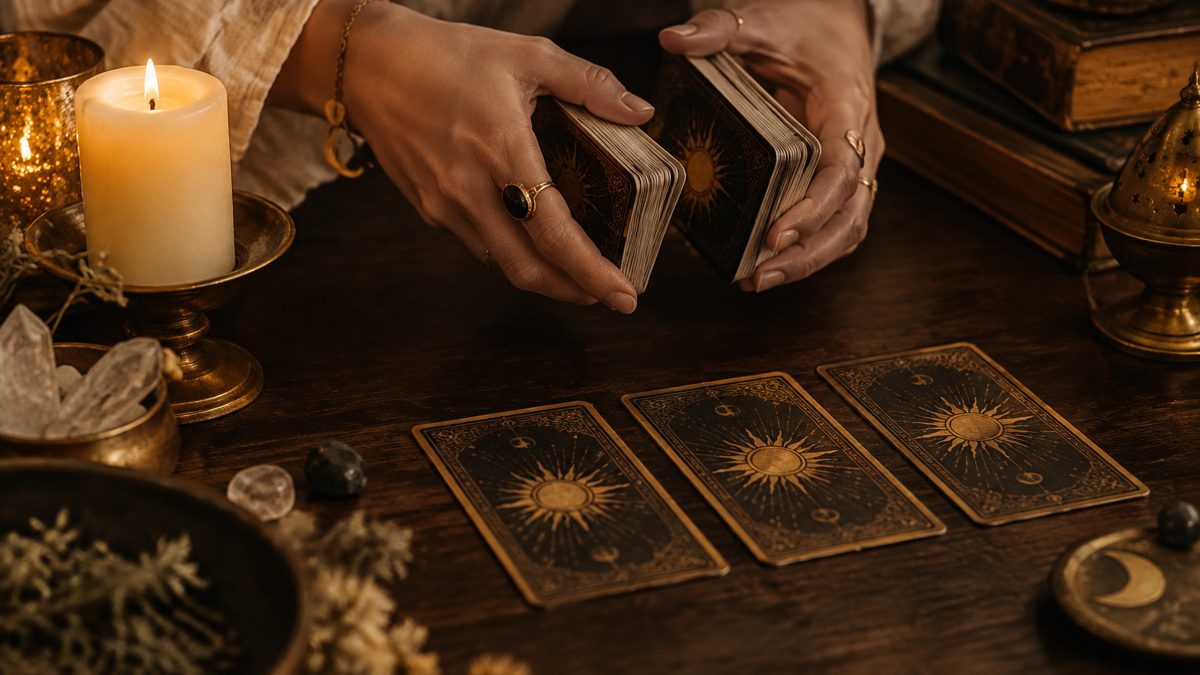
Shuffling mixes the cards and gives you a moment to focus. It does not require a particular flourish. An overhand shuffle works well for many decks; gently spreading the cards face down and mixing them across a clean surface is another option. A riffle shuffle may bend or wear stiff cards, so use it only if the deck and your hands tolerate it. You can also divide the deck into smaller piles and recombine them when a large stack is uncomfortable.
Magpasya bago magsimula kung gagamit ka ng reversals, o mga barahang nakabaligtad. Kung nais mo ng pagbasang patayo lamang, panatilihing nakaharap sa iisang direksyon ang mga baraha habang binabaraha. Kung nais mo ng reversals, paikutin ang bahagi ng deck bago ito pagsamahing muli. Hindi kailangang gumawa ng eksaktong proporsyon. Gayundin, maaari kang bumunot mula sa itaas o pumili ng mga baraha mula sa nakataob na yaring pamaypay. Walang napatunayang mas nagbubunyag sa dalawang paraan; ang pagkakapare-pareho ay nagpapadali lamang sa pag-aaral ng proseso.
Minsan tinatawag ng mga mambabasa na “jumpers” ang mga barahang nalalaglag habang binabaraha. Binibigyang-kahulugan ito ng ilan, habang ibinabalik naman ito ng iba sa deck. Piliin ang iyong paraan nang maaga upang hindi maging madaliang mensahe ang bawat nalaglag na baraha. Iminumungkahi ko ring magtakda ng katamtamang tuntunin para sa mga clarifier: marahil isang karagdagang baraha matapos mong bigyang-kahulugan ang orihinal na spread. Ang paulit-ulit na pagbunot hanggang sa mapanatag ang sagot ay maaaring gawing siklo ng mas maraming kawalang-katiyakan ang isang mapaggalugad na gawain.
- Read your question and remind yourself of the spread positions.
- Shuffle using a comfortable method, with or without reversals.
- Stop at a practical point; you do not need a special sensation to tell you when.
- Cut the deck if you wish, then draw the planned number of cards.
- Place each card in its assigned position and record the layout before interpreting it.
6. Magsimula sa One-Card at Three-Card Spread
A one-card reading is a complete practice, not merely a beginner exercise. Give the position a clear purpose, such as “A quality to practice today” or “An aspect of this project to notice.” Look at the card before opening the guidebook. Describe the scene literally: a person carrying something, a doorway, a distant landscape, an overflowing cup. Then move toward interpretation. This sequence helps distinguish what is actually pictured from what you are bringing to the image.
For a three-card reading, label the positions before drawing. Situation, challenge, and helpful approach is a versatile combination. What to acknowledge, what to reconsider, and what to try also works well. Past, present, and future is traditional, but I suggest reading the final position as a possible direction if present patterns continue, not a fixed event. Even then, the cards do not establish what happened in the past or what will happen next.
Basahin ang bawat baraha ayon sa posisyon nito, pagkatapos ay pag-isipan ang kabuuang ayos. Ang parehong baraha ay maaaring magkaiba ang kahulugan bilang hamon at bilang nakatutulong na lapit. Halimbawa, ang Four of Swords sa posisyon ng hamon ay maaaring mag-anyayang pag-isipan kung ang paghinto ay naging pag-iwas na; sa posisyon ng nakatutulong na lapit, maaari nitong imungkahing magbigay ng espasyo para sa pagninilay. Hindi awtomatiko ang alinman sa dalawang kahulugan. Ang iyong sitwasyon at ang paligid na imahen ang dapat magtakda kung alin ang akma.
- For a one-card spread, write one focused prompt and draw one card.
- List three visible details, consult the guidebook, and write a sentence connecting the card to your prompt.
- For a three-card spread, assign the positions situation, challenge, and helpful approach.
- Draw three cards and interpret each according to its position.
- Finish with one summary sentence and one small action you can choose to take.
7. Lay Out the Celtic Cross Step by Step
The Celtic Cross is a ten-card spread with several established variations. There is no single universally correct set of position names. What matters is choosing a version before drawing and using it consistently. Because this spread offers many interpretive possibilities, I save it for questions with several connected dimensions. For a small daily concern, ten cards can create more noise than insight. You are not becoming a better reader simply by putting more cards on the table.
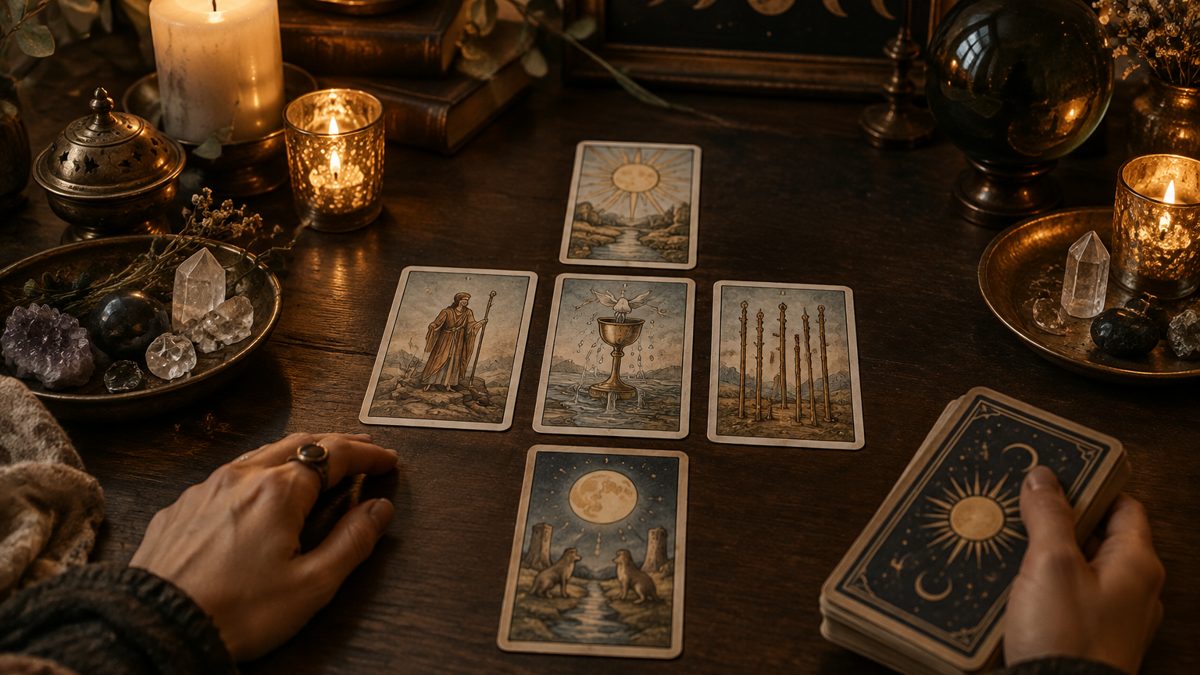
In the version below, six cards form a central cross and four form a vertical column to its right. Card two lies sideways across card one to identify the crossing influence; that sideways placement is not itself a reversal. If you use reversals, note card two’s original orientation before placing it across the center. Positions concerned with background or environment describe themes to examine, not independently verified facts about events or other people.
Once the spread is laid out, resist interpreting everything at once. Begin with the central pair, then add the foundation and conscious focus. Compare the background with the emerging direction, and only then move up the right-hand column. Read the final card in light of the whole spread. An encouraging final image is not a promise, and a difficult one is not a sentence. End by returning to what the reading suggests you might notice, question, or choose.
- Place card one in the center: the situation as you are currently experiencing it.
- Ilagay ang ikalawang baraha nang pahalang sa ibabaw nito: isang hamon, tensyon, o nagpapakomplikadong impluwensya.
- Place card three below the center: an underlying pattern or foundation to examine.
- Place card four to the left: relevant background or a recent influence.
- Ilagay ang ikalimang baraha sa itaas ng gitna: ang iyong may-malay na pokus, intensyon, o hangarin.
- Place card six to the right: a possible near-term direction if current patterns continue.
- Start a separate vertical column farther right. Place card seven at the bottom: your approach or role.
- Place card eight above card seven: environmental influences or support to consider.
- Place card nine above card eight: hopes and fears, which may overlap.
- Place card ten at the top: a possible trajectory or concluding theme, not a guaranteed outcome.
- Summarize the central tension, available support, and one practical point for reflection.
8. Basahin ang mga Reversal bilang Nuance, Hindi Awtomatikong Masamang Balita
Reversals are optional. Many experienced readers work only with upright cards and find complexity through spread positions and neighboring cards. If you are still learning the deck, upright-only reading can reduce the number of variables. You are not doing an incomplete version of tarot. A challenging position can already reveal a difficult expression of an otherwise welcoming card, while a supportive position can show a constructive response to a troubling image.
If you do read reversals, choose a small interpretive framework. An upside-down card might suggest a quality that is blocked, internalized, excessive, diminished, or being reconsidered. It does not necessarily mean the exact opposite of the upright meaning. The reversed Sun, for instance, could invite reflection on difficulty recognizing satisfaction rather than predict unhappiness. A reversed Knight might raise questions about pace or direction rather than identify a bad person.
Avoid cycling through every possible reversal meaning until one feels dramatic enough. Ask which interpretation fits the question and position with the fewest unsupported assumptions. Then hold it lightly. You might write, “I’m reading this reversal as inward attention because the question concerns a private creative process.” That explanation makes your method visible. Over time, your journal will show which approaches produce useful reflection and which merely encourage you to stretch a card around any situation.
9. Pagsamahin ang mga Baraha at Magkuwento nang May Katuwiran
Start combining cards by noticing patterns. Are several cards from one suit? Are there many court cards or Major Arcana? Does the imagery feel still, busy, open, crowded, solitary, or communal? These observations can guide attention without becoming rigid formulas. Several Swords cards might emphasize thought and communication, but they do not establish that conflict is inevitable. An absent suit is simply an absence in a small selection of cards, not proof that something is missing from your life.
Next, look at relationships between images. A figure facing another card may suggest engagement; a figure turned away may suggest distance. A heavy burden beside a communal scene might invite questions about sharing responsibility. Numbers can add another layer if your reading tradition uses them, but avoid importing so many symbolic systems that you lose sight of the actual question. Visual details are prompts for interpretation, not secret evidence.
Upang bumuo ng kuwento, bigyan ng natatanging tungkulin ang bawat baraha. Sa sitwasyon, hamon, at nakatutulong na lapit, maaaring sundin ng iyong buod ang ganitong istruktura: “Nararanasan ko ito; pinapakomplika ito ng tensyong ito; maaaring sulit subukan ang tugong ito.” Gumamit ng pananalitang tulad ng “maaaring magmungkahi” at “iniisip ko kung” kapag hindi tiyak ang koneksyon. Ang magkakaugnay na kuwento ay dapat magpalinaw sa spread, hindi magkubli ng haka bilang kaalaman. Kung dalawang interpretasyon ang nananatiling kapani-paniwala, pangalanan ang pareho sa halip na pilitin ang iisang sagot.
I also look for the least sensational interpretation that still respects the imagery. Death often concerns endings and transition in modern tarot practice; it should not be treated as a literal prediction of death. The Tower can invite examination of unstable assumptions without forecasting catastrophe. When an image unsettles you, describe it, consult your guidebook, and reconnect it to the question. You can stop the reading if it is no longer helpful.
10. Walk Through a Complete Sample Reading
Narito ang gawa-gawang halimbawa para sa pag-aaral, hindi testimonya o hula. Ipagpalagay na ang tanong ay, “Ano ang makatutulong sa aking pagbalik sa isang personal na proyektong pagsulat?” Bago bumunot, itinatala ko ang konteksto: ilang linggo nang hindi nagagalaw ang burador, at malabo ang pakiramdam ng susunod na hakbang. Pumipili ako ng tatlong posisyon: sitwasyon, hamon, at nakatutulong na lapit. Ang mga baraha para sa paglalarawan ay ang Eight of Pentacles na patayo, ang Seven of Cups na patayo, at ang Queen of Swords na patayo.
For the situation, the Eight of Pentacles shows a craftsperson engaged in repeated work in familiar Rider–Waite–Smith imagery. I notice attention, repetition, and a tangible task. Its conventional association with practice suggests viewing the project as something developed through manageable effort. I would not conclude that the card proves talent or promises publication. I would ask, “Which part of this project becomes easier when I treat it as a skill to practice rather than a test of my worth?”
For the challenge, the Seven of Cups presents several enticing or confusing possibilities. I connect that image to the stated problem cautiously: perhaps the project feels vague because too many versions are competing for attention. That is a hypothesis to check, not a fact revealed by the deck. If the writer actually has one clear plan but little available time, this interpretation needs revision. The card might instead invite reflection on imagined expectations or the distance between planning and doing.
Para sa nakatutulong na lapit, iminumungkahi ng Queen of Swords ang pagkilatis, malinaw na pananalita, at mga hangganan sa loob ng tradisyong ito ng pagbasa. Kapag pinagsama, nag-aalok ang mga baraha ng posibleng kuwento: may magagamit na praktikal na gawain, pinapakomplika ito ng magkakumpitensyang posibilidad, at makatutulong ang malinaw na pagpili. Ang angkop na susunod na hakbang ay pumili ng isang seksyon, tukuyin kung ano ang kailangang laman ng magaspang na burador, at maglaan ng kayang gawing panahon sa pagsulat. Ang halaga ay nasa pagsubok kung nakatutulong ang kilos na iyon, hindi sa pagpapatunay na alam ng mga baraha ang sagot.
- Record the question, factual context, position names, cards, and orientations.
- Ilarawan ang bawat larawan bago magtakda ng kumbensyonal na kahulugan.
- Check whether each proposed interpretation fits the known situation.
- Pagsamahin ang mga baraha sa isang pansamantalang buod sa halip na tatlong magkakahiwalay na kahulugan.
- Choose a small, reversible action: for example, draft one scene before reconsidering the project’s whole structure.
- Return later to assess the action and interpretation without rewriting the original notes.
11. Keep a Tarot Journal That Helps You Learn
Your tarot journal does not need to be beautiful. A notebook, a plain document, or a simple table is enough. Record the date, deck, question, spread positions, cards, and orientations. Add a few literal observations, the meanings you consulted, your initial interpretation, and any action you chose. Separating observation from interpretation is especially useful. “The figure faces away” describes the artwork; “I am avoiding a conversation” is an inference that deserves examination.
Leave room for follow-up. After an appropriate interval, ask what was useful, what did not fit, and what you might interpret differently now. Keep the original entry intact so you can distinguish your first impression from later knowledge. People naturally remember striking matches and overlook misses; a written record helps counter that tendency. A reading that did not resonate is not a failure you must explain away. It can show that a question was too broad or an interpretation too elaborate.
For steady learning, try studying one card at a time alongside occasional small spreads. Notice how a card’s meaning changes with its position, and compare your own associations with the guidebook rather than replacing one with the other. Protect the privacy of anyone whose reading you record. If your practice begins to feel compulsory, take a break. Familiarity grows through thoughtful attention, not through asking the deck the same question every hour.
- Create a repeatable entry with space for context, observations, interpretation, and follow-up.
- Mark guidebook meanings separately from your personal associations.
- Itala ang kawalang-katiyakan at mga alternatibong interpretasyon sa halip na pakinisin ang mga ito.
- Review several entries periodically for useful patterns, strained connections, and repeated questions.
- Adjust your practice toward what supports reflection and away from what increases dependence.
12. Read Ethically and Keep Your Own Authority
If you read for someone else, begin with consent and a clear explanation of your approach. Ask what they want to explore, whether any topics are off limits, and whether they prefer a reflective or tradition-based spiritual framing. Make clear that interpretations are uncertain and that they can disagree, decline a question, or stop. Do not assume that a person who enjoys tarot shares your beliefs about divination. The reading should leave them with room to think, not pressure to accept your worldview.
Keep boundaries around subjects the cards cannot responsibly settle. Do not use tarot to diagnose conditions, determine pregnancy, predict death, establish legal facts, or direct financial decisions. Refer medical, legal, and financial questions to appropriately qualified professionals. Likewise, cards cannot establish that someone has cheated, committed a crime, or concealed a particular intention. Redirect third-party questions toward the querent’s own observations, boundaries, and options rather than claiming access to another person’s private life.
Never tell someone they are cursed or must purchase a service to prevent misfortune. Do not use frightening imagery to create dependency, and do not promise a particular relationship, achievement, or outcome. If you charge for readings, disclose prices, scope, and relevant terms beforehand. Respect confidentiality, and obtain explicit permission before sharing a reading, even anonymously. When someone is in immediate danger or acute distress, prioritize appropriate real-world support rather than drawing more cards.
Para sa sarili mong mga pagbasa, nalalapat ang parehong kabaitan at pagpipigil. Maaari mong itabi ang deck, baguhin ang iyong interpretasyon, o magpasyang walang naibigay na kapaki-pakinabang ang isang spread ngayon. Ang aking pag-asa dito sa Crossroads Journal ay maging gawain ng malapitang pagmamasid ang tarot: sa mga larawan, sa mga palagay, at sa mga pagpiliang talagang magagamit mo. Magsimula sa isang tanong at isang baraha. Hayaang tumulong ang gabay na aklat, hayaang pinuhin ng karanasan ang iyong pang-unawa, at tandaan na sa iyo pa rin ang susunod na hakbang.
These practices are shared as tradition and personal reflection, not as a substitute for medical, legal or financial advice.
Magpatuloy sa pag-aaral
- Mga kahulugan ng baraha ng tarot
- How to read tarot cards
- How to use angel oracle cards
- Paano magbasa ng playing cards
- Paano gumamit ng mga kristal sa mga spell
- Paano gumamit ng mga halamang-gamot sa witchcraft
- How to read the Dr. Moorne Egyptian Tarot
- How to read dice
- How to read tea leaves
- Paano gumamit ng pendulum
- How to cast a candle spell
- How to make a spell jar
- How to make a sigil
- How to cleanse your home
- How to set up an ancestor altar
- How to open a sacred space
- How to time spells with the moon
- How to work with water and salt
- How to make a protection charm bag
- Read the Journal or visit the shops