Guide
Pendulum Movements and Charts
By Seraphina
A pendulum is a small weight suspended from a chain or cord, free to swing above a surface. In divination traditions, practitioners interpret its movements as responses to questions or prompts. Others use the same tool for quiet reflection, treating its motion as a starting point for noticing hopes, doubts and assumptions. At Crossroads Journal, we welcome that personal meaning while keeping a clear distinction between spiritual interpretation and evidence. A pendulum cannot reliably reveal hidden facts, diagnose illness or tell you what another person thinks.
The movement itself has an ordinary physical explanation: tiny, often unconscious muscle movements can travel through the hand and into the suspended weight. This is known as the ideomotor effect. Breathing, posture, drafts and the momentum of a previous swing can also shape the result. For that reason, there is no universal movement dictionary. A clockwise circle does not inherently mean yes, and a still pendulum does not prove that a question is forbidden. Any meanings you assign belong to your chosen practice, not to a fixed natural code.
This guide separates three things that are easily muddled: movement patterns, the materials used to make pendulums, and the charts placed beneath them. Start with a comfortable weight and a simple layout, then keep your sessions short enough to remain curious rather than anxious. If you use ritual preparation, a clean cloth and a quiet pause are enough; smoke, candles and elaborate cleansing are optional. Let the pendulum open a question for reflection, and let observation, conversation and sound judgment guide what you do next.
Pendulum swings and movements
These are possible interpretations within a personal practice, not established signals. Decide what your movements will mean before asking questions, and allow an unclear result to remain unclear.
- Forward-and-back swing
- MeaningA swing toward and away from your body is sometimes assigned to yes, although other practitioners use it differently.
- UseDefine the direction relative to your seated position so that turning a chart does not silently change your interpretation.
- Side-to-side swing
- MeaningA left-to-right swing is commonly assigned to no in some contemporary practices, but it has no universal meaning.
- CautionCheck that your wrist is not leaning sideways and that the chain is not brushing your fingers.
- Diagonal swing
- MeaningSome practitioners reserve a diagonal movement for uncertainty or a response outside their usual yes-or-no pattern.
- UseOn a chart, a diagonal swing may simply follow the alignment of a sector rather than carry a separate symbolic meaning.
- Clockwise circle
- TraditionSome modern magical practices associate clockwise motion with drawing in, building or affirmation.
- CautionA circular path can arise from small combined movements of your hand; it does not demonstrate an outside presence.
- Counterclockwise circle
- TraditionSome practitioners associate counterclockwise motion with release, reduction or refusal.
- CautionDo not interpret this movement as evidence of a curse, harmful energy or another person's intentions.
- Elliptical movement
- MeaningAn oval path falls between a straight swing and a circle and can be treated as an unclear response.
- UseLet the weight settle before trying again rather than forcing an oval into your preferred category.
- Small or faint swing
- MeaningA slight movement has no established relationship to weak agreement or low confidence.
- CautionIf the movement is too small to distinguish comfortably, record it as unclear rather than searching for certainty.
- Wide or vigorous swing
- MeaningA large swing is physically more pronounced, but it is not a stronger guarantee of truth.
- CautionKeep enough clearance to prevent the weight from hitting glass, candles or nearby objects.
- Changing or irregular movement
- MeaningA movement that switches direction or pattern is best treated as ambiguous.
- UsePause, relax your shoulder and consider whether the question contains several different questions.
- Stillness
- MeaningStillness can simply mean that there is too little movement to observe; it need not carry a spiritual message.
- UseAllow no response to be a complete outcome and end the session if you find yourself straining for movement.
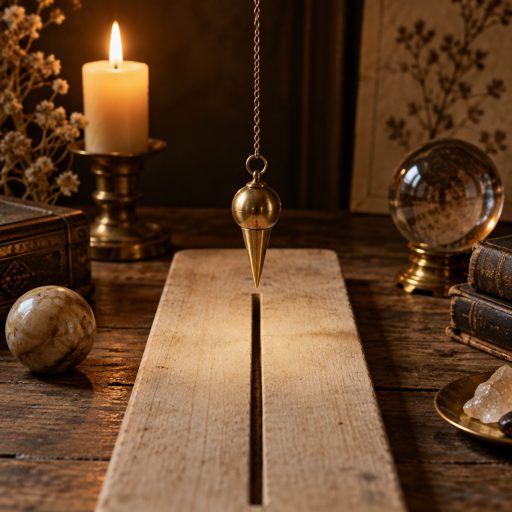
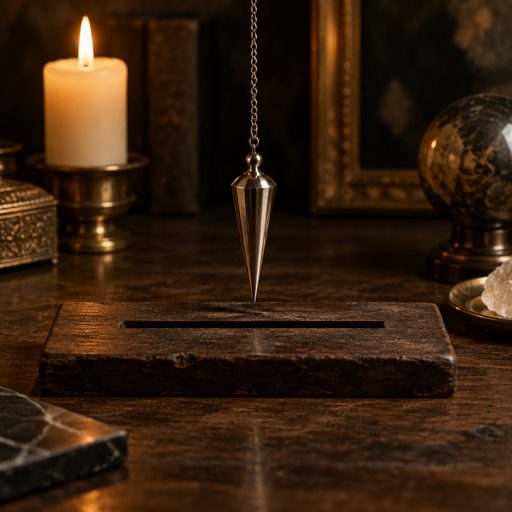
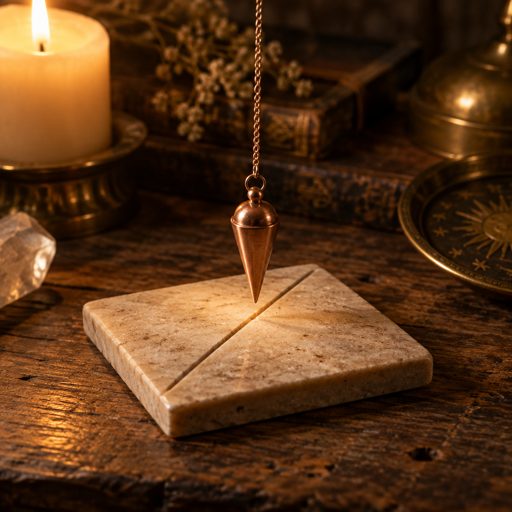
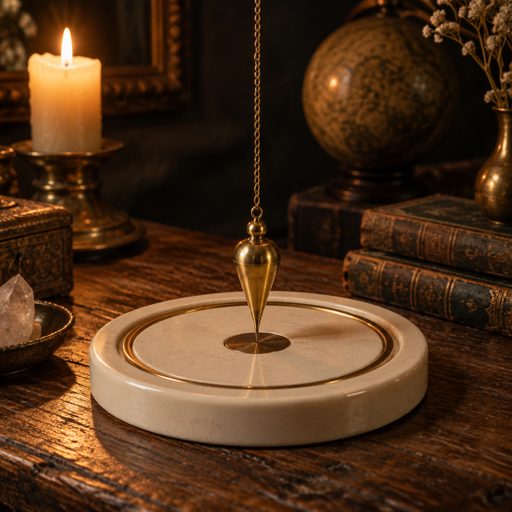
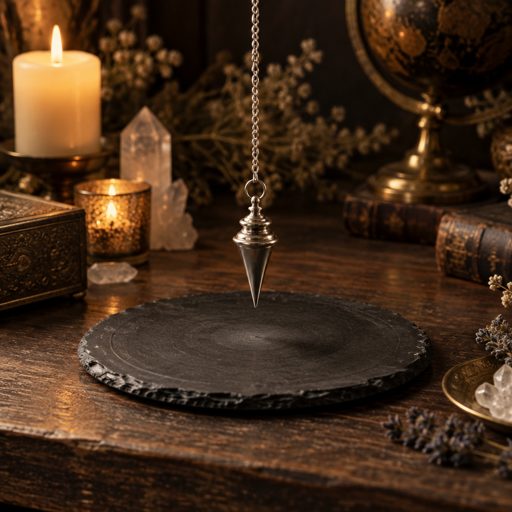
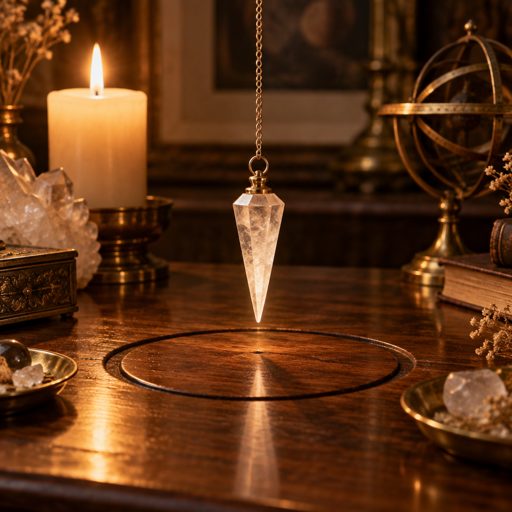
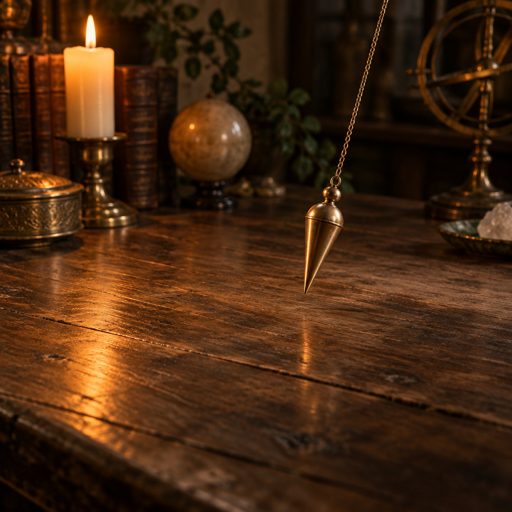
Pendulum materials
Choose for comfort, balance, durability and personal symbolism. No material has been shown to make pendulum answers more accurate.
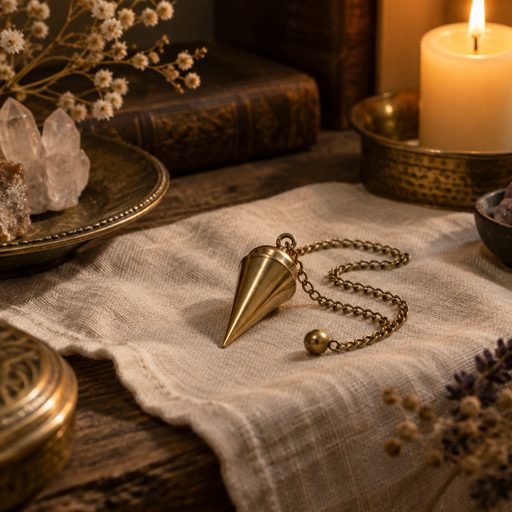
- Brass
- UseBrass offers a substantial feel in a compact shape, and a pointed tip makes chart alignment easy to see.
- CareWipe it dry after handling and follow the maker's cleaning instructions, especially for plated or lacquered pieces.
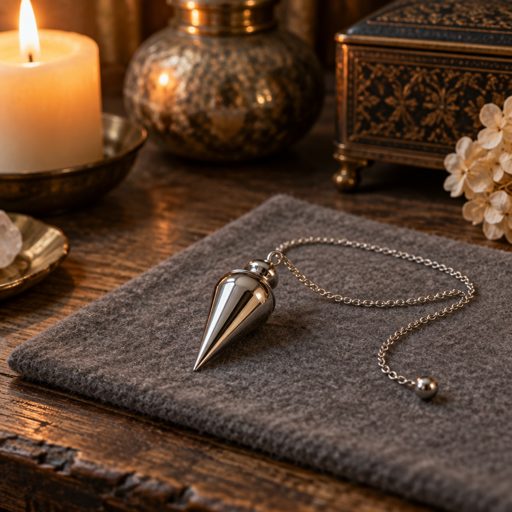
- Stainless steel
- UseStainless steel is durable and generally easy to maintain for regular practice.
- CautionSome alloys contain nickel; check the chain and metal composition if you have a contact allergy.
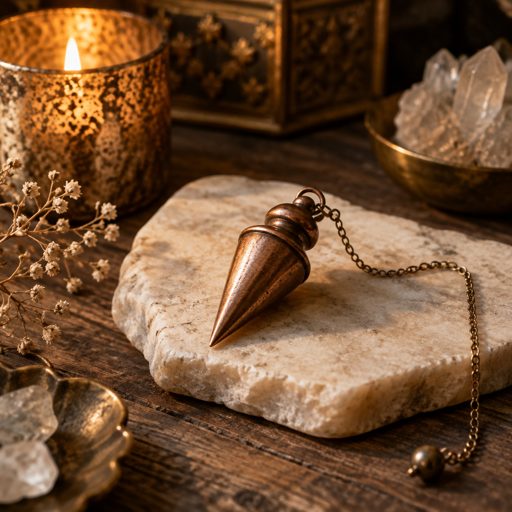
- Copper
- TraditionSome contemporary practitioners choose copper for symbolism associated with connection or flow, not for demonstrated divinatory performance.
- CareCopper can tarnish and leave temporary skin marks; keep it dry and avoid harsh homemade cleaning mixtures.
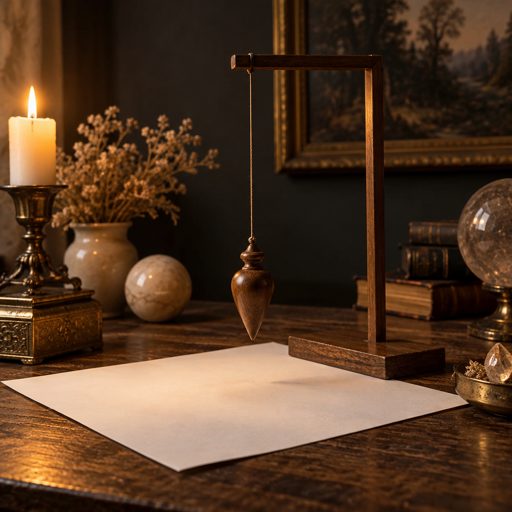
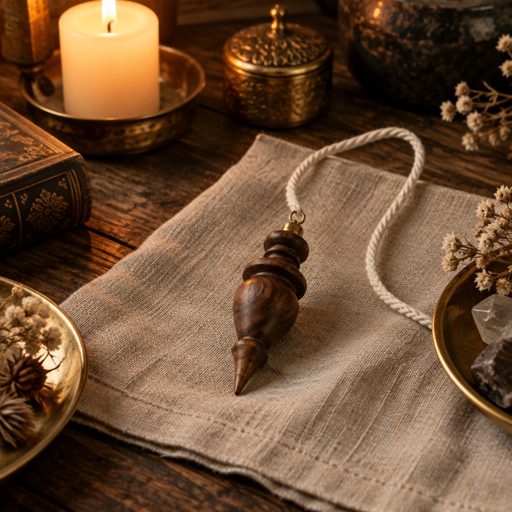
- Wood
- UseWood is often lighter than metal or stone and may feel comfortable during short sessions.
- CareAvoid soaking wooden pieces or exposing them to flame, prolonged damp or strong heat.
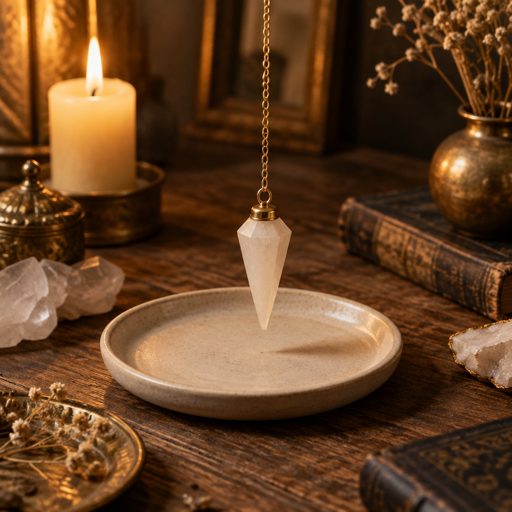
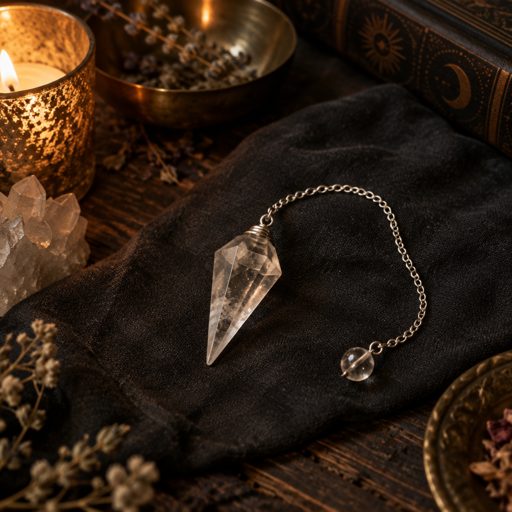
- Clear quartz
- TraditionModern crystal practices often associate clear quartz with clarity or focus.
- CautionQuartz can chip when dropped; inspect the point and attachment before use, and keep it out of drinking water.
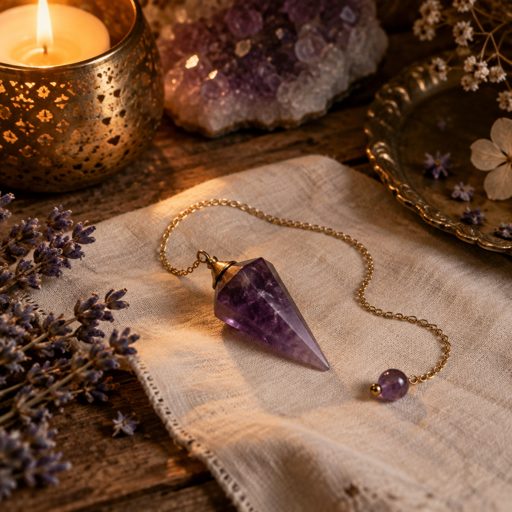
- Amethyst
- TraditionAmethyst is commonly associated with contemplation and spiritual awareness in modern crystal practice.
- CareProlonged strong sunlight may fade its color; store it away from direct sun and protect its edges from knocks.
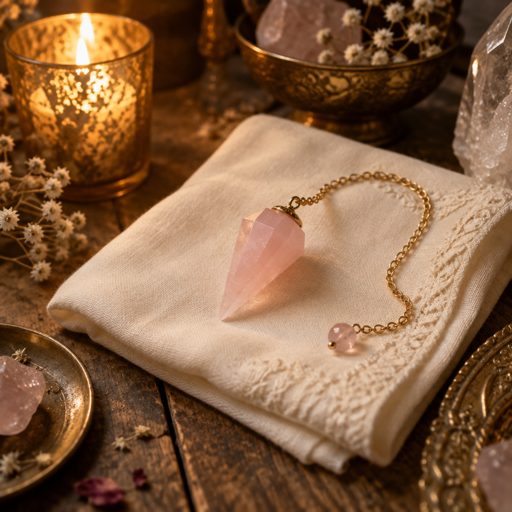
- Rose quartz
- TraditionRose quartz is often chosen as a symbol of kindness, affection or self-compassion.
- UseIt can accompany reflection on your own feelings, but it cannot establish another person's love, fidelity or consent.
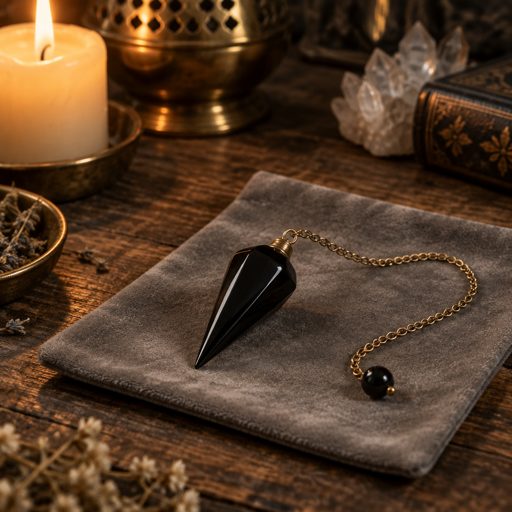
- Obsidian
- TraditionSome modern practitioners associate obsidian with protection or honest self-examination.
- CautionObsidian is volcanic glass and may form very sharp edges if broken; stop using a chipped piece.
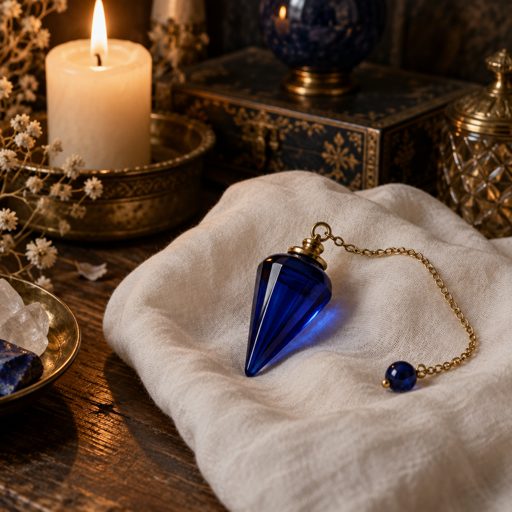
- Glass
- UseGlass offers many colors and shapes, making it a practical choice when appearance helps you focus.
- CautionProtect it from impact and sudden temperature changes, and discard cracked pieces safely.
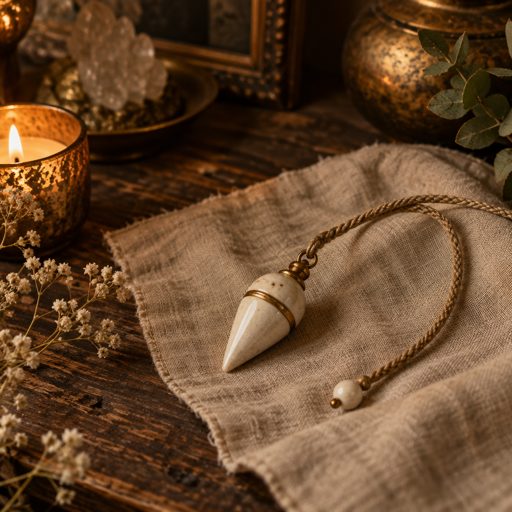
- Ceramic
- UseA balanced ceramic weight can serve as a pendulum without crystal or metal symbolism.
- CareInspect the glaze, attachment and cord for damage; porous or unglazed pieces should not be soaked.
Pendulum chart types
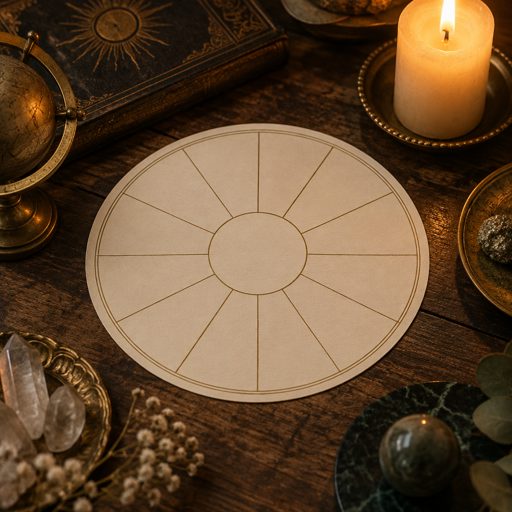
A chart organizes possible responses; it does not validate them. Use clear spacing, a consistent starting position and an explicit way to record uncertainty.
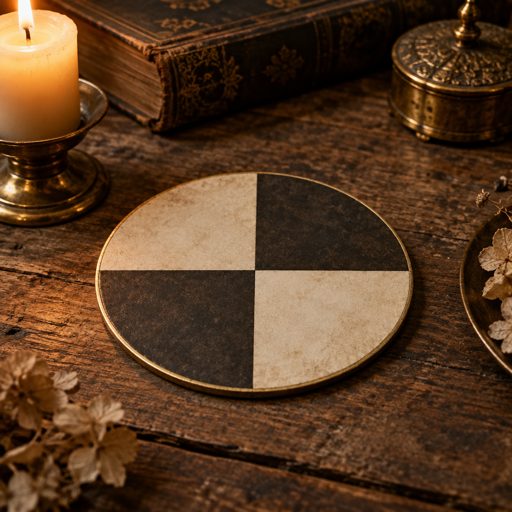
- Yes-and-no chart
- UseAssign two distinct axes to yes and no for simple, low-stakes reflective questions.
- CautionA binary layout can hide complexity; avoid questions that need context, consent or factual investigation.
- Uncertainty-inclusive chart
- UseInclude options such as yes, no, unclear and rephrase so that every movement need not become a definite answer.
- CautionKeep the alternatives visibly separate and accept unclear without repeatedly asking until the result changes.
- Number chart
- UseNumbered sectors can select a journaling prompt from a prepared list.
- CautionDo not treat selected numbers as measurements, winning numbers, dosages or financial forecasts.
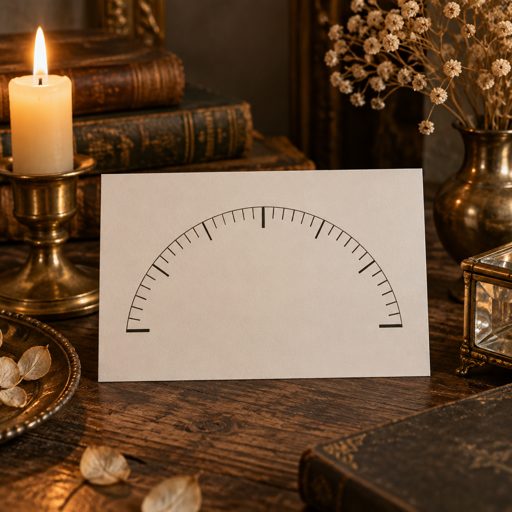
- Percentage chart
- UseSome practitioners use a percentage scale as a subjective prompt for exploring how strongly they feel about something.
- CautionThe result is not a measured probability, accuracy score or medical reading, even when it appears precise.
- Alphabet chart
- UseLetter sectors are used in some divination practices to assemble words one selection at a time.
- CautionExpectation can strongly shape the sequence; do not present assembled words as verified messages from spirits or other people.
- Timing chart
- UseA chart of days, weeks or months can serve as a prompt to reflect on your preferred pace for a personal project.
- CautionIt cannot reliably predict dates; use actual schedules and professional guidance for deadlines or urgent decisions.
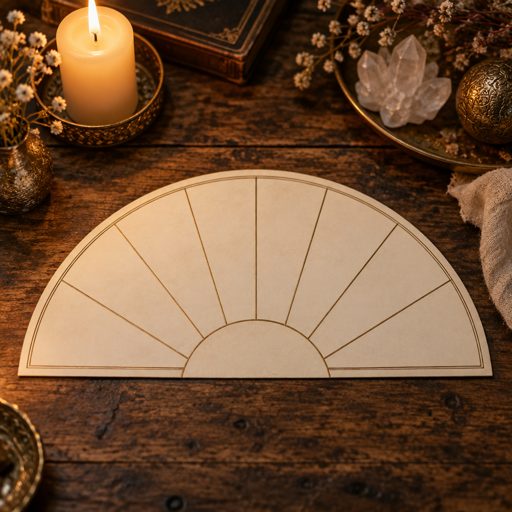
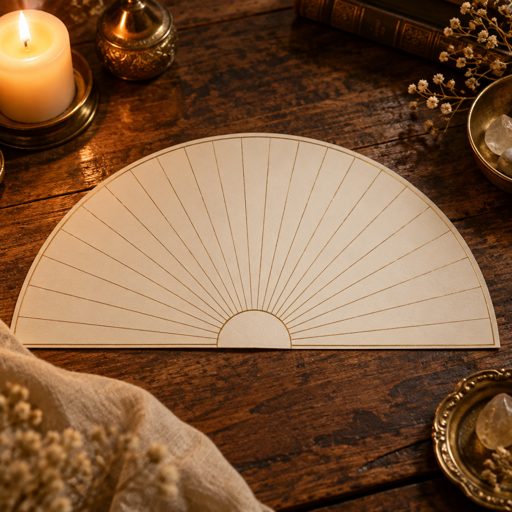
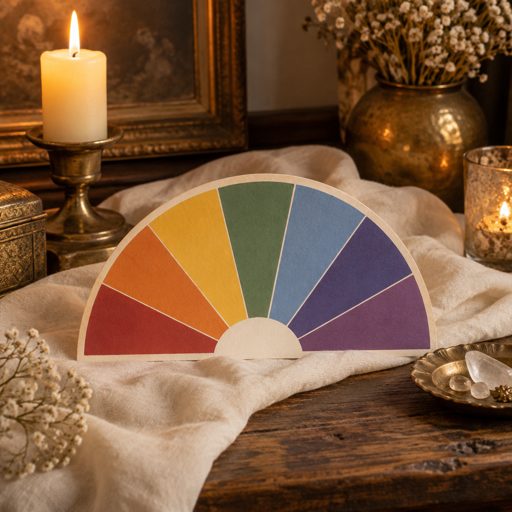
- Options fan
- UsePlace a few low-stakes choices in separate sectors, such as creative exercises or topics to journal about.
- CautionNotice your reaction to the selection rather than treating it as a command; you remain free to choose differently.
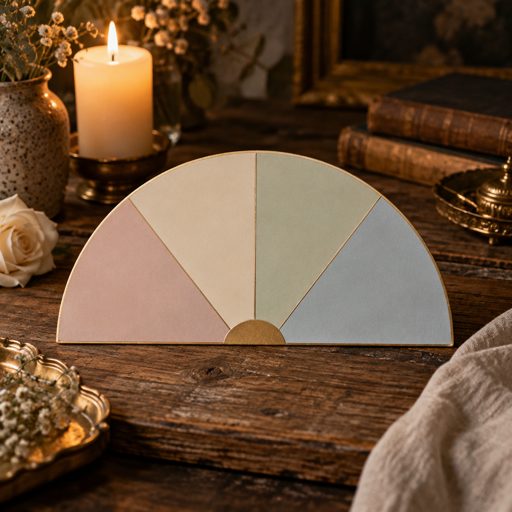
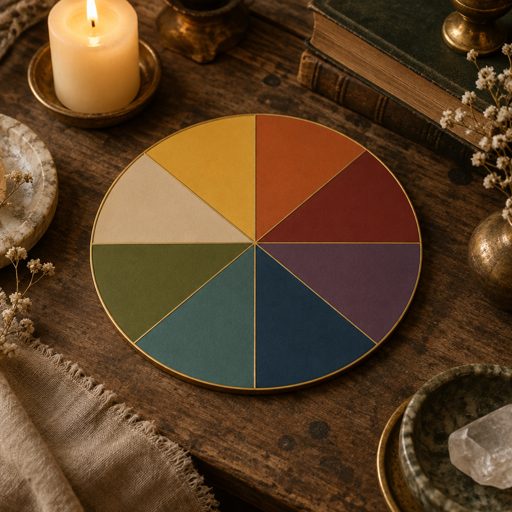
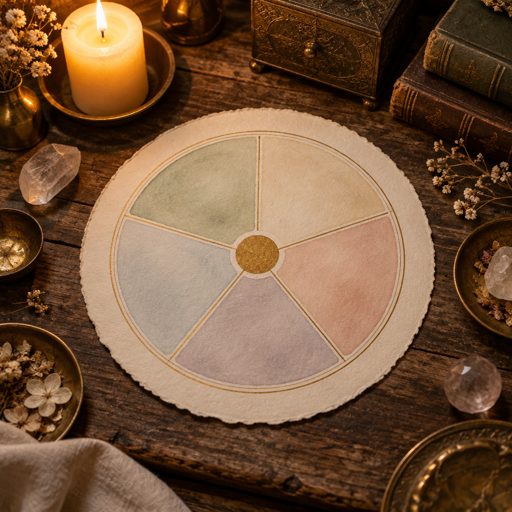
- Color chart
- UseA color wheel can help select a symbolic theme for artwork, an altar cloth or a reflective exercise.
- TraditionColor correspondences vary across cultures and practices, so record your own associations rather than assuming a universal code.
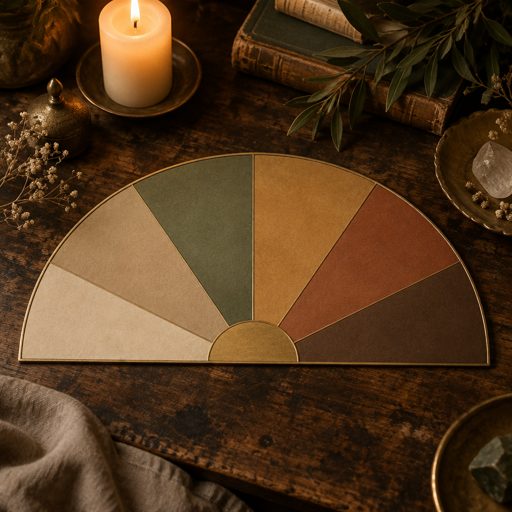
- Chakra-themed chart
- TraditionContemporary charts often use a seven-color chakra scheme, though chakra teachings have South Asian roots and vary across traditions.
- CautionUse this layout only for symbolic reflection, not to diagnose blocked energy, illness or a need for treatment.
- Personal reflection chart
- UseCreate sectors for themes such as rest, creativity, connection, boundaries and practical tasks.
- PracticeTreat the selected theme as an invitation to write or think, then check what actually fits your circumstances.
Practical care and grounded practice
A simple setup is enough. Keep the practice comfortable, optional and separate from decisions that require evidence.
- Sit comfortably with your elbow supported, keep your wrist relaxed and let the weight hang clear of the chart. Avoid drafts and allow leftover motion to settle.
- Use a secure chain or cord at a comfortable length. Inspect clasps and attachments, and keep small weights and long cords away from children and pets.
- Define chart sectors and movement meanings beforehand. A straight swing travels in two opposite directions, so use paired meanings on a full circle or a clearly defined reading side on a fan.
- Ask one clear, low-stakes question at a time. Record the question, your assigned meanings and any ambiguity without rewriting the result to fit your hopes.
- Do not use a pendulum to test allergies, choose medication, diagnose symptoms, assess pregnancy, identify safe foods or decide whether water is drinkable.
- Do not use chart results to accuse someone, establish consent, locate a missing person or make legal or financial decisions. Seek direct information and appropriate professional support.
- Clean according to the material and maker's instructions. A soft, dry cloth is often sufficient; salt and salt water can damage metals, finishes and some stones.
- If salt water is part of your ritual, do not pour it onto plants or garden soil. Never drink pendulum-cleansing water or make ingestible crystal preparations.
- Candles, incense and herbs are optional. Keep flames away from cords and cloth, never leave them unattended, ventilate smoke and avoid burning unfamiliar herbs or using essential oils around sensitive people or pets.
- Set a short time limit and stop if you feel anxious, compelled to repeat questions or unable to act without a reading. Return to ordinary routines, trusted conversation and decisions based on observable facts.
Pendulum work is a spiritual or reflective practice, not a reliable way to establish facts, predict events or replace professional advice.
Step-by-step how-to guides
- How to read tarot cards
- How to use angel oracle cards
- How to read playing cards
- How to use crystals in spells
- How to use herbs in witchcraft
- The Dr. Moorne Egyptian Tarot deck and how to read it
- How to read dice · Dice meanings
- How to read tea leaves · Tea leaf symbols
- How to use a pendulum · Pendulum meanings
- How to cast a candle spell · Candle color meanings
- How to make a spell jar · Spell jar recipes
- How to make a sigil · Sigil methods
- How to cleanse your home · Home cleansing methods
- How to set up an ancestor altar · Ancestor altar items
- How to open a sacred space · Sacred space tools
- How to time spells with the moon · Moon phase meanings
- How to work with water and salt · Water and salt magic
- How to make a protection charm bag · Charm bag recipes
Keep exploring
See the tarot card meanings, angel oracle cards, playing card meanings, crystals for spells and herbs in witchcraft guides, read the Journal, or visit the shops for a reading or spell from our partner practitioners.