Guide
Sigil Methods
By Seraphina
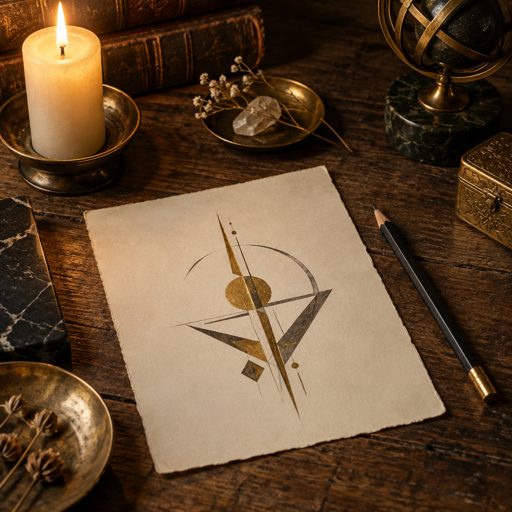
A sigil is a symbol made or chosen to represent an intention, a name, or a spiritual idea. In some historical magical traditions, sigils are prescribed signs associated with particular spirits or planetary powers; in contemporary personal practice, they are often original designs built from words, shapes, or images. These uses overlap, but they are not interchangeable. This guide focuses on accessible personal methods while noting where a technique belongs to a more specific tradition. You do not need expensive tools or artistic training: a pencil, paper, and a clearly phrased intention are enough to begin.
It helps to separate three stages. Construction gives your intention a visual form. Charging is the term many practitioners use for giving that form focused attention, emotion, or ritual significance. Activation marks the point when you put the symbol into use or consider the working complete. Not every tradition uses these terms, and some people combine all three stages in a single drawing session. Others treat sigils as reflective tools rather than supernatural instruments, using them to support attention, habits, or meaningful transitions. Neither approach requires you to experience a dramatic sensation.
Choose a method that suits your circumstances rather than one that sounds powerful. Keep intentions specific, realistic, and centered on your own choices, especially when relationships are involved. Pair the symbol with a practical action: prepare for the interview, make the appointment, or set the boundary. The entries below offer alternatives, not a required sequence. Start simply, record what you actually do, and let safety guide every choice.
Constructing the symbol
These methods turn an intention into a design. Most are contemporary personal approaches; historically situated techniques need additional context.
- Letter reduction
- MethodWrite a short intention, remove repeated letters, and combine the remaining letter shapes into one design. Some practitioners also remove vowels; this is optional.
- TraditionLetter-based personal sigils are associated with Austin Osman Spare and later chaos magic. Contemporary instructions vary rather than following one universal formula.
- Letter overlay
- MethodChoose a few significant letters and overlap, rotate, or mirror them. Simplify shared strokes until the result reads as a single symbol.
- UseThis suits intentions with a central word or personal initial. Avoid borrowing another person's identifying marks for a working aimed at controlling them.
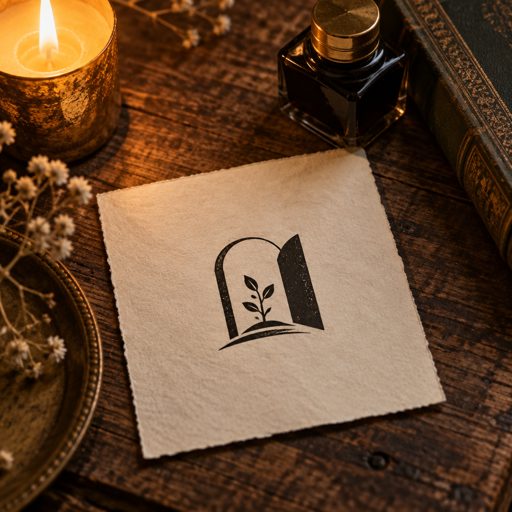
- Pictorial combination
- MethodChoose two or three pictures associated with your intention, such as a doorway for opportunity or a sprout for growth. Combine their outlines into a compact emblem.
- MeaningThese associations are personal, not universal. Choose images that make sense to you rather than relying on a fixed symbol dictionary.
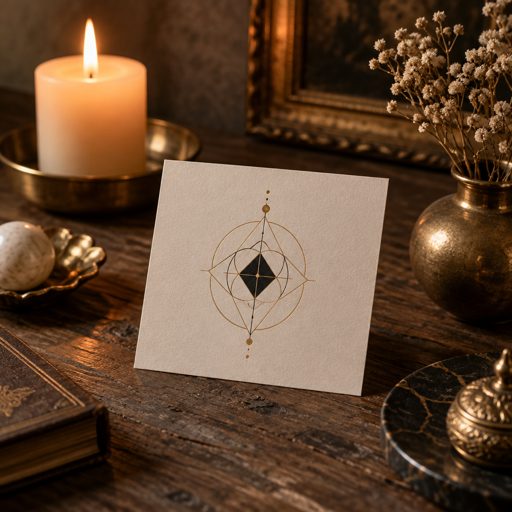
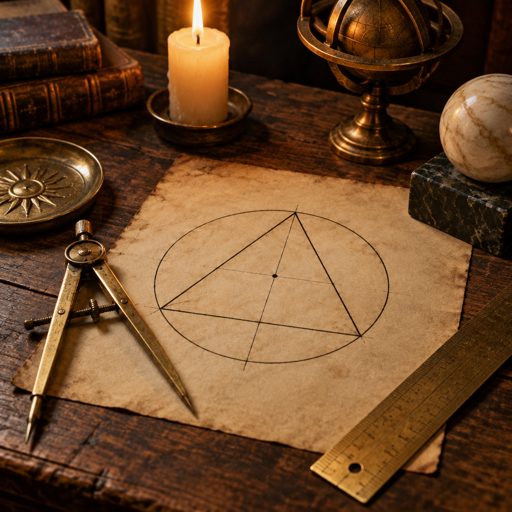
- Geometric construction
- MethodBuild a design from circles, lines, triangles, or other simple shapes. Assign each component a meaning before arranging it.
- UseA small vocabulary of shapes makes the design easy to redraw. Geometry alone does not give a symbol a documented historical lineage.
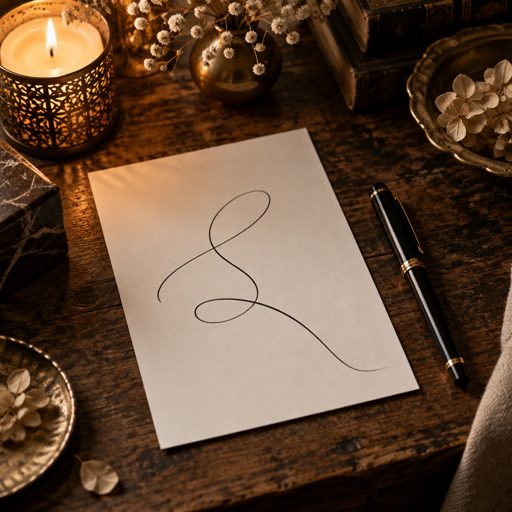
- Continuous-line drawing
- MethodHold your intention in mind and draw one unbroken line. Repeat a few times, then choose and refine a version.
- UseThis offers a less verbal route into design. Treat the result as your own creative mark, not evidence of a message from an outside source.
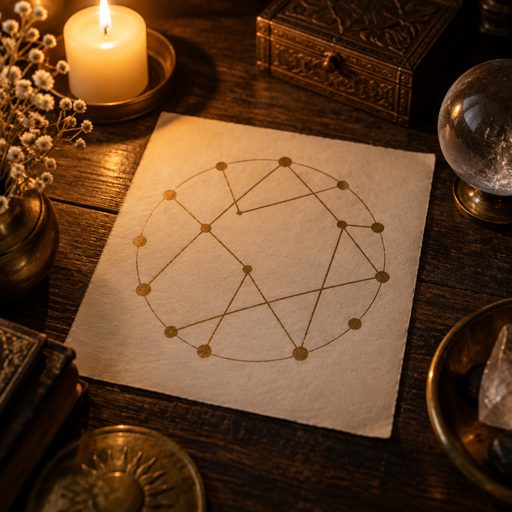
- Alphabet wheel
- MethodArrange an alphabet around a circle and trace the letters of a chosen word in sequence. Copy only the resulting path onto your final surface.
- UseRecord the alphabet order if you want to reproduce the design. Changing the arrangement changes the symbol.
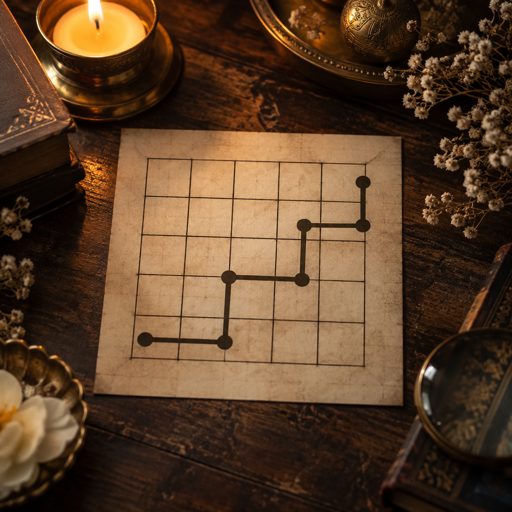
- Custom grid tracing
- MethodPlace letters or assigned values in a grid, then connect the positions belonging to your intention. Use a dot or small circle to distinguish the starting point if helpful.
- TraditionA grid you invent is a personal design system. It should not be presented as an ancient planetary square.
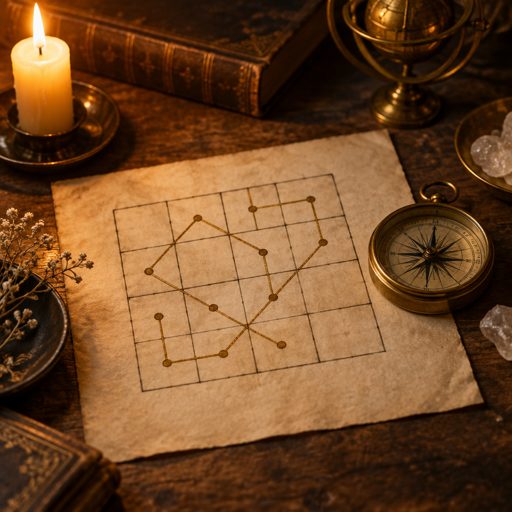
- Planetary-square tracing
- TraditionSome Western ceremonial systems construct sigils by tracing numerical values on planetary magic squares, often called kameas. The square and letter-to-number conventions depend on the system.
- MethodUse a reliable source for the particular square, numerical conversion, and any value-reduction rules. Keep your source notes rather than mixing incompatible instructions.
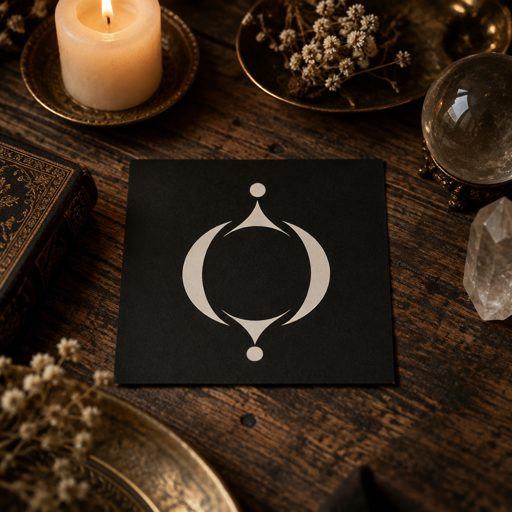
- Negative-space design
- MethodCreate the symbol through the spaces between dark shapes rather than through drawn strokes. Test whether it remains recognizable at a small size.
- UseThis works well for stamps, stencils, and simple digital icons. Use a cutting mat and appropriate tools if making a physical stencil.
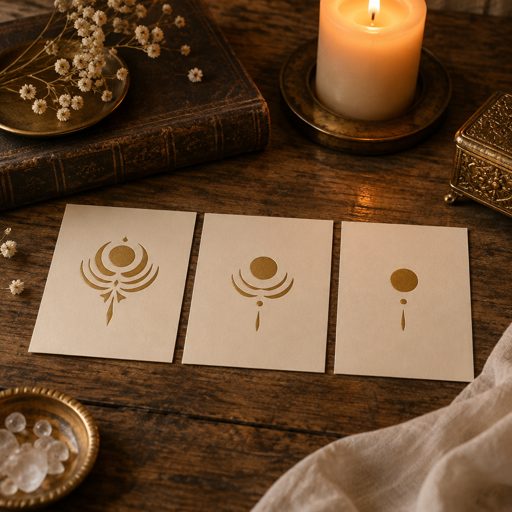
- Iterative simplification
- MethodBegin with a detailed design and redraw it several times, removing unnecessary strokes. Stop when the symbol feels distinct and easy to reproduce.
- UseThis can finish almost any construction method. Simplicity is a practical benefit, not a measure of magical strength.
Choosing a physical form
The surface can make a sigil portable, temporary, private, or easy to revisit. It does not have to be rare or costly.
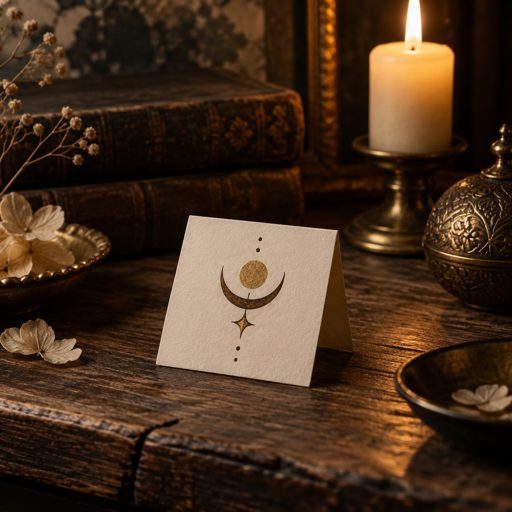
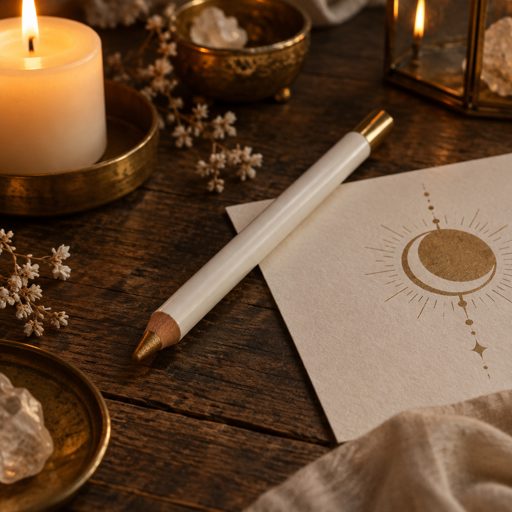
- Paper token
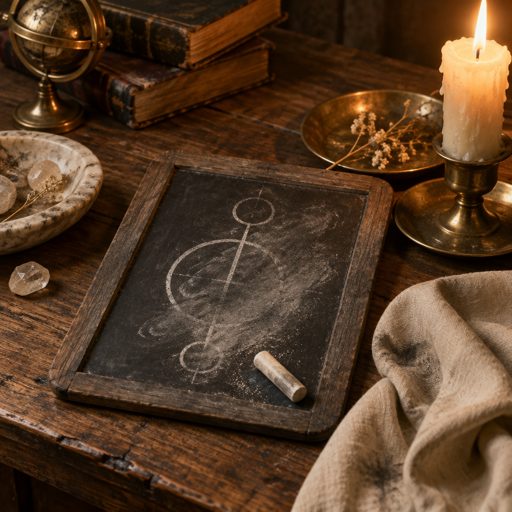
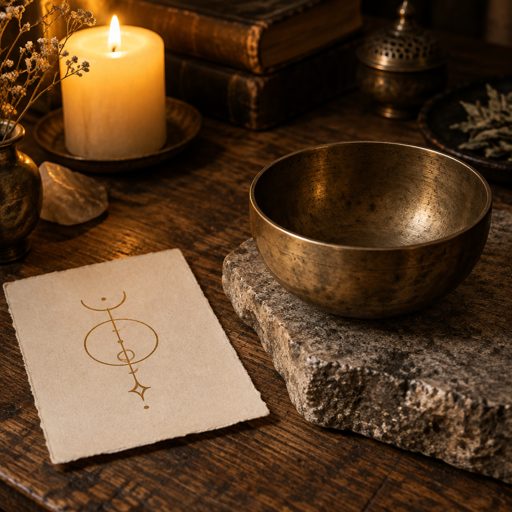
- MethodDraw the sigil on a small piece of paper and leave it flat or fold it inward. Keep a separate record of its intention if desired.
- UsePaper is inexpensive and easy to store or retire. Keep private intentions somewhere other people are unlikely to mistake them for shared notes.
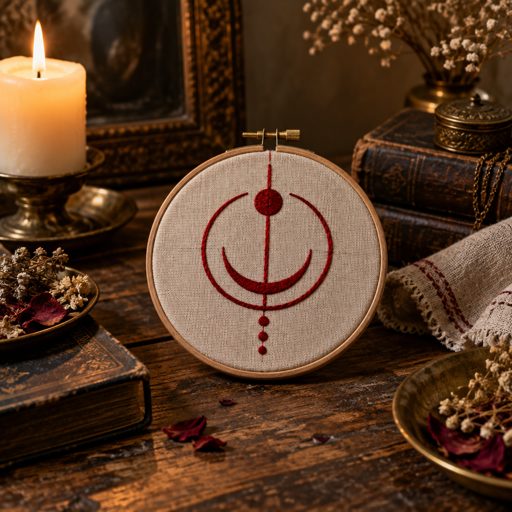
- Thread-stitched sigil
- MethodTransfer a simple design to fabric and stitch along its lines. Stitching slowly can also serve as a period of focused attention.
- CautionStore needles safely and keep loose thread away from children and pets. Thread color has no single meaning across all traditions.
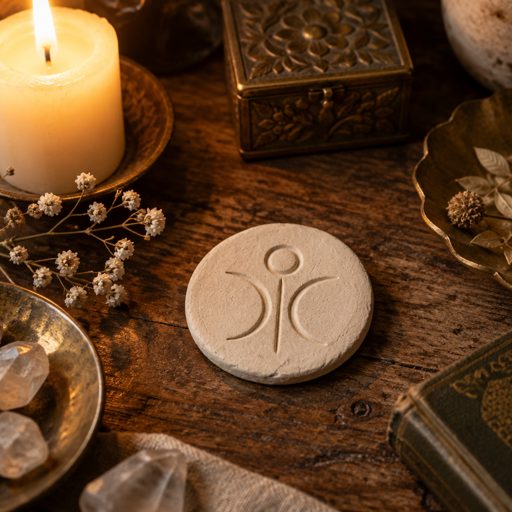
- Clay impression
- MethodPress or incise the design into a clay disk while it is soft. Follow the material's drying or firing instructions.
- CautionCraft clay is not automatically food-safe, waterproof, or suitable for use near flames. Avoid sanding dry clay in ways that create airborne dust.
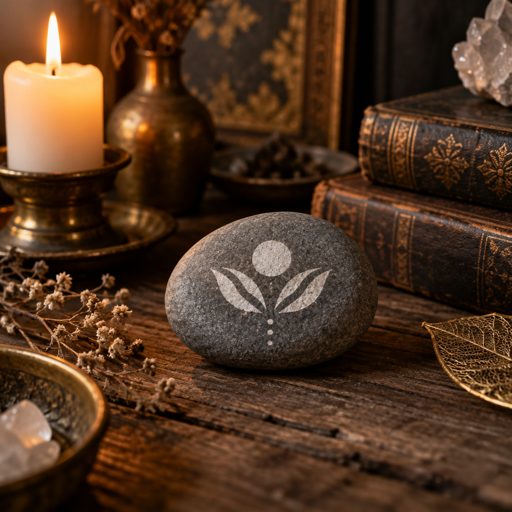
- Painted stone
- MethodPaint the sigil onto a legally obtained stone and let it dry fully. Its weight can make it a useful desk reminder.
- CautionKeep painted or sealed stones out of waterways and natural habitats. Do not remove stones from protected sites or heat unknown rocks.
- Temporary skin mark
- MethodUse a product specifically intended for cosmetic use on the relevant area of skin. A small mark can act as a temporary personal reminder.
- CautionFollow the label and patch-test as directed; avoid eyes, broken skin, craft inks, and black henna. Stop using the product if irritation develops.
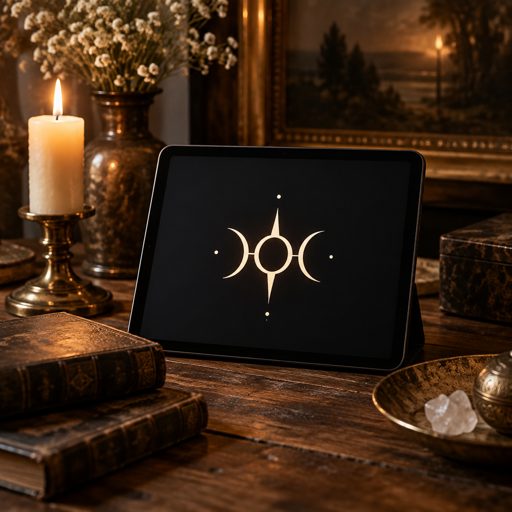
- Digital sigil
- MethodDraw or scan your symbol and use it as a private background, saved image, or reminder icon. A digital version need not imitate an antique object.
- UseConsider whether notifications, shared screens, or cloud storage could expose a private intention. Save an editable copy if you expect to revise the design.
Charging through attention and ritual
Practitioners use charging to describe giving a sigil focused significance. These options do not require extreme states, discomfort, or claims about measurable energy.
- Quiet contemplation
- MethodLook gently at the symbol for a comfortable interval while recalling its intention. Let your attention return without forcing concentration.
- CautionBlink normally and avoid prolonged fixed staring. Stop if the exercise causes distress, dizziness, or eye strain.
- Natural breathing
- MethodLet ordinary, comfortable breaths mark a brief period of attention to the design. You can silently recall the intention as you breathe.
- CautionBreath-holding and rapid breathing are unnecessary. If focusing on breathing feels uncomfortable, choose an external focus instead.
- Practical visualization
- MethodImagine yourself taking a specific action connected with the intention. Focus on the next manageable step rather than a guaranteed outcome.
- UseIf mental pictures are difficult, describe the action silently or aloud. Vivid imagery is not a requirement.
- Spoken phrase or humming
- MethodRepeat a short personal phrase or hum while attending to the symbol. End when the repetition feels complete rather than chasing an altered state.
- CautionKeep the volume comfortable and respect shared spaces. Do not label an invented phrase as a traditional sacred chant.
- Gentle movement
- MethodPair the intention with comfortable stretching, seated movement, or a short walk. Return to the symbol afterward to mark the connection.
- CautionWork within your mobility and energy limits. Exhaustion, spinning, pain, and sleep deprivation are not necessary.
- Candlelit focus
- MethodUse candlelight as a ritual setting while reflecting on the sigil. A battery-operated candle can serve the same symbolic role.
- CautionKeep flames away from paper, fabric, herbs, and drafts on a stable heat-resistant surface. Never leave a burning candle unattended.
- Moonlight observance
- TraditionSome contemporary practitioners associate lunar phases with growth, completion, or release. Associations vary, and a particular phase is not a universal requirement.
- MethodPlace the sigil safely indoors near a window and spend a moment acknowledging the chosen phase. Treat the timing as symbolic rather than a proven transfer of energy.
- Meaningful-object pairing
- MethodPlace the sigil beside an object that already carries personal meaning, such as a key or keepsake. Reflect on the connection between the object and your intention.
- CautionKeep small objects away from children and pets. If you add herbs, check toxicity and allergies; ingestion or burning is not needed.
Activation, use, and release
Activation can be a simple decision that the symbol is ready for use. Keeping, concealing, or destroying it are alternatives, not competing requirements.
- Declaration and first action
- MethodState privately that the sigil is now in use, then take one practical step toward the intention. The declaration can be spoken or silent.
- UseThis provides a clear beginning without special equipment. It connects ritual meaning with something you can actually influence.
- Carry the token
- MethodPut the finished sigil in a wallet, pocket, or pouch. Decide whether it will be a frequent reminder or simply a private symbolic object.
- CautionA token is not protective equipment or a guarantee of safety. Avoid carrying sharp, fragile, or irritating materials against your skin.
- Place at a point of action
- MethodPlace the symbol where the relevant behavior happens, such as a desk for focused work. Give it a specific job as a reminder.
- UseWhen you notice it, perform a small associated action. Move or retire it if it becomes distracting or fades into the background.
- Seal and set aside
- MethodPut the symbol in an envelope or box and stop checking it repeatedly. You may choose a later review date.
- TraditionSome chaos magic approaches encourage releasing conscious fixation after charging. Literal forgetting is not something you need to force.
- Erase or dismantle
- MethodErase a temporary design or take apart an arrangement of reusable objects. Let that action mark activation or closure, according to your chosen practice.
- UseThis offers a fire-free release method. Decide its meaning beforehand so you are not left worrying that ordinary wear has spoiled the working.
- Burning release
- MeaningSome practitioners burn a paper sigil to mark release or completion. Destruction is optional and is not evidence of greater effectiveness.
- CautionOnly burn where permitted, using a fire-rated container, ample clearance, ventilation, and extinguishing supplies nearby; never leave it unattended. Avoid coated paper, plastics, glitter, and unknown inks, and choose tearing or erasing whenever fire conditions are unsuitable.
Practical notes for a sustainable practice
A useful reference record can be simple: intention, construction method, date, associated action, and what you observed.
- Keep intentions centered on your own conduct and choices. For relationship work, favor communication, boundaries, and openness rather than attempts to override another person's consent.
- Begin with one symbol and one practical action. You do not need to combine every construction, charging, and activation method.
- Record observations without treating coincidence as proof of supernatural causation. Include ordinary explanations, setbacks, and changes in your own behavior.
- Do not swallow sigil papers, inks, essential oils, or craft materials. Food-related practice should use only edible ingredients and food-safe tools, with allergies considered.
- Smoke and scented herbs can aggravate respiratory conditions and harm some pets. Unscented, smoke-free methods are valid alternatives.
- Do not pour salt water onto plants, garden soil, or freshwater habitats. Keep salt contained in a dish if you use it symbolically, and dispose of it appropriately.
- Do not bury painted objects, wax, synthetic thread, glitter, or laminated paper outdoors. Reuse materials where possible and follow local waste guidance.
- Historical seals and religious signs may have meanings beyond their appearance. Check sources and distinguish your own adaptations from inherited practices.
- Choose a review or retirement point rather than repeatedly checking whether the sigil has worked. Losing or damaging it does not establish that harm will follow.
- If the practice begins to create fear, compulsive repetition, or a sense that you cannot act without a ritual, pause and seek support from someone you trust or a qualified mental health professional.
Sigil work is a spiritual or creative practice, not a proven way to cause external events or a substitute for medical, legal, financial, or mental health care.
Step-by-step how-to guides
- How to read tarot cards
- How to use angel oracle cards
- How to read playing cards
- How to use crystals in spells
- How to use herbs in witchcraft
- The Dr. Moorne Egyptian Tarot deck and how to read it
- How to read dice · Dice meanings
- How to read tea leaves · Tea leaf symbols
- How to use a pendulum · Pendulum meanings
- How to cast a candle spell · Candle color meanings
- How to make a spell jar · Spell jar recipes
- How to make a sigil · Sigil methods
- How to cleanse your home · Home cleansing methods
- How to set up an ancestor altar · Ancestor altar items
- How to open a sacred space · Sacred space tools
- How to time spells with the moon · Moon phase meanings
- How to work with water and salt · Water and salt magic
- How to make a protection charm bag · Charm bag recipes
Keep exploring
See the tarot card meanings, angel oracle cards, playing card meanings, crystals for spells and herbs in witchcraft guides, read the Journal, or visit the shops for a reading or spell from our partner practitioners.